On This Page
Description
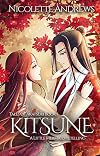
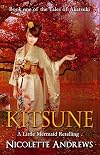
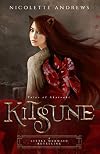
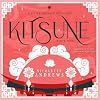
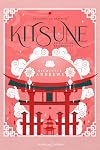
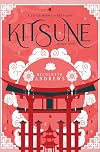
A Kitsune dreaming of a wider world. A prince seeking purpose. A love that defies the odds.Trapped in a dull and unfilling role as palace maid, Rin dreams of rising higher in the immortal court. Determined to change her lot in life, she plans to use her illusion power to spy on her ruler's rival and prove her worth. But when her mission fails, she's turned human as punishment. Now she has until the next full moon to seduce a human prince, break his engagement, and upend his treaty with a show more rival kingdom without her Kitsune magic or voice, otherwise she'll become a common fox.Hikaru is the dutiful oldest son and heir. Whatever he's asked, he does without complaint. Outwardly, at least. Inwardly, he pines to be a poet, scholar, or anything but a prince. Then he finds a mysterious woman wandering alone beside spirit invested woods, and while he knows he shouldn't, he brings her home. She cannot speak, but there's something bewitching about her, drawing him in becoming a dangerous temptation... show lessTags
Recommendations

















Member Reviews
Originally posted on Tales to Tide You Over
I purchased this book (the start of the Tales of Akatsuki) some time ago because the blurb and the use of the Japanese mythology caught my attention. I am not a Japanophile, but that very lack of absorption draws me to explore stories unknown to me. Add to that the Kitsune as trickster figures, and this book won a place on my schedule. The piece it did not live up to in my opinion was the retelling aspects. Little Mermaid is one of those complicated tales that has both original and broadly known meanings that are in contradiction. How retellings explore those aspects can be fascinating, but the connection between this story and Little Mermaid is weak, resting mostly on a witch stealing the show more voice from a character’s throat.
Don’t let the last stop you from giving the book a try, though. It offers a complicated, multilayered tale about love, ambition, betrayal, and sacrifice. The tone is mostly a fairytale lilt, though the characters are more developed than in traditional fairytales, and the world is early alt Japanese where the people are separated into competing clans and the fantastic have a place not just in ritual but also in reality. I don’t know Japanese folklore well enough to recognize themes and influences of known stories, but the tale offers the sense of a greater mythology just out of reach, something that gives the book weight. There are both plot seeds and red herrings to keep the story moving, too.
The cast is larger than I expected from the beginning focus on Rin and Hikaru. While it is their story, it’s also that of Shin, Rin’s best friend; Hotaru, Hikaru’s brother; and Naoki, a servant of the forest guardian, among others. The tale itself has feelers into the past with the mystery of Hikaru’s mother, and into the future as well, though the main focus is resolved in a manner I quite appreciated by the end of the book.
The book has a good number of writing issues that some will pass off as stylistic, but threw me out of the story at times. For example, there are comma splices (which is odd because there are also correctly used semi-colons), unclear pronouns, and cases where the POV switches for a paragraph or two, but not enough of the last to change the POV to multiple third from one POV per scene. Mixed in with this are some actual typos.
I also feel the story would have been served better by starting a few minutes earlier, when Hikaru offends the forest guardian and brings his party through the forest. Instead, it begins when Rin saves Hikaru in the forest with no sense of how he came to be there. We learn the full story in a later flashback, and it’s not the only key scene left out in favor of flashback or inference.
Those two issues are why this book gets a nod but not as enthusiastic a one as it deserves. Whenever the writing issues threw me out, the characters, political and emotional tangles, mysteries, and fascinating cultural elements pulled me back in. This book worked for me on many levels and it’s a pity that wasn’t true with every aspect.
Ultimately, the characters are complex and the use of a broad number of perspectives as well as showing the characters in action allowed us to both see when perceptions were misguided and the strengths within each of them, but especially Hikaru. Rin begins and ends the story in a very different place, but stays true to her core. One element I appreciated, though, is how the Yokai demonstrate different motivations from humans rather than being human with fox ears glued on.
While Rin discovers more in common with the humans in her time among them than she would have thought possible, she does not convert to a human simply because of her growing affection for Hikaru. The brother is another character who changes without changing. There’s a point where I considered him the villain, and some might agree with that assessment, but there’s more going on.
Meanwhile, the witch is an actual villain, but of the whole series. We see only pieces of her plan as she ensnares the others to do her bidding, but the scope and whether she’s been foiled still remain unknown. Everyone has reasons, motivations that drive them, whether known or not. This doesn’t make them good, it doesn’t even make them sympathetic necessarily, but it makes them more well rounded than I would expect in a fairytale.
I didn’t even get to mention the bargains and how you’ve never quite won what you think you have. There are many elements familiar to me from other cultures that crop up here, and the complexity is a wonder to behold. I’ve gone on long enough in any case. Despite its flaws, there’s much to enjoy in Kitsune and hope for the future novels where greater or just related stories wait to play out. show less
I purchased this book (the start of the Tales of Akatsuki) some time ago because the blurb and the use of the Japanese mythology caught my attention. I am not a Japanophile, but that very lack of absorption draws me to explore stories unknown to me. Add to that the Kitsune as trickster figures, and this book won a place on my schedule. The piece it did not live up to in my opinion was the retelling aspects. Little Mermaid is one of those complicated tales that has both original and broadly known meanings that are in contradiction. How retellings explore those aspects can be fascinating, but the connection between this story and Little Mermaid is weak, resting mostly on a witch stealing the show more voice from a character’s throat.
Don’t let the last stop you from giving the book a try, though. It offers a complicated, multilayered tale about love, ambition, betrayal, and sacrifice. The tone is mostly a fairytale lilt, though the characters are more developed than in traditional fairytales, and the world is early alt Japanese where the people are separated into competing clans and the fantastic have a place not just in ritual but also in reality. I don’t know Japanese folklore well enough to recognize themes and influences of known stories, but the tale offers the sense of a greater mythology just out of reach, something that gives the book weight. There are both plot seeds and red herrings to keep the story moving, too.
The cast is larger than I expected from the beginning focus on Rin and Hikaru. While it is their story, it’s also that of Shin, Rin’s best friend; Hotaru, Hikaru’s brother; and Naoki, a servant of the forest guardian, among others. The tale itself has feelers into the past with the mystery of Hikaru’s mother, and into the future as well, though the main focus is resolved in a manner I quite appreciated by the end of the book.
The book has a good number of writing issues that some will pass off as stylistic, but threw me out of the story at times. For example, there are comma splices (which is odd because there are also correctly used semi-colons), unclear pronouns, and cases where the POV switches for a paragraph or two, but not enough of the last to change the POV to multiple third from one POV per scene. Mixed in with this are some actual typos.
I also feel the story would have been served better by starting a few minutes earlier, when Hikaru offends the forest guardian and brings his party through the forest. Instead, it begins when Rin saves Hikaru in the forest with no sense of how he came to be there. We learn the full story in a later flashback, and it’s not the only key scene left out in favor of flashback or inference.
Those two issues are why this book gets a nod but not as enthusiastic a one as it deserves. Whenever the writing issues threw me out, the characters, political and emotional tangles, mysteries, and fascinating cultural elements pulled me back in. This book worked for me on many levels and it’s a pity that wasn’t true with every aspect.
Ultimately, the characters are complex and the use of a broad number of perspectives as well as showing the characters in action allowed us to both see when perceptions were misguided and the strengths within each of them, but especially Hikaru. Rin begins and ends the story in a very different place, but stays true to her core. One element I appreciated, though, is how the Yokai demonstrate different motivations from humans rather than being human with fox ears glued on.
While Rin discovers more in common with the humans in her time among them than she would have thought possible, she does not convert to a human simply because of her growing affection for Hikaru. The brother is another character who changes without changing. There’s a point where I considered him the villain, and some might agree with that assessment, but there’s more going on.
Meanwhile, the witch is an actual villain, but of the whole series. We see only pieces of her plan as she ensnares the others to do her bidding, but the scope and whether she’s been foiled still remain unknown. Everyone has reasons, motivations that drive them, whether known or not. This doesn’t make them good, it doesn’t even make them sympathetic necessarily, but it makes them more well rounded than I would expect in a fairytale.
I didn’t even get to mention the bargains and how you’ve never quite won what you think you have. There are many elements familiar to me from other cultures that crop up here, and the complexity is a wonder to behold. I’ve gone on long enough in any case. Despite its flaws, there’s much to enjoy in Kitsune and hope for the future novels where greater or just related stories wait to play out. show less
In a Nutshell: This is supposedly a retelling of ‘The Little Mermaid’ but it has hardly any similarities to the original. (And I mean the ‘original’ by Hans Christian Andersen, not the Disney version.) Mixed feelings, but the lore elements were outstanding. Not as good as the second book of this series, but not bad as well.
Story Synopsis:
Where the book worked for me:
✔ Loved reading all the parts connected to Japanese lore – kitsune, yokai, and many other names that I don’t know how to spell because I heard the audiobook. show less
Story Synopsis:
Rin is an immortal kitsune (a magical fox with shapeshifting abilities). However, a witch’s curse has turned her into a human without the ability to utter any sound. To regain her abilities, Rin has to fulfil the witch’s directive within the next fortnight. This would have been an easy command to carry out, except that it involves Hikaru, a human who is the eldest son of a local lord andshow more
will do anything to protect his clan. When Hikaru spies Rin, he feels an instant connect with her, but when the “lady” who charmed him doesn’t even speak, he feels torn between his heart and his duties.
Okay, the story involves a lot more than this and I can’t do justice to it here. It focusses on Rin, Hikaru, their attraction and clashes, and if/how things will return to how they were. Also involved in the proceedings are a boar, a dragon, a wolf, and a disgruntled second son, and the proceedings include clan rivalries, angry ‘guardians’, and a lot more. It is very complicated to sum up here!
The story is written in the third person limited narration of various characters, though Rin and Hikaru get the maximum chunk.
Where the book worked for me:
✔ Loved reading all the parts connected to Japanese lore – kitsune, yokai, and many other names that I don’t know how to spell because I heard the audiobook. show less
In a Nutshell: This is supposedly a retelling of ‘The Little Mermaid’ but it has hardly any similarities to the original. (And I mean the ‘original’ by Hans Christian Andersen, not the Disney version.) Mixed feelings, but the lore elements were outstanding. Not as good as the second book of this series, but not bad as well.
Story Synopsis:
Where the book worked for me:
✔ Loved reading all the parts connected to Japanese lore – kitsune, yokai, and many other names that I don’t know how to spell because I heard the audiobook. show less
Story Synopsis:
Rin is an immortal kitsune (a magical fox with shapeshifting abilities). However, a witch’s curse has turned her into a human without the ability to utter any sound. To regain her abilities, Rin has to fulfil the witch’s directive within the next fortnight. This would have been an easy command to carry out, except that it involves Hikaru, a human who is the eldest son of a local lord andshow more
will do anything to protect his clan. When Hikaru spies Rin, he feels an instant connect with her, but when the “lady” who charmed him doesn’t even speak, he feels torn between his heart and his duties.
Okay, the story involves a lot more than this and I can’t do justice to it here. It focusses on Rin, Hikaru, their attraction and clashes, and if/how things will return to how they were. Also involved in the proceedings are a boar, a dragon, a wolf, and a disgruntled second son, and the proceedings include clan rivalries, angry ‘guardians’, and a lot more. It is very complicated to sum up here!
The story is written in the third person limited narration of various characters, though Rin and Hikaru get the maximum chunk.
Where the book worked for me:
✔ Loved reading all the parts connected to Japanese lore – kitsune, yokai, and many other names that I don’t know how to spell because I heard the audiobook. show less
Ratings
Members
- Recently Added By
Lists

Little Mermaid Retellings, Variations, and Adaptations
32 works; 3 members
Author Information

38 Works 433 Members

Nicolette Andrews is a LibraryThing Author, an author who lists their personal library on LibraryThing.
Series

Common Knowledge
- Canonical title
- Kitsune
Classifications
- Genres
- Fiction and Literature, Fantasy, Romance
- BISAC
Statistics
- Members
- 85
- Popularity
- 376,411
- Reviews
- 3
- Rating
- (3.00)
- Languages
- English
- Media
- Paper, Audiobook, Ebook
- ISBNs
- 3
- ASINs
- 5