A House in Sicily
by Daphne Phelps
On This Page
Description
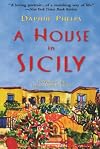
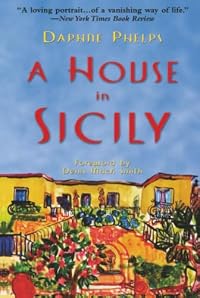
The captivating memoir of a resourceful woman who started life anew in the "most beautiful house in Sicily" For fifty years, at Casa Cuseni in the small Sicilian town of Taormina, Daphne Phelps has extended her English charm and warm hospitality to seasoned travelers and professional escapists as well as to writers and artists like Tennessee Williams, Bertrand Russell, Henry Faulkner, and Roald Dahl. This memoir tells their story, and hers. It begins in 1947 when, thirty-four years old and show more war-weary, a modest Englishwoman arrived in Taormina with little Italian, less money, and a plan to sell the property she had unexpectedly inherited. Instead, she fell in love, not just with the airy quarters of the golden stone house on a hillside but also with a community and its way of life. To save Casa Cuseni from certain demolition, Daphne converted her enchanting inheritance into the wondrous pensione that for nearly half a century she has run with the blessing of every Taorminan from the local silk-shirted godfather, Don Ciccio, to Concetta Genio, her steadfast cook, housekeeper, and friend. "A loving portrait ... of a vanishing way of life." -- New York Times Book Review "The often humorous clash of cultures ... [and] the stories of the ordinary Sicilian men and women who populate the pages that make this book, and this place, so special,... so thoroughly alive." -- Chicago Tribune show lessTags
Recommendations





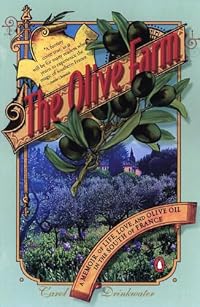
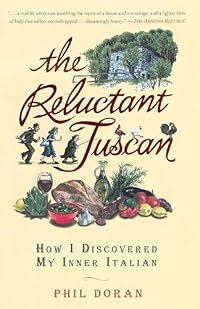
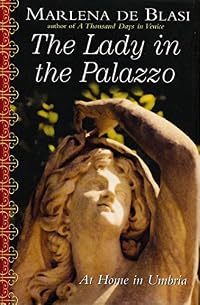
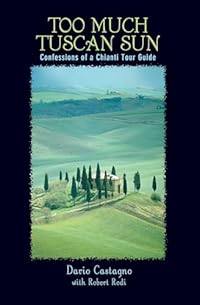




Member Reviews
There are some good bits that pop up amidst the longer boring parts. I'm an expat myself and I am always interested in the experiences of others who have, for one reason or another, left their homeland to live somewhere else. Many of them (hopefully I am not among these but it's possible that I am) while having a love for their adopted land, also have a patronizing attitude to the people. They may like the people, but they seem to feel somehow superior to them and/or their culture. Daphne Phelps is one of those expats. I sensed that attitude and it spoiled some of the book for me. But having said all that, the good bits were very good.
Daphne Phelps' uncle died unexpectedlyand left her a too-big, too-expensivehouse in Sicily. Somehow, Phelpsmanaged to move there anyway andsurvive anyway. Phelps spenta lot of time in the company ofsemi-celebrities of her day andmuch of the book is spent detailinglittle stories about these people.My favorite stories were thosetold about the little people Phelps came to know in Sicily ina chapter called Siciliana.
Charming, delightfully told memoir of a woman who inherits a house in Sicily and spends the next sixty years there taking in guests to make ends meet and getting to know the people and customs and pets and criminals of her adopted land. I was sorry to come to the end.
From the 1999 copyright I was expecting something more like "A Year in Provence". However, the author was born in 1911, and inherited the house from her uncle in 1947. She immediately had to deal with British restrictions on travel and taking money out of England, as well as the expected difficulties in Sicily. When the sale of the property fell through, she made the descision to maintain the property as sort of a rest haven for artists and writers. The book is split between anecdotes about the Sicilian people she meets and employes, and the famous guests (paying and non-paying) that stayed at Casa Cuseni. The book left me wanting more information about Daphne herself, and more info about some of her guests whose names were familiar to show more me in just a casual way. show less
very good read bt the british author inheriting her Uncle's palazzo in Sicily.She intends to sell it,but stays for the rest of her life. She learns the tricky,complicated ways of Sicilian life.She has many colorful local and international characters that visit her.
Interesting and fast read. I would suggest giving it 50 pages to get into the story.
Interesting and fast read. I would suggest giving it 50 pages to get into the story.
One of my favourite books that evokes a time and place. Daphne Phelps inherited the beautiful villa Casa Cuseni in Taormina near Mount Etna. With no money she had to take in paying guests. The eccentrities of these and the locals are charmingly recounted.
--------------------------------------------------
THE HOUSE IS FOR SALE!
Details from the estate agents....
The English artist Robert Hawthorne Kitson arrived in Taormina in 1900 attracted by the Mediterranean weather and by the reputation and beauty of a resort that had long been on the Grand Tour of every aristocratic European. He bought a piece of land in a spectacular position overlooking the town and with views of the Bay of Naxos and Mount Etna. Casa Cuseni was completed six years show more later. Over the next century “the finest house in Taormina” was to welcome an incredible array of guests, from DH Lawrence to Bertrand Russell, Henry Faulkner, Tennessee Williams, Roald Dahl and Alan Whicker.
Stepping through the gate and looking up past a steeply terraced garden, the bustle of Taormina is suddenly a distant memory. The design of the garden is influenced by Lutyens and Sicilian tradition. It contains a number of unusual plants and has attracted garden tours and visitors from around the world. Arrival at the main terrace, dominated by a façade that is both imposing and understated, is rewarded by the spectacle of a snow covered Etna towering over the Bay of Naxos. The design of both the house and the gardens is a mixture of Arts and Crafts and Italian classical styles. On the ground floor is a drawing room, a library and a dining room designed, furnished and painted in 1906 by Sir Frank Brangwyn, an apprentice of William Morris an art nouveau pioneer who worked in Paris, Munich and Vienna. The drawing room and library are richly furnished with antiques from Kitson’s collection and leave the impression that little has changed here since he died in 1947. The first floor features 4 bedrooms and a design for 4 bathrooms (currently 3) and the top floor features a bedroom, bathroom and living room and a very large terrace with spectacular views.
Following his death in 1947, the house passed to his niece Daphne Phelps, who has left a record of her experience of living here for over five decades in her book “A House in Sicily”. Daphne took the house into its second era by opening its rooms and gardens to paying guests, and the house found a niche amongst the elite of artistic and literary circles. A project for an extensive and sensitive restoration has been approved, including the rejuvenation of least five bedrooms, the installation of new bathrooms and the modernisation of the original pool (which was designed in such a way as to carry a reflection of Mount Etna, illumated by the full moon).
Daphne died in 2005, and her descendents have decided to engage Think Sicily and Knight Frank to identify a purchaser to take the house to its third era. Their website casacuseni.org gives an excellent insight into the fascinating history of the house. show less
--------------------------------------------------
THE HOUSE IS FOR SALE!
Details from the estate agents....
The English artist Robert Hawthorne Kitson arrived in Taormina in 1900 attracted by the Mediterranean weather and by the reputation and beauty of a resort that had long been on the Grand Tour of every aristocratic European. He bought a piece of land in a spectacular position overlooking the town and with views of the Bay of Naxos and Mount Etna. Casa Cuseni was completed six years show more later. Over the next century “the finest house in Taormina” was to welcome an incredible array of guests, from DH Lawrence to Bertrand Russell, Henry Faulkner, Tennessee Williams, Roald Dahl and Alan Whicker.
Stepping through the gate and looking up past a steeply terraced garden, the bustle of Taormina is suddenly a distant memory. The design of the garden is influenced by Lutyens and Sicilian tradition. It contains a number of unusual plants and has attracted garden tours and visitors from around the world. Arrival at the main terrace, dominated by a façade that is both imposing and understated, is rewarded by the spectacle of a snow covered Etna towering over the Bay of Naxos. The design of both the house and the gardens is a mixture of Arts and Crafts and Italian classical styles. On the ground floor is a drawing room, a library and a dining room designed, furnished and painted in 1906 by Sir Frank Brangwyn, an apprentice of William Morris an art nouveau pioneer who worked in Paris, Munich and Vienna. The drawing room and library are richly furnished with antiques from Kitson’s collection and leave the impression that little has changed here since he died in 1947. The first floor features 4 bedrooms and a design for 4 bathrooms (currently 3) and the top floor features a bedroom, bathroom and living room and a very large terrace with spectacular views.
Following his death in 1947, the house passed to his niece Daphne Phelps, who has left a record of her experience of living here for over five decades in her book “A House in Sicily”. Daphne took the house into its second era by opening its rooms and gardens to paying guests, and the house found a niche amongst the elite of artistic and literary circles. A project for an extensive and sensitive restoration has been approved, including the rejuvenation of least five bedrooms, the installation of new bathrooms and the modernisation of the original pool (which was designed in such a way as to carry a reflection of Mount Etna, illumated by the full moon).
Daphne died in 2005, and her descendents have decided to engage Think Sicily and Knight Frank to identify a purchaser to take the house to its third era. Their website casacuseni.org gives an excellent insight into the fascinating history of the house. show less
read 2022
Members
- Recently Added By
Author Information

1 Work 269 Members
Common Knowledge
- Canonical title
- A House in Sicily
- Original publication date
- 1999
- People/Characters
- Daphne Phelps; Bertrand Russell; Tennessee Williams; Roald Dahl; Julian Trevelyan; Henry Faulkner (show all 7); Robert Kitson
- Important places
- Taormina, Sicily; Sicily, Italy; Mount Etna, Sicily
- Dedication
- To Concetta Genio without whose manifold skills, generosity of spirit and steadfast friendship over the years, I would never have been able to save Casa Cuseni.
Classifications
Statistics
- Members
- 266
- Popularity
- 119,665
- Reviews
- 9
- Rating
- (3.47)
- Languages
- Dutch, English, Italian
- Media
- Paper
- ISBNs
- 16
- ASINs
- 5