Panthers and the Museum of Fire
by Jen Craig
On This Page
Description
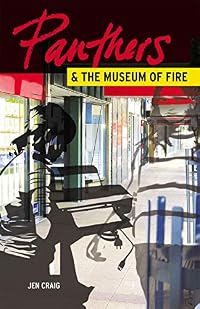
Panthers and the Museum of Fire is a novella about walking, memory and writing. The narrator walks from Glebe to a central Sydney cafe to return a manuscript by a recently-dead writer. While she walks, the reader enters the narrator's entire world: life with family and neighbours, narrow misses with cars, her singular friendships, dinner conversations and work. We learn of her adolescent desire for maturity and acceptance through a brush with religion, her anorexia, the exercise of that show more power when she was powerless in every other aspect of her life. show lessTags
Recommendations











Member Reviews
The best writing knows where it comes from
This may be a little long for most review readers. But I don't apologise, I enjoyed the work and the thoughts that came to me about it.
I wrote this review for Panthers three or four times. I wanted to give it a big review, praise it and delve into what I liked about it and how good it is. I was slow to get it where I wanted and then this word popped into my head: palimpsest. It refers to mostly parchment documents (ie old vellum before the printing press) that were scraped to remove the old layer of ink printed on them so a new document could be created over the top. Of course, ink left a residue or phantom text behind the superimposed text. Some ancient texts only exist because they were show more deciphered from this phantom layer. Among these are a work by Cicero, Archimedes and some early manuscripts of Homer’s epics. Sometimes, too, works deemed heretical were covered with a more agreeable work, leaving the heretical text for modern decipherment, like a message in a bottle. Basically velum or parchment was too expensive to throw away, leaving layers for later researchers to discover. I find the palimpsest rich with imaginative and literary possibilities. Perhaps author Jen Craig was creating possibilities when she opens her work with a phantom text echoing the sound and rhythm of an older text:
For a long time I have dreamed of such a breakthrough
She reminds us that when we read fiction, we are always reading ghosts. We are already in the realm of the past on the first page when Proust’s opening line rings in my ear:
For a long time I would go to bed early
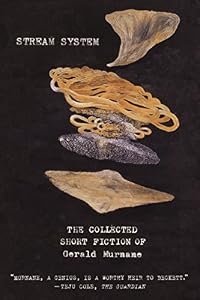
But Jen Craig has her own ideas and her own story to tell. She’s decided that her text will have traces of the literary past none of us are able to escape. Writers like Proust are big players, they loom over writers who will often cease to function paralysed in their esteemed presence until the new author can find a voice. Our author here has also picked a local modernist, Gerald Murnane, whose prose style looms large over Australian writers. So Jen has taken a tough path.
Jen Craig offers her own take. Her character and narrator (another dualistic narrative technique Proust used), takes a walk to hand back a manuscript written by a dead friend, to the dead friend’s sister. This unifying structure of a walking journey to make her appointment is only the skeleton of the story. The road and the walk matters, the places she crosses matter, too, so do the places she recalls along the way. Will she make it? Will she deliver her document?
Jen Craig has offered an insight into these literary relationships herself, she recognises those who came before. I like that. There are few geniuses that break forms anymore. I think they are all data analysts these days. There’s no money in being a literary genius.
The walk takes in not only what is ahead and around the traveller, but what happens in the mind. Literary walks have a history, Rousseau walked, Belloc walked his path to Rome, WG Sebald’s narrator took that troubled walk through East Anglia in The Rings of Saturn. Much happens along the way in Jen Craig’s thoughts as she intersects with her landscape (inner Sydney), the manuscript in her hands and the fate of her old school ‘friend’. This friend wrote a draft of a novel which the sister (Pamela) asked Jen to read at the sister’s wake. The deceased friend (Sarah) and Jen did not keep up their friendship after school, and Jen doubts they were ever really friends. More like Jen was assigned to be her mentor when she arrived in the middle of a school term. Sarah was obese. Jen talks about herself as an anorexic. She gives the reader a long exposition of how the anorexic thinks – a fascinating interior world in which they seek out a very personal space to simply be who they are without external interference. Some would dismiss that private space as denial. This is a fascinating philosophical argument about the freedom of the anorexic to be. In this narrative interjection, the author has broken well clear from Proust and Sebald. We are now in a contemporary world, but we are not offered an expected journalistic drama, but an insight into consciousness that we cannot fully comprehend: the anorexic mind. The blurring of narrator-author is offered up in a clever way. Jen was once Jenny, Jenny changed her name to Jen Craig to create a separation from the multinational diet peddling corporation of the same name, Jenny Craig. A painful yet unavoidable irony.
I mentioned Murnane earlier because Jen Craig uses a similar hypnotic repetitive prose style. It’s not for everyone. But that’s OK, the rhythms work like poetry. But not as dense as Gerald Murnane’s. I make much of these comparisons, but that is because Jen Craig really has already told us who her antecedents are anyway. So we can’t dismiss the work as derivative or say nicely that she hasn’t found her voice. All narrative forms are borrowed from somewhere. Sebald’s too, has a long history. https://wordpress.com/read/blogs/668780/posts/6918
Jen Craig has her own, yet one that recognises where it sits in the universe of writing.
Panthers is framed by several narratives. One of which sees Jen telling a story to another friend while she prepares dinner on Sunday night, the night before the walk. Time has an important framework here as the story telling is episodic, measured in little actions like the purchasing of prawns, the unwrapping of prawns, the (tedious) peeling of prawns, the removal of the vein, the cooking and the final consumption. Within that dinner narrative Jen steadily reveals the story of the friendship with the deceased Sarah to the dinner guest who we discover is actually her dearest friend. Jen reveals everything to her best friend, who is defined as the first friend she actually wanted to have. We also learn in this intimate space that Jen dislikes Sarah’s sister, Pamela, because she was once drawn into a religious ‘cult’ as she calls all religions, by Pamela at a house party when she was younger. Sarah, the deceased school friend was odd as a child. The friendship itself did not last long after school finished and the last time the narrator saw Sarah was two years prior to her death when the narrator promised to catch up. It never happened. There is a satisfying narrative structure at work here, since we only learn the deepest revelations of the story inside the most intimate and safe spaces, in the realm of close friendship. So, author Jen breaks free of her chosen literary ghosts.
These two narratives don’t sound like much. The substance of most of our lives don’t sound like much when we narrate them to someone. They need something more, embellishment, clever tricks to gain our attention and keep us sustained throughout. The narrative of the prawn’s purchase, preparation and consumption is drawn out in a sub-set of the narrative to keep the reader going. We all have opinions about prawns – I’m anaphylactic - so I lack sympathy towards prawns, but these gutted prawns kept me going, I still remember their taste years after.
If anyone tries to explain the inner processes and minutiae of the human mind, it can be dull, or embarrassing, or it can spark a little sense of human connection across that divide that separates us all – our individual consciousness.
This idea comes to mind as I read Panthers because as I read Proust again, I am reminded what William James wrote over 120 years ago that we cannot breach another’s individual consciousness. When I read a book like this, I realise the exciting prospect that literature offers perhaps the closest way of breaching individual consciousness. To remind us that we are not alone.
The individual consciousness has its own set of symbols, metaphors, images that repeat like they do here. As they do in all literature. We always worry about the same things, always concern ourselves with the same people, over and over, in recurring forms, funnily like the prose style Jen Craig has chosen here. Tuning into other minds would be (yes a breach of consciousness) to see an alternate set of repetitions – structurally like ours. Most of us go over the same old ground, our own ground, searching for the narrative that makes sense of it.
I mention other writers here because Jen does; like the hidden text in a palimpsest. Then I wonder if readers see their own hidden narratives when they read. show less
This may be a little long for most review readers. But I don't apologise, I enjoyed the work and the thoughts that came to me about it.
I wrote this review for Panthers three or four times. I wanted to give it a big review, praise it and delve into what I liked about it and how good it is. I was slow to get it where I wanted and then this word popped into my head: palimpsest. It refers to mostly parchment documents (ie old vellum before the printing press) that were scraped to remove the old layer of ink printed on them so a new document could be created over the top. Of course, ink left a residue or phantom text behind the superimposed text. Some ancient texts only exist because they were show more deciphered from this phantom layer. Among these are a work by Cicero, Archimedes and some early manuscripts of Homer’s epics. Sometimes, too, works deemed heretical were covered with a more agreeable work, leaving the heretical text for modern decipherment, like a message in a bottle. Basically velum or parchment was too expensive to throw away, leaving layers for later researchers to discover. I find the palimpsest rich with imaginative and literary possibilities. Perhaps author Jen Craig was creating possibilities when she opens her work with a phantom text echoing the sound and rhythm of an older text:
For a long time I have dreamed of such a breakthrough
She reminds us that when we read fiction, we are always reading ghosts. We are already in the realm of the past on the first page when Proust’s opening line rings in my ear:
For a long time I would go to bed early
But Jen Craig has her own ideas and her own story to tell. She’s decided that her text will have traces of the literary past none of us are able to escape. Writers like Proust are big players, they loom over writers who will often cease to function paralysed in their esteemed presence until the new author can find a voice. Our author here has also picked a local modernist, Gerald Murnane, whose prose style looms large over Australian writers. So Jen has taken a tough path.
Jen Craig offers her own take. Her character and narrator (another dualistic narrative technique Proust used), takes a walk to hand back a manuscript written by a dead friend, to the dead friend’s sister. This unifying structure of a walking journey to make her appointment is only the skeleton of the story. The road and the walk matters, the places she crosses matter, too, so do the places she recalls along the way. Will she make it? Will she deliver her document?
Jen Craig has offered an insight into these literary relationships herself, she recognises those who came before. I like that. There are few geniuses that break forms anymore. I think they are all data analysts these days. There’s no money in being a literary genius.
The walk takes in not only what is ahead and around the traveller, but what happens in the mind. Literary walks have a history, Rousseau walked, Belloc walked his path to Rome, WG Sebald’s narrator took that troubled walk through East Anglia in The Rings of Saturn. Much happens along the way in Jen Craig’s thoughts as she intersects with her landscape (inner Sydney), the manuscript in her hands and the fate of her old school ‘friend’. This friend wrote a draft of a novel which the sister (Pamela) asked Jen to read at the sister’s wake. The deceased friend (Sarah) and Jen did not keep up their friendship after school, and Jen doubts they were ever really friends. More like Jen was assigned to be her mentor when she arrived in the middle of a school term. Sarah was obese. Jen talks about herself as an anorexic. She gives the reader a long exposition of how the anorexic thinks – a fascinating interior world in which they seek out a very personal space to simply be who they are without external interference. Some would dismiss that private space as denial. This is a fascinating philosophical argument about the freedom of the anorexic to be. In this narrative interjection, the author has broken well clear from Proust and Sebald. We are now in a contemporary world, but we are not offered an expected journalistic drama, but an insight into consciousness that we cannot fully comprehend: the anorexic mind. The blurring of narrator-author is offered up in a clever way. Jen was once Jenny, Jenny changed her name to Jen Craig to create a separation from the multinational diet peddling corporation of the same name, Jenny Craig. A painful yet unavoidable irony.
I mentioned Murnane earlier because Jen Craig uses a similar hypnotic repetitive prose style. It’s not for everyone. But that’s OK, the rhythms work like poetry. But not as dense as Gerald Murnane’s. I make much of these comparisons, but that is because Jen Craig really has already told us who her antecedents are anyway. So we can’t dismiss the work as derivative or say nicely that she hasn’t found her voice. All narrative forms are borrowed from somewhere. Sebald’s too, has a long history. https://wordpress.com/read/blogs/668780/posts/6918
Jen Craig has her own, yet one that recognises where it sits in the universe of writing.
Panthers is framed by several narratives. One of which sees Jen telling a story to another friend while she prepares dinner on Sunday night, the night before the walk. Time has an important framework here as the story telling is episodic, measured in little actions like the purchasing of prawns, the unwrapping of prawns, the (tedious) peeling of prawns, the removal of the vein, the cooking and the final consumption. Within that dinner narrative Jen steadily reveals the story of the friendship with the deceased Sarah to the dinner guest who we discover is actually her dearest friend. Jen reveals everything to her best friend, who is defined as the first friend she actually wanted to have. We also learn in this intimate space that Jen dislikes Sarah’s sister, Pamela, because she was once drawn into a religious ‘cult’ as she calls all religions, by Pamela at a house party when she was younger. Sarah, the deceased school friend was odd as a child. The friendship itself did not last long after school finished and the last time the narrator saw Sarah was two years prior to her death when the narrator promised to catch up. It never happened. There is a satisfying narrative structure at work here, since we only learn the deepest revelations of the story inside the most intimate and safe spaces, in the realm of close friendship. So, author Jen breaks free of her chosen literary ghosts.
These two narratives don’t sound like much. The substance of most of our lives don’t sound like much when we narrate them to someone. They need something more, embellishment, clever tricks to gain our attention and keep us sustained throughout. The narrative of the prawn’s purchase, preparation and consumption is drawn out in a sub-set of the narrative to keep the reader going. We all have opinions about prawns – I’m anaphylactic - so I lack sympathy towards prawns, but these gutted prawns kept me going, I still remember their taste years after.
If anyone tries to explain the inner processes and minutiae of the human mind, it can be dull, or embarrassing, or it can spark a little sense of human connection across that divide that separates us all – our individual consciousness.
This idea comes to mind as I read Panthers because as I read Proust again, I am reminded what William James wrote over 120 years ago that we cannot breach another’s individual consciousness. When I read a book like this, I realise the exciting prospect that literature offers perhaps the closest way of breaching individual consciousness. To remind us that we are not alone.
The individual consciousness has its own set of symbols, metaphors, images that repeat like they do here. As they do in all literature. We always worry about the same things, always concern ourselves with the same people, over and over, in recurring forms, funnily like the prose style Jen Craig has chosen here. Tuning into other minds would be (yes a breach of consciousness) to see an alternate set of repetitions – structurally like ours. Most of us go over the same old ground, our own ground, searching for the narrative that makes sense of it.
I mention other writers here because Jen does; like the hidden text in a palimpsest. Then I wonder if readers see their own hidden narratives when they read. show less
Ratings
Members
- Recently Added By
Lists

Best Australian Books of the 21st Century
88 works; 2 members
Author Information
4+ Works 85 Members
Jen Craig is an Australian author who has written articles that have appeared in various Australian literary magazines. She collaborated with composers of the chamber opera, A Dictionary of Maladies, in Switzerland in 2005. She regularly blogs micro fiction at absurdenticements.blogspot.com and about writing issues at beinginlieu.blogspot.com Her show more title Panthers and the Museum of Fire is a bold new read for 2015. It is an original complex work of fiction- memoir in the style of writers like Karl Ove Knausgaard and Sheila Heti. (Bowker Author Biography) show less
Awards and Honors
Awards
Classifications
Statistics
- Members
- 53
- Popularity
- 571,703
- Reviews
- 2
- Rating
- (4.13)
- Languages
- English
- Media
- Paper, Ebook
- ISBNs
- 7
- ASINs
- 2