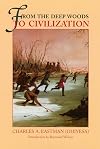
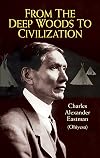
From the Deep Woods to Civilization: Chapters in the Autobiography of an Indian
by Charles Alexander Eastman
On This Page
Description
History. Nonfiction. HTML:"Has a many-sided appeal …. This stimulating book is one of the few that really deserve the over-worked term, a human document." — Publishers Weekly.In the first of his memoirs, the popular Indian Boyhood, Charles Alexander Eastman recounted his traditional upbringing among the Santee Sioux. From the Deep Woods to Civilization resumes his story, recounting his abrupt departure from tribal life at age 15 to pursue his education among whites — a path that led show more him to certification as a medical doctor, the publication of many successful books, and a lifetime of tireless efforts to benefit his native culture. Through his social work and his writings, Eastman became one of the best-known Indians of the early twentieth century and an important force in interpreting and relating the spiritual depth and greatness of the Native American traditions.
Eastman became a physician in hopes of serving the Native American community; he received a Bachelor of Science degree from Dartmouth in 1887 and a medical degree from Boston University in 1890. He began college just a few months after the Battle of Little Bighorn, and his first job as a physician at Pine Ridge Reservation coincided with the Ghost Dance uprisings that culminated in the U. S. Army's attack at Wounded Knee. The only doctor available to assist the massacre's victims, Eastman writes movingly of the event's appalling inhumanity and injustice. Afterward, he lobbied Capitol Hill on behalf of the Sioux and devoted the rest of his life, both in and out of government service, to helping Indians adapt to the white world while retaining the best of their own culture. His autobiography resonates with the impassioned thoughts and experiences of a profound contributor to the richness of American culture. show less
Tags
Recommendations





















Member Reviews
This is the 98th in the Lakeside Press series;
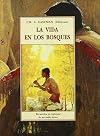
La vida en los bosques es un libro autobiográfico en el que Eastman narra, con gran viveza y amenidad, sus recuerdos de aquellos años en que llevó la vida fascinante de los niños pieles rojas. En un medio natural a la vez bellísimo y lleno de peligros, el pequeño indio seguía los pasos de sus mayores y, entre juegos y aventuras, se formaba para llegar a ser algún día el guerrero estoico y valeroso que hoy todos admiramos. Las cacerías, los ataques de tribus enemigas, los rigores y las bellezas de los bosques y las praderas, la presencia constante de los animales, las leyendas y los relatos de hazañas guerreras… todo, en fin, lo que constituía aquel mundo legendario se ofrece al lector en una obra llena de vida que lleva el show more sello inconfundible de la experiencia auténtica.
Donado a la Bibliocomarca por César Pescador Galindo show less
Donado a la Bibliocomarca por César Pescador Galindo show less
Nov 5, 2022 (Edited)Spanish
Ratings
Members
- Recently Added By
Author Information

27+ Works 1,442 Members
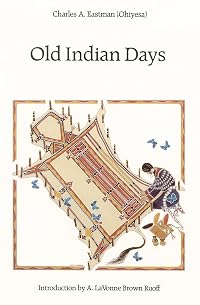
A Santee Sioux, born in Red Falls, Minnesota, Charles Eastman was raised by his grandmother and uncle in Manitoba, Canada, where he learned Native American traditions and lore. As a teenager he returned to his father's family and attended mission schools and Beloit College. He graduated from Dartmouth College in 1887 and from Boston University show more School of Medicine in 1890. Although his background made him unwelcome in some parts of white society and his education made him uneasy in Native American cultures, he worked for his people throughout his life as a doctor, as a representative in Washington, D.C., and as a founder of the Society of American Indians. His first published book, Indian Boyhood (1902), written for children, tells the stories and traditions of the Sioux nation. Red Hunters and the Animal People (1904), Old Indian Days (1907), and Wigwam Evenings (1909), written with the help of his wife, Elaine Goodale Eastman, continue in this vein, but his later work, including The Soul of the Indian (1911), The Indian Today (1915), and his autobiography, From the Deep Woods to Civilization (1916), attempts to interpret Native American culture for white society, describing the problems of assimilation. (Bowker Author Biography) show less
All Editions
Series
Belongs to Publisher Series
Work Relationships
Common Knowledge
- Original publication date
- 1916
Classifications
Statistics
- Members
- 240
- Popularity
- 135,392
- Reviews
- 2
- Rating
- (3.54)
- Languages
- English, Italian, Portuguese, Spanish
- Media
- Paper, Ebook
- ISBNs
- 23
- UPCs
- 1
- ASINs
- 13