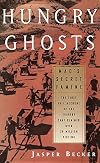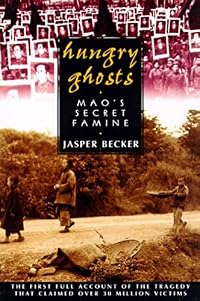
Hungry Ghosts
by Jasper Becker
On This Page
Description
In the tradition of John Hersey's Hiroshima, journalist Jasper Becker's penetrating account of China's four-year famine uncovers the truth behind one of the darkest chapters in history. Hungry Ghosts is the horrific story of the state-sponsored terror, cannibalism, torture, and murder during Mao Zedong's "Great Leap Forward," an attempt at utopian engineering gone wrong. This is the unforgettable story of the century's greatest human rights disaster, in which more people died than in show more Stalin's purges and the Holocaust put together. Becker conducted hundreds of interviews and spent years immersed in painstaking detective work to examine the unprecedented madness that plagued China between 1958 and 1962. For the first time since it was so ruthlessly and categorically erased from history, Becker unearths what really happened during these years, and how the famine and terror could have been kept a secret for so long. show lessTags
Recommendations






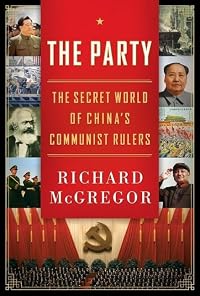
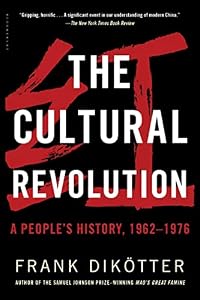
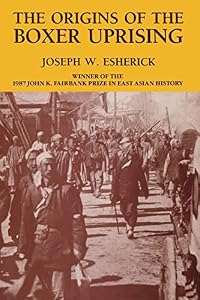


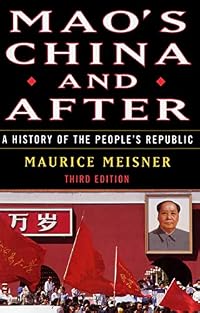
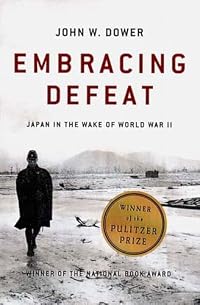
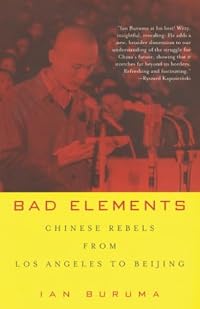
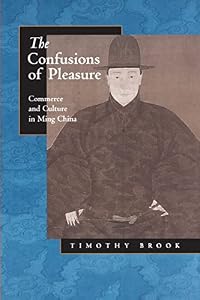
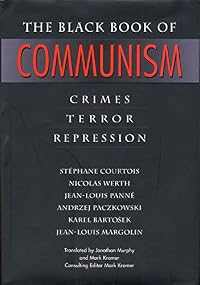


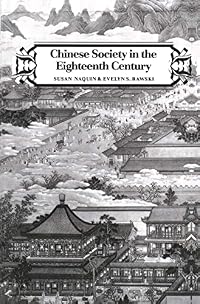


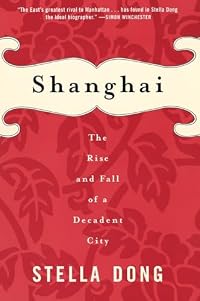

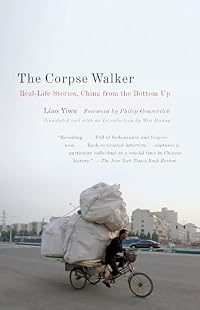
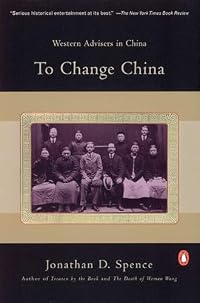
Member Recommendations
Member Reviews
One of the most compelling history books I've ever read, period. I'm a lover of history who recognizes that 90% of the books I read make most people fall to sleep - but with 'Hungry Ghosts', I recommend it even to those who typically would never pick up a history book at all.
The modern and recent scholarship of 'Hungry Ghosts' provides a perspective on Maoist China which has only recently been revealed. After reading this book, I must seriously reconsider the conventional wisdom that "Hitler was the most evil historical actor of the 20th century." But its even more than that, though: the megalomania of Mao, and the wild, collective mass-delusion of hundreds of millions of ideologically brainwashed Chinese is truly breathtaking to read show more about; nothing short of astonishing, even in the context of a century that was filled with many instances of insane atrocities.
Read this book. show less
The modern and recent scholarship of 'Hungry Ghosts' provides a perspective on Maoist China which has only recently been revealed. After reading this book, I must seriously reconsider the conventional wisdom that "Hitler was the most evil historical actor of the 20th century." But its even more than that, though: the megalomania of Mao, and the wild, collective mass-delusion of hundreds of millions of ideologically brainwashed Chinese is truly breathtaking to read show more about; nothing short of astonishing, even in the context of a century that was filled with many instances of insane atrocities.
Read this book. show less
I came to this book after reading Grass Soup and In Search of My Homeland, both memoirs by "rightists" who had been sentenced to a labor camp during the 1958-1962 famine in China. I was interested in learning more about this time period of Chinese history, and Hungry Ghosts was a good overview: well-written and well-documented. He relied on hundreds of sources, both written and oral, Chinese and Western. One of the things I liked was that he references many internal reports and Chinese demographers, not relying on Western ones. There are extensive endnote citations and pages of bibliography. This is important because the famine has at various times been denied, acknowledged, ignored, and blamed on various factors by various show more people.
Becker begins with an overview of famine in China and elsewhere in the world, and in particular the Soviet famine of 1930-33. He discusses the causes of the famine, it's effect on various regions and groups of people (like the Tibetans and prisoners in the labor camps), and the aftermath, which led to the Cultural Revolution. He situates it in both Chinese history and in the world and spends several chapters at the end of the book discussing how the famine was documented, how the various death toll estimates were arrived at, and how the Western press influenced policy and was influenced.
I came at the book already knowing something about the famine from the memoirs I had read, and I think Becker was writing for an audience that either didn't know it had happened or denied it had happened. His tone at times was, I don't know, strident? in making his points. He was definitely trying to convince people. All in all, however, I found the book both easy to read and yet comprehensive and well-documented. I would recommend it to anyone interested in this time period. show less
Becker begins with an overview of famine in China and elsewhere in the world, and in particular the Soviet famine of 1930-33. He discusses the causes of the famine, it's effect on various regions and groups of people (like the Tibetans and prisoners in the labor camps), and the aftermath, which led to the Cultural Revolution. He situates it in both Chinese history and in the world and spends several chapters at the end of the book discussing how the famine was documented, how the various death toll estimates were arrived at, and how the Western press influenced policy and was influenced.
I came at the book already knowing something about the famine from the memoirs I had read, and I think Becker was writing for an audience that either didn't know it had happened or denied it had happened. His tone at times was, I don't know, strident? in making his points. He was definitely trying to convince people. All in all, however, I found the book both easy to read and yet comprehensive and well-documented. I would recommend it to anyone interested in this time period. show less
I first read this book when it came out. Now, 13 years later, I find it has lost none of its shock value. Every page heaps multiple outrages on multiple outrages. It is still the world's most outrageous coverup, and it cost 30 to 60 million deaths in three years Hitler and Stalin had nothing on Mao.
Unlike any other famine, this one did not have a political objective or a natural basis - it was essentially unintentional, and entirely man--made, making it even more horrifying. It was of such proportion the country even suppressed the 1964 census data. Doctors were not permitted to claim starvation as a cause of death. Cannibalism was rampant. And the entire time, China continued to export grain. The state's granaries remained full.
Mao show more implemented the "Great Lea Forward" to catch up to the West, using an agricultural policy he knew had totally failed in Stalin's USSR 25 years before. Everyone had to go along, or face death. No one could avoid lying that everything was going great, and exceeding expectations, because that's what Mao had to hear. The result was an unending and unendurable hell, which, far from catching up, actually saw wheat production actually drop below the level of the Han Dynasty, 2000 years prior.
The details elicit emotions like I have never experienced in reading the worst atrocities of Nazi Germany or Stalinist Russia, probably because this had no such goal - it just happened and kept happening to a worse and worse effect. It is all thoroughly and painstakingly documented, making it absolutely believable, and horrifyingly real, from the bizarre policies that led to it (melting all metal in backyard furnaces to create "steel") to the insane agricultural "solutions" (cutting three to six foot deep furrows so the wheat harvest would multiply) inspired by Mao, it is all there, in seeming science fiction of the worst kind. Absolutely horrifying and totally absurd - if it wasn't true. Truly a must read. show less
Unlike any other famine, this one did not have a political objective or a natural basis - it was essentially unintentional, and entirely man--made, making it even more horrifying. It was of such proportion the country even suppressed the 1964 census data. Doctors were not permitted to claim starvation as a cause of death. Cannibalism was rampant. And the entire time, China continued to export grain. The state's granaries remained full.
Mao show more implemented the "Great Lea Forward" to catch up to the West, using an agricultural policy he knew had totally failed in Stalin's USSR 25 years before. Everyone had to go along, or face death. No one could avoid lying that everything was going great, and exceeding expectations, because that's what Mao had to hear. The result was an unending and unendurable hell, which, far from catching up, actually saw wheat production actually drop below the level of the Han Dynasty, 2000 years prior.
The details elicit emotions like I have never experienced in reading the worst atrocities of Nazi Germany or Stalinist Russia, probably because this had no such goal - it just happened and kept happening to a worse and worse effect. It is all thoroughly and painstakingly documented, making it absolutely believable, and horrifyingly real, from the bizarre policies that led to it (melting all metal in backyard furnaces to create "steel") to the insane agricultural "solutions" (cutting three to six foot deep furrows so the wheat harvest would multiply) inspired by Mao, it is all there, in seeming science fiction of the worst kind. Absolutely horrifying and totally absurd - if it wasn't true. Truly a must read. show less
Excellent Scholarship
This book looks at the disastrous policies of the Chinese Communist Party and how those policies led to famine in the late '50s and early '60s. Jasper's writing, while dry and uninteresting, is an example of excellent scholarship. He used countless sources, including many internal CCP documents, interviews, and plenty of statistical analysis. Mixed with the scholarship are several in-depth narratives that look at specific counties and provinces in China.
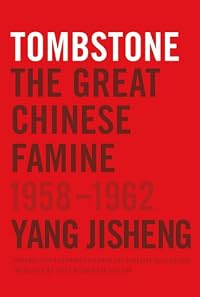
Becker's book is one of the first to detail the disastrous Great Leap Forward, Yang Jisheng's "Tombstone" and then Frank Dikötter's "Mao's Great Famine." The English translation of "Tombstone" removes about half of the original book's contents. "Mao's Great Famine" show more is somewhat more myopic than "Hungry Ghosts," providing little geography context for the hundreds of anecdotes Dikötter presents.
The scholarly debate between these books seems focused on the number of deaths. Taken together, the three books point to a death toll between 30,000,000 and 45,000,000 - an unfathomable tragedy. All three books correctly point out the disgusting human fault of the famine. Jasper's book, while dryer, does an excellent job of examining local and national faults. show less
This book looks at the disastrous policies of the Chinese Communist Party and how those policies led to famine in the late '50s and early '60s. Jasper's writing, while dry and uninteresting, is an example of excellent scholarship. He used countless sources, including many internal CCP documents, interviews, and plenty of statistical analysis. Mixed with the scholarship are several in-depth narratives that look at specific counties and provinces in China.
Becker's book is one of the first to detail the disastrous Great Leap Forward, Yang Jisheng's "Tombstone" and then Frank Dikötter's "Mao's Great Famine." The English translation of "Tombstone" removes about half of the original book's contents. "Mao's Great Famine" show more is somewhat more myopic than "Hungry Ghosts," providing little geography context for the hundreds of anecdotes Dikötter presents.
The scholarly debate between these books seems focused on the number of deaths. Taken together, the three books point to a death toll between 30,000,000 and 45,000,000 - an unfathomable tragedy. All three books correctly point out the disgusting human fault of the famine. Jasper's book, while dryer, does an excellent job of examining local and national faults. show less
This is a sobering book. It will keep you up at night and astound you that such things actually happened. But - I also got a different look at Mao. For the longest time I just thought he was horrible. Now I think there are many things he didn't really know about. The lengths his people would go to in order to make it look like his idea's were working were unbelievable. Everyone was so afraid of not being a success that they were very deceptive. I recommend this book to give you a different look at how Mao got away with so much. Warning - if canniblism is too much for you to handle, do not read this book. It is harsh. (
I really liked this book. It tells the story of Mao Zedong and what he did to China during his reign. Mao kept anybody outside of China in ignorance of what was happening in the horrific famine. His man-made famine is something very few people know about, even now. As my daughter said"How could something like that happen (45 million dead in 3 years) and I never learned about that in school?" This book will open your eyes.
Jasper Becker in Hungry Ghosts: "North Korea seems in the grip of a death-cult psychosis that leaves it impervious to rational notions of self-interest" (339). Bruce Cumings on the kind of racism that is allowed to run free when talking about North Korea: "Prominent Americans lose any sense of embarrassment or self-consciousness about the intricate and knotty problems of racial difference and Otherness when it comes to North Korea and its leaders" (49).I'm sure there are better books about the Great Leap Forward out there. The author doesn't even try to hide his pro-West, anti-Communist, orientalist biases.
Members
- Recently Added By
Lists

Books in the Bibliography of The Cold War by John Lewis Gaddis
192 works; 1 member
Author Information
14 Works 731 Members
Common Knowledge
- Canonical title
- Hungry Ghosts
- Original publication date
- 1996
- People/Characters
- Mao Zedong; Liu Shaoqi; Peng Dehuai
- Important places
- Kharkiv, Ukraine; Henan Province, China; Anhui Province, China; Beijing, China; North Korea
- Important events
- Great Leap Forward; Cultural Revolution
- Dedication
- For Ru who supported me with tea and sympathy
- First words
- The year 1960 was the darkest moment in the long, long history of China.
- Last words
- (Click to show. Warning: May contain spoilers.)If the famine remains a secret, the country will draw no lessons from its past nor learn that only in a secretive society could so many have starved to death.
Classifications
- Genres
- History, Nonfiction, General Nonfiction, Politics and Government
- DDC/MDS
- 363.8095109045 — Society, Government, and Culture Social problems and social services Public Safety - Police, Crime Investigation Food supply History, geographic treatment, biography
- LCC
- HC430 .F3 .B33 — Social sciences Economic history and conditions Economic history and conditions By region or country
- BISAC
Statistics
- Members
- 283
- Popularity
- 113,470
- Reviews
- 8
- Rating
- (4.04)
- Languages
- Chinese, English, Italian
- Media
- Paper, Ebook
- ISBNs
- 7
- ASINs
- 2