On This Page
Description
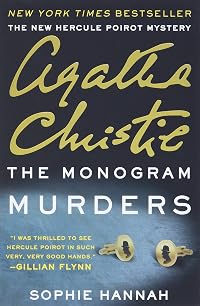
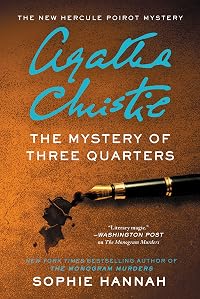
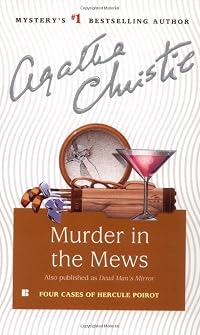
Hercule Poirot's quiet supper in a London coffee house is interrupted when a young woman confides to him that she is about to be murdered. She is terrified, but begs Poirot not to find and punish her killer. Once she is dead, she insists, justice will have been done. Later that night, Poirot learns that three guests at a fashionable London hotel have been murdered, and a cufflink has been placed in each one's mouth. Could there be a connection with the frightened woman? While Poirot show more struggles to put together the bizarre pieces of the puzzle, the murderer prepares another hotel bedroom for a fourth victim. show lessTags
Recommendations





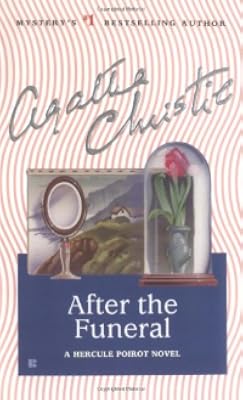
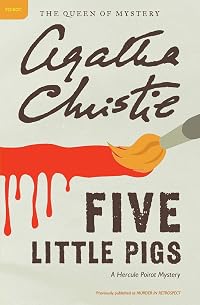
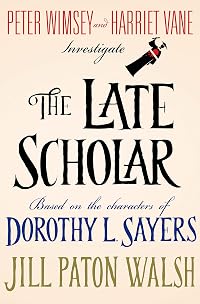




Member Reviews
Similar to several of the other reviews I’ve seen, I was delighted by the author’s portrayal of Poirot himself, but severely annoyed by the sidekick she created for him. Catchpool is relatable human, but too much so at times. He ends up coming across as inept and perhaps unsuited for his chosen line of work. The mystery itself was intriguing, and it had some interesting psychological aspects. It was, however, somewhat predictable albeit convoluted at the end. I enjoyed this book, but won’t return to it as I do the originals. There’s just something about Christie’s Poirot...
Can the empty shoes of Dame Agatha Christie be filled with substance? Can the life of her Belgian sleuth, Hercule Poirot, be portrayed well enough by another to read as Dame Agatha's lost manuscript? A resounding yes! for the brilliant plot and execution of story provided by author Sophie Hannah. The syntax and rhythm are so perfect that one hears in their mind the voice of British actor David Suchet deftly delivering Hercule's lines throughout the story.
As in a typical Christie plot, there are twists, turn and red herrings along the way. Poirot's fastidiousness, punctilious punctuality and superior "grey cells" ring out loud and clear as ever before. This was a delightful, couldn't-put-it-down mystery with all of the charm of the show more original Christie novels. I certainly hope this is not the last we'll hear of our resurrected Poirot from this extremely capable author. Well done Madame Hannah!
I am grateful to Goodreads' First Reads, author John Rector and publisher Thomas and Mercer for having provided a free copy of this book. Their generosity did not, however, influence this review - the words of which are mine alone. show less
As in a typical Christie plot, there are twists, turn and red herrings along the way. Poirot's fastidiousness, punctilious punctuality and superior "grey cells" ring out loud and clear as ever before. This was a delightful, couldn't-put-it-down mystery with all of the charm of the show more original Christie novels. I certainly hope this is not the last we'll hear of our resurrected Poirot from this extremely capable author. Well done Madame Hannah!
I am grateful to Goodreads' First Reads, author John Rector and publisher Thomas and Mercer for having provided a free copy of this book. Their generosity did not, however, influence this review - the words of which are mine alone. show less
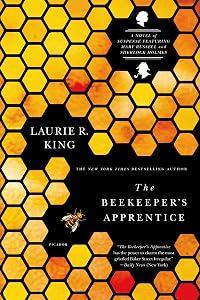
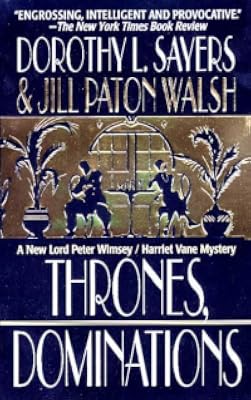
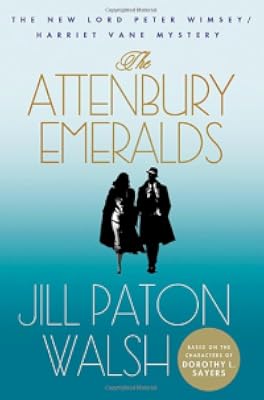
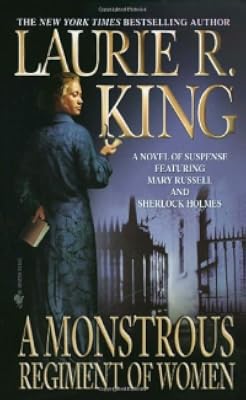
Let’s get the most important point out of the way: Hannah Sophie is no Dame Agatha Christie. With Laurie R. King, her Mary Russell-Sherlock Holmes series, which begins with The Beekeeper's Apprentice, you forget you are not reading Sir Arthur Conan Doyle, she so perfectly captures Conan Doyle’s voice. The same goes for Jill Paton Walsh when she is at her best and is completing an effort begun by Dorothy L. Sayers, as in Thrones, Dominations and A Presumption of Death (although not in her solo effort, The Attenbury Emeralds. Ugh!)
Set in 1929, in The Monogram Murders, Hercule Poirot sets out to help the hopeless Scotland Yard detective Edward Catchpool (a clueless Captain Hastings stand-in) to investigate the cyanide murder of three show more guests in the posh Bloxham Hotel in London. All three were found laid out as if at a funeral parlor — except that each, a man and two women, had a monogrammed cufflink in the mouth. The two women — Harriet Sippel and Ida Gransbury — live in the village of Great Holling; the third victim, Richard Negus, once lived in that same village and was the fiancé of Miss Gransbury until he broke off the engagement in 1913.
Earlier, Poirot had encountered a young housemaid named Jennie at a coffeehouse. Before fleeing, she predicts her own death and judges that her demise would be justice rather than murder. Despite Catchpool’s skepticism, Poirot insists that Jennie has a connection to the Bloxham Hotel murders. Want to bet who’s right on that one?
Why had they been killed? Poirot senses that the clues to the motive lie in Great Holling, and he dispatches Catchpool to snoop around there while Poirot tries to track down the elusive Jennie. Both discover quite a lot, but I won’t spoil the novel by saying any more.
Fair is fair, and The Monogram Murders should not be judged on whether it is pitch-perfect Agatha Christie — it clearly isn’t — but whether it is an enjoyable mystery. And there Sophie succeeds. No, the first Hercule Poirot novel since Curtain: Poirot’s Last Case was published in 1975 never comes close to Murder on the Orient Express, The A.B.C. Murders, The Labours of Hercules or The Murder of Roger Ackroyd. But, while a bit too clever by half — too convoluted to ring true, too broad in its portrayal of Hercule Poirot as a romantic, too implausible in its denouement — The Monogram Murders proved a suitable companion on a day when I was home sick as could be. And I’ve never been one to let the perfect be the enemy of the good. show less
Set in 1929, in The Monogram Murders, Hercule Poirot sets out to help the hopeless Scotland Yard detective Edward Catchpool (a clueless Captain Hastings stand-in) to investigate the cyanide murder of three show more guests in the posh Bloxham Hotel in London. All three were found laid out as if at a funeral parlor — except that each, a man and two women, had a monogrammed cufflink in the mouth. The two women — Harriet Sippel and Ida Gransbury — live in the village of Great Holling; the third victim, Richard Negus, once lived in that same village and was the fiancé of Miss Gransbury until he broke off the engagement in 1913.
Earlier, Poirot had encountered a young housemaid named Jennie at a coffeehouse. Before fleeing, she predicts her own death and judges that her demise would be justice rather than murder. Despite Catchpool’s skepticism, Poirot insists that Jennie has a connection to the Bloxham Hotel murders. Want to bet who’s right on that one?
Why had they been killed? Poirot senses that the clues to the motive lie in Great Holling, and he dispatches Catchpool to snoop around there while Poirot tries to track down the elusive Jennie. Both discover quite a lot, but I won’t spoil the novel by saying any more.
Fair is fair, and The Monogram Murders should not be judged on whether it is pitch-perfect Agatha Christie — it clearly isn’t — but whether it is an enjoyable mystery. And there Sophie succeeds. No, the first Hercule Poirot novel since Curtain: Poirot’s Last Case was published in 1975 never comes close to Murder on the Orient Express, The A.B.C. Murders, The Labours of Hercules or The Murder of Roger Ackroyd. But, while a bit too clever by half — too convoluted to ring true, too broad in its portrayal of Hercule Poirot as a romantic, too implausible in its denouement — The Monogram Murders proved a suitable companion on a day when I was home sick as could be. And I’ve never been one to let the perfect be the enemy of the good. show less
Hercule Poirot is having a quiet dinner in his favorite London coffeehouse when he encounters a young woman who is terrified of being murdered. Later that day Poirot hears of a murder at an upscale London hotel and accompanies the Scotland Yard detective staying in his boardinghouse to the scene of the crime. There he learns of a mysterious clue...a monogrammed cuff link left in the mouth of each of the three victims. He can't help but think that the young woman he met earlier that night may be the murder's fourth victim...
I personally really enjoyed this book, though I know it's taken some hard hits from other reviewers and even some critics. I didn't go into this expecting the writing to be anything like Christie's writing because - show more gasp - Sophie Hannah isn't Agatha Christie! Of course the writing won't be a replica of the original Poirot works. Hannah does, however, capture Poirot's personality - his disdain over a lack of imagination in his detective partner, his excitement when he's put two clues together, and his pompous explanations at the close of the book. Another thing she successfully manages to do is to capture the importance of motive and psychology to the plot. She is able to show us both the morality and the darkness of the characters in her story in a way that was vitally important in all of Christie's work.
In the end, the Monogram Murders should not be looked at as a "continuation" of the Poirot library, but rather a new interpretation of an old familiar character. The puzzling twists and turns of the plot, the voices of the characters, and the seeming impossibility of the mystery are all echoes of the Christie I love, with the fabulous writing of Hannah to pull it all together. show less
I personally really enjoyed this book, though I know it's taken some hard hits from other reviewers and even some critics. I didn't go into this expecting the writing to be anything like Christie's writing because - show more gasp - Sophie Hannah isn't Agatha Christie! Of course the writing won't be a replica of the original Poirot works. Hannah does, however, capture Poirot's personality - his disdain over a lack of imagination in his detective partner, his excitement when he's put two clues together, and his pompous explanations at the close of the book. Another thing she successfully manages to do is to capture the importance of motive and psychology to the plot. She is able to show us both the morality and the darkness of the characters in her story in a way that was vitally important in all of Christie's work.
In the end, the Monogram Murders should not be looked at as a "continuation" of the Poirot library, but rather a new interpretation of an old familiar character. The puzzling twists and turns of the plot, the voices of the characters, and the seeming impossibility of the mystery are all echoes of the Christie I love, with the fabulous writing of Hannah to pull it all together. show less
0.5*
I have tried to finish this book so many times this week, but The Monogram Murders is not only utterly crap it's also bloody endless. It drags, and drags, and drags.
The last 30% of the book just felt like the story of who did what changed on every page and I completely lost track of what happened.
You know, that fabulous spoof of the mystery genre that is Murder by Death (the film)?
Every character comes up with a different version of the solution, and they are all wrong.
In this book, the same thing happened, but the different versions were not put forward by different characters but by the book's version of Poirot (a poor shadow of Christie's original creation), which made the last 30% of the book absolutely unbearable. And unlike show more Murder by Death, this book was not a spoof of the genre.
No. The only word that comes to my mind to describe this book was: painful.
None of the plot made sense. Poirot is not Poirot. The writing lacks the complexity and charm and atmosphere that Christie's books have.
The portrayal of women in this book didn't work for me - it was in parts downright offensive - and it certainly did not do a book justice that is supposed to be a continuation of Christie's oeuvre.
The romance subplots were ridiculous.
And last, but definitely worst of all, was that the book was narrated from the POV of a character that has no justification of even being in the story. He's the most incompetent policeman or even amateur detective that I can imagine.
Needless to say, I have no interest in reading any other books in the series. show less
I have tried to finish this book so many times this week, but The Monogram Murders is not only utterly crap it's also bloody endless. It drags, and drags, and drags.
The last 30% of the book just felt like the story of who did what changed on every page and I completely lost track of what happened.
You know, that fabulous spoof of the mystery genre that is Murder by Death (the film)?
Every character comes up with a different version of the solution, and they are all wrong.
In this book, the same thing happened, but the different versions were not put forward by different characters but by the book's version of Poirot (a poor shadow of Christie's original creation), which made the last 30% of the book absolutely unbearable. And unlike show more Murder by Death, this book was not a spoof of the genre.
No. The only word that comes to my mind to describe this book was: painful.
None of the plot made sense. Poirot is not Poirot. The writing lacks the complexity and charm and atmosphere that Christie's books have.
The portrayal of women in this book didn't work for me - it was in parts downright offensive - and it certainly did not do a book justice that is supposed to be a continuation of Christie's oeuvre.
The romance subplots were ridiculous.
And last, but definitely worst of all, was that the book was narrated from the POV of a character that has no justification of even being in the story. He's the most incompetent policeman or even amateur detective that I can imagine.
Needless to say, I have no interest in reading any other books in the series. show less
On its own, this is a weak novel. The mystery wasn't believable, the repeated depiction of "true love" as unhealthy obsession got old very quickly, and the ending, while tying up the mystery's loose ends, failed to really satisfy. None of the characters grew in the course of the story. The Scotland Yard detective should never have lasted 6 months as a beat cop, let alone been promoted as highly as he was. He was foolish, ineffectual, and unable to handle the work set before him. The main character seemed to be in contact with him purely to give him a new contact in Scotland Yard.
As a Poirot mystery, I'm alternately annoyed with and embarrassed for the author. We almost never see Poirot's bon vivant outlook - always he is angry or show more stern. The author captured his speech patterns, but very little else about the detective. Other than being told the date, the text is remarkably free of temporal reference. There's little to no mention of anything that establishes when the story takes place. That made it hard to know what to expect culturally and technologically - things very relevant in a mystery story.
I fear the Poirot/Catchpool relationship is supposed to be the basis of a whole series of novels. Please, please, whoever gets to decide this, don't do it! Inspectory Japp, at his most obnoxious, is more agreeable than Catchpool. Superintendent Spence would never have allowed such a pathetic creature of Catchpool to sully the ranks of Scotland Yard. Having to watch Catchpool flounder about beside a Poirot grown constantly cranky will have a terrible effect on the little grey cells of Agatha Christie fans. show less
As a Poirot mystery, I'm alternately annoyed with and embarrassed for the author. We almost never see Poirot's bon vivant outlook - always he is angry or show more stern. The author captured his speech patterns, but very little else about the detective. Other than being told the date, the text is remarkably free of temporal reference. There's little to no mention of anything that establishes when the story takes place. That made it hard to know what to expect culturally and technologically - things very relevant in a mystery story.
I fear the Poirot/Catchpool relationship is supposed to be the basis of a whole series of novels. Please, please, whoever gets to decide this, don't do it! Inspectory Japp, at his most obnoxious, is more agreeable than Catchpool. Superintendent Spence would never have allowed such a pathetic creature of Catchpool to sully the ranks of Scotland Yard. Having to watch Catchpool flounder about beside a Poirot grown constantly cranky will have a terrible effect on the little grey cells of Agatha Christie fans. show less
I'd actually give this book 3.5 stars, so for me it falls between "liked it" and "really liked it". I was excited to see a revisitation of Hercule Poirot--excited and nervous. I've always been a Christie fan, having read all of her works years ago, so I was interested to see if Poirot could be convincingly resurrected.
Upon finishing the book, my answer to this question was "close, but not quite." Poirot, in my opinion, was well-portrayed, in the way that a very good tribute band can be very close to the original performers, just missing that ineffable "something" that distinguishes the originals. So Hannah's Poirot seemed to me.
Then I read some reviews that seemed unduly harsh against her portrayal of Poirot, so I questioned myself--was show more I simply remembering wrong?
I had listened to the audiobook version of The Monogram Murders, so, as a test, I checked out two vintage Christie-Poirot audio titles from my library: Five Little Pigs and The Mysterious Affair at Styles. Having listened to them, I stand by my original impression; Hannah's Poirot is close to Christie's, if not quite there. Which, I think, is probably good enough when writing a character who "belongs" to someone else.
I found that the mystery in The Monogram Murders didn't stand up as well. Where Christie's Hastings misses clues and fails to make extrapolations because he is a mere mortal compared to the power of Poirot's "little grey cells," Hannah's Catchpool appears simply dim-witted and rather weak and annoying. The tale was a little too long and twisted, and I couldn't quite buy into all aspects of the plot. That said, Christie's Mysterious Affair at Styles might also be thought to be a bit long and rambling in places, so I don't think Hannah should be criticized too strongly on this point. Hannah, I think, has made a good attempt to capture the elegance and intricacy of a Christie plot.
At any rate, I'd read another Poirot penned by Hannah, for the same reason people go to listen to tribute bands--to rekindle fond memories and to come close to the spark that makes you love things in the first place. No, it's not an exact replica, but in some cases, it's close enough. show less
Upon finishing the book, my answer to this question was "close, but not quite." Poirot, in my opinion, was well-portrayed, in the way that a very good tribute band can be very close to the original performers, just missing that ineffable "something" that distinguishes the originals. So Hannah's Poirot seemed to me.
Then I read some reviews that seemed unduly harsh against her portrayal of Poirot, so I questioned myself--was show more I simply remembering wrong?
I had listened to the audiobook version of The Monogram Murders, so, as a test, I checked out two vintage Christie-Poirot audio titles from my library: Five Little Pigs and The Mysterious Affair at Styles. Having listened to them, I stand by my original impression; Hannah's Poirot is close to Christie's, if not quite there. Which, I think, is probably good enough when writing a character who "belongs" to someone else.
I found that the mystery in The Monogram Murders didn't stand up as well. Where Christie's Hastings misses clues and fails to make extrapolations because he is a mere mortal compared to the power of Poirot's "little grey cells," Hannah's Catchpool appears simply dim-witted and rather weak and annoying. The tale was a little too long and twisted, and I couldn't quite buy into all aspects of the plot. That said, Christie's Mysterious Affair at Styles might also be thought to be a bit long and rambling in places, so I don't think Hannah should be criticized too strongly on this point. Hannah, I think, has made a good attempt to capture the elegance and intricacy of a Christie plot.
At any rate, I'd read another Poirot penned by Hannah, for the same reason people go to listen to tribute bands--to rekindle fond memories and to come close to the spark that makes you love things in the first place. No, it's not an exact replica, but in some cases, it's close enough. show less
Members
- Recently Added By
Published Reviews
ThingScore 50
The first posthumous Hercule Poirot mystery impresses with its intricacy, but lacks the sublime simplicity at the heart of Agatha Christie's original novels
added by Luisali
Lists

Agatha Christie Poirot
43 works; 2 members

Chronological 2016
33 works; 1 member

Books Read in 2016
4,666 works; 199 members

Books Read in 2023
5,638 works; 147 members
Author Information

77+ Works 12,782 Members
Sophie Hannah was born in 1971 in Manchester, England. She is a bestselling, award-winning poet. Hannah went to the University of Manchester and published her first book of poems, The Hero and the Girl Next Door, at the age of 24. In 2004 she won first prize in the Daphne Du Maurier Festival Short Story Competition for her psychological suspense show more story, The Octopus Nest. Hannah was recently chosen by Agatha Christie's estate to resurrect her beloved detective, Hercule Poirot. Her subsequent novel, The Monogram Murders, was published in 2014. (Bowker Author Biography) show less
All Editions
Some Editions
Awards and Honors
Awards
Distinctions
Series

Work Relationships
Common Knowledge
- Canonical title
- The Monogram Murders
- Original title
- The Monogram Murders
- Alternate titles*
- Nimikirjainmurhat : uusi Hercule Poirot -mysteeri
- Original publication date
- 2014-09-14
- People/Characters
- Hercule Poirot
- Important places*
- London, England, Grossbritannien
- Dedication*
- Für Agatha Christie
- First words
- "Ich mag sie nicht, mehr sag ich ja gar nich", flüsterte die Kellnerin mit dem fliegenden Haar.
'All's I'm saying is, I don't like her,' the waitress with the flyaway hair whispered. - Last words
- (Click to show. Warning: May contain spoilers.)Und er gab ihn ihr zu lesen.
(Click to show. Warning: May contain spoilers.)And he handed it to me to read. - Blurbers
- Smith, Alexander McCall; French, Tana; Flynn, Gillian; Todd, Charles; Prichard, Mathew
- Original language
- English
*Some information comes from Common Knowledge in other languages. Click "Edit" for more information.
Classifications
Statistics
- Members
- 1,590
- Popularity
- 14,347
- Reviews
- 74
- Rating
- (3.11)
- Languages
- 20 — Bulgarian, Chinese, Danish, Dutch, English, Estonian, Finnish, French, German, Hindi, Hungarian, Indonesian, Italian, Latvian, Polish, Portuguese, Slovak, Spanish, Swedish, Turkish
- Media
- Paper, Audiobook, Ebook
- ISBNs
- 74
- ASINs
- 12