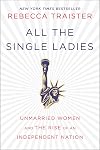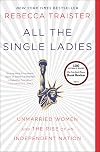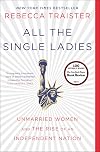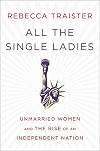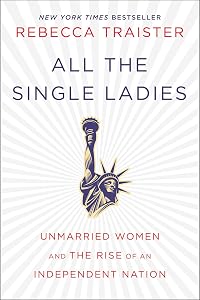
All the Single Ladies: Unmarried Women and the Rise of an Independent Nation
by Rebecca Traister
On This Page
Description
A nuanced investigation into the sexual, economic, and emotional lives of women in America, this "singularly triumphant work" (Los Angeles Times) by Rebecca Traister "the most brilliant voice on feminism in the country" (Anne Lamott) is "sure to be vigorously discussed" (Booklist, starred review).In 2009, the award-winning journalist Rebecca Traister started All the Single Ladies—a book she thought would be a work of contemporary journalism—about the twenty-first century phenomenon of show more the American single woman. It was the year the proportion of American women who were married dropped below fifty percent; and the median age of first marriages, which had remained between twenty and twenty-two years old for nearly a century (1890–1980), had risen dramatically to twenty-seven.
But over the course of her vast research and more than a hundred interviews with academics and social scientists and prominent single women, Traister discovered a startling truth: the phenomenon of the single woman in America is not a new one. And historically, when women were given options beyond early heterosexual marriage, the results were massive social change—temperance, abolition, secondary education, and more.
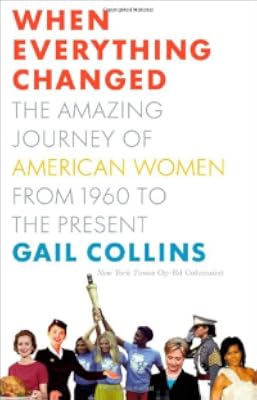
Today, only twenty percent of Americans are wed by age twenty-nine, compared to nearly sixty percent in 1960. The Population Reference Bureau calls it a "dramatic reversal." All the Single Ladies is a remarkable portrait of contemporary American life and how we got here, through the lens of the single American woman. Covering class, race, sexual orientation, and filled with vivid anecdotes from fascinating contemporary and historical figures, All the Single Ladies is destined to be a classic work of social history and journalism. Exhaustively researched, brilliantly balanced, and told with Traister's signature wit and insight, this book should be shelved alongside Gail Collins's When Everything Changed.
. show less
Tags
Recommendations

Member Reviews
This book has given me a lot to think about. In so many ways, this was a great source of validation to me as a "single" woman (I use quotations marks because that's not typically how I identify myself, i.e. I've never used a romantic relationship status to identify myself, so it feels weird to use the word single even in this context. I digress.)
The chapters on female friendships resonated with me the most. I have always been a person that has relied on a very tight circle of friends that I highly value. Lately, however, I've been appreciating and valuing friendships I have made via the internet (the bookish friends, primarily). It has always surprised me how the change in the dynamics of my friendships with different people profoundly show more affect me, and it took me a while to understand that I place a very high value on those relationships, akin to the value a lot of people place on romantic relationships.
Traister did an excellent job with the research and the layout of the book with exceptionally researched material to give readers an insight into the variables that have had an effect on women (married, unmarried, partnered, etc.) and the various aspects of their lives. She did a good job covering women of racial minorities; the only thing I would have liked to see was a discussion of how all the variables she'd discussed also affected trans-women, femme identifying individuals, etc. This doesn't take away from the fact that this is a book you must definitely read, and ponder. It is going to sit with me for a while. show less
The chapters on female friendships resonated with me the most. I have always been a person that has relied on a very tight circle of friends that I highly value. Lately, however, I've been appreciating and valuing friendships I have made via the internet (the bookish friends, primarily). It has always surprised me how the change in the dynamics of my friendships with different people profoundly show more affect me, and it took me a while to understand that I place a very high value on those relationships, akin to the value a lot of people place on romantic relationships.
Traister did an excellent job with the research and the layout of the book with exceptionally researched material to give readers an insight into the variables that have had an effect on women (married, unmarried, partnered, etc.) and the various aspects of their lives. She did a good job covering women of racial minorities; the only thing I would have liked to see was a discussion of how all the variables she'd discussed also affected trans-women, femme identifying individuals, etc. This doesn't take away from the fact that this is a book you must definitely read, and ponder. It is going to sit with me for a while. show less
Women, single or formerly single: you need this book in your life. It reinforced all the comforting, realistic things my friends said to me in my worst "my life is not following the Official Path" moments -- with historical context and data! Traister is a real journalist who understands that you can't just tell your story and those of your (also white and well-educated) friends and pretend that it's a book about women in general. She acknowledges that there's a slant towards people who look like her, but is scrupulous about including a diversity of stories. Multiple people are getting this one from me for Winter Gift Season.
I gave this book an extra star for the importance of some of the messages and points that she makes. I especially liked the part about the history of women and economic policies that disenfranchised people of color. However, most of the women she interviewed for the book seemed to be financially well off and were very successful in jobs that they loved. She used them as anecdotes describing the options available nowadays to women. Well, that's great, but that isn't the average person. The resources that they have available to them (they can outsource housework, cooking, laundry, etc) might seem fantastical to some readers.
Firstly I would like to say - EVERY WOMAN SHOULD READ THIS BOOK.
This book was incredibly well researched as well as being nicely written. Each subject often starts with a story about a woman that the author has either met or researched and then weaves supporting studies throughout.
In my opinion Traister does an excellent job of bringing her own tone to the writing and it is especially apparent when she is refuting any long held myths or misinformation that society has been laboring under.
This book gave me so much to think about and it definitely offers so many interesting alternatives to the "marriage, babies, housewife" equation that women, and men to a certain extent, are force fed as they grow. I found it particularly great to hear show more that while this may have been the "main" narrative for most of history - women have also been wandering away from this throughout most of history as well, this is just the first time that we've done it in such great numbers that society has finally had to make room in the main narrative for it (wooo!)
It's great to read a book that offers so many different stories that I'm sure anyone reading this book could find one that resonates with them and it's definitely given me another future to imagine, one that I feel extremely comfortable with. show less
This book was incredibly well researched as well as being nicely written. Each subject often starts with a story about a woman that the author has either met or researched and then weaves supporting studies throughout.
In my opinion Traister does an excellent job of bringing her own tone to the writing and it is especially apparent when she is refuting any long held myths or misinformation that society has been laboring under.
This book gave me so much to think about and it definitely offers so many interesting alternatives to the "marriage, babies, housewife" equation that women, and men to a certain extent, are force fed as they grow. I found it particularly great to hear show more that while this may have been the "main" narrative for most of history - women have also been wandering away from this throughout most of history as well, this is just the first time that we've done it in such great numbers that society has finally had to make room in the main narrative for it (wooo!)
It's great to read a book that offers so many different stories that I'm sure anyone reading this book could find one that resonates with them and it's definitely given me another future to imagine, one that I feel extremely comfortable with. show less
All the Single Ladies A compelling book about the herstory and current state of being a single woman in the US. Some new information for me, but also referenced some books I've read before!
It's exciting for me that she references books I've read. It means that I might just be catching up on the state feminism and a reasonable amount of it's herstory and therefore taking that information out of "cold storage" and into active use.
I have not been "single" but because of both my and my husband's jobs, I've spent time alone and totally understand some of the reasons listed for not wanting to get involved with a partner, let alone married. I have always missed my husband when I or he was on travel for work, and my son since his birth as well, show more but I understand how great it can be to not have to worry about what they want to do today or how long it will take them to get ready or how long we can stay somewhere. One or the other of us has been gone for months and we've used the time to do pretty much what these single women do but without even having to worry about dating. We've also had our share of bad times enough to know that it takes a lot to have a good marriage and both have to be in it all the way. In other words, it's not something to enter into lightly and I appreciate that these women are taking their time to be sure about tying their lives to someone else's.
Because of this, I cannot properly express my appreciation of Traister's inclusion of the facts on marriage, specifically bad marriage. It is far from a guarantee on almost everything that people tell you to get married for. In fact, if someone is telling you that you should marry, you probably shouldn't. In my opinion, it's a sign you aren't ready yet. I love her sentiment that marriage is increasingly being reserved as special. It is special. It is something that you should want more than anything when you do it, much like having children. But it's also not something that everyone should do and not something that everyone needs to want (also like kids). I don't understand the craze over the declining birth rates but I have noticed that we've stopped talking about overpopulation, which was a major problem that needed solving when I was a kid. Now we're back to encouraging women to get married and pop out babies.
Well, affluent white women. Yeah, it was also great that Traister includes the differences in the messages to women of color and poor women. Marriage is not the answer to financial stability. It can help and for some it is an answer, but financial stability is not a good reason to hitch your life and well-being to someone else. They may not deliver. You may grow to hate them. They may grow to hate you. They might leave or die. There are no guarantees in life and Traister reminds the reader of that.
Marriage is great, when it's great. Some of us are in it good enough to even work through what we consider hard times. Others of us have to deal with various forms of abuse. It is not an answer to how to make life great because it can be awful. It can be the worst thing for you. So waiting to marry until you really want to, I have always thought was a good idea.
More than all this, painting the picture of a single woman as one who is happy with her life is an incredible and beautiful thing. Yes, being in love is great, but so is being you. We shouldn't be painted as needing a partner to be whole or fulfilled or happy. We should be able to be happy with ourselves. I have known plenty of women who are happy on their own and with what their lives are giving them and don't feel a family would increase this feeling. Mine does for me, but I know these same two people could make others very not happy. Between the book and personal experience, I am compelled to believe that surrounding ourselves with people who we can be ourselves and happy around is the best way to live, it just doesn't always include legal styles of partnering like marriage.
I love the idea of celebrations of singledom. I don't have many single friends (it just happens when you're married or single that we migrate to separate circles) but I would happily buy one a present for some other milestone. I also find that the way we lavish expense on weddings to be extreme and unnecessary and demanding friends to partake in expensive gifts is not cool. I've had a big wedding and a small one and I can tell you that they require so much compromise and cause so much stress that the lavishness wasn't worth it for me. The small wedding was better, more hectic in the preparations but relaxed during the ceremony and party and I could actually enjoy myself instead of worrying about all the tables I needed to stop by and other disasters, including that I've just put myself and my family in extra debt for just a day. Though, I guess it can seem okay when we expect to reciprocate eventually, but when most women get married around the same age, it can be drain on everyone around us. And then, yeah, baby showers are completely necessary still and those don't preclude single women, though they can be drain on the wallet too. Personally, I'd rather save it for the baby shower because babies require a lot of set up costs.
Still, we should be able to celebrate singledom. We should be able to be happy for each other when someone is doing something we wouldn't necessarily do. I don't know what those celebrations should be, but I'm all for it. Maybe a 'moving out on your own' party, or something. I don't know. Single people, let us know!
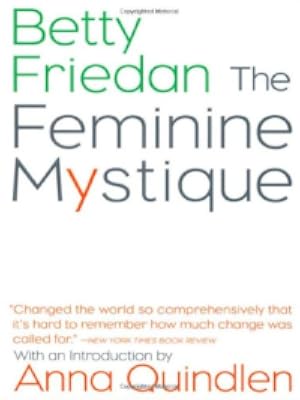
I really enjoyed this book. It did get a low at times, explaining the realities of both singledom and marriage in many of their forms both good and bad, but overall, it was an enjoyable read. It gave me hope for the future and the direction that women are going in this country. It was inclusive of many ways of being single and/or married and the evolution of some problems for both. It's an important book to read and I'd pair it with The Feminine Mystique if you haven't read it. Not only is it mentioned, but they work well together to further illuminate the evolution of women in this country in a way that neither does well on it's own. Obviously, The Feminine Mystique is technically about 55 years behind the times, but you'll cringe to see how similar the times can really be while appreciating those changes that have been made.
Progress is slow but real. It seems like a crawl and like we take two steps back for every step forward, but reading some of the older texts definitely helps me realize the changes, though subtle, that have taken place in our impressions of our own society. show less
It's exciting for me that she references books I've read. It means that I might just be catching up on the state feminism and a reasonable amount of it's herstory and therefore taking that information out of "cold storage" and into active use.
I have not been "single" but because of both my and my husband's jobs, I've spent time alone and totally understand some of the reasons listed for not wanting to get involved with a partner, let alone married. I have always missed my husband when I or he was on travel for work, and my son since his birth as well, show more but I understand how great it can be to not have to worry about what they want to do today or how long it will take them to get ready or how long we can stay somewhere. One or the other of us has been gone for months and we've used the time to do pretty much what these single women do but without even having to worry about dating. We've also had our share of bad times enough to know that it takes a lot to have a good marriage and both have to be in it all the way. In other words, it's not something to enter into lightly and I appreciate that these women are taking their time to be sure about tying their lives to someone else's.
Because of this, I cannot properly express my appreciation of Traister's inclusion of the facts on marriage, specifically bad marriage. It is far from a guarantee on almost everything that people tell you to get married for. In fact, if someone is telling you that you should marry, you probably shouldn't. In my opinion, it's a sign you aren't ready yet. I love her sentiment that marriage is increasingly being reserved as special. It is special. It is something that you should want more than anything when you do it, much like having children. But it's also not something that everyone should do and not something that everyone needs to want (also like kids). I don't understand the craze over the declining birth rates but I have noticed that we've stopped talking about overpopulation, which was a major problem that needed solving when I was a kid. Now we're back to encouraging women to get married and pop out babies.
Well, affluent white women. Yeah, it was also great that Traister includes the differences in the messages to women of color and poor women. Marriage is not the answer to financial stability. It can help and for some it is an answer, but financial stability is not a good reason to hitch your life and well-being to someone else. They may not deliver. You may grow to hate them. They may grow to hate you. They might leave or die. There are no guarantees in life and Traister reminds the reader of that.
Marriage is great, when it's great. Some of us are in it good enough to even work through what we consider hard times. Others of us have to deal with various forms of abuse. It is not an answer to how to make life great because it can be awful. It can be the worst thing for you. So waiting to marry until you really want to, I have always thought was a good idea.
More than all this, painting the picture of a single woman as one who is happy with her life is an incredible and beautiful thing. Yes, being in love is great, but so is being you. We shouldn't be painted as needing a partner to be whole or fulfilled or happy. We should be able to be happy with ourselves. I have known plenty of women who are happy on their own and with what their lives are giving them and don't feel a family would increase this feeling. Mine does for me, but I know these same two people could make others very not happy. Between the book and personal experience, I am compelled to believe that surrounding ourselves with people who we can be ourselves and happy around is the best way to live, it just doesn't always include legal styles of partnering like marriage.
I love the idea of celebrations of singledom. I don't have many single friends (it just happens when you're married or single that we migrate to separate circles) but I would happily buy one a present for some other milestone. I also find that the way we lavish expense on weddings to be extreme and unnecessary and demanding friends to partake in expensive gifts is not cool. I've had a big wedding and a small one and I can tell you that they require so much compromise and cause so much stress that the lavishness wasn't worth it for me. The small wedding was better, more hectic in the preparations but relaxed during the ceremony and party and I could actually enjoy myself instead of worrying about all the tables I needed to stop by and other disasters, including that I've just put myself and my family in extra debt for just a day. Though, I guess it can seem okay when we expect to reciprocate eventually, but when most women get married around the same age, it can be drain on everyone around us. And then, yeah, baby showers are completely necessary still and those don't preclude single women, though they can be drain on the wallet too. Personally, I'd rather save it for the baby shower because babies require a lot of set up costs.
Still, we should be able to celebrate singledom. We should be able to be happy for each other when someone is doing something we wouldn't necessarily do. I don't know what those celebrations should be, but I'm all for it. Maybe a 'moving out on your own' party, or something. I don't know. Single people, let us know!
I really enjoyed this book. It did get a low at times, explaining the realities of both singledom and marriage in many of their forms both good and bad, but overall, it was an enjoyable read. It gave me hope for the future and the direction that women are going in this country. It was inclusive of many ways of being single and/or married and the evolution of some problems for both. It's an important book to read and I'd pair it with The Feminine Mystique if you haven't read it. Not only is it mentioned, but they work well together to further illuminate the evolution of women in this country in a way that neither does well on it's own. Obviously, The Feminine Mystique is technically about 55 years behind the times, but you'll cringe to see how similar the times can really be while appreciating those changes that have been made.
Progress is slow but real. It seems like a crawl and like we take two steps back for every step forward, but reading some of the older texts definitely helps me realize the changes, though subtle, that have taken place in our impressions of our own society. show less
This is a good book, but it is dense. I started it in early August and just finished it late last night because I didn’t want to carry around such a hefty hardback book, and also because I kind of just wanted to read puffy junk like “Nerve.” But I’m really glad I made it all the way through, because I think it’s an interesting and important work.
Ms. Traister breaks her book down into ten chapters that explore different facets of being an unmarried woman in the U.S., including politics and power, independence, activism, and the reality that it can be very challenging. She doesn’t spend all of her time focusing on well-off white women (as I sort of feared); instead she looks at the different ways being unmarried and a woman show more intersects with class and race. And these aren’t just young unmarried women – some are older women, some are young mothers, some are older mothers, and some eventually do decide to get married.
The parts that definitely resonated most with me were the sections that covered being in one’s 20s and 30s and single in a large urban area. I spent most of my 20s single, and I lived in NYC. It was mostly fantastic, although I wasn’t actively eschewing dating or staking out a claim as a singleton. I’d go through phases of dating and not dating, enjoying the solitude of being able to wander through Central Park all day on a Saturday and not have to adjust to anyone else’s schedule. And I appreciate that my family never put any pressure on me to meet a man and settle down (it probably helped that they knew I wasn’t having kids). The parts that I didn’t directly relate to – such as discussions of being a single mother, or wanting to go through fertility treatment without a partner – were still very engaging to read.
If you’re interested in some history and some current analysis of how the US treats single women, this is definitely a good choice. Just be prepared for it to take a while to get through. show less
Ms. Traister breaks her book down into ten chapters that explore different facets of being an unmarried woman in the U.S., including politics and power, independence, activism, and the reality that it can be very challenging. She doesn’t spend all of her time focusing on well-off white women (as I sort of feared); instead she looks at the different ways being unmarried and a woman show more intersects with class and race. And these aren’t just young unmarried women – some are older women, some are young mothers, some are older mothers, and some eventually do decide to get married.
The parts that definitely resonated most with me were the sections that covered being in one’s 20s and 30s and single in a large urban area. I spent most of my 20s single, and I lived in NYC. It was mostly fantastic, although I wasn’t actively eschewing dating or staking out a claim as a singleton. I’d go through phases of dating and not dating, enjoying the solitude of being able to wander through Central Park all day on a Saturday and not have to adjust to anyone else’s schedule. And I appreciate that my family never put any pressure on me to meet a man and settle down (it probably helped that they knew I wasn’t having kids). The parts that I didn’t directly relate to – such as discussions of being a single mother, or wanting to go through fertility treatment without a partner – were still very engaging to read.
If you’re interested in some history and some current analysis of how the US treats single women, this is definitely a good choice. Just be prepared for it to take a while to get through. show less
This book did some things right, and some things not right, but overall I would recommend it. The biggest thing the author did right was centering the book around the intersectionalities of gender, race, and class, and clearly exploring how those things combined to determine women's choices around their partnership status, as well as society's views of them and it. The biggest things the author did wrong were (1) assuming the reader came from the same place she did when she started reseaching the book, which is thinking her generation (1990's college grads) invented the normalization of single life (ummm) and (2) asserting that self-identification as gay or lesbian is a 20th century construct (double ummm). Nevertheless, it draws on show more diverse sources--thankfully, most of whom are women--and presents some thought provoking viewpoints, and is in general an easy read. show less
Members
- Recently Added By
Lists

Top Five Books of 2022
736 works; 272 members

Top Five Books of 2016
795 works; 228 members

Books Read in 2016
4,666 works; 197 members

Simon & Schuster
136 works; 4 members

Women's History Month: Suggested Reads
63 works; 6 members

Angry Women Reading List
17 works; 2 members

Books Read in 2023
5,638 works; 147 members
Author Information

3+ Works 1,991 Members
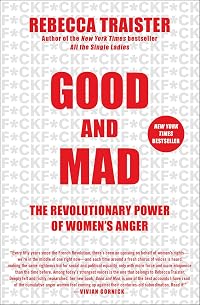
Rebecca Traister is a writer based in New York. Her work has been published in New York magazine, Elle, The New Republic, Salon, The Nation, The New York Observer, The New York Times, The Washington Post, Vogue, Glamour and Marie Claire. She is the author of All the Single Ladies, Big Girls Don't Cry, and Good and Mad: The Revolutionary Power of show more Women's Anger. (Bowker Author Biography) show less
Awards and Honors
Awards
Distinctions
Notable Lists
Common Knowledge
- Canonical title
- All the Single Ladies: Unmarried Women and the Rise of an Independent Nation
- Original publication date
- 2016-03-01
- Epigraph
- Nelly Bly: "What do you think the new woman will be?"
Susan B. Anthony: "She'll be free." -1896 - First words
- I always hated it when my heroines got married. -Introduction
The contemporary wave of single women was building in the very same years that I was heading off to college. -Chapter One - Canonical DDC/MDS
- 306.81530973
- Canonical LCC
- HQ880.4.U6
Classifications
- Genres
- Sexuality and Gender Studies, Sociology, General Nonfiction, History, Nonfiction
- DDC/MDS
- 306.81530973 — Society, government, & culture Social sciences, sociology & anthropology Social Behavior - Dating, Marriage, Divorce Marriage, partnerships, unions; family Marriage and marital status Single marital status
- LCC
- HQ880.4 .U6 — Social sciences The family. Marriage, Women and Sexuality The Family. Marriage. Women The family. Marriage. Home Divorce
- BISAC
Statistics
- Members
- 968
- Popularity
- 27,411
- Reviews
- 31
- Rating
- (3.88)
- Languages
- Chinese, English, Italian
- Media
- Paper, Audiobook, Ebook
- ISBNs
- 11
- ASINs
- 4