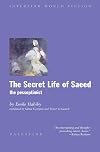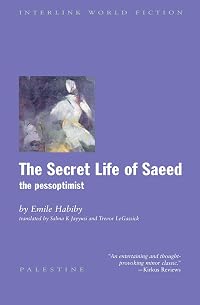
The Secret Life of Saeed, The Pessoptimist
by Imīl Ḥabībī
On This Page
Description
This award-winning novel-in-translation is clever tragicomedy that demonstrates the complex life of a Palestinian living in Israel.Saeed is the comic hero, the luckless fool, whose tale tells of aggression and resistance, terror and heroism, reason and loyalty that typify the hardships and struggles of Arabs in Israel.Tags
Recommendations














Member Reviews
**********SPOILERS**********
The Secret Life of Saeed, The Pessoptimist depicts the life of Saeed, a Palestinian resident of Haifa who becomes a collaborator with the newly created State of Israel, and the impact that this decision has on his son, Walaa.
Saeed embarks on a career as an informer in order to save himself and facilitate his reunification with Yuaad, the woman he loves. Saeed’s obsessive pursuit of Communists within the Israeli Arab community fails to reunite him with Yuaad. Eventually Saeed marries a woman named Baqiyya, after receiving the approval of his superiors, who feel their marriage will facilitate his infiltration of her village and allow him to expose its Communist sympathizers. Baqiyya is keeping a secret show more regarding her family’s hidden treasure, which she shares with Saeed. Together, they conspire to keep this secret hidden from the network of surveillance that they believe can penetrate even dreams. He urges Baqiyya to be cautious above all things, warning her that “people eat people, no never trust those around you.”
The stress of keeping Baqiyya’s secret while remaining an informant permeates Saeed’s entire existence and he goes to extreme lengths to demonstrate his loyalty and subservience to the State of Israel. When their son is born, Baqiyya’s preferred name for him meets with official disapproval, so they christen him “Walaa, which means ‘loyal’” before deciding not to have any more children since “birth control [is] proof of loyalty.” They speak only in whispers and unceasingly caution Walaa: “Careful what you say!”
In 1966, Saeed is shocked to learn that Walaa has betrayed his legacy and has become a resistance fighter. When Saeed and Baqiyya go to rescue Walaa, who has barricaded himself inside a basement stronghold, Walaa confronts them: “I’m not hiding, mother. I’ve taken up arms only because I got sick and tired of your hiding.” Walaa’s political action is also a deeply personal criticism of the passivity of his parents. Unlike his mother, who believes that the Palestinian people must bide their time and submit to the Israeli state in the hope of one day obtaining their freedom, Walaa is no longer willing to “just stick it out.” From his perspective, collaboration and cooperation have brought the Palestinians no closer to obtaining their rights. He believes that his generation will transcend the submissiveness of their parents and liberate the Palestinians at the barrel of a gun.
The generational conflict depicted in The Secret Life of Said, The Pessoptimist centers around the question of how the Palestinian inhabitants of Israel between 1948 and 1967 should interact with the state. Was the proper position one of submissiveness and collaboration, as adopted by Saeed and Baqiyya? Or should one embrace violence in attempt to redress the wrongs committed by the state? Saeed’s collaboration begins when his single attempt at resistance fails, Yuaad is expelled from Haifa, and Saeed is nearly jailed for harboring her in his house. Having learned that he is powerless against the Israeli state, Saeed sees no choice but to collaborate with the state in order to avoid punishment. From Walaa’s perspective in 1966, however, submissiveness has not only failed to liberate the Palestinians living within Israel, it has crippled them individually and collectively. With his stunted speech and inability to trust even his parents, Walaa is a testament to the psychological impact of life as a suspect minority in the State of Israel.
This was a strange, surreal book with a bizarre, unreliable narrator. While the main message of the story gets through, much of the imagery and references were somewhat confusing. I did enjoy it though, and it was interesting to read a novel about a collaborator. Though not a collaborator, Habiby himself is an Israeli Arab, so his perspective is quite interesting. show less
The Secret Life of Saeed, The Pessoptimist depicts the life of Saeed, a Palestinian resident of Haifa who becomes a collaborator with the newly created State of Israel, and the impact that this decision has on his son, Walaa.
Saeed embarks on a career as an informer in order to save himself and facilitate his reunification with Yuaad, the woman he loves. Saeed’s obsessive pursuit of Communists within the Israeli Arab community fails to reunite him with Yuaad. Eventually Saeed marries a woman named Baqiyya, after receiving the approval of his superiors, who feel their marriage will facilitate his infiltration of her village and allow him to expose its Communist sympathizers. Baqiyya is keeping a secret show more regarding her family’s hidden treasure, which she shares with Saeed. Together, they conspire to keep this secret hidden from the network of surveillance that they believe can penetrate even dreams. He urges Baqiyya to be cautious above all things, warning her that “people eat people, no never trust those around you.”
The stress of keeping Baqiyya’s secret while remaining an informant permeates Saeed’s entire existence and he goes to extreme lengths to demonstrate his loyalty and subservience to the State of Israel. When their son is born, Baqiyya’s preferred name for him meets with official disapproval, so they christen him “Walaa, which means ‘loyal’” before deciding not to have any more children since “birth control [is] proof of loyalty.” They speak only in whispers and unceasingly caution Walaa: “Careful what you say!”
In 1966, Saeed is shocked to learn that Walaa has betrayed his legacy and has become a resistance fighter. When Saeed and Baqiyya go to rescue Walaa, who has barricaded himself inside a basement stronghold, Walaa confronts them: “I’m not hiding, mother. I’ve taken up arms only because I got sick and tired of your hiding.” Walaa’s political action is also a deeply personal criticism of the passivity of his parents. Unlike his mother, who believes that the Palestinian people must bide their time and submit to the Israeli state in the hope of one day obtaining their freedom, Walaa is no longer willing to “just stick it out.” From his perspective, collaboration and cooperation have brought the Palestinians no closer to obtaining their rights. He believes that his generation will transcend the submissiveness of their parents and liberate the Palestinians at the barrel of a gun.
The generational conflict depicted in The Secret Life of Said, The Pessoptimist centers around the question of how the Palestinian inhabitants of Israel between 1948 and 1967 should interact with the state. Was the proper position one of submissiveness and collaboration, as adopted by Saeed and Baqiyya? Or should one embrace violence in attempt to redress the wrongs committed by the state? Saeed’s collaboration begins when his single attempt at resistance fails, Yuaad is expelled from Haifa, and Saeed is nearly jailed for harboring her in his house. Having learned that he is powerless against the Israeli state, Saeed sees no choice but to collaborate with the state in order to avoid punishment. From Walaa’s perspective in 1966, however, submissiveness has not only failed to liberate the Palestinians living within Israel, it has crippled them individually and collectively. With his stunted speech and inability to trust even his parents, Walaa is a testament to the psychological impact of life as a suspect minority in the State of Israel.
This was a strange, surreal book with a bizarre, unreliable narrator. While the main message of the story gets through, much of the imagery and references were somewhat confusing. I did enjoy it though, and it was interesting to read a novel about a collaborator. Though not a collaborator, Habiby himself is an Israeli Arab, so his perspective is quite interesting. show less
A strange read.
I read this book for a Book Group who read books published in both English and Arabic.
It was not an easy book to penetrate and I was not the only one who felt they would not have persevered if we hadn't been going to discuss it.
While a number of books have been written about the Israeli / Palestinian problems, this was a bit unusual in that it was written from the point of view of an Arab remaining in Israel after the occupation. It was also written thirty five years ago, without the benefit of the foresight that we now have.
The book is semi autobiographical - the author was also an Arab who remained in Israel but whereas Habiby rose to hold a position within the Israeli parliament, his 'hero' was nothing more than an show more informer for the state, and not a very good one, at that.
Although the book is broken up into short chapters, I found some of them made little sense in the early part of the book. Eventually the pattern started to emerge of a young man who really just wants to live his life with the minimum amount of fuss. He sees the Israelis as people who have invaded and who he must therefore obey - he is their possession. He does not favour revolutionary tactics - it took 200 years to shake off the Crusaders and he seems ready for the long wait.
It's quite a sad tale of a young man who loves and loses more than once. There is an element of comedy but it is more irony than carefree humour. He is an optimist and an pessimist (hence the title), looking on the bright side of the bad and the dark side of the good, although there doesn't seem a lot of hope in his struggle with life.
There is a 14 page introduction to the novel (which I found made more sense when read afterwards) which explains some of the nuances and writing style but still left many questions ananswered - like why was Saeed (voluntarily) abducted by aliens and why was he sitting frozen and motionless on a stake?
I am very glad I read this with the benefit of discussion afterwards. I think the reader would have to have a lot of relevant background, not just historical but also cultural, to untangle it otherwise.
PS: If you are struggling with this book the other review, below mine, presents an excellent précis of the story, I found it a great help :) show less
I read this book for a Book Group who read books published in both English and Arabic.
It was not an easy book to penetrate and I was not the only one who felt they would not have persevered if we hadn't been going to discuss it.
While a number of books have been written about the Israeli / Palestinian problems, this was a bit unusual in that it was written from the point of view of an Arab remaining in Israel after the occupation. It was also written thirty five years ago, without the benefit of the foresight that we now have.
The book is semi autobiographical - the author was also an Arab who remained in Israel but whereas Habiby rose to hold a position within the Israeli parliament, his 'hero' was nothing more than an show more informer for the state, and not a very good one, at that.
Although the book is broken up into short chapters, I found some of them made little sense in the early part of the book. Eventually the pattern started to emerge of a young man who really just wants to live his life with the minimum amount of fuss. He sees the Israelis as people who have invaded and who he must therefore obey - he is their possession. He does not favour revolutionary tactics - it took 200 years to shake off the Crusaders and he seems ready for the long wait.
It's quite a sad tale of a young man who loves and loses more than once. There is an element of comedy but it is more irony than carefree humour. He is an optimist and an pessimist (hence the title), looking on the bright side of the bad and the dark side of the good, although there doesn't seem a lot of hope in his struggle with life.
There is a 14 page introduction to the novel (which I found made more sense when read afterwards) which explains some of the nuances and writing style but still left many questions ananswered - like why was Saeed (voluntarily) abducted by aliens and why was he sitting frozen and motionless on a stake?
I am very glad I read this with the benefit of discussion afterwards. I think the reader would have to have a lot of relevant background, not just historical but also cultural, to untangle it otherwise.
PS: If you are struggling with this book the other review, below mine, presents an excellent précis of the story, I found it a great help :) show less
Like Flashman written by Tom Stoppard, about the Middle East. I quite appreciated the Candide references.
The story was compelling, however there were many geographical and historical references I was unfamiliar with, and I wasn't able to fully enjoy the book.
Ratings
Members
- Recently Added By
Lists

Middle East Fiction
179 works; 16 members

Decolonize Palestine's Reading List
126 works; 3 members

Books Referenced by Khalidi's The Hundred Years' War on Palestine
181 works; 1 member

Arab and Arab Diaspora Literature We Recommend
112 works; 53 members

The 10 Best Arabic Novels Ever
10 works; 1 member
Author Information

14+ Works 375 Members
Some Editions
Awards and Honors
Notable Lists
Series
Belongs to Publisher Series
Common Knowledge
- Canonical title
- The Secret Life of Saeed, The Pessoptimist
- Original title
- Waqa'i'al-gharibah fi ikhtifa' Sa'id Abi al-Nahs al-Mutasha'il
- Original publication date
- 1974
- People/Characters
- Saeed; Yuaad; Baqiyya; Walaa; The Big Man; Jacob
- Important places
- Acre, Israel; Haifa, Israel; Nazareth, Israel
- First words
- In his letter to me, Saeed, the ill-fated Pessoptimist, pleaded.
- Last words
- (Click to show. Warning: May contain spoilers.)The point is, gentlemen, how will you ever find him unless you happen to trip right over him?
Classifications
- Genres
- Fiction and Literature, General Fiction
- DDC/MDS
- 892.736 — Literature & rhetoric Literatures of other languages Afro-Asiatic literatures Arabic (Egypt, Lebanon, Palestine, Saudi Arabia, Sudan) Arabic fiction 1945–2000
- LCC
- PJ7828 .B53 .W313 — Language and Literature Oriental languages and literatures Oriental philology and literature Arabic Arabic literature Individual authors or works
- BISAC
Statistics
- Members
- 318
- Popularity
- 100,289
- Reviews
- 4
- Rating
- (3.47)
- Languages
- 13 — Arabic, Danish, Dutch, English, French, German, Hebrew, Italian, Norwegian (Bokmål), Norwegian, Polish, Spanish, Swedish
- Media
- Paper
- ISBNs
- 21
- ASINs
- 3