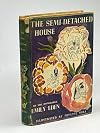
The Semi-Detached House
by Emily Eden
On This Page
Description
Can Couples Be Semi-Detached as a House? Lady Chester lives in a semi-detached house (duplex in American terminology). Her husband, Arthur is sent away on a diplomatic mission so she is also forced to live a 'semi-detached' life along with her neighbors, the Hopkinsons. How will she handle her new life?Tags
Recommendations

























Member Reviews
Emily Eden's second attempt at a novel was made almost thirty years after her first---and this time she published her work. The success, in 1859, of The Semi-Detached House prompted her to revive her long-neglected manuscript of The Semi-Attached Couple, which finally appeared in 1860. Despite their "paired" titles, the two novels have no direct connection, and in fact make for an interesting contrast---not least in that they depict, effectively, the same society more than a generation apart, offering an intriguing, unintentional sketch of the changes that occurred in between. In particular, while The Semi-Attached Couple restricts itself to the higher levels of society, The Semi-Detached House is about the beginning of the breakdown of show more social barriers and friendship across the classes. With her husband away on a diplomatic mission, the young Blanche, Lady Chester, who is expecting a baby, is ordered by her doctor to remove from the bustle and pollution of London. When her relatives hire for her a semi-detached house outside of the city, by the river, Blanche is at first dismayed at the thought of having "common people" for close neighbours. She does not realise that, thanks to a misinterpreted piece of gossip in a newspaper, the "common people" in question believe her to be either an adulterous wife separated from her husband, or a kept mistress, and are even more dismayed by the prospect of a "fallen woman" next door... While it is a less serious work than The Semi-Attached Couple, The Semi-Detached House is a better-written novel: Emily Eden sustains her comedy much more successfully, and though her themes are mostly light, they are consistent. The result is a minor but charming work, depicting the new friendships available in an evolving society, and offering the encouraging thought that nice people will always find each other. As it turns out, the people next door, the Hopkinsons, are almost exactly as the over-imaginative Blanche pictured them---except that they are also kind, generous, and entirely likeable. Her own qualms set at rest, Mrs Hopkinson takes Blanche to her heart, mothering her when she needs it most. Around this warmly-drawn central friendship, several romantic relationships are lightly sketched; while when Lord Chester returns, we are offered a welcome portrait of a young married couple very much in love. There is far more comedy than romance in this novel, however, with Eden again showing her skill at depicting amusingly horrid people: this time, the Baroness Sampson, a determined social-climber who disrupts the narrative's central idyll. (The subplot featuring the Baroness's unhappy niece, Rachel, is one of the novel's serious touches.) The Semi-Detached House also offers one of the era's most unusual characters in Charles Willis, Mrs Hopkinson's son-in-law, who is at once psychologically complex and perversely funny. Not, in fact, having cared much for his late wife, Willis had nevertheless turned himself into a monument of grief, crushing everyone else's spirits at every possible opportunity and deriving enormous gratification from his own mental image of himself as inconsolable---so much so, that when he finally falls genuinely in love, he hardly knows how to let himself be happy...
Then Arthur's fond letter came, and after that matters mended considerably. There was the house to show to Aileen, and the garden to investigate, and all sorts of red and gold barges came careering up the river, with well-dressed people, looking slightly idiotical as they danced furiously in the hot sun... Blanche had several visitors the first week, and Dulham Lane was, as Janet and Rose had hoped, much enlivened thereby.
But Mrs Hopkinson sat with her broad back to the window, pertinaciously declining to look at all the wickedness on wheels that was rolling by her door. She had found that the plan of shutting her shutters would probably end in a fall down her narrow staircase, so she had told her girls not to look out of the window, that poor Willis had reason to believe that the people next door were not at all creditable; and as Janet and Rose were singularly innocent in the ways of the world, and were always desirous to thwart Willis, and as they were particularly anxious to know whether flounces or double skirts were the prevailing fashion, they resented this exclusion from their only point of observation. Charlie missed his airings in the garden, and altogether the advent of Lady Chester had thrown a gloom over the Hopkinson circle.
When Sunday arrived, a fresh grievance occurred. The Hopkinsons had been allowed to make use of the pew belonging to Pleasance, and that was now occupied by Lady Chester and her sister. The slight bustle occasioned by the attempt to find a seat for Mrs Hopkinson, who was of large dimensions, caused Blanche to look up, and with natural good breeding she opened her pew door, and beckoned to that lady to come in. She did so, and what with the heat of the day, and the thought of what Willis would say when he saw her sitting next to a lady of doubtful character, who had made a "fracaw in high life," she could hardly breathe... show less
Then Arthur's fond letter came, and after that matters mended considerably. There was the house to show to Aileen, and the garden to investigate, and all sorts of red and gold barges came careering up the river, with well-dressed people, looking slightly idiotical as they danced furiously in the hot sun... Blanche had several visitors the first week, and Dulham Lane was, as Janet and Rose had hoped, much enlivened thereby.
But Mrs Hopkinson sat with her broad back to the window, pertinaciously declining to look at all the wickedness on wheels that was rolling by her door. She had found that the plan of shutting her shutters would probably end in a fall down her narrow staircase, so she had told her girls not to look out of the window, that poor Willis had reason to believe that the people next door were not at all creditable; and as Janet and Rose were singularly innocent in the ways of the world, and were always desirous to thwart Willis, and as they were particularly anxious to know whether flounces or double skirts were the prevailing fashion, they resented this exclusion from their only point of observation. Charlie missed his airings in the garden, and altogether the advent of Lady Chester had thrown a gloom over the Hopkinson circle.
When Sunday arrived, a fresh grievance occurred. The Hopkinsons had been allowed to make use of the pew belonging to Pleasance, and that was now occupied by Lady Chester and her sister. The slight bustle occasioned by the attempt to find a seat for Mrs Hopkinson, who was of large dimensions, caused Blanche to look up, and with natural good breeding she opened her pew door, and beckoned to that lady to come in. She did so, and what with the heat of the day, and the thought of what Willis would say when he saw her sitting next to a lady of doubtful character, who had made a "fracaw in high life," she could hardly breathe... show less
A pleasant little story, with a happy ending for all of the characters involved. A Lady Chester takes a house in a suburb of London, while her husband is attending to a diplomatic assignment in Berlin. The house is semi-detached, which I picture as a kind of duplex, and the Lady is worried that her neighbors are going to be tiresome. Nothing of the sort, as they all end up getting along ever so well. There is a Baron and Baroness Sampson in the neighborhood, too, who are pretentious and cons, and they are always throwing parties, trying to get in with the best crowds. An amusing part was when the wife of one of the Baron Sampson's con friends sings a song at the baroness' parties. It goes like this:
"Yes sir! I can waltz! I can flirt! show more I'm out of the schoolroom at last! Pa' says I'm a romp, Ma' says I'm a pert, I say, I am fast! I am fast!
We girls love a park! It's the men who are stiff. Why that little Lord John's such a tease, If I ask him to dance, he turns off in a Tiff, Last, sir! That is ease! That is ease!
I handle the ribbons! I smoke my cigar! I polk till Aunt Jane looks aghast. I swim like a fish! Ride like young Lochinvar! In short, I am fast! I am fast! show less
"Yes sir! I can waltz! I can flirt! show more I'm out of the schoolroom at last! Pa' says I'm a romp, Ma' says I'm a pert, I say, I am fast! I am fast!
We girls love a park! It's the men who are stiff. Why that little Lord John's such a tease, If I ask him to dance, he turns off in a Tiff, Last, sir! That is ease! That is ease!
I handle the ribbons! I smoke my cigar! I polk till Aunt Jane looks aghast. I swim like a fish! Ride like young Lochinvar! In short, I am fast! I am fast! show less
A charming romance, with plenty of lovers, satisfyingly nasty neighbors, a new baby, and a heap of weddings.
I definitely want a hard copy version.
http://digital.library.upenn.edu/women/eden/house/house.html
I definitely want a hard copy version.
http://digital.library.upenn.edu/women/eden/house/house.html
Ratings
Members
- Recently Added By
Talk Discussions
Past Discussions
Group read: The Semi-Detached House by Emily Eden in Virago Modern Classics (February 2018)
Author Information

8 Works 752 Members
Some Editions
Work Relationships
Is contained in
Common Knowledge
- Original title
- The Semi-Detached House
- Original publication date
- 1859
- People/Characters
- Blanche, Lady Chester
- Important places
- Dulham, England, UK
- First words
- "The only fault of the house is that it is semi-detached."
- Last words
- (Click to show. Warning: May contain spoilers.)Willis has been accepted, and is in high spirits.
Classifications
Statistics
- Members
- 60
- Popularity
- 513,111
- Reviews
- 3
- Rating
- (3.59)
- Languages
- English, Italian
- Media
- Paper, Audiobook, Ebook
- ISBNs
- 10
- ASINs
- 7