On This Page
Description
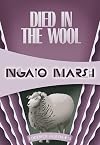
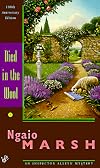
Ngaio Marsh returns to her New Zealand roots to transplant the classic country-house murder mystery to an upland sheep station on South Island and produces one of her most exotic and intriguing novels.Parliament member Florence Rubrick has the wool pulled over her eyes—quite literally. She's been found dead, her body pressed into a bale of wool.
When Inspector Roderick Alleyn pays a visit to her New Zealand country home, he meets two fine, handsome men and two lovely young women, all of show more whom have reason to be grateful to dear Flossie for saving their lives. But as Inspector Alleyn learns, there are secrets aplenty hiding in the floorboards of that sheep station, and one in particular conceals a murderous motive that has the look and smell of treason.
. show less
Tags
Recommendations
























Member Reviews
Re read after lending this to a colleague. After her comments I spent more time noticing the beauty of the descriptive writing. Marsh's love for the New Zealand landscape shines through and you can see the high plateau ringed with mountains and almost smell the clear upland air. The story and characters are engaging with a mix of murder and espionage in the later years of WWII. Delightful.
I really liked this mystery set in New Zealand. Even though I knew the murderer very early on, the book was a pretty compelling read.
A bossy yet generous older woman, an MP in New Zealand, goes missing in the middle of WW 2. Three weeks later her body is found, stuffed in a bale of wool. Was it her personality that motivated the murder? Or was it connected to some form of wartime espionage?
Usually I dislike the addition of possible spying or the like in my mysteries. Here, however, Marsh blends that right into the mystery plot. Almost the entire book consists of conversations, with dome action coming at the very end, and the plot is neatly tied up.
Recommended for those who like vintage mysteries, or those who just want something a show more little different from a good writer. show less
A bossy yet generous older woman, an MP in New Zealand, goes missing in the middle of WW 2. Three weeks later her body is found, stuffed in a bale of wool. Was it her personality that motivated the murder? Or was it connected to some form of wartime espionage?
Usually I dislike the addition of possible spying or the like in my mysteries. Here, however, Marsh blends that right into the mystery plot. Almost the entire book consists of conversations, with dome action coming at the very end, and the plot is neatly tied up.
Recommended for those who like vintage mysteries, or those who just want something a show more little different from a good writer. show less
If you're an enthusiast of the fibre arts, particularly spinning, and also enjoy mysteries, this book is a good way to combine the two interests. Set in New Zealand during the Second World War, the plot is a "cold case" of sorts, or at best lukewarm. New Zealand MP Florence "Flossie" Rubrick, whose husband owns a wool operation called Mount Moon, goes into the wool shed to practise a speech, and is never seen alive again. She is found three weeks later at an auction, packed inside a bale of Mount Moon wool. One year after she is found, Inspector Roderick Alleyn is sent to Mount Moon at the behest of Flossie's protégé of sorts, Fabian Losse, who wants Alleyn to get to the bottom of the murder. Officially, Alleyn is there in a show more counter-espionage capacity, but there is nothing stopping him from asking a few other questions as well.
Overall, this was a very good mystery. The part where Flossie was actually found was very suspenseful, and I was kept guessing as to the identity of the murderer throughout. The beginning was a bit choppy, but once Alleyn came on the scene, the pace became more consistent. There were some good descriptions of the wool processing operation and even a small technical section on Fabian's invention, an aerial magnetic fuse, which is a bonus for any WW2 enthusiasts out there. The dialogue is lively and for the most part feels natural (Marsh, being a playwright, has a knack for dialogue), although there is a slight tendency to long speeches as the various characters tell Alleyn what happened leading up to Flossie's murder. But I did quite enjoy the book and would definitely recommend it. show less
Overall, this was a very good mystery. The part where Flossie was actually found was very suspenseful, and I was kept guessing as to the identity of the murderer throughout. The beginning was a bit choppy, but once Alleyn came on the scene, the pace became more consistent. There were some good descriptions of the wool processing operation and even a small technical section on Fabian's invention, an aerial magnetic fuse, which is a bonus for any WW2 enthusiasts out there. The dialogue is lively and for the most part feels natural (Marsh, being a playwright, has a knack for dialogue), although there is a slight tendency to long speeches as the various characters tell Alleyn what happened leading up to Flossie's murder. But I did quite enjoy the book and would definitely recommend it. show less
Now this one is more like it! It features Mr. Alleyn from the beginning. It's still set in NZ and features both a murder and his war work of dealing with the Nazis, and seems most appropriate to read during our current political climate. The people are well drawn and complex, and the murderer hard to figure out. There's a good bit of psychology in it, and it is well thought out.
The hardest thing about listening to this one is that it features someone with a head wound, and I'm home listening to books as I recover from a concussion!
The hardest thing about listening to this one is that it features someone with a head wound, and I'm home listening to books as I recover from a concussion!
The descriptions of New Zealand were stunning. I could almost smell the air. Some charts or diagrams of the wool shearing process itself would have been a wonderful addition.
Summary: New Zealand member of Parliament Flossie Rubrick is found dead, concealed in a bale of wool from her farm, and Alleyn, working in counter-espionage during the war, comes to investigate because of secret research on the farm.
The setting is the highlands of New Zealand during World War 2. After having apparently departed for a session of Parliament, Flossie Rubrick has been missing for three weeks, until found in a bale of wool from Mount Moon, her farm. Roderick Alleyn, engaged in war service in counter-espionage, is sent fifteen months later to investigate because of some secret research being conducted by her husband’s nephew on the farm–a type of aerial magnetic anti-aircraft mine.
Flossie had been an influential force in show more Parliament. Her driving character did not make her easy to live with, whether it was her generosity to her niece Ursula and her husband’s nephew Fabian, the one doing research, with practical assistance from Flossie’s nephew, Douglas Grace. Flossie could be generous, but drove everyone in her circle hard, including her secretary Terence Lynne and her husband, Arthur, working together researching and formulating her policy proposals. Their work together fostered an attraction, discovered the first time it had found expression when Flossie intruded weeks before her death. She separated them and was cloyingly sweet to Arthur. Then there is Cliff Johns, son of the working manager of the farm. Cliff had become her protege when she discovered his musical talent, until the night before, when Markins, the manservant, discovered him apparently stealing some of her whiskey. Markins himself is not without suspicion, having been sent from a generous wool buyer, Kurata Kan, suspected of ties with the Japanese spy effort.
In other words, there is a whole cast of characters with a motive for murder, and perhaps a larger agenda, something that becomes evident when Fabian, mistaken for Alleyn, nearly suffers the same fate as Flossie. As in other cases, Alleyn interviews everyone, including the whole family circle together in an awkward discussion that reveals varying perceptions of Flossie. Small things–a lost diamond clip, a stub of a candle, smudges on the floor of the wool shed where the murder occurred and the whereabouts of each person when the murder occurred all are important.
In the end, Alleyn sets a trap, with himself as the bait, to catch a murderer and a spy. The trap works but who will be found in it and why?
This is one that builds up at a leisurely pace at first as Alleyn does his interviews–lots of conversation looking at Flossie Rubrick and her murder from every perspective. Then things accelerate and the book turns into a page-turner as we come to the final scenes. Even then, while Alleyn has his hunches, it is the murderer (and spy) who is responsible for the big reveal. All in all, a well-crafted story! show less
The setting is the highlands of New Zealand during World War 2. After having apparently departed for a session of Parliament, Flossie Rubrick has been missing for three weeks, until found in a bale of wool from Mount Moon, her farm. Roderick Alleyn, engaged in war service in counter-espionage, is sent fifteen months later to investigate because of some secret research being conducted by her husband’s nephew on the farm–a type of aerial magnetic anti-aircraft mine.
Flossie had been an influential force in show more Parliament. Her driving character did not make her easy to live with, whether it was her generosity to her niece Ursula and her husband’s nephew Fabian, the one doing research, with practical assistance from Flossie’s nephew, Douglas Grace. Flossie could be generous, but drove everyone in her circle hard, including her secretary Terence Lynne and her husband, Arthur, working together researching and formulating her policy proposals. Their work together fostered an attraction, discovered the first time it had found expression when Flossie intruded weeks before her death. She separated them and was cloyingly sweet to Arthur. Then there is Cliff Johns, son of the working manager of the farm. Cliff had become her protege when she discovered his musical talent, until the night before, when Markins, the manservant, discovered him apparently stealing some of her whiskey. Markins himself is not without suspicion, having been sent from a generous wool buyer, Kurata Kan, suspected of ties with the Japanese spy effort.
In other words, there is a whole cast of characters with a motive for murder, and perhaps a larger agenda, something that becomes evident when Fabian, mistaken for Alleyn, nearly suffers the same fate as Flossie. As in other cases, Alleyn interviews everyone, including the whole family circle together in an awkward discussion that reveals varying perceptions of Flossie. Small things–a lost diamond clip, a stub of a candle, smudges on the floor of the wool shed where the murder occurred and the whereabouts of each person when the murder occurred all are important.
In the end, Alleyn sets a trap, with himself as the bait, to catch a murderer and a spy. The trap works but who will be found in it and why?
This is one that builds up at a leisurely pace at first as Alleyn does his interviews–lots of conversation looking at Flossie Rubrick and her murder from every perspective. Then things accelerate and the book turns into a page-turner as we come to the final scenes. Even then, while Alleyn has his hunches, it is the murderer (and spy) who is responsible for the big reveal. All in all, a well-crafted story! show less
Inspector Alleyn happens to be in New Zealand during World War II and has the opportunity to investigate a death on a sheep farm. The cast of characters includes many good suspects, and Marsh does a good job creating suspicion with many. However, the hint for the perpetrator was a bit too obvious. Still there are interesting tidbits about sheep farming included, and the New Zealand setting is a nice change from American and British ones in so much detective fiction. I listened to this one on Blackstone Audio on Overdrive. The female narrator did a good job.
Members
- Recently Added By
Lists

British Mystery
469 works; 14 members

Books Read in 2021
5,361 works; 114 members
Author Information

127+ Works 31,479 Members
Ngaio Marsh was born on April 23, 1895 in Christchurch, New Zealand. She attended St. Mary's College and Canterbury University. She worked in the theater acting, producing, and even painting scenery. She was a partner in an interior decorating business in England from 1928 to 1932. She later returned to New Zealand and produced plays for a show more Shakespearean repertory company. She also worked with the Drama Department of Canterbury University. During World War II, she served in the New Zealand Red Cross Transport Unit. She traveled to England frequently and founded the British Commonwealth Theatre Company in 1949. Her first novel, A Man Lay Dead, was published in 1934. She wrote more than 40 books including the Roderick Alleyn Mysteries series and Black Beech and Honeydew. She also wrote theatrical and television plays. She was named to the Order of the British Empire in 1949 and was made Dame Commander of the Order of the British Empire in 1966. The Mystery Writers of America named her a Grand Master in 1977. She died on February 18, 1982 at the age of 82. (Bowker Author Biography) show less
Some Editions
Series

Belongs to Publisher Series
Work Relationships
Common Knowledge
- Canonical title
- Died in the Wool
- Original title
- Died in the Wool
- Original publication date
- 1945
- People/Characters
- Roderick Alleyn; Fabian Losse; Douglas Grace; Florence Rubrick; Arthur Rubrick; Terence Lynne (show all 7); Ursula Harme
- Important places
- North Island, New Zealand
- Dedication
- For the Lexicographers
- First words
- A service car pulled out of the township below the Pass.
- Last words
- (Click to show. Warning: May contain spoilers.)I regret very much that I didn't accept her invitation and come, before she was dead, for a weekend at Mount Moon.
- Original language
- English
Classifications
Statistics
- Members
- 950
- Popularity
- 27,778
- Reviews
- 22
- Rating
- (3.69)
- Languages
- Danish, Dutch, English, French
- Media
- Paper, Audiobook, Ebook
- ISBNs
- 36
- ASINs
- 27