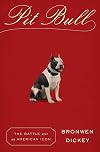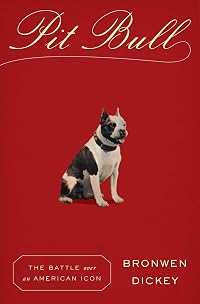
Pit Bull: The Battle over an American Icon
by Bronwen Dickey
On This Page
Description
Pets. Science. Sociology. Nonfiction. HTML:The hugely illuminating story of how a popular breed of dog became the most demonized and supposedly the most dangerous of dogs—and what role humans have played in the transformation.When Bronwen Dickey brought her new dog home, she saw no traces of the infamous viciousness in her affectionate, timid pit bull. Which made her wonder: How had the breed—beloved by Teddy Roosevelt, Helen Keller, and Hollywood’s “Little Rascals”—come to show more be known as a brutal fighter?
Her search for answers takes her from nineteenth-century New York City dogfighting pits—the cruelty of which drew the attention of the recently formed ASPCA—to early twentieth?century movie sets, where pit bulls cavorted with Fatty Arbuckle and Buster Keaton; from the battlefields of Gettysburg and the Marne, where pit bulls earned presidential recognition, to desolate urban neighborhoods where the dogs were loved, prized—and sometimes brutalized.
Whether through love or fear, hatred or devotion, humans are bound to the history of the pit bull. With unfailing thoughtfulness, compassion, and a firm grasp of scientific fact, Dickey offers us a clear-eyed portrait of this extraordinary breed, and an insightful view of Americans’ relationship with their dogs. show less
Tags
Recommendations




























Member Reviews
4.5 stars
The first half of the book starts with a history of dog breeds, dog fighting, “pit bulls” (however defined, as it constantly changes, but it’s mostly based on looks although there is one actual “American Pit Bull” breed, but many others tend to be lumped in, as well) as seen in history. In the second half of the book, the focus is more on dog bites, breed specific legislation, the media and politics.
The author has done an incredible amount of research here. She looks deeper into some of the media accounts (which are rarely, if ever, based on any kind of proper research), interviews people (on both sides of the “debate” over whether “pit bulls” should be banned or not). I learned of a few myths (like “bait show more dogs” – apparently they don’t really use bait dogs to train dogs to fight).
This was really interesting and I was impressed how, with very little information she was able to dig deeper, particularly into statistics, to find that most of the stats in the media accounts are just not based on valid (can’t think of a good word) stats. That is, one of the first “peer reviewed” (shoddily done, it seems) articles (which, of course, was then cited in later peer reviewed articles) that did find that pit bulls caused the most deaths was based on very flawed stats (“flawed” is the word I’m looking for).
I’m really impressed with this book and the amount of research that went into it. I feel like a lot more people should read it! show less
The first half of the book starts with a history of dog breeds, dog fighting, “pit bulls” (however defined, as it constantly changes, but it’s mostly based on looks although there is one actual “American Pit Bull” breed, but many others tend to be lumped in, as well) as seen in history. In the second half of the book, the focus is more on dog bites, breed specific legislation, the media and politics.
The author has done an incredible amount of research here. She looks deeper into some of the media accounts (which are rarely, if ever, based on any kind of proper research), interviews people (on both sides of the “debate” over whether “pit bulls” should be banned or not). I learned of a few myths (like “bait show more dogs” – apparently they don’t really use bait dogs to train dogs to fight).
This was really interesting and I was impressed how, with very little information she was able to dig deeper, particularly into statistics, to find that most of the stats in the media accounts are just not based on valid (can’t think of a good word) stats. That is, one of the first “peer reviewed” (shoddily done, it seems) articles (which, of course, was then cited in later peer reviewed articles) that did find that pit bulls caused the most deaths was based on very flawed stats (“flawed” is the word I’m looking for).
I’m really impressed with this book and the amount of research that went into it. I feel like a lot more people should read it! show less
Hey, did you know that race has infected every issue in America? Dickey’s almost-aside on the history of discrimination and defamation against slaves’ dogs comes late in the book, but race appears throughout. (She says “race” was actually a term borrowed from animal breeding.) People make claims about pit bulls and other breeds based on supposed genetic predispositions to certain behaviors, including viciousness; Dickey points out that racism infects both defenders and detractors of the breeds, who both use stereotypes of (bad) pit bull owners who are urban, poor, “pimps” and “thugs”—all code for black and lower-class. Dickey suggests that the real problem is poverty; that most dogs’ owners love them even when they show more don’t have the resources and knowledge to treat them in the best way; that many more dogs of all breeds survive terrible conditions without turning vicious; and that individual variation among dogs is the key source of potential danger. Genetic identification of “pit bulls” is actually impossible, and that many dogs that are called “pit bulls” aren’t purebred and even sometimes aren’t even mixes of the technical categories dog breeders use to define them. Dog bite statistics also suggest that whatever breed of dog becomes popularly known as a guard dog type will get more than its share of media attention whenever one dog who kind of looks like it belongs to that breed bites someone; it’s self-reinforcing, in that people who want vicious dogs will gravitate to whatever dog is known as vicious. show less
The American pit bull is a dog with a confused and troubled history. It's become the definition of the vicious dog, the dangerous dog, the dog that will go from lying quietly beside you on the couch to tearing your kids to shreds, for no apparent reason and with no warning.
And anyone will tell you it has "always" been that way.
Except that when I was a kid, that dog was the Doberman Pinscher. Well, except when it was the German Shepherd.
Since then, it was the rottweiler for a decade or so.
In the 19th century, for some of the time it was the bloodhound, and some of the time it was the white spitz dog--a dog also known to be a major spreader of rabies. This terrifying breed is now better known as the American Eskimo dog, a fluffy, adorable show more American house pet, one of the most successful rebranding efforts in history.
Bronwen Dickey and her husband adopted a dog from their local shelter, and afterwards were told that she looked like a "pit bull." Dickey looked at the scary pit bull stories, and her sweet pet, and got very interested in the history of the pit bull. It's a story that encompasses bull dogs and terriers, fighting dogs, American military dogs, and working farm dogs. It includes some of the biggest early canine stars of the silver screen, and dogs who scramble for survival with their human companions on the mean streets of the inner cities. It includes the "game bred" dogs of those who love the heritage but would never fight their own dogs, and the softer, easier dogs of those who love the look and the strength but see the "game bred" spirit as something best left to history.
And it includes not only the American Pit Bull Terrier (registered with the United Kennel Club) and the American Staffordshire Terrier (the American Kennel Club's version of the same dog), the Staffordshire Terrier, the Staffordshire Bull Terrier, and several other breeds that may or may not be called "put bulls" by one authority or another, but a wide range of mixed breed dogs that look like one or more of these breeds and may or may not be crosses or mixes of them. That's part of the challenge and terror of loving these dogs. They are so often banned, and in some places seized and killed, and usually the only determiner of whether or not your dog is "a pit bull" is your landlord or your neighbors or your local animal control officer who has no more training in visual identification of breeds than your landlord or your neighbors have. Your dog who has never so much as growled at anyone can suddenly be on trial for her life for having a short coat and a broad head.
Dickey interviewed those who love the American Pit Bull Terrier as recognized by the UKC, and those who love all the "pit bull" mixed breed dogs in shelters or owned by inner city residents most often targeted by "dangerous dog" laws. She talked to those who've done extensive research on dog bites and dog behavior, and those who reject the research as being the product of "the pit bull lobby," a shadowy, sinister perceived presence allegedly bent on keeping dangerous dogs on the streets.
It's a fascinating journey through the history of an American breed type, and Randye Kaye does an excellent job of narration.
Recommended.
I bought this book. show less
And anyone will tell you it has "always" been that way.
Except that when I was a kid, that dog was the Doberman Pinscher. Well, except when it was the German Shepherd.
Since then, it was the rottweiler for a decade or so.
In the 19th century, for some of the time it was the bloodhound, and some of the time it was the white spitz dog--a dog also known to be a major spreader of rabies. This terrifying breed is now better known as the American Eskimo dog, a fluffy, adorable show more American house pet, one of the most successful rebranding efforts in history.
Bronwen Dickey and her husband adopted a dog from their local shelter, and afterwards were told that she looked like a "pit bull." Dickey looked at the scary pit bull stories, and her sweet pet, and got very interested in the history of the pit bull. It's a story that encompasses bull dogs and terriers, fighting dogs, American military dogs, and working farm dogs. It includes some of the biggest early canine stars of the silver screen, and dogs who scramble for survival with their human companions on the mean streets of the inner cities. It includes the "game bred" dogs of those who love the heritage but would never fight their own dogs, and the softer, easier dogs of those who love the look and the strength but see the "game bred" spirit as something best left to history.
And it includes not only the American Pit Bull Terrier (registered with the United Kennel Club) and the American Staffordshire Terrier (the American Kennel Club's version of the same dog), the Staffordshire Terrier, the Staffordshire Bull Terrier, and several other breeds that may or may not be called "put bulls" by one authority or another, but a wide range of mixed breed dogs that look like one or more of these breeds and may or may not be crosses or mixes of them. That's part of the challenge and terror of loving these dogs. They are so often banned, and in some places seized and killed, and usually the only determiner of whether or not your dog is "a pit bull" is your landlord or your neighbors or your local animal control officer who has no more training in visual identification of breeds than your landlord or your neighbors have. Your dog who has never so much as growled at anyone can suddenly be on trial for her life for having a short coat and a broad head.
Dickey interviewed those who love the American Pit Bull Terrier as recognized by the UKC, and those who love all the "pit bull" mixed breed dogs in shelters or owned by inner city residents most often targeted by "dangerous dog" laws. She talked to those who've done extensive research on dog bites and dog behavior, and those who reject the research as being the product of "the pit bull lobby," a shadowy, sinister perceived presence allegedly bent on keeping dangerous dogs on the streets.
It's a fascinating journey through the history of an American breed type, and Randye Kaye does an excellent job of narration.
Recommended.
I bought this book. show less
Fantastically well-researched, this book examines and explains the history of dogs in America - both under the "pit bull" umbrella and not. Through a historical and sociological lens from the beginning of America through today, this is a fascinating journey with deep insight and compassion for all parties. The author strikes a very delicate balance threading the line between the sides to illuminate a whole that is larger than breed: all dogs are dogs.
Really, I can't say enough good things about this book. I bought the book after reading two excerpts because of how thought-provoking they were, and then devoured the book in one sitting because I couldn't pull myself away.
Investigative journalism at its finest - a culmination of years of show more research plus a thorough list of sources. show less
Really, I can't say enough good things about this book. I bought the book after reading two excerpts because of how thought-provoking they were, and then devoured the book in one sitting because I couldn't pull myself away.
Investigative journalism at its finest - a culmination of years of show more research plus a thorough list of sources. show less
Pit Bull reads very slowly. The care and heart with which Dickey has pursued her subject is admirable, and her bias is openly acknowledged in the prose, allowing her research the particular illumination of a self-reflective author. The structure and voice were subservient to this research, and the story's flow was thickened by the immense labor of defending each new point of view.
An illumination which I would have appreciated going in: this book agonizes over the details of human relationship and treatment of dogs, but does little to deal with the animals themselves. This allows it to be a lens through which we can view the conflicts and bureaucratic solutions of our day, but obscures the minds and behavior of the animals. The show more assertion reached by the end of the work is that pit bulls ought to be treated like any other dogs, but Dickey does not long venture into the realm of larger dog-human relationships, or delve into the biological aspects of living with domesticated dogs. show less
An illumination which I would have appreciated going in: this book agonizes over the details of human relationship and treatment of dogs, but does little to deal with the animals themselves. This allows it to be a lens through which we can view the conflicts and bureaucratic solutions of our day, but obscures the minds and behavior of the animals. The show more assertion reached by the end of the work is that pit bulls ought to be treated like any other dogs, but Dickey does not long venture into the realm of larger dog-human relationships, or delve into the biological aspects of living with domesticated dogs. show less
A must read for any Pitbull owner. The way these dogs are demonized by media and the general public is heartbreaking. Bronwen takes you on a cross country trip to investigate and research these musclebound fur babies . An authentic and unbiased look at this breed. She gives you the truths....good and bad. I'm usually a fiction only reader, but I really enjoyed this. I simply couldn't put it down once I started. A truly delightful read!
This book, is very, very biased in favor of pit bulls.
I mean yeah no, that's not surprising, but it's frustrating how the author places her own bias/personal opinion over fact.
Dickey completely glosses over the history of dogfighting and how it pertains to the problems of the pit bull in today's society. She does not talk to any dogfighters. Much of this book is pure fiction, as the author writes that dogfighting basically disappeared for decades and only resurfaced in the 1970's (and that between the 1900's and that time, pitbulls were popular family dogs) which is a blatant lie - dogfighting continued but most of it was underground because of the stigma attached to dogfighting.
She writes about famous pit bulls like Petey from Little show more Rascals even though he had a bite record (Funny how so many pitbull advocates are so willing to overlook bite histories) She also mentions Teddy Roosevelt's pitbull. Yeah, because a famous person owned a pitbull that means others should? Eyeroll. She also pushes the nanny dog myth, which has been proven to be false (and which in recent years has led to absolute disaster from people who adopt pitbulls after buying into that myth only to have their children or other innocent souls mauled)
She has also talked to breeders, but never chastises them for their contribution to the dog overpopulation problem. She also argues that prejudice against pitbulls are based off race and class. GTFO with that stupid shit, don't compare BIPOC people to a breed that was engineered for bloodsport!
Dickey also shows disdain for the victims of pitbull attacks and tries to minimize the deaths that have occurred from pitbull attacks.
No matter what people say, no mater what cutesy names they might come up with (pitties, pibbles, velvet hippos, for fuck's sake!) nothing will change the fact that pitbulls (and other bloodsport dogs like Canes, Dogos, etc) were bred for gameness/fighting, and that has given pits the features they're known for (high strength, prey drive, a head shape that makes their bite all the more devastating) and these exact features make them shitty pets. I've read waaaaay too many news articles of pitbulls that attacked people with no provocation, and the victims are all too often children because there are still people out there who believe that nanny dog bullshit.
The best thing to do with pitbulls is to put down any that attack other animals and people (because their size and strength easily trumps that of a chihuahua, a breed that pit enthusiasts like to condemn as aggressive and bite-y) and simply spay and neuter the rest out of existence - this is an artificial breed brought into this world by humans for a really shitty reason, and needs to be phased back out of existence, the world would only become a better place without bloodsport breeds. (if only it were as easy to spay/neuter people involved in dogfighting, but I digress...)
Also, American icon? Really? Doesn't the country already have a better and much cooler one? An bald eagle, as I recall...
I will never for the life of me understand why some people are so fixated on this breed when there's so many lovely (and much less dangerous) dog breeds out there... but then common sense isn't very common, as I've found out.
For REAL information on the breed and its history, look to books written by the people involved in dogfighting, such as 'The American Pit Bull Terrier' by Joseph Colby, which provides a much more accurate history of this bloodsport breed. show less
I mean yeah no, that's not surprising, but it's frustrating how the author places her own bias/personal opinion over fact.
Dickey completely glosses over the history of dogfighting and how it pertains to the problems of the pit bull in today's society. She does not talk to any dogfighters. Much of this book is pure fiction, as the author writes that dogfighting basically disappeared for decades and only resurfaced in the 1970's (and that between the 1900's and that time, pitbulls were popular family dogs) which is a blatant lie - dogfighting continued but most of it was underground because of the stigma attached to dogfighting.
She writes about famous pit bulls like Petey from Little show more Rascals even though he had a bite record (Funny how so many pitbull advocates are so willing to overlook bite histories) She also mentions Teddy Roosevelt's pitbull. Yeah, because a famous person owned a pitbull that means others should? Eyeroll. She also pushes the nanny dog myth, which has been proven to be false (and which in recent years has led to absolute disaster from people who adopt pitbulls after buying into that myth only to have their children or other innocent souls mauled)
She has also talked to breeders, but never chastises them for their contribution to the dog overpopulation problem. She also argues that prejudice against pitbulls are based off race and class. GTFO with that stupid shit, don't compare BIPOC people to a breed that was engineered for bloodsport!
Dickey also shows disdain for the victims of pitbull attacks and tries to minimize the deaths that have occurred from pitbull attacks.
No matter what people say, no mater what cutesy names they might come up with (pitties, pibbles, velvet hippos, for fuck's sake!) nothing will change the fact that pitbulls (and other bloodsport dogs like Canes, Dogos, etc) were bred for gameness/fighting, and that has given pits the features they're known for (high strength, prey drive, a head shape that makes their bite all the more devastating) and these exact features make them shitty pets. I've read waaaaay too many news articles of pitbulls that attacked people with no provocation, and the victims are all too often children because there are still people out there who believe that nanny dog bullshit.
The best thing to do with pitbulls is to put down any that attack other animals and people (because their size and strength easily trumps that of a chihuahua, a breed that pit enthusiasts like to condemn as aggressive and bite-y) and simply spay and neuter the rest out of existence - this is an artificial breed brought into this world by humans for a really shitty reason, and needs to be phased back out of existence, the world would only become a better place without bloodsport breeds. (if only it were as easy to spay/neuter people involved in dogfighting, but I digress...)
Also, American icon? Really? Doesn't the country already have a better and much cooler one? An bald eagle, as I recall...
I will never for the life of me understand why some people are so fixated on this breed when there's so many lovely (and much less dangerous) dog breeds out there... but then common sense isn't very common, as I've found out.
For REAL information on the breed and its history, look to books written by the people involved in dogfighting, such as 'The American Pit Bull Terrier' by Joseph Colby, which provides a much more accurate history of this bloodsport breed. show less
Members
- Recently Added By
Lists

Top Five Books of 2016
795 works; 229 members

Bitter Southerner Summer Reading Roundup
198 works; 8 members
Author Information
1+ Work 177 Members
Awards and Honors
Common Knowledge
- Epigraph
- Neither a man, nor a crowd, nor a nation can be trusted to act humanely or to think sanely under the influence of a great fear.
—Bertrand Russell - Dedication
- For Sean, who makes everything possible
- First words
- The sky had just begun to darken when the Smoak family stopped for gas in Davidson County, Tennessee.
- Last words
- (Click to show. Warning: May contain spoilers.)"I love you," she said.
- Blurbers
- Mann, Charles C.; Bausch, Richard; Zoellner, Tom; McCaig, Donald; Conroy, Pat; Herzog, Hal
Classifications
Statistics
- Members
- 175
- Popularity
- 185,062
- Reviews
- 11
- Rating
- (4.34)
- Languages
- English
- Media
- Paper, Audiobook, Ebook
- ISBNs
- 7
- ASINs
- 2