On This Page
Description
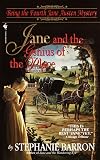
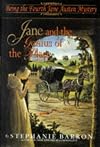
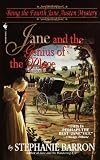
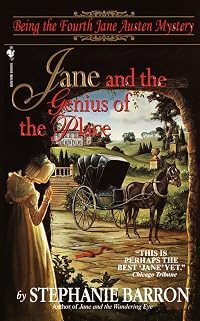
Fiction. Mystery. Historical Fiction. HTML:In three highly diverting mysteries, Jane Austen has shown herself a clever hand at unraveling the deadly knots woven by the unscrupulous. Now, in her latest engrossing adventure, Jane is called upon to solve a shattering crime that may begin and end in one man's heart—or encompass the fate of an entire nation.In the waning days of summer, Jane Austen is off to the Canterbury Races, where the rich and fashionable go to gamble away their show more fortunes. It is an atmosphere ripe for scandal. But even Jane is unprepared for the shocking drama that ensues when a raven-haired wanton in a scarlet riding habit takes center stage. She is Françoise Grey, a flamboyant French beauty who has cast a spell over the gentlemen of Kent...and her unbridled behavior at the races invites the most scandalous speculation.
What can Mrs. Grey be thinking, Jane wonders, to so brazenly strike a gentleman with her whip? And what recklessness then spurs her to leap the rail on her fleet black horse and join the race? Only hours after Mrs. Grey has departed the race grounds in triumph will Jane realize the full import of her questions. For in a shabby chaise less than a hundred feet from where Jane sat, the impossible is revealed: Mrs. Grey's lifeless body, gruesomely strangled, her ruby riding habit nowhere to be found.
As those around her rush to arrest the owner of the chaise—a known scoundrel with eyes for Françoise—Jane looks further afield to find a number of others behaving oddly, including the dashing military man caught rifling through the dead woman's desk, the widower who does not appear to be grieving, and the shy governess curiously overpowered by the horror of the Frenchwoman's death.
As rumors spread like wildfire that Napoleon's fleet is bound for Kent, Jane begins to suspect that Françoise Grey's murder was an act of war rather than a crime of passion. The peaceful fields of Kent have become a very dangerous place...and Jane's thirst for justice may exact the steepest price of all—her life.
Deliciously sinister and splendidly wrought, Jane and the Genius of the Place is a stylish puzzler that only the incomparable Jane Austen could hope to crack. And in her capable hands, the solving of it is a pleasure to watch. show less
Tags
Recommendations
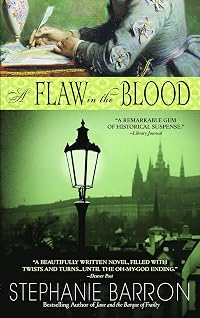




Member Reviews
When reading Austen, it's often easy to forget everything that was happening in her world. The politics of the time go mostly unremarked in her books (with a few momentary glaring exceptions...I'm thinking this second of Persuasion and Mansfield Park); one hardly expects talk of a French invasion.
I think that's why Barron's series is so special - it's a little bit of Austen's real life, a giant sprinkling of her books, and a smattering of political intrigue. One minute you're saying "Hey - that line's from Captain Wentworth's letter in Persuasion," and in the next you're trying to figure out who killed the French lady.
Jane and the Genius of the Place occurs a few months after the passing of her father, while she spends some months with show more her brother Edward's family near Canterbury. While at the famous Canterbury Races, a woman is killed and, as honorary Justice, Edward and his family are dragged into the fray. What ensues is a twisted tale of spies, death and...wait for it...cross-dressing.
This book was perhaps less romantic than the Second in the series. And with no Lord Harold in sight for 99% of the novel, it was lacking in a certain amount of witty exchanges. But the murder, intrigue, and then more murder kind of made up for his absence. And there were all kinds of gems for Janeites to find - glimpses of Darcy, of Wentworth, Mrs. Elton, Mr. Collins, Mr. Rushworth and even Lady Catherine. Barron's edge is in mixing these characters of Jane's invention with the real historical figures featured in the novel. Because so much of Austen's correspondance was destroyed, we will never truly know what her interactions with these people were like, nor what persons were definite inspirations for her work. But Barron's novels make a rather fun game of guessing.
Lauren Cartelli
www.theliterarygothamite.com show less
I think that's why Barron's series is so special - it's a little bit of Austen's real life, a giant sprinkling of her books, and a smattering of political intrigue. One minute you're saying "Hey - that line's from Captain Wentworth's letter in Persuasion," and in the next you're trying to figure out who killed the French lady.
Jane and the Genius of the Place occurs a few months after the passing of her father, while she spends some months with show more her brother Edward's family near Canterbury. While at the famous Canterbury Races, a woman is killed and, as honorary Justice, Edward and his family are dragged into the fray. What ensues is a twisted tale of spies, death and...wait for it...cross-dressing.
This book was perhaps less romantic than the Second in the series. And with no Lord Harold in sight for 99% of the novel, it was lacking in a certain amount of witty exchanges. But the murder, intrigue, and then more murder kind of made up for his absence. And there were all kinds of gems for Janeites to find - glimpses of Darcy, of Wentworth, Mrs. Elton, Mr. Collins, Mr. Rushworth and even Lady Catherine. Barron's edge is in mixing these characters of Jane's invention with the real historical figures featured in the novel. Because so much of Austen's correspondance was destroyed, we will never truly know what her interactions with these people were like, nor what persons were definite inspirations for her work. But Barron's novels make a rather fun game of guessing.
Lauren Cartelli
www.theliterarygothamite.com show less
Fieldnotes:
Godmersham Park, August 1805
1 Sleuthing Authoress
1 Brother/Magistrate
2 Dastardly Murders
1 Scandalous Frenchwoman
1 Neglectful Husband
1 "Sporting" Set of Gambling Friends
1 Handsome Landscape Artist
1 Temperamentally Unsuited Governess
Too Many Edwards
1 French Army Gathering Along the Channel
1 Evacuation Plan for Kent
Complicated Banking Arrangements
Monologuing Spies Making a Muddle of Everything
Scholarly Footnotes
Several Allusions to Austen Characters and Works
The Short Version:
I really enjoy the central conceit of this mystery series - that a scholar has stumbled upon a cache of lost Austen diaries detailing her sleuthing and has prepared them for publication (including occasional explanatory footnotes which give me show more *heart-eyes*).
The underlying mystery of this one felt much more of a muddle, though. I figured out the "how" very quickly (and the wait until the characters cottoned on was very painful), the "who" in good time, and the "why" perplexes me despite the relevant characters monologuing to explain for two chapters. I'm not sure if it actually *is* a muddle or if my brain is just refusing to process it at the moment.
Regardless, while I found this enjoyable, the resolution let me down. This can move on to another home, but I wouldn't hesitate to pick up another in the series. show less
Godmersham Park, August 1805
1 Sleuthing Authoress
1 Brother/Magistrate
2 Dastardly Murders
1 Scandalous Frenchwoman
1 Neglectful Husband
1 "Sporting" Set of Gambling Friends
1 Handsome Landscape Artist
1 Temperamentally Unsuited Governess
Too Many Edwards
1 French Army Gathering Along the Channel
1 Evacuation Plan for Kent
Complicated Banking Arrangements
Monologuing Spies Making a Muddle of Everything
Scholarly Footnotes
Several Allusions to Austen Characters and Works
The Short Version:
I really enjoy the central conceit of this mystery series - that a scholar has stumbled upon a cache of lost Austen diaries detailing her sleuthing and has prepared them for publication (including occasional explanatory footnotes which give me show more *heart-eyes*).
The underlying mystery of this one felt much more of a muddle, though. I figured out the "how" very quickly (and the wait until the characters cottoned on was very painful), the "who" in good time, and the "why" perplexes me despite the relevant characters monologuing to explain for two chapters. I'm not sure if it actually *is* a muddle or if my brain is just refusing to process it at the moment.
Regardless, while I found this enjoyable, the resolution let me down. This can move on to another home, but I wouldn't hesitate to pick up another in the series. show less
A fascinating Jane Austen inspired Regency mystery involving horseracing, French spies and the "improvement of the estate"
In the summer of 1805, we find Jane Austen visiting her wealthy brother Edward and his large family at their palatial country estate Godmersham Park in Kent, enjoying the comforts of living above “vulgar economy,” and the privileges of ease and splendor. Her father Rev. Austen had passed away the following January, displacing herself, her sister Cassandra and their mother from their rented residence in Bath. This was the beginning of their wilderness years, when the Austen women would shuffle about from relative to relative, homeless genteel vagabonds, dependent on the generosity of their families for a roof over show more their heads. While Jane visits in Kent, her sister Cassandra resides nearby Goodnestone with Mrs. Bridges, the mother of Edward’s wife Elizabeth, and Mrs. Austen is in Hampshire.
Jane wastes no times in enjoying their opulent society with an outing to the Canterbury Races to picnic on the green and watch her brother Henry’s latest folly with the Sporting Set, his magnificent race horse Commodore, who is set to take his paces against the local favorites. Among the festivities, it is hard not to notice a beautiful young woman in a scarlet riding costume siting in a phaeton near their own carriage. As she lashes out injuring a young man with her driving whip, Jane is shocked by her wild behavior. Her sister-in-law Elizabeth Austen explains that she is the notorious Francoise Lamartine Grey, the spirited young wife of a wealthy local banker who owns the grand neighboring estate The Larches. Besides being a Frenchwomen in England during the height of the “Great Terror,” when many feared Bonaparte’s invasion of the English coast, she is disliked by everyone in the neighborhood because of scandalous behavior. While Henry’s horse loses the race, Mrs. Grey loses her life.
Brutally strangled by her hair ribbon and striped of her red riding costume, she is found in the carriage of her former lover Denys Collingworth, a man of “slim means, illiberal temper and general disfavor of the whole neighborhood.” As the local Justice of the Peace, Edward Austen steps forward and takes command of the investigation, aided by the observant eyes of his sister Jane, his wife Elizabeth and their governess Anne Sharpe, they are able to recount the events of the day involving Mrs. Grey’s movements. But something is awry. How could she lie dead in the carriage and then later be seen on horseback recklessly jumping the racecourse rail, chasing after the galloping horses, collecting the winners up, and then promptly departing in her phaeton? All eyes are on Collingworth who feigns absence corroborated by a witness. He points the finger at family friend Captain Woodford and Elizabeth Austen’s brother Rev. Edward Bridges who are both deeply in debt to Mrs. Grey. Later we learn that her husband does not mourn Francoise’s death, nor does he attend her funeral. As the suspects add up, Edward and Jane are uncertain that what appears to be a lovers quarrel gone terribly wrong, in fact involves international espionage and Bonaparte far reaching ambitions.
Jane and the Genius of the Place, is the fourth Being a Jane Austen Mystery, by Stephanie Barron, the very popular series involving British novelist Jane Austen as an amateur sleuth paralleling actual events from her own life. It is told in a first person narrative from Jane’s perspective edited from her personal journals discovered by the author in an outbuilding on an ancient Maryland estate. They blend the factual and the fictional, incorporating known events and facts from Austen’s letters, history, culture and politics with a clever mystery story. This is my fourth of the series and I found it fascinating. The storyline introduces many of the social pursuits that a Regency gentleman would aspire to: horse racing, “improvement of the estate,” cultivation of the manor house and family. In addition to the return of Jane’s favorite brother Henry Austen, we are introduced to her elder brother Edward, his wife Elizabeth, daughter Fanny and the brood of their other eight children. Governess to the two daughters is Anne Sharpe, who Jane will develop a lifelong friendship with. Barron did superb job with Elizabeth “Lizzy” Austen as companion and sounding board to Jane and the investigation. Elegant, intelligent and composed, Lizzy is the kind of mother, sister-in-law or friend that we all should have in our lives, but rarely do. It is understandable how her death in 1808 was such a shock to Jane and her family.
I loved the introduction of the Austen’s governess Anne Sharpe, who we know little about other than a few surviving letters, and that Jane valued her friendship enough to give her a presentation copy of Emma when it was published in 1815. In this story she has a flirtation of such with landscape designer Julian Southey, which I wish had been played out more. The aesthetic movement of the “improvement of the estate” is woven into the plot in detail, and as a landscape designer myself for many years, I appreciated the beautiful descriptions of the transformation of English countryside into the picturesque visions made popular by designers Humphrey Repton and Capability Brown.
Even though Jane Austen is criticized for not broaching politics in her novels, she did talk about them in her letters and followed the Napoleonic Wars through her two brothers in the Royal Naval. Politics, international espionage and French spies factor heavily into this novel in a clever way. In addition, with the introduction of new characters I did not miss the lack of Cassandra Austen, who seems to be a killjoy in the series, nor Mrs. Austen who is a bit of a downer for “our” Jane. Even thought the mystery drove the plot, I found myself guessing whodunit early on. It really didn’t matter in the least. The writing is so entrancing, the descriptions so mesmerizing and the characters so enjoyable, that nothing was wanting – well, except the shortage of Lord Harold Trowbridge, Rogue, Flirt and personal Infatuation. I patiently await his return.
Laurel Ann, Austenprose show less
In the summer of 1805, we find Jane Austen visiting her wealthy brother Edward and his large family at their palatial country estate Godmersham Park in Kent, enjoying the comforts of living above “vulgar economy,” and the privileges of ease and splendor. Her father Rev. Austen had passed away the following January, displacing herself, her sister Cassandra and their mother from their rented residence in Bath. This was the beginning of their wilderness years, when the Austen women would shuffle about from relative to relative, homeless genteel vagabonds, dependent on the generosity of their families for a roof over show more their heads. While Jane visits in Kent, her sister Cassandra resides nearby Goodnestone with Mrs. Bridges, the mother of Edward’s wife Elizabeth, and Mrs. Austen is in Hampshire.
Jane wastes no times in enjoying their opulent society with an outing to the Canterbury Races to picnic on the green and watch her brother Henry’s latest folly with the Sporting Set, his magnificent race horse Commodore, who is set to take his paces against the local favorites. Among the festivities, it is hard not to notice a beautiful young woman in a scarlet riding costume siting in a phaeton near their own carriage. As she lashes out injuring a young man with her driving whip, Jane is shocked by her wild behavior. Her sister-in-law Elizabeth Austen explains that she is the notorious Francoise Lamartine Grey, the spirited young wife of a wealthy local banker who owns the grand neighboring estate The Larches. Besides being a Frenchwomen in England during the height of the “Great Terror,” when many feared Bonaparte’s invasion of the English coast, she is disliked by everyone in the neighborhood because of scandalous behavior. While Henry’s horse loses the race, Mrs. Grey loses her life.
Brutally strangled by her hair ribbon and striped of her red riding costume, she is found in the carriage of her former lover Denys Collingworth, a man of “slim means, illiberal temper and general disfavor of the whole neighborhood.” As the local Justice of the Peace, Edward Austen steps forward and takes command of the investigation, aided by the observant eyes of his sister Jane, his wife Elizabeth and their governess Anne Sharpe, they are able to recount the events of the day involving Mrs. Grey’s movements. But something is awry. How could she lie dead in the carriage and then later be seen on horseback recklessly jumping the racecourse rail, chasing after the galloping horses, collecting the winners up, and then promptly departing in her phaeton? All eyes are on Collingworth who feigns absence corroborated by a witness. He points the finger at family friend Captain Woodford and Elizabeth Austen’s brother Rev. Edward Bridges who are both deeply in debt to Mrs. Grey. Later we learn that her husband does not mourn Francoise’s death, nor does he attend her funeral. As the suspects add up, Edward and Jane are uncertain that what appears to be a lovers quarrel gone terribly wrong, in fact involves international espionage and Bonaparte far reaching ambitions.
Jane and the Genius of the Place, is the fourth Being a Jane Austen Mystery, by Stephanie Barron, the very popular series involving British novelist Jane Austen as an amateur sleuth paralleling actual events from her own life. It is told in a first person narrative from Jane’s perspective edited from her personal journals discovered by the author in an outbuilding on an ancient Maryland estate. They blend the factual and the fictional, incorporating known events and facts from Austen’s letters, history, culture and politics with a clever mystery story. This is my fourth of the series and I found it fascinating. The storyline introduces many of the social pursuits that a Regency gentleman would aspire to: horse racing, “improvement of the estate,” cultivation of the manor house and family. In addition to the return of Jane’s favorite brother Henry Austen, we are introduced to her elder brother Edward, his wife Elizabeth, daughter Fanny and the brood of their other eight children. Governess to the two daughters is Anne Sharpe, who Jane will develop a lifelong friendship with. Barron did superb job with Elizabeth “Lizzy” Austen as companion and sounding board to Jane and the investigation. Elegant, intelligent and composed, Lizzy is the kind of mother, sister-in-law or friend that we all should have in our lives, but rarely do. It is understandable how her death in 1808 was such a shock to Jane and her family.
I loved the introduction of the Austen’s governess Anne Sharpe, who we know little about other than a few surviving letters, and that Jane valued her friendship enough to give her a presentation copy of Emma when it was published in 1815. In this story she has a flirtation of such with landscape designer Julian Southey, which I wish had been played out more. The aesthetic movement of the “improvement of the estate” is woven into the plot in detail, and as a landscape designer myself for many years, I appreciated the beautiful descriptions of the transformation of English countryside into the picturesque visions made popular by designers Humphrey Repton and Capability Brown.
Even though Jane Austen is criticized for not broaching politics in her novels, she did talk about them in her letters and followed the Napoleonic Wars through her two brothers in the Royal Naval. Politics, international espionage and French spies factor heavily into this novel in a clever way. In addition, with the introduction of new characters I did not miss the lack of Cassandra Austen, who seems to be a killjoy in the series, nor Mrs. Austen who is a bit of a downer for “our” Jane. Even thought the mystery drove the plot, I found myself guessing whodunit early on. It really didn’t matter in the least. The writing is so entrancing, the descriptions so mesmerizing and the characters so enjoyable, that nothing was wanting – well, except the shortage of Lord Harold Trowbridge, Rogue, Flirt and personal Infatuation. I patiently await his return.
Laurel Ann, Austenprose show less
A little less than genius, but still fun
July 2001
In this, the fourth of the Jane Austen Mystery series by Stephanie Barron, we are once again drawn into a tale more sordid than the ones we are used to from Jane Austen. Jane attends Canterbury Race Day with some of the Austen clan, witnessing the excitement over straining horses, and being shocked by Mrs. Grey, a rich Frenchwoman with a good taste in racehorses, a genius at shocking the populace, and the bad fate to end up brutally strangled by Race Day's end. Once again, our fictional Jane is close to the investigative action -- this time, it's her brother Neddie, local magistrate, who is in charge of discovering the murderer. There is an obvious suspect, the man who owned the carriage show more in which Mrs. Grey's body was found (scandalously undressed!), but Mrs. Grey had made enemies of much of the people of the Kentish neighborhood.
As is usual, Stephanie Barron weaves in cultural information of the day -- one starts with some knowledge of the low pursuits of cock-fighting, high-stakes card parties, and speculation on horseracing, but by novel's end one has learned of the new perspectives in landscaping "improvement", a bit on current women's fashions, British troop movements in holding off Napolean's armies, and the financial ramifications of the Napoleanic wars in general. Not all of the historical information is pleasant to learn; Barron reminds us a little bit too often of the August heat making it a necessity for quick inquests and burials. I'm sure the coroners of England were happy when the inquest jury no longer had to examine the corpse for themselves.
As an avid reader of Agatha Christie, I figured out a few of the mystery's puzzles early on, but though I could tell =how= the murder was done, I couldn't tell =who= did it. There are some odd, distracting bits of plot, I believe; however, I do appreciate the little bit of =Emma= that was stolen for the use of this book. It makes for interesting pitfalls; a devoted Janeite will be able to recognize phrases, dialogue, and plot taken from Austen's works, but Barron uses them for her own end and the unwary reader can be caught in surprise twists to the Austen originals. I found the ending of the novel somewhat unsatisfying, but the novel as a whole is entertaining. show less
July 2001
In this, the fourth of the Jane Austen Mystery series by Stephanie Barron, we are once again drawn into a tale more sordid than the ones we are used to from Jane Austen. Jane attends Canterbury Race Day with some of the Austen clan, witnessing the excitement over straining horses, and being shocked by Mrs. Grey, a rich Frenchwoman with a good taste in racehorses, a genius at shocking the populace, and the bad fate to end up brutally strangled by Race Day's end. Once again, our fictional Jane is close to the investigative action -- this time, it's her brother Neddie, local magistrate, who is in charge of discovering the murderer. There is an obvious suspect, the man who owned the carriage show more in which Mrs. Grey's body was found (scandalously undressed!), but Mrs. Grey had made enemies of much of the people of the Kentish neighborhood.
As is usual, Stephanie Barron weaves in cultural information of the day -- one starts with some knowledge of the low pursuits of cock-fighting, high-stakes card parties, and speculation on horseracing, but by novel's end one has learned of the new perspectives in landscaping "improvement", a bit on current women's fashions, British troop movements in holding off Napolean's armies, and the financial ramifications of the Napoleanic wars in general. Not all of the historical information is pleasant to learn; Barron reminds us a little bit too often of the August heat making it a necessity for quick inquests and burials. I'm sure the coroners of England were happy when the inquest jury no longer had to examine the corpse for themselves.
As an avid reader of Agatha Christie, I figured out a few of the mystery's puzzles early on, but though I could tell =how= the murder was done, I couldn't tell =who= did it. There are some odd, distracting bits of plot, I believe; however, I do appreciate the little bit of =Emma= that was stolen for the use of this book. It makes for interesting pitfalls; a devoted Janeite will be able to recognize phrases, dialogue, and plot taken from Austen's works, but Barron uses them for her own end and the unwary reader can be caught in surprise twists to the Austen originals. I found the ending of the novel somewhat unsatisfying, but the novel as a whole is entertaining. show less
Although I did not enjoy this book as much as the last one it is still a great read. We have our sleuth, Jane Austen, delving into the world of espionage. The book is set in Kent in August of 1805. It was during this time that England was under threat of an invasion by Napoleon, and when a local woman is found dead in another man's chaise, Jane and her family don't at first connect the death to treachery and espionage. The lady had what was called a "reputation". Not many mourn the beautiful and brazen Francoise, but Ned, Jane's brother is the county magistrate, so he must find the killer. He enlists the help of the intrepid Jane. I really like these characters, and I have to keep reminding myself that this Jane Austen is not the real show more one. This is a wonderful Regency series. show less
An enjoyable read. I especially enjoy the footnotes noting details of Austen's life and friends during this year, and I appreciate the footnoted details of the politics and military maneuvers during Austen's time. It didn't take long to solve the murder mystery, but the whys took longer and Austen's discoveries (and clever interviews of potential suspects) were fun.
One thing to enjoy about these mysteries the denseness of the language - there is a weighty story that isn't resolved too quickly. I particularly enjoyed the historical aspects regarding the ongoing French war pursuits.
Members
- Recently Added By
Lists

Austenland
166 works; 12 members
Author Information

21+ Works 8,418 Members
Series

Work Relationships
Common Knowledge
- Canonical title
- Jane and the Genius of the Place
- Original publication date
- 1999-01-05
- People/Characters
- Jane Austen; Lord Harold Trowbridge; Francoise Grey
- Important places
- Godmersham Park, Kent, England, UK
- Epigraph
- In laying out a garden,
the first and chief thing to be considered
is the genius of the place.
-ALEXANDER POPE, 1728
as quoted in
Observations, Anecdotes and Characters of books and Men,
b... (show all)y Joseph Spence - Dedication
- Dedicated to the memory if Ruth Connor,
whose genius lives on in the places
and people she loved - First words
- Miss Jane Austen--late of Green Park Buildings, Bath, but presently laying claim to nowhere in particular, given her esteemed father's recent death, and the subsequent upheaval of domestic arrangements--might never be accused... (show all) of dissipation.
- Last words
- (Click to show. Warning: May contain spoilers.)If ever there is a monument built on Godmersham's heights--a propitiation of the local spirit, perhaps--then pray let it be dedicated to the genius of laughter.
Classifications
Statistics
- Members
- 620
- Popularity
- 47,076
- Reviews
- 14
- Rating
- (3.80)
- Languages
- English, German
- Media
- Paper, Audiobook, Ebook
- ISBNs
- 10
- UPCs
- 1
- ASINs
- 4