On This Page
Description
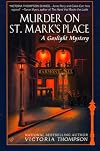
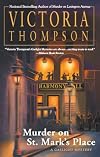
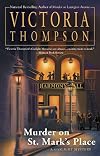
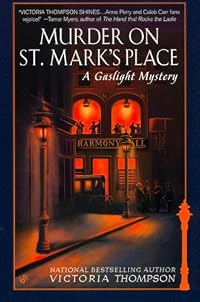
Thinking that she has been summoned by German immigrant Agnes Otto to usher a new life into the world, midwife Sarah Brandt is greeted by the news of an untimely death instead. It seems that Agnes's beautiful younger sister, Gerda, had fallen into the life of a "charity girl." Caught up in the false glamour of the city's nightlife, she would trade her company and her favors for lavish gifts. And now she was dead; victim, no doubt, of one of her "gentlemen friends." No one cares much about show more the fate of girls like Gerda, but Sarah does. To find her killer, she turns to sergeant Frank Malloy. As the two pursue an investigation that leads from the bright lights of Coney Island to the stately homes of Fifth Avenue, they find that their shared passion for justice may cost them dearly. show lessTags
Recommendations




































Member Reviews
I couldn't resist taking Murder at St. Mark’s Place, book two of Victoria Thompson’s Gaslight Mystery series, from Hoopla this month. If book one was 3 1/2 bumped up to 4 stars – I found this one to be a solid 4+ stars. Reading/listening to this book was like slipping into a pair of flannel pajamas, warm fuzzy socks and climbing under the duvet in the middle of the afternoon, on a freezing winter day, to read just for the fun of it..you get it? (right?) I figured out whodunnit right at the beginning of the novel but I still enjoyed watching Sarah Bryant and Frank Malloy turn over every stone and examine every clue till they discovered who was murdering poor young girls trying to scrape by and improve their miserable existences in show more any way that they could. Sarah and Malloy are now familiar characters, doing what they do best, alternately sparring and agreeing with other (kind of Moonlighting/Remington Steele combos but at the turn of the century). I’m even falling in love with Sarah’s nosy neighbor. I love Mrs. Bryant for her independent spirit and moral code, for not being judgmental and for championing the rights of women without forfeiting her own humility while doing so, for always being willing to help no matter what the cost (sounds a little like Kipling’s “If”).
“….What right did she have to try to convince (xxx) to leave her home? Many would condemn her actions. She had, after all, tried to break up a marriage. Not many people would consider the fact that (xxx) had beaten his wife savagely as grounds for desertion. Many men beat their wives and consider it their right. The law in most cases supported them too. A man might go to jail for beating up a total stranger but if he did the same thing to his wife, the law would turn a blind eye, even if she died from her injuries. Just one more injustice to feel outraged about in an unjust world….”
Oh Sarah, what ageless truth you speak. Nary a week goes by without hearing a news report about a woman who was murdered by her partner or scorned lover. The reporting generally is accompanied by a description of multiple complaints to the police by the victim PRIOR to the final brutal act. Just one more injustice to feel outraged about in an unjust world.
I’m currently finishing (and enjoying) book three, but I will give myself a break from Sarah and Frank for a while thereafter … I don’t want to spoil the pleasure by overdosing and becoming immune to their charms. show less
“….What right did she have to try to convince (xxx) to leave her home? Many would condemn her actions. She had, after all, tried to break up a marriage. Not many people would consider the fact that (xxx) had beaten his wife savagely as grounds for desertion. Many men beat their wives and consider it their right. The law in most cases supported them too. A man might go to jail for beating up a total stranger but if he did the same thing to his wife, the law would turn a blind eye, even if she died from her injuries. Just one more injustice to feel outraged about in an unjust world….”
Oh Sarah, what ageless truth you speak. Nary a week goes by without hearing a news report about a woman who was murdered by her partner or scorned lover. The reporting generally is accompanied by a description of multiple complaints to the police by the victim PRIOR to the final brutal act. Just one more injustice to feel outraged about in an unjust world.
I’m currently finishing (and enjoying) book three, but I will give myself a break from Sarah and Frank for a while thereafter … I don’t want to spoil the pleasure by overdosing and becoming immune to their charms. show less
Murder on St. Mark's Place is book two in Victoria Thompson's Gaslight Mystery series. Our heroine, widowed nurse-midwife Sarah Decker Brandt, is called to deliver Agnes Otto's third child. Poor Agnes is having to deal with being in labor at the same time that she's mourning the brutal murder of her younger sister, 16-year-old Gerda Reinhard.
Gerda had been sent to America in the hopes that she would find a husband as her sister had. Gerda had found a factory job, as girls did before they found a husband. As often true today, the workers weren't paid much -- certainly not a living wage. After the workday at Faircloth's, Gerda loved to go to dance halls with her friends. This is enough to put her in the category of 'bad girl' in the eyes show more of her brother-in-law and the neighbors. A good girl would have been home instead of being beaten to death in a filthy alley. She was identifiable because she was wearing red shoes. Gerda claimed to have saved up the money to buy them herself, but it was suspected that she had become a 'charity girl'. (Such girls assumed they were not prostitutes because they had sex for gifts instead of money.)
If you've ever read Hans Christian Andersen's 1845 cautionary tale, 'The Red Shoes,' then you have some idea of how shocking wearing red shoes was back in the 19th century. If not, the reactions of some of the supporting characters should make it clear that they were no footwear for a respectable girl.
Sarah asks for the help of our hero, Detective Sergeant Frank Malloy, because the murder is weighing on Agnes' spirits. Sarah fears that her new little girl will fail to thrive. Seeing their mother in such a state isn't helping her other two children, either. Agnes' husband, Lars, isn't being supportive. He won't even let Agnes openly grieve for her sister because Gerda has brought shame upon their family.
Sarah isn't familiar with dance halls, but she learns about them from Gerda's friends. She even visits one, although she has to wear a tacky hat and cheap beads to look less out of place. (Factory girls often skip lunch so they can afford to go to dance halls, so Sarah's offers to treat them to food while they chat are most welcome.)
While talking to Gerda's friends in chapter two, Sarah learns something unexpected that raises the stakes for anyone who cares about the welfare of the charity girls.
Gerda's souvenir photograph from Coney Island provides an excuse for Ms. Thompson to have her main characters visit the place and describe it for us. (Read the author's note for a liberty she took with historical accuracy.) Coney Island's brand of fun is looked down upon by the upper crust, so Sarah's never been there before. When Sarah and Frank visit Coney Island, she meets a fellow Knickerbocker, Dirk Schyler. What was Dirk doing there?
In book one we met Frank's three-year-old son, Brian, whose birth caused his beloved Kathleen's death. Like Colin Craven in that childhood classic, The Secret Garden by Frances Hodgson Burnett, Brian is the living image of his beautiful mother. Brian has a club foot, so he can only crawl. Frank and his widowed mother, who looks after the boy, think Brian is feeble-minded. Sarah isn't so sure. This time she visits to observe Brian. What she tells Frank is hard for him to believe. Could Sarah be right? It's an interesting subplot.
By the way, there really was a heat wave in Eastern North America, including New York City, in 1896. Luckily, the book tells us it's early July. The murderous ten days will happen in August. Almost as many New Yorkers will die as passengers and crew died when the Titanic sank.
NOTES:
Chapter 1:
a. St. Mark's Place is the heart of New York City's 'Little Germany'.
b. It's no mistake when the author describes Gerda as having blond hair instead of 'blonde'. 'Blonde' is the feminine noun form. The adjective form is the same as the masculine noun form, 'blond'. (They're French words and French is big on masculine and feminine forms.)
c. See book one, Murder on Astor Place, for Sarah being locked in an interrogation room at police headquarters.
d. While Brian's curls are still red-gold, his eyes are green instead of blue in this book. That will be corrected in a later book.
e. Look here for another of Mrs. Elsworth's superstitions, this one involving bubbles in a teacup. (Sarah's next-door neighbor's name won't be changed to 'Ellsworth' until book three, Murder on Gramercy Park. Her first name, Edna, won't be revealed until book twenty-two, Murder on Trinity Place.)
f. Interesting that Sarah can fry a pork chop better than Mrs. Malloy can in this book. In chapter 3 of book four, Murder on Washington Square, Frank doesn't think Sarah is as good a cook as his mother. Perhaps Sarah is just better at frying.
Chapter 2:
a. Sarah tells Frank why she thinks what she thinks about Brian.
b. I'm not surprised that the church Gerda's service is held at is the United German Lutheran Church. My late mother was born in Wisconsin in 1923. One of the summers we visited her parents in Appleton, she took us to see her girlhood church, St. Joseph's, some blocks away from Grandma & Grandpa Deschler's house. I asked why they attended there when my grandparents lived next door to St. Mary's. Mom told me that St. Joseph's was the German Catholic church and St. Mary's was the Irish one.
c. The murders definitely considered to be by Jack the Ripper took place in 1888. There were articles about him in American newspapers, too.
Chapter 3: Gerda's friend, Lisle Lasher, is paid $6 a week at Faircloth's. Her family lets her keep only a dollar or two, out of which she has to pay for lunch, trolley rides, and her clothes. Admission to a dance hall is 15 cents. Sarah's last suit cost her $7.50. (A shirtwaist is an old name for a blouse.)
Chapter 4:
a. We get more of Mrs. Elsworth's superstitions, these involving weddings.
b. Look here for some information about Coney Island.
Chapter 6: Mrs. Elsworth has a superstition involving buttons. Later in the chapter she talks about one involving a knife and a fork.
Chapter 8: Mrs. Elsworth explains how one must make corn dollies if they are to bring good luck.
Chapter 10: Mrs. Elsworth explains what it means to see a white cricket.
Chapter 13:
a. It's Mrs. Elsworth again, although it's about scissors this time.
b. Frank tells Sarah about how Kathleen died.
As usual with this series, one mystery was very easy to guess. As is also usual, Ms. Thompson got me with something I never saw coming until Sarah did. I love reading about late 19th Century New York City and I enjoy the main cast. This time it's her father that Sarah sees for the first time in three years. I enjoyed their argument until Elizabeth Decker put a stop to it in a way that made Sarah see her mother in a new light.
Also seen in a new light is Sarah's nosy and superstitious next-door neighbor, Mrs. Elsworth. I give her two enthusiastic thumbs up for the stunt she pulls in chapter 14. Sarah didn't do so bad herself in chapter 13. On the romantic front, Sarah and Frank are liking each other better than they want to, not that either is willing to let the other know that. As for the help Sarah gives Frank regarding his son, Brian, Frank thinks that solving the murder of Sarah's husband, Tom, should be a good way to pay her back. I definitely recommend this series to fans of historical mysteries. show less
Gerda had been sent to America in the hopes that she would find a husband as her sister had. Gerda had found a factory job, as girls did before they found a husband. As often true today, the workers weren't paid much -- certainly not a living wage. After the workday at Faircloth's, Gerda loved to go to dance halls with her friends. This is enough to put her in the category of 'bad girl' in the eyes show more of her brother-in-law and the neighbors. A good girl would have been home instead of being beaten to death in a filthy alley. She was identifiable because she was wearing red shoes. Gerda claimed to have saved up the money to buy them herself, but it was suspected that she had become a 'charity girl'. (Such girls assumed they were not prostitutes because they had sex for gifts instead of money.)
If you've ever read Hans Christian Andersen's 1845 cautionary tale, 'The Red Shoes,' then you have some idea of how shocking wearing red shoes was back in the 19th century. If not, the reactions of some of the supporting characters should make it clear that they were no footwear for a respectable girl.
Sarah asks for the help of our hero, Detective Sergeant Frank Malloy, because the murder is weighing on Agnes' spirits. Sarah fears that her new little girl will fail to thrive. Seeing their mother in such a state isn't helping her other two children, either. Agnes' husband, Lars, isn't being supportive. He won't even let Agnes openly grieve for her sister because Gerda has brought shame upon their family.
Sarah isn't familiar with dance halls, but she learns about them from Gerda's friends. She even visits one, although she has to wear a tacky hat and cheap beads to look less out of place. (Factory girls often skip lunch so they can afford to go to dance halls, so Sarah's offers to treat them to food while they chat are most welcome.)
While talking to Gerda's friends in chapter two, Sarah learns something unexpected that raises the stakes for anyone who cares about the welfare of the charity girls.
Gerda's souvenir photograph from Coney Island provides an excuse for Ms. Thompson to have her main characters visit the place and describe it for us. (Read the author's note for a liberty she took with historical accuracy.) Coney Island's brand of fun is looked down upon by the upper crust, so Sarah's never been there before. When Sarah and Frank visit Coney Island, she meets a fellow Knickerbocker, Dirk Schyler. What was Dirk doing there?
In book one we met Frank's three-year-old son, Brian, whose birth caused his beloved Kathleen's death. Like Colin Craven in that childhood classic, The Secret Garden by Frances Hodgson Burnett, Brian is the living image of his beautiful mother. Brian has a club foot, so he can only crawl. Frank and his widowed mother, who looks after the boy, think Brian is feeble-minded. Sarah isn't so sure. This time she visits to observe Brian. What she tells Frank is hard for him to believe. Could Sarah be right? It's an interesting subplot.
By the way, there really was a heat wave in Eastern North America, including New York City, in 1896. Luckily, the book tells us it's early July. The murderous ten days will happen in August. Almost as many New Yorkers will die as passengers and crew died when the Titanic sank.
NOTES:
Chapter 1:
a. St. Mark's Place is the heart of New York City's 'Little Germany'.
b. It's no mistake when the author describes Gerda as having blond hair instead of 'blonde'. 'Blonde' is the feminine noun form. The adjective form is the same as the masculine noun form, 'blond'. (They're French words and French is big on masculine and feminine forms.)
c. See book one, Murder on Astor Place, for Sarah being locked in an interrogation room at police headquarters.
d. While Brian's curls are still red-gold, his eyes are green instead of blue in this book. That will be corrected in a later book.
e. Look here for another of Mrs. Elsworth's superstitions, this one involving bubbles in a teacup. (Sarah's next-door neighbor's name won't be changed to 'Ellsworth' until book three, Murder on Gramercy Park. Her first name, Edna, won't be revealed until book twenty-two, Murder on Trinity Place.)
f. Interesting that Sarah can fry a pork chop better than Mrs. Malloy can in this book. In chapter 3 of book four, Murder on Washington Square, Frank doesn't think Sarah is as good a cook as his mother. Perhaps Sarah is just better at frying.
Chapter 2:
a. Sarah tells Frank why she thinks what she thinks about Brian.
b. I'm not surprised that the church Gerda's service is held at is the United German Lutheran Church. My late mother was born in Wisconsin in 1923. One of the summers we visited her parents in Appleton, she took us to see her girlhood church, St. Joseph's, some blocks away from Grandma & Grandpa Deschler's house. I asked why they attended there when my grandparents lived next door to St. Mary's. Mom told me that St. Joseph's was the German Catholic church and St. Mary's was the Irish one.
c. The murders definitely considered to be by Jack the Ripper took place in 1888. There were articles about him in American newspapers, too.
Chapter 3: Gerda's friend, Lisle Lasher, is paid $6 a week at Faircloth's. Her family lets her keep only a dollar or two, out of which she has to pay for lunch, trolley rides, and her clothes. Admission to a dance hall is 15 cents. Sarah's last suit cost her $7.50. (A shirtwaist is an old name for a blouse.)
Chapter 4:
a. We get more of Mrs. Elsworth's superstitions, these involving weddings.
b. Look here for some information about Coney Island.
Chapter 6: Mrs. Elsworth has a superstition involving buttons. Later in the chapter she talks about one involving a knife and a fork.
Chapter 8: Mrs. Elsworth explains how one must make corn dollies if they are to bring good luck.
Chapter 10: Mrs. Elsworth explains what it means to see a white cricket.
Chapter 13:
a. It's Mrs. Elsworth again, although it's about scissors this time.
b. Frank tells Sarah about how Kathleen died.
As usual with this series, one mystery was very easy to guess. As is also usual, Ms. Thompson got me with something I never saw coming until Sarah did. I love reading about late 19th Century New York City and I enjoy the main cast. This time it's her father that Sarah sees for the first time in three years. I enjoyed their argument until Elizabeth Decker put a stop to it in a way that made Sarah see her mother in a new light.
Also seen in a new light is Sarah's nosy and superstitious next-door neighbor, Mrs. Elsworth. I give her two enthusiastic thumbs up for the stunt she pulls in chapter 14. Sarah didn't do so bad herself in chapter 13. On the romantic front, Sarah and Frank are liking each other better than they want to, not that either is willing to let the other know that. As for the help Sarah gives Frank regarding his son, Brian, Frank thinks that solving the murder of Sarah's husband, Tom, should be a good way to pay her back. I definitely recommend this series to fans of historical mysteries. show less
Once again Sarah Brandt is delivering a baby in the "bad" section of town. When the sister of her patient is murdered she is drawn into the investigation. There are rumors that the murdered girl was a Charity Girl and the killer was a man with means. Sarah certainly has the ability to move in circles Malloy can not access. Meanwhile, Frank Malloy is slowly but surely becoming more and more indebted to her as she helps him find care for his son.
Murder on St. Mark's Place
4 Stars
Attending to a routine delivery, midwife Sarah Brandt learns that the pregnant woman’s younger sister has been murdered. The victim, Gerda Reinhard, had been supplementing her seamstress salary by “working” as a “charity girl” - a young woman who exchanges her “company” for trinkets and an evening’s entertainment. With little police interest in the case, Sarah enlists the aid of Detective Frank Malloy and the two uncover a trail of death that leads from Coney Island to the drawing rooms of Fifth Avenue.
As with the first book in the series, the mystery is straightforward and predictable, but the historical setting and character development shine through.
Frank and Sarah's slow burn romance show more is the highlight of the story as the two begin opening up to one another albeit reluctantly. Readers also learn more about Frank’s son, Brian and his physical impairments, and about Sarah’s strained relationship with her father.
The details on the social conditions of women at the turn of the 20th century are absorbing. Whether it be the young girls using their feminine wiles to stretch the social and financial boundaries that constrain them, or the married women forced to cope with multiple pregnancies and often times abusive husbands, the lives of the women of the time were harsh and cruel.
The mystery is well-developed despite its simplicity and there are some gripping moments in which Sarah must struggle for her very life. That said, the ultimate culprit and explanation are quite obvious mainly due to the fact that there are few worthy suspects.
All in all, a well-written and entertaining historical mystery and I will be reading the next book sooner rather than later. show less
4 Stars
Attending to a routine delivery, midwife Sarah Brandt learns that the pregnant woman’s younger sister has been murdered. The victim, Gerda Reinhard, had been supplementing her seamstress salary by “working” as a “charity girl” - a young woman who exchanges her “company” for trinkets and an evening’s entertainment. With little police interest in the case, Sarah enlists the aid of Detective Frank Malloy and the two uncover a trail of death that leads from Coney Island to the drawing rooms of Fifth Avenue.
As with the first book in the series, the mystery is straightforward and predictable, but the historical setting and character development shine through.
Frank and Sarah's slow burn romance show more is the highlight of the story as the two begin opening up to one another albeit reluctantly. Readers also learn more about Frank’s son, Brian and his physical impairments, and about Sarah’s strained relationship with her father.
The details on the social conditions of women at the turn of the 20th century are absorbing. Whether it be the young girls using their feminine wiles to stretch the social and financial boundaries that constrain them, or the married women forced to cope with multiple pregnancies and often times abusive husbands, the lives of the women of the time were harsh and cruel.
The mystery is well-developed despite its simplicity and there are some gripping moments in which Sarah must struggle for her very life. That said, the ultimate culprit and explanation are quite obvious mainly due to the fact that there are few worthy suspects.
All in all, a well-written and entertaining historical mystery and I will be reading the next book sooner rather than later. show less
In the second book of the Gaslight Mystery series, Sarah Brandt, the estranged daughter of a wealthy Knickerbocker family and now a midwife, and New York Police Detective Frank Malloy team up once again to investigate the brutal murder of Gerda, a young German immigrant.
When the story opens Sarah is on her way over to St. Mark's Place to deliver another baby into the Otto family. She arrives to find police and neighbors assembled outside Agnes Otto's door listening to the awful news that Agnes' sixteen-year-old sister, Gerda, has been found beaten to death.
Gerda was a “Charity Girl”. Charity girls were given gifts for nights out dancing and drinking with men, among other things. Gerda had recently been given a pair of red shoes by show more an unknown admirer so it was obvious what she was doing every night when she left her sister's home. Gerda earned meager wages working in a sweatshop and this was her opportunity to have fun. There were few options available to women during this era. Her family was humiliated by the shame. The police department is still teeming with corruption. Rewards were almost always necessary to solve crimes and Gerda's sister was too poor to offer one, so Sarah enlists Malloy's help to conduct the investigation herself.
The author really brings the characters to life. Sarah is delightful, kind and always wants to bring some measure of hope into the sad existence of the people she meets in her work. I'm even starting to like her nosy neighbor, Mrs. Elsworth. Malloy is becoming a more fully developed character and this installment deals with his feelings for his three year old son. The portions of the mystery that take place at Coney Island are wonderful and was one of my favorite parts of the book.
Murder on St. Mark's Place is not a complex mystery but is nevertheless very enjoyable. The more I read the Gaslight series by Victoria Thompson the more I like them. show less
When the story opens Sarah is on her way over to St. Mark's Place to deliver another baby into the Otto family. She arrives to find police and neighbors assembled outside Agnes Otto's door listening to the awful news that Agnes' sixteen-year-old sister, Gerda, has been found beaten to death.
Gerda was a “Charity Girl”. Charity girls were given gifts for nights out dancing and drinking with men, among other things. Gerda had recently been given a pair of red shoes by show more an unknown admirer so it was obvious what she was doing every night when she left her sister's home. Gerda earned meager wages working in a sweatshop and this was her opportunity to have fun. There were few options available to women during this era. Her family was humiliated by the shame. The police department is still teeming with corruption. Rewards were almost always necessary to solve crimes and Gerda's sister was too poor to offer one, so Sarah enlists Malloy's help to conduct the investigation herself.
The author really brings the characters to life. Sarah is delightful, kind and always wants to bring some measure of hope into the sad existence of the people she meets in her work. I'm even starting to like her nosy neighbor, Mrs. Elsworth. Malloy is becoming a more fully developed character and this installment deals with his feelings for his three year old son. The portions of the mystery that take place at Coney Island are wonderful and was one of my favorite parts of the book.
Murder on St. Mark's Place is not a complex mystery but is nevertheless very enjoyable. The more I read the Gaslight series by Victoria Thompson the more I like them. show less
Sarah Brandt is mid-wife to Anna Otto who just learned her sister Gerda was murdered. Grieving is not allowed because Gerda, a new immigrant from Germany, was embarrassing the family being a “Charity Girl”.
Charity Girls refers to the young women who worked in sweat shops but went out dancing night after night, looking for fun freedom, and pretty things. They would take presents for their favors, but not money because they weren’t prostitutes!. The majority of the money they earned ($6 a week) went to the family where they lived. They were usually only left with a dollar a week to pay for their lunch, the trolley to work, and the clothes they wore.
Sarah tells Detective Inspector Frank Malloy that three other girls had been murdered show more in the same way and area. She than asks him
to help her find out who killed Gerda.
The writing style, the window into a time gone by, and the characters that inhabit this story kept drawing me into the tale until the final page, I can’t wait to read more. show less
Charity Girls refers to the young women who worked in sweat shops but went out dancing night after night, looking for fun freedom, and pretty things. They would take presents for their favors, but not money because they weren’t prostitutes!. The majority of the money they earned ($6 a week) went to the family where they lived. They were usually only left with a dollar a week to pay for their lunch, the trolley to work, and the clothes they wore.
Sarah tells Detective Inspector Frank Malloy that three other girls had been murdered show more in the same way and area. She than asks him
to help her find out who killed Gerda.
The writing style, the window into a time gone by, and the characters that inhabit this story kept drawing me into the tale until the final page, I can’t wait to read more. show less
Thompson writes of New York in the 1890's with a midwife, Sarah Brandt, as the main character of this mystery series, Gaslight Mystery. Thompson shows the plight of young, unmarried immigrants women who desire more than the hard life of a married woman. These unmarried pleasure-seeking women are called Charity Girls due to the fact that they give sexual favors for trinkets instead of money. Sarah Brandt jumps into the investigation of the murder of four of these girls when she learns the police will not pursue the murders. Thompson exposes the state of the police department in New York and hints at the reform started by Teddy Roosevelt. Thompson also points out the differences between the poor and the rich, and the origin of the term show more Knickerbockers. Thompson describes the pleasures and sights at the newly opened Coney Island, as well as presenting a perspective of the expense of pleasure. Sarah Brandt, a widow, is a strong-minded, independent woman at a time in history when women married or lived with parents. I hope to read more of this series. show less
Members
- Recently Added By
Lists

Books Read in 2025
4,090 works; 97 members
Author Information

54+ Works 10,809 Members
Awards and Honors
Awards
Series

Work Relationships
Common Knowledge
- Canonical title
- Murder on St Mark's Place
- Original publication date
- 2000-03-01
- People/Characters
- Sarah Brandt (née Decker, Tom's widow, nurse & midwife); Frank Malloy (Francis Xavier, Detective Sergeant, New York City police, Kathleen's widower); Agnes Otto (née Reinhard, German immigrant, Sarah's patient, already has a little boy and a girl); Lars Otto (Agnes' judgemental husband); Gerda Reinhard (Agnes' 16-yr-old sister, factory worker); Alma Malloy (Frank's widowed mother, first name revealed in a later book) (show all 33); Brian Malloy (Frank's three-year-old son); Mrs. Ellsworth (here spelled 'Elsworth,' Sarah's widowed, superstitious, & nosy next-door-neighbor, 1st name Edna, see book 22); Bertha Hoffman (Gerda's friend); Hetty Hall (Gerda's friend); Lisle Lasher (Gerda's friend, blond and smart); Bill Broughan (another NYC police detective); Billy (a guy at Harmony Hall who fancies Lisle and claims he'll buy her something better than the hat from George); Dirk Schyler (son of a Knickerbocker family that has known Sarah's family for a long time); Eva Bower (a girl who was brutally beaten to death); Luisa Isenberg (a girl who was brutally beaten to death); Fredrika Lutz (a girl who was brutally beaten to death); Marta Otto (the new baby); George Smith (hat salesman who gives them to Charity Girls); Ella Isenberg (Luisa's sister); Ingrid (Luisa Isenberg's friend); Will; Edward Higginbotham (runs The New York Institute for the Improved Instruction of Deaf Mutes); Alexander (Mr. Higginbotham's clerk, deaf but not mute); Elizabeth Decker (Felix's wife, Sarah and Maggie's mother); Felix Decker (rich & influential Knickerbocker, Sarah & Maggie's father); Lewis Peet (in charge of the New York Institute for the Deaf and Dumb); Amanda Walker (an old friend of Sarah's); Mrs. Schyler (Dirk's virago of a mother); James (the Schylers' butler); Mrs. Gertz (Agnes Otto's pregnant neighbor); Nelson Elsworth (Mrs. Elsworth's son); Officer O'Brien (NYC police)
- Important places
- New York, New York, USA; St. Mark's Place, New York, New York, USA (the heart of the city's 'Little Germany'); the Malloy 2nd floor flat, the 17th Ward, New York, New York, USA; the United German Lutheran Church, Sixth Street, New York, New York, USA; Harmony Hall, Fourteenth Street, New York, New York, USA (a dance hall over a saloon); Sarah Brandt's house, Bank Street, Greenwich Village, New York, New York, USA (show all 12); Coney Island, Brooklyn, New York, New York, USA; The New York Institute for the Improved Instruction of Deaf Mutes, Lexington Avenue, New York, New York, USA; the Deckers' Italiante brownstone town house on 57th Street, New York, New York, USA; The New York Institute for the Deaf and Dumb, Washington Heights, New York, New York, USA; The Elephant Hotel, Surf Avenue, Coney Island, New York, USA; the Schylers' brownstown townhouse, a few blocks from the Deckers, New York, New York, USA
- Dedication
- To Roselyn O'Brien and all the staff and volunteers of the March of Dimes, in appreciation for all you do to save babies.
- First words
- Sarah heard the wailing when she was still halfway down the street.
- Quotations
- It was so eminently reasonable solution that Sarah and her father gaped at her in astonishment. Sarah suddenly realized that she had done her mother a great injustice. She had judged her by the wrong standards and found he... (show all)r lacking when she wasn't lacking at all. She was clever and intelligent, and although she abided by a set of social rules Sarah found ridiculous, Elizabeth Decker did have a mind of her own and knew how to use it. Had she been a man, she might have pursued a successful career in diplomacy, if her work here today was any indication of her abilities. Instead, she had managed to negotiate a peaceful settlement to a family matter. Sarah thought such a success almost equal to an international treaty, and to her, of much more importance. (chapter 8)
- Last words
- (Click to show. Warning: May contain spoilers.)If he could find her husband's killer, however, he just might make a start of it.
Classifications
Statistics
- Members
- 672
- Popularity
- 42,584
- Reviews
- 16
- Rating
- (3.78)
- Languages
- English, German
- Media
- Paper, Audiobook, Ebook
- ISBNs
- 11
- ASINs
- 7