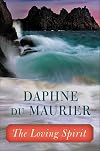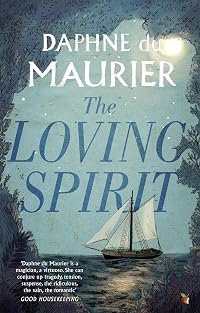
The Loving Spirit
by Daphne du Maurier
On This Page
Description
Born in turn of the century Cornwall, Janet Coombe longs to share in the excitement of seafaring: to travel, to have adventures, to know freedom. But constrained by the times, she marries her cousin Thomas, a boat builder, and settles down to raise a family. Janet's loving spirit--her passionate yearning for adventure and love--is passed down to her son, and through him to his children's children. As generations of the family struggle against hardship and loss, their intricately plotted show more history is set against the greater backdrop of war and social change in Britain. Her debut novel, The Loving Spirit established du Maurier's reputation and style with an inimitable blend of romance, history and adventure. show lessTags
Recommendations
























Member Reviews
Janet Coombe is a victim of her time and gender. She longs to know the wildness and freedom of the sea-faring life, but in Cornwall of the early 1800s, all that Janet may do is marry and raise a family. She ends up marrying her cousin, a staid ship-builder and raising six children with him. Janet is overjoyed when her boy Joseph, fulfills her secret dreams and becomes a sailor, eventually captaining his own ship - a ship built by his brothers - named the Janet Coombe. Through the trials, tribulations and tragedies which strike her family, Janet holds on to her lively and loving spirit and passes that on to the later generations. I really enjoyed this book, Daphne du Maurier's debut novel. I give it an A+!
This is impressive for a debut novel. Typical du Maurier Cornish setting. Atypical du Maurier in that it lacked a little with the dark and twisted plot turns. I still really enjoyed it, and Daphne remains my favorite author!!!
This was du Maurier's first novel, published in 1931 when she was just 24, and epitomises her love of Cornwall. This is a family saga describing the lives of four generations of the Coombe family, from Thomas and Janet, living and raising their family of several sons and daughters in the simple town of Plyn in the 1830s. Time follows through one of their sons, the dark and brooding Joseph, and his son Christopher, who initially rejects the quiet Cornish life for London, and his independent-minded daughter Jennifer who rejects her London family to return to Plyn in the 1920s. The spirit of Janet Coombe dominates the following generations, with her almost incestuous spiritual relationship with her son Joseph, and reverberating down the show more generations through her representation as the figurehead in an eponymous boat constructed by her family. The sea and sailing is as much of a character as the people throughout the narrative. Much of it is a very evocative and atmospheric, but with a slightly bittersweet feeling throughout, as in other du Maurier novels. A lovely read. show less
The Loving Spirit is the story of four generations of a shipbuilding family in 19th and early 20th century Cornwall. More specifically, the focus is one four members of the family: Janet, who’s story covers the period between 1830 and 1863; her son, Joseph (1863-1900); his son Christopher (1888-1912); and his daughter, Jennifer (1912-1930).
From the bleak Cornwelian landscape to London and back to Cornwall, Daphne Du Maurier weaves a fascinating story, heralding some of the novels that later made her famous. What I love about Du Maurier’s novels is that she really knew how to tell a compelling story.
While I didn’t quite buy the spiritual connection between Janet and her son Joseph (which supposedly also connects Christopher and show more Jennifer but gets dropped partway through the novel), I did enjoy the development of these characters over time. I love great family sagas, and only wish that this book had been longer and some of the characters more developed, particularly Jennifer, whose story got a bit rushed at the end. Also, the villain character was a little too stereotypical for my taste.
But otherwise, I really enjoyed this novel, particularly the author’s descriptions of Cornwall in the 19th and early 20th centuries. The plot moves swiftly, and Du Maurier does a fantastic story of contrasting the lives of the Coombe family against greater social and political events. Although not her best novel, this one is definitely a must for anyone who’s read Du Marier’s more famous novels, such as Rebecca and Jamaica Inn. show less
From the bleak Cornwelian landscape to London and back to Cornwall, Daphne Du Maurier weaves a fascinating story, heralding some of the novels that later made her famous. What I love about Du Maurier’s novels is that she really knew how to tell a compelling story.
While I didn’t quite buy the spiritual connection between Janet and her son Joseph (which supposedly also connects Christopher and show more Jennifer but gets dropped partway through the novel), I did enjoy the development of these characters over time. I love great family sagas, and only wish that this book had been longer and some of the characters more developed, particularly Jennifer, whose story got a bit rushed at the end. Also, the villain character was a little too stereotypical for my taste.
But otherwise, I really enjoyed this novel, particularly the author’s descriptions of Cornwall in the 19th and early 20th centuries. The plot moves swiftly, and Du Maurier does a fantastic story of contrasting the lives of the Coombe family against greater social and political events. Although not her best novel, this one is definitely a must for anyone who’s read Du Marier’s more famous novels, such as Rebecca and Jamaica Inn. show less
The Loving Spirit is my church book club’s November selection. All of us remembered reading and loving Rebecca when we were in high school. Well for some of us that was 30-50 years ago! So we were really excited about reading her very first novel, The Loving Spirit. I am afraid from early discussions, the consensus is that this book is just weird. There are some good things about it, but the first of the book is just creepy, and that is creepy-bad not creepy-good. Not sure if it is just our modern outlook on things as opposed to the worldview of the 1930s. So I’ll hit the good and then share the bad.
First the story – Janet is a free spirit, longing to have adventures and sail the seas, but as a young woman in the 1830s she must show more settle for life as a wife and mother. She loves her husband and children, but the deep spiritual connection with her son, Joseph, keeps her dreams alive. The book spans the lives of four generations of Janet’s family – her son Joseph, grandson Christopher and great-granddaughter Jennifer. The restlessness found in Janet is repeated through the generations causing personal and relationship problems for all the characters. There is also a strand of betrayal and bitter hatred that Janet’s son Phillip brings to the story.
Good points — multi-generational saga, well-developed characters, good look at the struggles women faced from 1830s to 1930s, indictment of Victorian manners. Beautiful prose, interesting story. Amazing that this complex novel was written when du Maurier was just 24.
Bad points — creepy relationship between Janet and her son, Joseph. The relationship bordered on the incestuous, at least from a 21st century perspective. Spiritual ambiguity — existence of God, existence of eternal justice. Amorality and situational ethics.
Now to be fair, this novel is purely secular and the worldview does not line up with the traditional Christian worldview. I expect a good amount of discussion from our group, which is really what we are looking for. show less
First the story – Janet is a free spirit, longing to have adventures and sail the seas, but as a young woman in the 1830s she must show more settle for life as a wife and mother. She loves her husband and children, but the deep spiritual connection with her son, Joseph, keeps her dreams alive. The book spans the lives of four generations of Janet’s family – her son Joseph, grandson Christopher and great-granddaughter Jennifer. The restlessness found in Janet is repeated through the generations causing personal and relationship problems for all the characters. There is also a strand of betrayal and bitter hatred that Janet’s son Phillip brings to the story.
Good points — multi-generational saga, well-developed characters, good look at the struggles women faced from 1830s to 1930s, indictment of Victorian manners. Beautiful prose, interesting story. Amazing that this complex novel was written when du Maurier was just 24.
Bad points — creepy relationship between Janet and her son, Joseph. The relationship bordered on the incestuous, at least from a 21st century perspective. Spiritual ambiguity — existence of God, existence of eternal justice. Amorality and situational ethics.
Now to be fair, this novel is purely secular and the worldview does not line up with the traditional Christian worldview. I expect a good amount of discussion from our group, which is really what we are looking for. show less
Loved this book, couldn't put it down. Many of Du Maurier's hallmarks can be seen here: passion, drama, suspense, and the always beautifully described landscapes of the Cornish coast. Knowing that this is her first novel made it easy for me to forgive any weak spots; indeed, I hardly noticed them once I got into the story. I was too hooked on what would happen next! Very satisfying read.
Excellent read - her first ovel. lots of Cornish atmosphere, but language a bit stilted in places.
Members
- Recently Added By
Lists

Favourite Virago Modern Classics
183 works; 38 members

Best family sagas
244 works; 34 members
Author Information

206+ Works 57,618 Members
Daphne Du Maurier was born in London on May 13, 1907 and educated in Paris. In 1932, she married Lieutenant-General Sir Frederick Browning. She began writing short stories of mystery and suspense for magazines in 1928, a collection of which appeared as The Apple Tree in 1952. Her first novel, The Loving Spirit, was published in 1931. Her tightly show more woven, highly suspenseful plots and her strong characters make her stories perfect for adaptation to film or television. Among her many novels that were made into successful films are Jamaica Inn (1936), Rebecca (1938), Frenchman's Creek (1941), Hungry Hill (1943), My Cousin Rachel (1952), and The Scapegoat (1957). Her short story, The Birds (1953), was brought to the screen by director Alfred Hitchcock in a treatment that has become a classic horror-suspense film. She died on April 19, 1989 at the age of 81. (Bowker Author Biography) show less
Some Editions
Series
Belongs to Publisher Series
Work Relationships
Is contained in
Has as a supplement
Common Knowledge
- Canonical title
- The Loving Spirit
- Original title
- The Loving Spirit
- Original publication date
- 1931
- People/Characters
- Janet Coombe; Joseph; Philip
- Important places
- Cornwall, England, UK; England, UK
- First words
- Janet Coombe stood on the hill above Plyn, looking down upon the harbour.
- Original language*
- English
- Disambiguation notice
- There are two sets of Virago Modern Classics covers. Please don't change the covers of the earlier editions - when adding books, look through the list for your edition
*Some information comes from Common Knowledge in other languages. Click "Edit" for more information.
Classifications
- Genres
- Fiction and Literature, General Fiction, Romance, Historical Fiction
- DDC/MDS
- 823.912 — Literature & rhetoric English & Old English literatures English fiction 1900- 1901-1999 1901-1945
- LCC
- PZ3 .D8916 .L — Language and Literature Fiction and juvenile belles lettres Fiction and juvenile belles lettres Fiction in English
- BISAC
Statistics
- Members
- 551
- Popularity
- 54,441
- Reviews
- 9
- Rating
- (3.74)
- Languages
- 7 — Czech, Dutch, English, French, German, Italian, Polish
- Media
- Paper, Audiobook, Ebook
- ISBNs
- 31
- UPCs
- 1
- ASINs
- 32