On This Page
Description
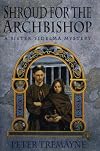
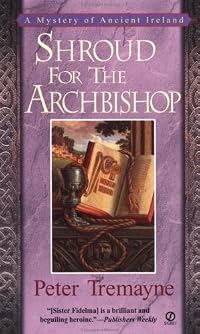
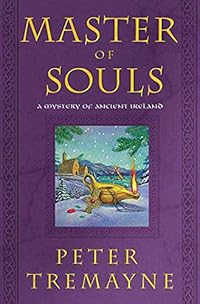
Wighard, Archbishop designate of Canterbury, has been found dead, garrotted in his chambers in Rome's Lateran Palace in the autumn of A.D. 664. His murderer seems apparent to all, since an Irish religieux was arrested by the palace guards as he fled Wighard's chamber, but the monk denies responsibility for the crime, and the treasures missing from Wighard's chambers are nowhere to be found. The bishop in charge of affairs at the Lateran Palace suspects a political motive and is wary of show more charging someone without independent evidence. So he asks Sister Fidelma of the Celtic Church to look into Wighard's death. Fidelma (an advocate of the Brehon Court), working with Brother Eadulf of the Roman Church, quickly finds herself with very few clues, too many motives, a trail strewn with bodies--and very little time before the killer strikes again. show lessTags
Recommendations














Member Reviews
Sister Fidelma brings her Irish trained legal mind and personal feistiness to Rome where it goes head on with more fusty and traditional 7th century church thinking. Good look at Ancient Rome during the first of what would become many conflicts with Muslim mentality. Early locked room mystery within the Papal State as she and her Saxon cohort, Eadolf, must reconcile Irish thinking, Saxon traditions and Roman Church conventions to produce the villains.
Rating is rounded up from 3.5 stars.
Sister Fidelma solves several murders in 7th-century Rome.
Sister Fidelma is a Celtic nun as well as a dalaigh, which means she is an advocate in the courts of the Five Kingdoms of Eirann. With the help of Saxon monk Brother Eadulf, Fidelma perseveres and prevails over church heirarchy and Roman custom to solve the murder of Archbishop Wighard, who was garrotted by his own prayer cord. Several more garrottings occur throughout the course of the book until Sister Fidelma, with the help of Brother Eadulf, names the killer.
Readers are treated to lots of historical tidbits about Rome, and I won’t deny that I enjoyed it when the more odious characters got their comeuppance. Overall, this was a solid show more read, well-researched and literate. There are lots of needlessly convoluted machinations and red herrings – and the scene of Fidelma’s exposure of the killer is excruciating. (“Name the killer, Sister!” followed by Fidelma asking for water because her mouth is dry and then slowly sipping the water, telling stories, asking people to write the name of a certain farmer down and pass it to someone else, etc.) I listened to the end at 200% playbask speed.
The last scene in the book, in which Fidelma says goodbye to many other characters before hopping on a boat back to Ireland, is poignant; every goodbye carries the weight of knowing that paths are unlikely to cross again.
Narrator Caroline Lennon brings the voice of Sister Fidelma to life with admirable skill.
I recommend this series to anyone intrested in 7th-century Britain/Ireland, and this book in particular would be appeciated by those interested Roman history. I don’t know that I’ll read or listen to the rest of the series; it’s not one of the few for which I wait, breathless with anticipation, for the next installment to be published. show less
Sister Fidelma solves several murders in 7th-century Rome.
Sister Fidelma is a Celtic nun as well as a dalaigh, which means she is an advocate in the courts of the Five Kingdoms of Eirann. With the help of Saxon monk Brother Eadulf, Fidelma perseveres and prevails over church heirarchy and Roman custom to solve the murder of Archbishop Wighard, who was garrotted by his own prayer cord. Several more garrottings occur throughout the course of the book until Sister Fidelma, with the help of Brother Eadulf, names the killer.
Readers are treated to lots of historical tidbits about Rome, and I won’t deny that I enjoyed it when the more odious characters got their comeuppance. Overall, this was a solid show more read, well-researched and literate. There are lots of needlessly convoluted machinations and red herrings – and the scene of Fidelma’s exposure of the killer is excruciating. (“Name the killer, Sister!” followed by Fidelma asking for water because her mouth is dry and then slowly sipping the water, telling stories, asking people to write the name of a certain farmer down and pass it to someone else, etc.) I listened to the end at 200% playbask speed.
The last scene in the book, in which Fidelma says goodbye to many other characters before hopping on a boat back to Ireland, is poignant; every goodbye carries the weight of knowing that paths are unlikely to cross again.
Narrator Caroline Lennon brings the voice of Sister Fidelma to life with admirable skill.
I recommend this series to anyone intrested in 7th-century Britain/Ireland, and this book in particular would be appeciated by those interested Roman history. I don’t know that I’ll read or listen to the rest of the series; it’s not one of the few for which I wait, breathless with anticipation, for the next installment to be published. show less
2nd in the Sister Fidelma mystery series set in 7th century Ireland and that world.
The 2nd installment sees Sister Fidelma in Rome. It’s curious that the series touts itself as “a mystery of ancient Ireland”, because the first two books are set in Saxon England and in Rome, respectively. We learn a good deal about Irish culture and law, but see nothing of Ireland itself.
Fidelma has been sent to Rome by the religious authorities in Ireland to see approval for the rule of the community at Kildare. She meets figures from the first book: Brother Eadulf, to whom she is attracted and Archbishop of Canterbury-designate Wighard. He is murdered, and the pope himself is anxious for Fidelma and Eadulf to find the killer because given the show more tensions between the Celtic and Roman sects, war could break out in England if one side believed the other had assassinated.
The plot is resolved, of course, but not before a great many other religious are killed off. Makes you wonder how the Christian churches managed to survive, given the high mortality rate of its clerics!
Through Sister Fidelma, Tremayne does not hesitate to criticize the Roman Church and its fondness for luxury and expensive trappings for its religious buildings and accoutrements, as well as hold up for ridicule the superstitious beliefs in relics, such as the True Cross (not even in Palestine under the best of conditions is wood going to last that long) and the staircase Christ descended from Pilate’s palace, all venerated by the Church in Rome.
Tremayne’s description of 7th century Rome, the impact of the rise of Islam, and the politics of the Roman Church, even if fictionalized, make the book interesting. The prose is marginally better than the first book, and there is an interesting subplot involving the famous ancient library in Alexandria, destroyed in the 7th century. I’m still don’t think that the series is as good as the Brother Caedfel series—for one thing, Tremayne is fond of Nero Wolfe type endings where all the suspects are gathered together and Fidelma, in a long, drawn-out scene, goes through the evidence, the logic,and then identifies the culprit. But I have the next two books and will continue to read to see if they are an improvement, because I still like the basic premise of a setting in 7th century Celtic culture. There’s hope. show less
The 2nd installment sees Sister Fidelma in Rome. It’s curious that the series touts itself as “a mystery of ancient Ireland”, because the first two books are set in Saxon England and in Rome, respectively. We learn a good deal about Irish culture and law, but see nothing of Ireland itself.
Fidelma has been sent to Rome by the religious authorities in Ireland to see approval for the rule of the community at Kildare. She meets figures from the first book: Brother Eadulf, to whom she is attracted and Archbishop of Canterbury-designate Wighard. He is murdered, and the pope himself is anxious for Fidelma and Eadulf to find the killer because given the show more tensions between the Celtic and Roman sects, war could break out in England if one side believed the other had assassinated.
The plot is resolved, of course, but not before a great many other religious are killed off. Makes you wonder how the Christian churches managed to survive, given the high mortality rate of its clerics!
Through Sister Fidelma, Tremayne does not hesitate to criticize the Roman Church and its fondness for luxury and expensive trappings for its religious buildings and accoutrements, as well as hold up for ridicule the superstitious beliefs in relics, such as the True Cross (not even in Palestine under the best of conditions is wood going to last that long) and the staircase Christ descended from Pilate’s palace, all venerated by the Church in Rome.
Tremayne’s description of 7th century Rome, the impact of the rise of Islam, and the politics of the Roman Church, even if fictionalized, make the book interesting. The prose is marginally better than the first book, and there is an interesting subplot involving the famous ancient library in Alexandria, destroyed in the 7th century. I’m still don’t think that the series is as good as the Brother Caedfel series—for one thing, Tremayne is fond of Nero Wolfe type endings where all the suspects are gathered together and Fidelma, in a long, drawn-out scene, goes through the evidence, the logic,and then identifies the culprit. But I have the next two books and will continue to read to see if they are an improvement, because I still like the basic premise of a setting in 7th century Celtic culture. There’s hope. show less
I am reading this series in order now and I enjoyed this one. It was a fast read and exists on two levels. First you have the mystery of the death of Wighard, Archbishop Designate of Canterbury. The author does a good job placing you in Rome in about 664AD. The mystery unfolds gradually with clues dropped down steadily and you get caught up in deciphering them (at least I do). I like the writing style very much. Secondly you watch the emerging relationship between Sister Fidelma and her Saxon friend Brother Eadulf. The banter between them is delightful and full of promise.
Overall a good read and I look forward to finding the next of the series.
Overall a good read and I look forward to finding the next of the series.
This is the second novel in Peter Tremayne's Sister Fidelma mystery series, which is set during the 7th century. Set in Rome, the novel centres around the murder of the archbishop-designate of Canterbury, Wighard. Fidelma, who has travelled to Rome on behalf of her church in Ireland, is once again called upon to investigate the death of Wighard. As in the first novel in the series, Fidelma is joined in her investigation by Eadulf, who was secretary to Wighard. As the two navigate through their investigation, it soon becomes clear to Fidelma that the case is not as clear cut as it may initially have seemed.
I find this series interesting not only for the mysteries themselves and the characters, but also because of the history. I'm show more especially interested in the differences between the early Roman church and the churches in Ireland. show less
I find this series interesting not only for the mysteries themselves and the characters, but also because of the history. I'm show more especially interested in the differences between the early Roman church and the churches in Ireland. show less
Sister Fidelma in Rome, investigating a suspicious murder, interesting stuff.
Sister Fidlma solves killing of archbishop in Rome
Members
- Recently Added By
Lists

al.vick-parents books
301 works; 1 member
Author Information

148+ Works 14,974 Members
Peter Tremayne is the fiction writing pseudonym of the Celtic scholar and author Peter Berresford Ellis, who was born in Coventry, Warwickshire, England on March 10, 1943. Even though he received a BA and an MA in Celtic Studies, he decided to become a journalist and worked at numerous weekly newspapers throughout England and Ireland. In 1968, he show more published is first book, Wales: A Nation Again, about the Welsh struggle for political independence. He became a full-time writer in 1975 and has published over 90 books under his own name and the pseudonyms Peter Tremayne and Peter MacAlan. One of his best known works under his real name is The Cornish Language and its Literature, which is considered the definitive history of the language. In 1988, he received an Irish Post Award in recognition of his services to Irish historical studies. Under the pseudonym Peter Tremayne, he writes the Sister Fidelma Mystery series. He received the French Prix Historia for the best historical mystery novel of 2010 for Le Concile des Maudits (The Council of the Cursed). (Bowker Author Biography) show less
Some Editions
Series

Work Relationships
Is contained in
Common Knowledge
- Canonical title
- Shroud for the Archbishop
- Original publication date
- 1995-01 (Headline Book Publishing|London) (Headline Book Publishing | London)
- People/Characters
- Sister Fidelma; Eadulf
- Important places
- Rome, Italy
- Dedication*
- Pour Peter Haining,
en remerciement de ses conseils sur la chrétienté, et pour Mike Ashley, le premier "converti" par soeur Fidelma - First words
- The night was warm and fragrant; but as oppressively scented as only a Roman summer's night can frequently be.
- Last words*
- (Click to show. Warning: May contain spoilers.)Elle rentrait chez elle.
*Some information comes from Common Knowledge in other languages. Click "Edit" for more information.
Classifications
Statistics
- Members
- 606
- Popularity
- 48,022
- Reviews
- 11
- Rating
- (3.85)
- Languages
- 8 — Dutch, English, Estonian, French, German, Italian, Spanish, Swedish
- Media
- Paper, Audiobook, Ebook
- ISBNs
- 23
- ASINs
- 11