On This Page
Description
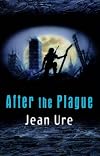
When Daniel is knocked unconscious, he wakes to see April and Meta staring at him as if he was a creature from outer space. Croydon has become an ultra feminist community and women hold power. This is the sequel to Plague 99.Tags
Recommendations



























Member Reviews
Maybe I shouldn't like this book, but I do.
A hundred years after the great plague wiped out nearly all of humanity, people live in small isolated communities. Daniel travels from Cornwall to London to try and find his great-grandmother's diary. But the main thing he finds is April Harriet's community.
I love the bold Young Adult 'this world doesn't need to make sense, we can just play with Big Ideas' of this book. I love the angry feminist 'all men are so terrible the only way to survive is tocastrate them all ' themes, and the way the book argues with them while giving them a platform. I love the power of the false dichotomy of Daniel's regressive society with no sex before marriage and no women in positions of leadership at all, and show more April's absolutely-no-violence, no-one actually called the leader even though it's clear who is.
I like the way it skirts round the possibility of a very predictable 'boy meets girl, they fall in love across the worlds and then run off into the sunset' plot, but makes it all a bit more complicated than that.
And I love all the characters. Even if they are in some lights very young adult and two dimensional, they are so very human and loveable. April, red headed and impulsive and passionate. David,mutilated to fit in to his society , trying to work out how to improve things for the better without smashing them up. And all the side characters, teenagers trading their relationships to find a better fit, bitter canteen workers, powerful doctors... It's a very rich world full of people-y people.
Or maybe I just love it because years ago I read it at exactly the right age? But I do. show less
A hundred years after the great plague wiped out nearly all of humanity, people live in small isolated communities. Daniel travels from Cornwall to London to try and find his great-grandmother's diary. But the main thing he finds is April Harriet's community.
I love the bold Young Adult 'this world doesn't need to make sense, we can just play with Big Ideas' of this book. I love the angry feminist 'all men are so terrible the only way to survive is to
I like the way it skirts round the possibility of a very predictable 'boy meets girl, they fall in love across the worlds and then run off into the sunset' plot, but makes it all a bit more complicated than that.
And I love all the characters. Even if they are in some lights very young adult and two dimensional, they are so very human and loveable. April, red headed and impulsive and passionate. David,
Or maybe I just love it because years ago I read it at exactly the right age? But I do. show less
This book, the second in the plague trilogy, begins some time after the plague has occured. We learn that the virus was in fact airborn and most of the world perished in the epidemic. It is stated that the plague may have been the result of germ warfare, but this can't be confirmed. A grandchild of Fran and Shahid, Daniel, wants to seek out London to see what it is like now. He has learned about it from Fran's journal. When he gets there he finds a civilization where women rule and men are castrated and carefully kept under control. He meets April, who is a member of this community, and both learn that what they know about the way they live may not be the truth.
Daniel's community is a fairly primitive place; April's is not. However, show more April is taught that there is little good in men and without their community measures they would be barely civilized brutes. Both are seen as imperfect places. The only thing that is established in them that is not ambigous is the fact April lives in a vegetarian community, and that is the only thing the author marks as clearly superior. She has a male friend, David, and with her interactions with Daniel she realizes that perhaps she does not know the entire truth. While Daniel and April both remain in the places they grew up, they are both changed and this is the set-up for the final book. The book is careful to point out the wrong aspects of April's community; despite what many claim, it is not portrayed as a paradise. Both of the ways of living feel like they could have easily developed after a holocaust such as the plague, While drastically different than the first book, it is also well worth reading. show less
Daniel's community is a fairly primitive place; April's is not. However, show more April is taught that there is little good in men and without their community measures they would be barely civilized brutes. Both are seen as imperfect places. The only thing that is established in them that is not ambigous is the fact April lives in a vegetarian community, and that is the only thing the author marks as clearly superior. She has a male friend, David, and with her interactions with Daniel she realizes that perhaps she does not know the entire truth. While Daniel and April both remain in the places they grew up, they are both changed and this is the set-up for the final book. The book is careful to point out the wrong aspects of April's community; despite what many claim, it is not portrayed as a paradise. Both of the ways of living feel like they could have easily developed after a holocaust such as the plague, While drastically different than the first book, it is also well worth reading. show less
Ratings
Members
- Recently Added By
Lists

Viral Outbreaks and Pandemics
82 works; 8 members
Author Information

185+ Works 2,172 Members
Series

Common Knowledge
- Canonical title
- After the Plague
- Original title
- Come lucky April
- Alternate titles
- After the Plague
- Disambiguation notice
- Come lucky April (Republished as: After the Plague)
Classifications
Statistics
- Members
- 36
- Popularity
- 801,692
- Reviews
- 3
- Rating
- (3.50)
- Languages
- English
- Media
- Paper, Ebook
- ISBNs
- 4