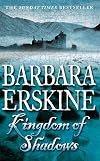
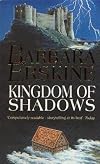
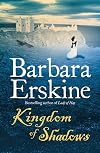
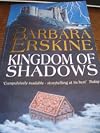
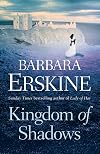
Kingdom of Shadows
by Barbara Erskine
On This Page
Description
Gorgeous repackage of Barbara Erskine's first novel, blending history, family legacy and contemporary passion In a childless and unhappy marriage, Clare Royland is rich and beautiful - but lonely. And fueling her feelings of isolation is a strange, growing fascination with an ancestress from the distant past. Troubled by haunting inexplicable dreams that terrify - but also powerfully compel - her, Clare is forced to look back through the centuries for answers. In 1306, Scotland is at war. show more Isobel, Countess of Buchan, faces fear and the prospect of untimely death as the fighting surrounds her. But passionate and headstrong, her trials escalate when she is persecuted for her part in crowning Robert the Bruce, her lover. Duncairn, Isobel's home and Clare's beloved heritage, becomes a battleground for passions that span the centuries. As husband Paul's recklessness threatens their security, Clare must fight to save Duncairn, and to save herself from the powers of Isobel... show lessTags
Recommendations









Member Reviews
After reading the author's first novel I debated whether to bother with this one, also on my shelves as a charity shop acquisition. I believe it is her second novel and broadly follows the same narrative split of a contemporary narrative (set in the 1980s when the book was published) and a medieval past which the female protagonist is drawn into. However, this novel is not nearly as objectionable as 'Lady of Hay' because at least there is no suggestion that women enjoy being knocked about or raped etc as there was in that book, despite there being some violence against the female protagonist.
Clare is the bored wife of a rich banker, Paul, who has been insider dealing, has lost money without telling her and is becoming increasingly show more desperate to get his hands on Clare's property, her beloved castle in Scotland Duncairn (a castle which is fictional as made clear in the author's afterword). He lies to her about his own infertility, saying the doctor told him she was the one who can't have children. After being unable to contact the doctor she eventually gives up trying, which I found rather unconvincing given her later discoveries that he is a compulsive liar. I also thought the doctor was negligent given that she should surely have been offered counselling, but that of course would lead to her discovery of the truth which has to happen late in the novel.
Paul's machinations become more extreme as the modern day storyline progresses. Meanwhile the meditation which Clare has been learning from her teacher Zak leads her to tap into the past life of Isobel, a woman of the nobility in 13th century Scotland and a contemporary of Robert the Bruce. Clare's family have a connection to Isobel, and her deceased great aunt from whom she inherited Duncairn, also had visitations from her. Quite a bit of the past storyline is based on actual history although the author's note at the end does inform us that the romance between Isobel and the eventual Scottish king is based upon English slanders of the time (both parties were married to other people).
As the story progresses, Clare becomes increasingly overpowered by Isobel's need to show her the past. Meanwhile Paul uses her preoccupation to pretend to all and sundry that she is mad or possessed. His brothers - who include a vicar and a Member of Parliament - are so gullible that they go along with this. Paul pretends that Zak is the leader of a cult and his brothers are persuaded that yoga and meditation are evil and that people who practice them will be sucked in by mind controlling cults. As far as they are concerned, Clare is performing black magic and Satanic rites. They seem capable of believing - despite the contradiction - that she is mad and that spirits actually exist and have possessed her. I found all this rather hard to take seriously. If they had followed up various plans to take her to psychiatrists I thought they would be the ones who ended up under scrutiny.
Only the women in the family, Paul's sister Emma, and the vicar's wife Chloe, are doubtful and put up any kind of defence on her behalf. Clare's mother is too much of a doormat to stand up against Archie, her second husband, who dislikes step-daughter Clare for no apparent reason and thinks she needs sorting out by her husband. Parts of this storyline became quite risible with the vicar brother resorting to exorcism. Clare's mother and stepfather meanwhile think it is OK to keep her cooped up in their house at one point and to enforce a reconcilliation between the warring parties. They refused to believe anything she says about what he had been doing to try to trick or force her to sell the castle and adjacent lands.
One good point to the book is that although there is eventually a male romantic lead, Neil, he and Clare at first dislike each other. He is an organiser for an environmental group who are trying to save Duncairn and its environs from the oil interest to whom Paul plans to sell the property. There is a minor subplot involving him and his current girlfriend who becomes very vindictive when she senses the attraction between Neil and Clare, and Neil does not play a major role nor does Clare constantly moon over him. This was a nice contrast to the 'Lady of Hay' where the romantic male lead was an awful character and the female lead loved him despite his constant abuse of her: co-dependency basically.
The main problem with the novel is that the modern day part is dragged out, well beyond the point where it should be resolved. There are various non-incidents to spice it up, such as a mini car crash where Clare has to be towed out of a field by an oblidging farmer. The lengths Paul goes to and the way in which his brothers and Archie just brush off what he is doing becomes increasingly unbelievable. Even when he runs off with a loaded gun, Archie does not report him to the police. Clare herself is a very pathetic character with little ability to resist what is happening to her and a passive onlooker to Isobel's story. She sometimes contributes to the situation where Paul's brothers gullibly believe she is a Satanist or witch and is quite ineffectual at times in expressing herself. I found her rather a frustrating character and much preferred Emma.
As with 'Lady of Hay' the story set in the past would have made a fairly decent historical romance novel in its own right, but presumably there was still the issue I noted in the review of that book where publishers were uncomfortable publishing straight historicals in their stubborn belief that there was no market for such. It is a powerful tale with great descriptions and a strong narrative drive involving the political struggles between England and Scotland, with the romance between Isobel and Robert set against that. A lot of great historical detail is worked into the narrative. The only mistake that stood out to me was the mention of napkins used on laps - as napkins were draped over the shoulder for the diner to wipe their fingers on during Tudor times I don't think they would have been used on laps in the 13th century. But the evocation of the lifestyle of the well off, the religious beliefs, the cruelty and barbarism of punishments and the position of women were all well evoked. As was the beauty but also starkness and coldness of the Scottish landscape especially in autumn and winter.
In conclusion, I liked this book more than I expected although the last hundred or so pages were quite a slog. I did guess the twist that Paul's attempt to force Clare into signing a power of attorney would fail as, given her confused state due to his mistreatment, she would have signed Isobel's name . I should point out that this book may upset anyone who doesn't like stories where animals, particularly dogs, meet a sad fate.
Given that this book is rather a mixed bag, with the historical material being far superior to the contemporary framework, it balances out for me as a 3 star read. show less
Clare is the bored wife of a rich banker, Paul, who has been insider dealing, has lost money without telling her and is becoming increasingly show more desperate to get his hands on Clare's property, her beloved castle in Scotland Duncairn (a castle which is fictional as made clear in the author's afterword). He lies to her about his own infertility, saying the doctor told him she was the one who can't have children. After being unable to contact the doctor she eventually gives up trying, which I found rather unconvincing given her later discoveries that he is a compulsive liar. I also thought the doctor was negligent given that she should surely have been offered counselling, but that of course would lead to her discovery of the truth which has to happen late in the novel.
Paul's machinations become more extreme as the modern day storyline progresses. Meanwhile the meditation which Clare has been learning from her teacher Zak leads her to tap into the past life of Isobel, a woman of the nobility in 13th century Scotland and a contemporary of Robert the Bruce. Clare's family have a connection to Isobel, and her deceased great aunt from whom she inherited Duncairn, also had visitations from her. Quite a bit of the past storyline is based on actual history although the author's note at the end does inform us that the romance between Isobel and the eventual Scottish king is based upon English slanders of the time (both parties were married to other people).
As the story progresses, Clare becomes increasingly overpowered by Isobel's need to show her the past. Meanwhile Paul uses her preoccupation to pretend to all and sundry that she is mad or possessed. His brothers - who include a vicar and a Member of Parliament - are so gullible that they go along with this. Paul pretends that Zak is the leader of a cult and his brothers are persuaded that yoga and meditation are evil and that people who practice them will be sucked in by mind controlling cults. As far as they are concerned, Clare is performing black magic and Satanic rites. They seem capable of believing - despite the contradiction - that she is mad and that spirits actually exist and have possessed her. I found all this rather hard to take seriously. If they had followed up various plans to take her to psychiatrists I thought they would be the ones who ended up under scrutiny.
Only the women in the family, Paul's sister Emma, and the vicar's wife Chloe, are doubtful and put up any kind of defence on her behalf. Clare's mother is too much of a doormat to stand up against Archie, her second husband, who dislikes step-daughter Clare for no apparent reason and thinks she needs sorting out by her husband. Parts of this storyline became quite risible with the vicar brother resorting to exorcism. Clare's mother and stepfather meanwhile think it is OK to keep her cooped up in their house at one point and to enforce a reconcilliation between the warring parties. They refused to believe anything she says about what he had been doing to try to trick or force her to sell the castle and adjacent lands.
One good point to the book is that although there is eventually a male romantic lead, Neil, he and Clare at first dislike each other. He is an organiser for an environmental group who are trying to save Duncairn and its environs from the oil interest to whom Paul plans to sell the property. There is a minor subplot involving him and his current girlfriend who becomes very vindictive when she senses the attraction between Neil and Clare, and Neil does not play a major role nor does Clare constantly moon over him. This was a nice contrast to the 'Lady of Hay' where the romantic male lead was an awful character and the female lead loved him despite his constant abuse of her: co-dependency basically.
The main problem with the novel is that the modern day part is dragged out, well beyond the point where it should be resolved. There are various non-incidents to spice it up, such as a mini car crash where Clare has to be towed out of a field by an oblidging farmer. The lengths Paul goes to and the way in which his brothers and Archie just brush off what he is doing becomes increasingly unbelievable. Even when he runs off with a loaded gun, Archie does not report him to the police. Clare herself is a very pathetic character with little ability to resist what is happening to her and a passive onlooker to Isobel's story. She sometimes contributes to the situation where Paul's brothers gullibly believe she is a Satanist or witch and is quite ineffectual at times in expressing herself. I found her rather a frustrating character and much preferred Emma.
As with 'Lady of Hay' the story set in the past would have made a fairly decent historical romance novel in its own right, but presumably there was still the issue I noted in the review of that book where publishers were uncomfortable publishing straight historicals in their stubborn belief that there was no market for such. It is a powerful tale with great descriptions and a strong narrative drive involving the political struggles between England and Scotland, with the romance between Isobel and Robert set against that. A lot of great historical detail is worked into the narrative. The only mistake that stood out to me was the mention of napkins used on laps - as napkins were draped over the shoulder for the diner to wipe their fingers on during Tudor times I don't think they would have been used on laps in the 13th century. But the evocation of the lifestyle of the well off, the religious beliefs, the cruelty and barbarism of punishments and the position of women were all well evoked. As was the beauty but also starkness and coldness of the Scottish landscape especially in autumn and winter.
In conclusion, I liked this book more than I expected although the last hundred or so pages were quite a slog. I did guess the twist
Given that this book is rather a mixed bag, with the historical material being far superior to the contemporary framework, it balances out for me as a 3 star read. show less
Clare seems to have it all, money, land and a handsome husband. However, when Paul and Clare learn that they cannot have children, things seem to go awry. Through focused meditation, Clare begins reliving the past as Isobel, Countess of Buchan. The story alternates between the crumbling life of Paul and Clare and the war torn Scotland of the fourteenth century. As Paul makes one bad investment after another, he begins to pressure Clare to sell her inheritance, the ruined castle on the sea and the surrounding land of Duncairn. As he learns about her "trips into the past" he first involves the church and then plays upon her phobias to drive her further away from sanity.
Well written, this was definitely a page turner. I first picked up the show more book because I was interested in Isobel, the woman who spent four years hanging in a cage for crowning Robert the Bruce King of Scotland. However, now I've found an increasing interest in Scottish history. Her suspenseful writing style keeps the reader engaged and interested and her characters are dynamic and interesting. show less
Well written, this was definitely a page turner. I first picked up the show more book because I was interested in Isobel, the woman who spent four years hanging in a cage for crowning Robert the Bruce King of Scotland. However, now I've found an increasing interest in Scottish history. Her suspenseful writing style keeps the reader engaged and interested and her characters are dynamic and interesting. show less
I really enjoyed this book not least as I live in the area the book concentrates on and have many of the names featured in my own family so maybe its my own family history!!
It switches between 14C Scotland and the wars between England and Scotland and contempory Scotland where an ancestor of Countess Isobel relives her life through dreams and meditations. Although fictionalised the account of ancient Scotland reads well and is very believable. The modern day Clare can be very annoying at times and comes across as a spoilt little rich girl but its hard not to get involved in her story and will her to suceed.
I wasn't comfortable with her use of yoga and medication techniques to 'summon' Isobel but this story does show how dangerous they show more can be. show less
It switches between 14C Scotland and the wars between England and Scotland and contempory Scotland where an ancestor of Countess Isobel relives her life through dreams and meditations. Although fictionalised the account of ancient Scotland reads well and is very believable. The modern day Clare can be very annoying at times and comes across as a spoilt little rich girl but its hard not to get involved in her story and will her to suceed.
I wasn't comfortable with her use of yoga and medication techniques to 'summon' Isobel but this story does show how dangerous they show more can be. show less
This was one of my favorite books many, many years ago. Now I have reread it and just got plain frustrated with the main character. I sincerely hope women don't act or think like that anymore! But the historic story is great!
Another spectacular and gripping read from Barbara Eskine. Never paid to annoy Edward I and Isobel, Countess of Buchan certainly paid a very heavy price. How she survived her punishment I will never know. Good tension in both the current story and the story set in the early days of 14th Century.
Fabulous story, never a dull moment. Wonderfully written and steeped in Scottish/English history. Can’t wait to start the next Erskine book, she is an amazing author.
Kingdom of Shadows is a parallel tale of Clare Royland in the 1980's and Isobel Buchan in Scotland at the time of Robert The Bruce in the latter 13th and early 14th century. Clare is married to stock broker Paul Royland who gambled with insider trading and lost and needs to sell Clare's Scottish Castle Duncairn to raise desperately needed funds. Unhappy in her marriage, Clare turns to yoga and meditation and she begins to see visions of the past as Isobel Buchan of Scotland relives her past through Clare.
The retelling of Isobel's life in Scotland, an unhappy marriage and her ultimate affair with Robert the Bruce and capture by Edward I and imprisonment in one of those infamous cages on the castle wall is interwoven with that of the show more present day Clare whose husband intrigues to have her proven insane so that he can lay claim to her property. Erskine does point out in her notes at the end of the book that Isobel, her crowning of Robert at Scone and capitivy are historical fact, but the affair with Robert is merely supposition by the author.
I did find the story entertaining enough and it kept me reading, but this is definitely not one of Erskine's best -- that would be Child of the Phoenix or Hiding from the Light. While I enjoyed the story set in the 13/14C, I really didn't particularly care for Isobel, she was a little too self centered for me and as for Clare -- likeable enough but bordering on TSTL for putting up with that pompous pig of a husband and not seeing him for what he really was. If you're an Erskine fan and can get your hands on a copy somewhat cheaply go for it, but don't go out of your way either. show less
The retelling of Isobel's life in Scotland, an unhappy marriage and her ultimate affair with Robert the Bruce and capture by Edward I and imprisonment in one of those infamous cages on the castle wall is interwoven with that of the show more present day Clare whose husband intrigues to have her proven insane so that he can lay claim to her property. Erskine does point out in her notes at the end of the book that Isobel, her crowning of Robert at Scone and capitivy are historical fact, but the affair with Robert is merely supposition by the author.
I did find the story entertaining enough and it kept me reading, but this is definitely not one of Erskine's best -- that would be Child of the Phoenix or Hiding from the Light. While I enjoyed the story set in the 13/14C, I really didn't particularly care for Isobel, she was a little too self centered for me and as for Clare -- likeable enough but bordering on TSTL for putting up with that pompous pig of a husband and not seeing him for what he really was. If you're an Erskine fan and can get your hands on a copy somewhat cheaply go for it, but don't go out of your way either. show less
Members
- Recently Added By
Talk Discussions
Past Discussions
fiction probably at least 15 years old in Name that Book (October 2010)
Author Information

35+ Works 5,075 Members
Common Knowledge
- Canonical title
- Kingdom of Shadows
- Original publication date
- 1988
- People/Characters
- Clare Royland; Isabella MacDuff; Robert the Bruce; Zak
- Important places
- Duncairn Castle; Scotland, UK
- Original language*
- English
*Some information comes from Common Knowledge in other languages. Click "Edit" for more information.
Classifications
- Genres
- Fiction and Literature, General Fiction, Historical Fiction, Science Fiction, Romance, Fantasy
- DDC/MDS
- 823.914 — Literature & rhetoric English & Old English literatures English fiction 1900- 1901-1999 1945-1999
- LCC
- PR6055 .R7 .K56 — Language and Literature English English Literature 1961-2000
- BISAC
Statistics
- Members
- 383
- Popularity
- 81,696
- Reviews
- 12
- Rating
- (4.10)
- Languages
- Czech, English, German, Swedish
- Media
- Paper, Audiobook, Ebook
- ISBNs
- 22
- ASINs
- 5