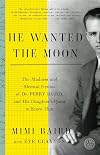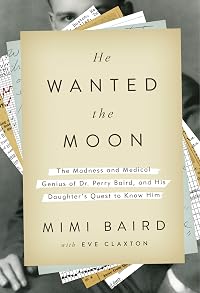
He Wanted the Moon: The Madness and Medical Genius of Dr. Perry Baird, and His Daughter's Quest to Know Him
by Mimi Baird, Eve Claxton
On This Page
Description
The author pieces together the story of her absent father's life, beginning with his advancements in isolating the biochemical root of manic depression, which he then began to suffer from himself, leading to years of institutionalization and confinement.Tags
Recommendations





















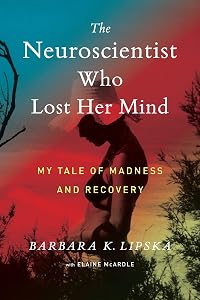
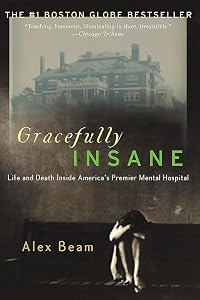







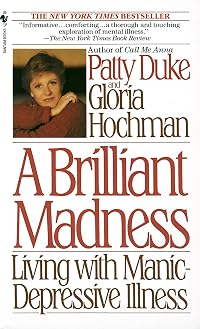

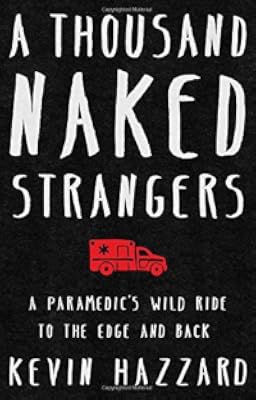


Member Recommendations


The Bridesmaid's Daughter: From Grace Kelly's Wedding to a Women's Shelter - Searching for the Truth About My Mother by Nyna Giles
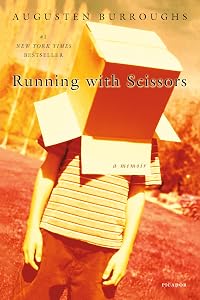
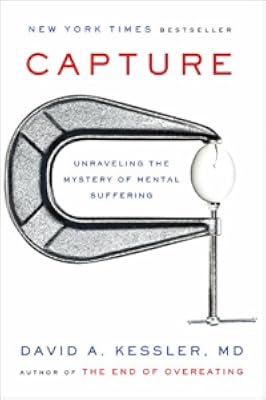
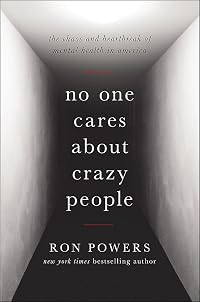
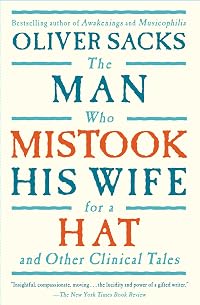
akblanchard In addition to sharing a subject (parents with mental illness) these two books also share a co-author, Eve Claxton.
Member Reviews
Mimi Baird, a senior citizen and grandmother, has traveled a long way in her life. In her 70s, she is realizing the dream of knowing her father and, at the same time, publishing her first book. HE WANTED THE MOON is a moving and, at times - heart wrenching - story. In the epilogue, the author says: "My editor had asked me to go back into my archive of my father's writings and to transcribe every single word that I could find there." One can hear the editor saying this - and for good reason. The sections written by Dr. Perry Baird - most of them when he was a patient at Westborough State Hospital in Massachusetts in the 1940s - are the core of the book.
Mimi Baird's memoir of growing up mostly without a father, of living within a family show more where her father was never mentioned or, if he was, it was fleetingly and vague, is similar to other young girls being raised with absent fathers. The difference is that Mimi remembered her father; she was six when he "left" (was hospitalized). Dr. Perry Baird was a brilliant doctor with an active dermatology practice who also studied bipolar disease (then known as manic depression) and tried to find a biochemical cause for it. He had everything going for him: intelligence, personality, good looks, and a wife and two young daughters. Unfortunately, he had a psychiatric illness and was being treated for it during a time in history before the discovery of Lithium.
The pages written by Dr. Perry Baird are chilling, terrifying, and superbly rendered. When he describes how he feels in his mania, the reader can almost ride along beside him in this unwanted adventure. When he is strapped into a straightjacket or given various treatments that sound like medieval torture, the reader cringes and feels for him. His cameos describing fellow patients, supervising psychiatrists, and staff at the State Hospital are clever, creative, and put the reader squarely in the "scene." One senses Dr. Baird's creativity, his sensitivity, and his ability to grasp what was being done to him while, at the same time, his inability to keep the disease from allowing him to accept treatment. One scene in which he - logically it seems to the reader - works at getting himself loose from the straightjacket is so vivid that the reader will feel as though he/she has been straightjacketed. Yes, Dr. Baird certainly knew how to write.
Throughout the book, one feels hope. Perhaps a medication will be invented, perhaps his manic depression will go into a long remission, perhaps he will find a new psychaitrist with a different approach. All this hope creates suspense in the story of his life. When one reaches the chapter about the lobotomy, however, all hopes are dashed and the reader feels the letdown - strongly.
How hard and yet how fascinating it must have been for Mimi Baird to relive her father's life through his old writings (luckily preserved) and his old medical records (luckily released). For anyone with bipolar disorder or anyone who has a friend or family member who has struggled with the disease, this book will speak to the heart as well as to the love and concern we have for those in our lives so afflicted. For someone with no experience or knowledge of manic depression, HE WANTED THE MOON will be a very educational experience.
Mental illness is one of the most difficult challenges in our society today. Mental illness tears up individuals and families, often causes substance abuse issues and homelessness. Although it can't be made to go away with the snap of a finger, we are all grateful for progress - ANY progress. Reading about Dr. Baird's hospitalization in the United States in the 1940s is like reading about something that might have taken place in the Victorian era. The field of mental health has come a very long way in the 70 years since Perry Baird was treated at Westborough State Hospital. Today, perhaps, someone like Dr. Baird may be treated with Lithium or another prescription drug. There would be better versions of talk therapy, more understanding of the illness. It is hard to speculate whether he would have been able to carry on with his own medical career if he were alive in today's times - or not. But one certainty is that the treatments would be very, very different and his chances of a normal life much greater.
Mimi Baird deserves commendations for writing this book about her father. It certainly could not have been easy for her to relive her childhood, but it must have been very difficult for her to read her father's writings and the reports other medical practitioners wrote about him. She is a very brave woman who took on a very heavy task, but - by doing so - she has done an incredible service not only to her father's memory but to all those who suffer or suffered with issues of bipolar.
Writing the book must have exhausted her. The only extra a reader might wish for was a longer book. There were so many areas left unexplored: background on her father's family, more on her maternal grandfather who also suffered from the disorder. A genealogy of family from both sides might have added to the book as well as a discussion of current generations and the health issues they do - or do not - face. Still, despite the brevity of the memoir, it is a very important and recommended book. show less
Mimi Baird's memoir of growing up mostly without a father, of living within a family show more where her father was never mentioned or, if he was, it was fleetingly and vague, is similar to other young girls being raised with absent fathers. The difference is that Mimi remembered her father; she was six when he "left" (was hospitalized). Dr. Perry Baird was a brilliant doctor with an active dermatology practice who also studied bipolar disease (then known as manic depression) and tried to find a biochemical cause for it. He had everything going for him: intelligence, personality, good looks, and a wife and two young daughters. Unfortunately, he had a psychiatric illness and was being treated for it during a time in history before the discovery of Lithium.
The pages written by Dr. Perry Baird are chilling, terrifying, and superbly rendered. When he describes how he feels in his mania, the reader can almost ride along beside him in this unwanted adventure. When he is strapped into a straightjacket or given various treatments that sound like medieval torture, the reader cringes and feels for him. His cameos describing fellow patients, supervising psychiatrists, and staff at the State Hospital are clever, creative, and put the reader squarely in the "scene." One senses Dr. Baird's creativity, his sensitivity, and his ability to grasp what was being done to him while, at the same time, his inability to keep the disease from allowing him to accept treatment. One scene in which he - logically it seems to the reader - works at getting himself loose from the straightjacket is so vivid that the reader will feel as though he/she has been straightjacketed. Yes, Dr. Baird certainly knew how to write.
Throughout the book, one feels hope. Perhaps a medication will be invented, perhaps his manic depression will go into a long remission, perhaps he will find a new psychaitrist with a different approach. All this hope creates suspense in the story of his life. When one reaches the chapter about the lobotomy, however, all hopes are dashed and the reader feels the letdown - strongly.
How hard and yet how fascinating it must have been for Mimi Baird to relive her father's life through his old writings (luckily preserved) and his old medical records (luckily released). For anyone with bipolar disorder or anyone who has a friend or family member who has struggled with the disease, this book will speak to the heart as well as to the love and concern we have for those in our lives so afflicted. For someone with no experience or knowledge of manic depression, HE WANTED THE MOON will be a very educational experience.
Mental illness is one of the most difficult challenges in our society today. Mental illness tears up individuals and families, often causes substance abuse issues and homelessness. Although it can't be made to go away with the snap of a finger, we are all grateful for progress - ANY progress. Reading about Dr. Baird's hospitalization in the United States in the 1940s is like reading about something that might have taken place in the Victorian era. The field of mental health has come a very long way in the 70 years since Perry Baird was treated at Westborough State Hospital. Today, perhaps, someone like Dr. Baird may be treated with Lithium or another prescription drug. There would be better versions of talk therapy, more understanding of the illness. It is hard to speculate whether he would have been able to carry on with his own medical career if he were alive in today's times - or not. But one certainty is that the treatments would be very, very different and his chances of a normal life much greater.
Mimi Baird deserves commendations for writing this book about her father. It certainly could not have been easy for her to relive her childhood, but it must have been very difficult for her to read her father's writings and the reports other medical practitioners wrote about him. She is a very brave woman who took on a very heavy task, but - by doing so - she has done an incredible service not only to her father's memory but to all those who suffer or suffered with issues of bipolar.
Writing the book must have exhausted her. The only extra a reader might wish for was a longer book. There were so many areas left unexplored: background on her father's family, more on her maternal grandfather who also suffered from the disorder. A genealogy of family from both sides might have added to the book as well as a discussion of current generations and the health issues they do - or do not - face. Still, despite the brevity of the memoir, it is a very important and recommended book. show less
 This review was written for LibraryThing Early Reviewers.
If possible I would have given this book even more stars. Mimi Baird brought to life the legacy of her father Dr. Perry Baird. He suffered from manic depression in a time when treatment for his condition brought unbelievably cruel and barbaric treatment. Dr. Baird was researching his condition and writing a manuscript for a book he wished to have published. He was on the brink of discovery and had he more time before his illness progressed could possibly have found a breakthrough in the treatment of manic depression. Dr. Baird was an extremely intelligent and gifted doctor. The decision of the medical profession to have him subjected to a lobotomy was a travesty. At the time a lobotomy was thought to be a last resort treatment. His show more daughter, Mimi Baird, using the letters, medical history and stories from her father's friend brought to life the devastating story of her father. I believe in her determination to find her father she also found herself. She was raised in a time when insanity was to be hidden and never discussed. She lost her father when she was six years old but in reading the manuscript he left behind she was able to come to a kind of closure with her past. A truly inspiring story and one that I found quite difficult to put down as i was reading it. show less
This review was written for LibraryThing Early Reviewers.In her mid 50s, Mimi Baird received a box of papers written by her father some decades before. Now, her father had mysteriously disappeared from her life when she was a child - her mother divorced him and she married another man without ever really telling Mimi and her sister much about their father.
Mimi found out that her father was a promising doctor who suffered profoundly from bipolar disorder, was hospitalized multiple times,and eventually lobotomized as treatment for severely manic episodes. She also found that her father, before his manic episodes became too severe to continue, had begun research into the biochemical causes of bipolar disorder, even publishing a paper with some interesting results years before John Cade's show more experiments leading to lithium treatment for the condition.
He Wanted the Moon is part transcription of Baird's writing during his hospitalization (and a fascinating look into the mind of a person in the throes of a severe manic condition) and part her story of discovery as she learned about her father - good and not so good. Ultimately it's a tragic story, given the state of mental health care at the time, especially as his lobotomy was performed not so very long before lithium revolutionized treatment for bipolar patients. show less
Mimi found out that her father was a promising doctor who suffered profoundly from bipolar disorder, was hospitalized multiple times,and eventually lobotomized as treatment for severely manic episodes. She also found that her father, before his manic episodes became too severe to continue, had begun research into the biochemical causes of bipolar disorder, even publishing a paper with some interesting results years before John Cade's show more experiments leading to lithium treatment for the condition.
He Wanted the Moon is part transcription of Baird's writing during his hospitalization (and a fascinating look into the mind of a person in the throes of a severe manic condition) and part her story of discovery as she learned about her father - good and not so good. Ultimately it's a tragic story, given the state of mental health care at the time, especially as his lobotomy was performed not so very long before lithium revolutionized treatment for bipolar patients. show less
This review was written for LibraryThing Early Reviewers.Dr. Perry Baird (d. 1959) was a promising dermatologist and medical researcher who had the misfortune of suffering from severe manic-depressive psychosis (now known as bipolar disorder) before effective treatments were available. During his manic phases, he was prone to violent rages, spending sprees and other impulsive, destructive behavior. For years Baird shuttled back and forth between various hospitals and the outside world, losing his family and medical license along the way. Finally, he was given a lobotomy that calmed him down, but took away his personality as well. He died a few years later, his promise as a man of science unfulfilled.
Baird's daughter Mimi inherited the disorganized pages of the memoir her father wrote while show more hospitalized, a work he called "Echoes from a Dungeon Cell". She pieced the document back together and sought out his few surviving friends in order to interview them. He Wanted the Moon is the result of her years of work on this project.
It is a harrowing story. Baird described in heartrending detail the daily indignities of life a mental hospital in the 1940s, including the agony of spending hours encased in cold packs or a straitjacket. Baird tried very hard to be "cooperative" in order to gain privileges and ultimately, his freedom, but the course of his illness was unrelenting. The contrast between the degrading conditions he endured in the hospital and the posh "country club" lifestyle he enjoyed during his more "normal" periods is remarkable.
As a physician, Baird suspected that his extreme mood swings had a physiological basis. During his healthier periods he tested this hypothesis through experiments that he designed himself. Modern science has since proven that his thinking on the subject was years ahead of its time.
This is a sad but necessary book. I highly recommended it to anyone interested in the history of mental health treatment. show less
Baird's daughter Mimi inherited the disorganized pages of the memoir her father wrote while show more hospitalized, a work he called "Echoes from a Dungeon Cell". She pieced the document back together and sought out his few surviving friends in order to interview them. He Wanted the Moon is the result of her years of work on this project.
It is a harrowing story. Baird described in heartrending detail the daily indignities of life a mental hospital in the 1940s, including the agony of spending hours encased in cold packs or a straitjacket. Baird tried very hard to be "cooperative" in order to gain privileges and ultimately, his freedom, but the course of his illness was unrelenting. The contrast between the degrading conditions he endured in the hospital and the posh "country club" lifestyle he enjoyed during his more "normal" periods is remarkable.
As a physician, Baird suspected that his extreme mood swings had a physiological basis. During his healthier periods he tested this hypothesis through experiments that he designed himself. Modern science has since proven that his thinking on the subject was years ahead of its time.
This is a sad but necessary book. I highly recommended it to anyone interested in the history of mental health treatment. show less
This review was written for LibraryThing Early Reviewers.Such a sad and beautiful book and breathtakingly honest, which left me in awe.
It begins as the story of Perry Baird and his manic depression. What I loved from the start is that the author has allowed her father's words to show him as a very real human being, rather than serving him up as a saint. He is smart and creative and passionate; he is also flawed, he fails and he stumbles like everyone else.
But then this seemingly ordinary man becomes terribly troubled, and he is placed in an extraordinary situation as he is sent away and treated in the most inhumane way (I found it almost unbearable to read).
Then comes the author's perspective. She has received a copy of her father's "manuscript" (mostly a collection of papers in disorder) show more and she becomes determined to learn his story. Her writing is stark and beautiful, and her yearning so sincere and poignant that many readers will be moved to tears.
This is certainly a book about dealing with mental illness and its brutal treatment, providing a rare firsthand glimpse into a world of institutions of the 1940s and '50s. But it's also a story about family and loneliness and mystery and curiosity and one of love's greatest gifts: making certain that someone will never be forgotten. show less
It begins as the story of Perry Baird and his manic depression. What I loved from the start is that the author has allowed her father's words to show him as a very real human being, rather than serving him up as a saint. He is smart and creative and passionate; he is also flawed, he fails and he stumbles like everyone else.
But then this seemingly ordinary man becomes terribly troubled, and he is placed in an extraordinary situation as he is sent away and treated in the most inhumane way (I found it almost unbearable to read).
Then comes the author's perspective. She has received a copy of her father's "manuscript" (mostly a collection of papers in disorder) show more and she becomes determined to learn his story. Her writing is stark and beautiful, and her yearning so sincere and poignant that many readers will be moved to tears.
This is certainly a book about dealing with mental illness and its brutal treatment, providing a rare firsthand glimpse into a world of institutions of the 1940s and '50s. But it's also a story about family and loneliness and mystery and curiosity and one of love's greatest gifts: making certain that someone will never be forgotten. show less
This review was written for LibraryThing Early Reviewers.He Wanted the Moon is a captivating account of Dr. Perry Baird's mental illness as recounted by his restored memoir and by his daughter. The book is split into roughly two parts, the first composed of Dr. Baird's painstakingly reconstructed manuscript and the second more autobiographical about the author and her father.
Dr. Baird's account of his manic-depressive illness in the mid-1940s is honest, compelling, and absolutely horrifying to read. It saddens me so much to think of how poorly people with mental illnesses were treated and the stunning amount of ignorance in not only people without mental illnesses but also among the very people caring for mental patients. Dr. Baird was subject to all sorts of horrifying "treatments" from show more restraint, cold packs, and finally, a lobotomy that led to his early demise in his mid-50s .
Dr. Baird had a brief career as a notable dermatologist and a medical research scientist hoping to find a cause or a cure for his illness. Unfortunately, his career was held back and ultimately ended by his illness. It's heartbreaking to think that, had he become ill a few decades later, he could have benefitted from mood stabilizing medications such as lithium. But either way, his "treatment" in several mental hospitals certainly helped to provoke relapse and worsen his symptoms and disease.
The author, Mimi Baird, grew up mostly not knowing her father, as the culture of silence pervading mental illness in the beginning of the 20th century led her mother and other family members to refer to her father as being "away" and leaving it at that. This book catalogues her attempt to get to know her father posthumously, to preserve his genius and make sense of his illness.
I would highly recommend this book to anybody interested in mental illness, as the first-person account of Dr. Baird's treatment is, although absolutely horrifying and breathtakingly sad, probably one of the best accounts of early-mid 20th century mental illness "treatment" that I've read. show less
Dr. Baird's account of his manic-depressive illness in the mid-1940s is honest, compelling, and absolutely horrifying to read. It saddens me so much to think of how poorly people with mental illnesses were treated and the stunning amount of ignorance in not only people without mental illnesses but also among the very people caring for mental patients. Dr. Baird was subject to all sorts of horrifying "treatments" from show more restraint, cold packs
Dr. Baird had a brief career as a notable dermatologist and a medical research scientist hoping to find a cause or a cure for his illness. Unfortunately, his career was held back and ultimately ended by his illness. It's heartbreaking to think that, had he become ill a few decades later, he could have benefitted from mood stabilizing medications such as lithium. But either way, his "treatment" in several mental hospitals certainly helped to provoke relapse and worsen his symptoms and disease.
The author, Mimi Baird, grew up mostly not knowing her father, as the culture of silence pervading mental illness in the beginning of the 20th century led her mother and other family members to refer to her father as being "away" and leaving it at that. This book catalogues her attempt to get to know her father posthumously, to preserve his genius and make sense of his illness.
I would highly recommend this book to anybody interested in mental illness, as the first-person account of Dr. Baird's treatment is, although absolutely horrifying and breathtakingly sad, probably one of the best accounts of early-mid 20th century mental illness "treatment" that I've read. show less
This review was written for LibraryThing Early Reviewers.Note: In composing this review, I have assumed the reader to have read the summary provided on the page on which this is posted, or, regardless of what information this page does or doesn't provide, or to have found out this book's general topic.
I was very excited to read He Wanted the Moon: The Madness and Medical Genius of Dr. Perry Baird, and His Daughter's Quest to Know Him, and I was fortunate enough to win an advance edition (publication expected in February) through the LibraryThing Early Reviewers monthly giveaway program. Having finished the work, I have to say that author Mimi Baird met and then exceeded my high hopes; my five-star rating at the top of this review understates the value of this reading experience in my view.
In show more fact, I think Baird has created a vitally important work that should be among the books everyone should (hope and try to) read at some point in life. I found ideas presented and questions raised in this text that would make it especially valuable reading for any professional engaged in critical services to diverse populations -- doctors, lawyers and teachers come first to my mind. In sum, this book imparts rare wisdom the ignorance of which tangibly impoverishes our society and limits the quality of human life.
Given my wholehearted belief in the value of this read, I was somewhat surprised when to find Kirkus presenting a very different perspective in the recently published review of this book. The highlighted excerpt chosen to showcase the review's conclusions evidenced a much more circumscribed view
of the value to be found in these pages:"For Mimi Baird, the book serves as closure; for general readers, it's a sobering account of how little we knew and how much we still have to learn about mental illness—especially how not to treat it." This link connects to the complete review: http://goo.gl/36vUrh
Contrary to the implications of that assessment, Mimi Baird's book is more than an insightful discussion of a personal quest. The text consists in large part of her father's own writings; his story is not just uncovered as a set of events that document the behavior that typified the illness for which he was hospitalized, the medical "treatments" he received, and details of the staggering professional and social losses he experienced after hospitalization. As it turns out, Dr. Baird was not only an outstanding practitioner of medicine with peerless academic qualifications for his profession, he was a gifted writer who possessed rich insight into his experiences as a mental patient. His papers provide straightforward, clear and rational descriptions of manifold elements of his life during his hospitalization. I found that Baird never dramatized the hardships he experienced, but he did not soften dismal conclusions about the terrible circumstances that arose directly from his mental illness diagnosis and the medical establishment's conception of what that illness entailed.
Despite the rational presentation of Dr. Baird's observations to which the reader is privy, his attempts to relate details of his psychological experience in order to improve knowledge of the disease and find a path to better treatment were unsuccessful. In speaking of his own experience, this brilliant man was not credited by either his treating doctors or his friends and former colleagues in the medical profession. Catherine Mackinnon once wisely observed that power inheres in the ability to speak your truth and have it taken seriously by the wider community (unfortunately, I do not have the direct quotation available right now). There is an increasing amount of scholarship on the persistent powerlessness and substantial life limitations experienced by the mentally ill. Systemic flaws in the perspective on mental illness, present in society as a whole as well as within the medical/psychological professions, collectively create phenomena that have come to be described as sanism. This first-person narrative of sanism at work can do more to raise awareness about the warped perspective on mental illness that exists today and throughout Western history than any academic theory or historical review. However, I think a broader truth is to be found here, and this is what provides the basis for my belief in the great impact this book could have if read widely. Specifically, it seems everywhere I look people who can be found near either end of various spectrums of given human qualities and experiences, are routinely misunderstood and their truth is silenced. It's not always a minority that meets with this effect; I think the persistence of sexism for example is rooted in a similar social process, at least in part. This story of a great genius ignored by everyone has much to teach about the grievous harm that can be done when we fail to pay close attention to human differences -- whether in personal relationships, classrooms, courtrooms, or mental hospitals.
This is just one key reason why I heartily encourage others to read this book. The fact is it's a quick read that is packed with stories and insights that are rarely available, let alone in such a convenient way. Thanks for reading my thoughts; I hope they are helpful to you in some respect. show less
I was very excited to read He Wanted the Moon: The Madness and Medical Genius of Dr. Perry Baird, and His Daughter's Quest to Know Him, and I was fortunate enough to win an advance edition (publication expected in February) through the LibraryThing Early Reviewers monthly giveaway program. Having finished the work, I have to say that author Mimi Baird met and then exceeded my high hopes; my five-star rating at the top of this review understates the value of this reading experience in my view.
In show more fact, I think Baird has created a vitally important work that should be among the books everyone should (hope and try to) read at some point in life. I found ideas presented and questions raised in this text that would make it especially valuable reading for any professional engaged in critical services to diverse populations -- doctors, lawyers and teachers come first to my mind. In sum, this book imparts rare wisdom the ignorance of which tangibly impoverishes our society and limits the quality of human life.
Given my wholehearted belief in the value of this read, I was somewhat surprised when to find Kirkus presenting a very different perspective in the recently published review of this book. The highlighted excerpt chosen to showcase the review's conclusions evidenced a much more circumscribed view
of the value to be found in these pages:"For Mimi Baird, the book serves as closure; for general readers, it's a sobering account of how little we knew and how much we still have to learn about mental illness—especially how not to treat it." This link connects to the complete review: http://goo.gl/36vUrh
Contrary to the implications of that assessment, Mimi Baird's book is more than an insightful discussion of a personal quest. The text consists in large part of her father's own writings; his story is not just uncovered as a set of events that document the behavior that typified the illness for which he was hospitalized, the medical "treatments" he received, and details of the staggering professional and social losses he experienced after hospitalization. As it turns out, Dr. Baird was not only an outstanding practitioner of medicine with peerless academic qualifications for his profession, he was a gifted writer who possessed rich insight into his experiences as a mental patient. His papers provide straightforward, clear and rational descriptions of manifold elements of his life during his hospitalization. I found that Baird never dramatized the hardships he experienced, but he did not soften dismal conclusions about the terrible circumstances that arose directly from his mental illness diagnosis and the medical establishment's conception of what that illness entailed.
Despite the rational presentation of Dr. Baird's observations to which the reader is privy, his attempts to relate details of his psychological experience in order to improve knowledge of the disease and find a path to better treatment were unsuccessful. In speaking of his own experience, this brilliant man was not credited by either his treating doctors or his friends and former colleagues in the medical profession. Catherine Mackinnon once wisely observed that power inheres in the ability to speak your truth and have it taken seriously by the wider community (unfortunately, I do not have the direct quotation available right now). There is an increasing amount of scholarship on the persistent powerlessness and substantial life limitations experienced by the mentally ill. Systemic flaws in the perspective on mental illness, present in society as a whole as well as within the medical/psychological professions, collectively create phenomena that have come to be described as sanism. This first-person narrative of sanism at work can do more to raise awareness about the warped perspective on mental illness that exists today and throughout Western history than any academic theory or historical review. However, I think a broader truth is to be found here, and this is what provides the basis for my belief in the great impact this book could have if read widely. Specifically, it seems everywhere I look people who can be found near either end of various spectrums of given human qualities and experiences, are routinely misunderstood and their truth is silenced. It's not always a minority that meets with this effect; I think the persistence of sexism for example is rooted in a similar social process, at least in part. This story of a great genius ignored by everyone has much to teach about the grievous harm that can be done when we fail to pay close attention to human differences -- whether in personal relationships, classrooms, courtrooms, or mental hospitals.
This is just one key reason why I heartily encourage others to read this book. The fact is it's a quick read that is packed with stories and insights that are rarely available, let alone in such a convenient way. Thanks for reading my thoughts; I hope they are helpful to you in some respect. show less
This review was written for LibraryThing Early Reviewers.Members
- Recently Added By
Lists

Best Biographies
216 works; 26 members

Penguin Random House
458 works; 4 members
Author Information

1 Work 217 Members
Mimi Baird is a graduate of Colby-Sawyer College. While working as a manager at the Dartmouth-Hitchcock Medical Center, she met a surgeon who had once known her father, which prompted her quest to finally understand her father's life and legacy. Her first book, He Wanted the Moon: The Madness and Medical Genius of Dr. Perry Baird, and His show more Daughter's Quest to Know Him, was published in 2015. (Bowker Author Biography) show less
8 Works 350 Members
Eve Claxton is the co-writer for several works of nonfiction. She is the editor of The Book of Life. She also works as a production consultant at NPR's StoryCorps, the National Oral History Project. (Bowker Author Biography)
Common Knowledge
- Canonical title
- He Wanted the Moon: The Madness and Medical Genius of Dr. Perry Baird, and His Daughter's Quest to Know Him
- Original title
- He Wanted the Moon: The Madness and Medical Genius of Dr. Perry Baird, and His Daughter's Quest to Know Him
- Alternate titles
- He Wanted the Moon
- Original publication date
- 2015-02-17
- Dedication
- To my two children
JAKE AND MEG
the pearls of my life - First words
- It was the spring of 1994 when I returned from work to find the package containing my father's manuscript on my doorstep.
Classifications
- Genres
- Nonfiction, Biography & Memoir, General Nonfiction, History
- DDC/MDS
- 616.89 — Applied science & technology Medicine & health Diseases, Allergies, Skin Conditions Nervous Disorders: Autism, Anorexia, OCD Mental disorders: bi-polar/schizophrenia
- LCC
- RC516 .B34 — Medicine Internal medicine Internal medicine Neurosciences. Biological psychiatry. Neuropsychiatry Psychiatry Psychopathology Psychoses
- BISAC
Statistics
- Members
- 217
- Popularity
- 150,997
- Reviews
- 73
- Rating
- (3.97)
- Languages
- English, Korean
- Media
- Paper, Audiobook, Ebook
- ISBNs
- 7
- UPCs
- 1
- ASINs
- 3