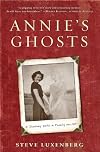
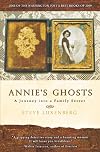
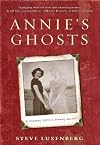
Annie's Ghosts: A Journey Into a Family Secret
by Steve Luxenberg 
On This Page
Description
Beth Luxenberg was an only child. Or so everyone thought. Six months after Beth's death, her secret emerged. It had a name: Annie. Steve Luxenberg's mother always told people she was an only child. It was a fact that he'd grown up with, along with the information that some of his relatives were Holocaust survivors. However, when his mother was dying, she casually mentioned that she had had a sister she'd barely known, who early in life had been put into a mental institution. Luxenberg began show more his researches after his mother's death, discovering the startling fact that his mother had grown up in the same house with this sister, Annie, until her parents sent Annie away to the local psychiatric hospital at the age of 23. Annie would spend the rest of her life shut away in a mental institution, while the family erased any hints that she had ever existed. Through interviews and investigative journalism, Luxenberg teases out her story from the web of shame and half-truths that had hidden it. He also explores the social history of institutions such as Eloise in Detroit, where Annie lived, and the fact that in this era (the 40s and 50s), locking up a troubled relative who suffered from depression or other treatable problems was much more common than anyone realizes today. show lessTags
Recommendations

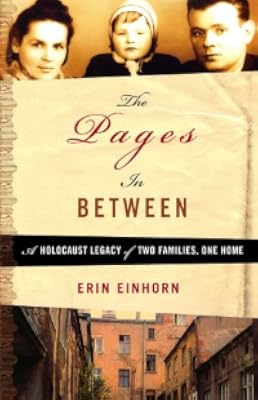
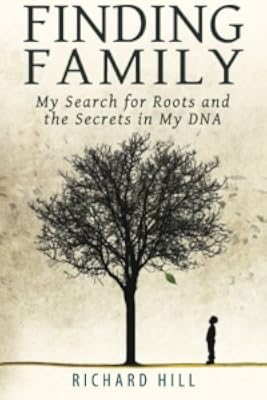

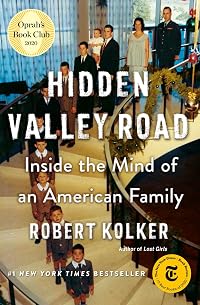



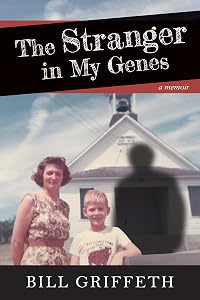

















Member Recommendations

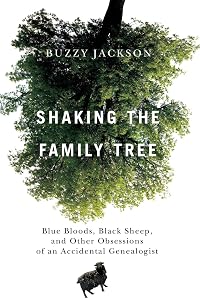
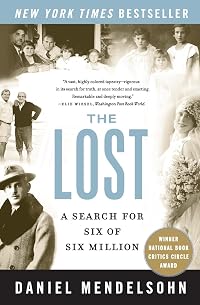
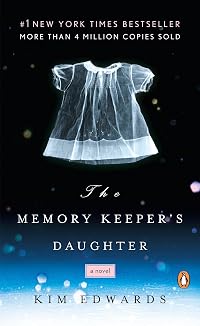
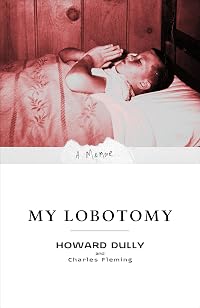
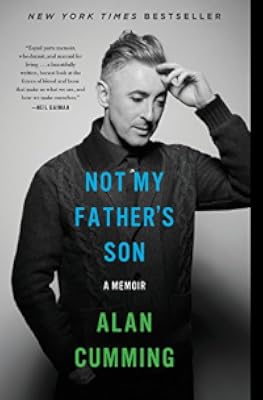
amyblue Both books are written by journalist's and examine the authors' relationships with their parents and both are investigative inquiries into family secrets.
Member Reviews
I first heard about Annie's Ghosts: A Journey into a Family Secret through the Early Reviewers program at LibraryThing. It sounded intriguing, and I requested the book, but it was not meant to be--at least at that time. Fortunately, I was contacted by the lovely people at FSB Associates who offered a copy for review, which I gladly accepted. Shortly after that, the book and the author, Steve Luxenberg, were featured on NPR. I'm very glad I had the chance to read and review Annie's Ghosts because it's among the best books I've read this year, and certainly the best work of non-fiction.
When Beth Luxenberg dies, her children are surprised to learn that she had a sister named Annie who had previously passed away. There were rumors a few show more years before, but their mother had always described herself as an only child and they never asked her about it. Upon discovering concrete evidence of Annie's existence, Steve Luxenberg decides to uncover as much of the truth of his mother's secret as he can; some of his siblings support wholeheartedly his project while others are more reluctant, concerned he will learn things they were never meant to know. But there must be a reason that Beth never mentioned her sister and kept Annie hidden, right?
Luxenberg's writing reads extraordinarily well; it is both accessible and engrossing. As an author, investigative journalist, and award winning editor at the Washington Post, he is able to capture his audience's attention while convening important information and details without breaking his narrative flow. At the same time, this flow can be somewhat meandering. A few of the tangents he follows, while connected to his family history in general, aren't always directly related to his search for Annie and the reason behind his mother's secret. Try as he might, he can't quite tie these substantial segments in; they are very interesting if not quite on topic, though. (I'm particularly thinking about one of his cousin's story of surviving the Holocaust, but there are other examples.)
Overall, I was very pleased with the book. Luxenberg tries to give his readers, and therefore himself, as much closure as is possible; given the situation, there are just some things no one living will ever know for sure. What I particularly liked about Annie's Ghosts is that the author is able to use his own family's story to explore elements that extend beyond it. Everything from the care, diagnoses, institutions and stigma surrounding the mentally ill and disabled in the United States and how it has changed over time to family dynamics and why secrets are kept to begin with--these being only a few of the areas Luxenberg introduces All of these topics are at least touched upon if not more fully addressed throughout the book. Thankfully, a good index, decent chapter notes, and other supplementary materials are included to help keep everything and everyone straight. Annie's Ghosts is wonderfully executed, and I would not hesitate to recommend it to others.
Experiments in Reading show less
When Beth Luxenberg dies, her children are surprised to learn that she had a sister named Annie who had previously passed away. There were rumors a few show more years before, but their mother had always described herself as an only child and they never asked her about it. Upon discovering concrete evidence of Annie's existence, Steve Luxenberg decides to uncover as much of the truth of his mother's secret as he can; some of his siblings support wholeheartedly his project while others are more reluctant, concerned he will learn things they were never meant to know. But there must be a reason that Beth never mentioned her sister and kept Annie hidden, right?
Luxenberg's writing reads extraordinarily well; it is both accessible and engrossing. As an author, investigative journalist, and award winning editor at the Washington Post, he is able to capture his audience's attention while convening important information and details without breaking his narrative flow. At the same time, this flow can be somewhat meandering. A few of the tangents he follows, while connected to his family history in general, aren't always directly related to his search for Annie and the reason behind his mother's secret. Try as he might, he can't quite tie these substantial segments in; they are very interesting if not quite on topic, though. (I'm particularly thinking about one of his cousin's story of surviving the Holocaust, but there are other examples.)
Overall, I was very pleased with the book. Luxenberg tries to give his readers, and therefore himself, as much closure as is possible; given the situation, there are just some things no one living will ever know for sure. What I particularly liked about Annie's Ghosts is that the author is able to use his own family's story to explore elements that extend beyond it. Everything from the care, diagnoses, institutions and stigma surrounding the mentally ill and disabled in the United States and how it has changed over time to family dynamics and why secrets are kept to begin with--these being only a few of the areas Luxenberg introduces All of these topics are at least touched upon if not more fully addressed throughout the book. Thankfully, a good index, decent chapter notes, and other supplementary materials are included to help keep everything and everyone straight. Annie's Ghosts is wonderfully executed, and I would not hesitate to recommend it to others.
Experiments in Reading show less
This is a book that I got through Early Reviewers and I'm so glad that I did. It's a non-fiction account of the author's journey to unearth his family's secrets. This begins with the startling news, found after his mother's death, that the author's mother had a sister who was disabled, mentally retarded, and mentally ill. This sister was committed to a state-run institution in her 20s. Even though they grew up together, his mother never mentioned this sister and actually went as far as creating story after story about growing up as an only child. The author goes on a journey through his mother's past to attempt to find out both about this sister, Annie, and his mother's reasons for hiding her sister.
The book ends up being about so many show more things: family history, secrets, memory, the treatment of the mentally ill, and the ethics of delving into someone's past and trying to recreate his/her motives.This book really got me to think about what I know about my family history. Is it truth or fiction or somewhere in between? We rely on family stories handed down, but how accurate are these accounts?
The author is a journalist and his writing shows it. For such a personal and emotionally charged topic, he stays relatively distant and factual. The mystery seems to unfold to the reader in the same manner as it did to him. I also appreciated that the author did not recreate conversations or scenes from the information he found. Because of that there are things we'll never know, but that is part of the point of the book and I was glad that he didn't invent the rest of the story.
Excellent book - highly recommended. show less
The book ends up being about so many show more things: family history, secrets, memory, the treatment of the mentally ill, and the ethics of delving into someone's past and trying to recreate his/her motives.This book really got me to think about what I know about my family history. Is it truth or fiction or somewhere in between? We rely on family stories handed down, but how accurate are these accounts?
The author is a journalist and his writing shows it. For such a personal and emotionally charged topic, he stays relatively distant and factual. The mystery seems to unfold to the reader in the same manner as it did to him. I also appreciated that the author did not recreate conversations or scenes from the information he found. Because of that there are things we'll never know, but that is part of the point of the book and I was glad that he didn't invent the rest of the story.
Excellent book - highly recommended. show less
 This review was written for LibraryThing Early Reviewers.
Annie's Ghosts was probably not a book I would have paid much attention to if I'd just run across it in a bookstore, but I was fortunate enough to be in the audience for a presentation about memoirs at the Kerrytown Book Fest in Ann Arbor where Steve Luxenberg was one of the panel members. And what he had to say was fascinating enough to me that I got in line to buy his book afterwards. I'm so glad I did. Because although Annie's Ghosts is mostly about his parents and family, Luxenberg keeps his own place in the narrative too, which gives this family "mystery" much more of a personal flavor. His investment in this highly personal and yet also universal "detective story" is very obvious from the beginning. And it's not just because he's show more a newspaperman and investigative reporter, although that most certainly made the book more polished and professional - more readable. No, it's because he inserted himself into the story as the son, as the grandson - as someone who obviously loved his parents very much, in spite of any failings they had - or secrets they kept. In a book that looks at the historical place and implications of mental hospitals and asylums in Michigan from the 19th century forward, and also at the immigrant experience and the Holocaust as it related to his research, this is perhaps most of all a loving and well-documented tribute to Luxenberg's family. It's not cleaned up or idealized; it's warts and all, including his mother's personal failures as a daughter or sister and his father's failings as a wage earner and soldier during WWII. Luxenberg lays it all out, and traces his various paths of discovery in a way that makes Annie's Ghosts seem like a tangled mystery - which I suppose it was. This guy can write "like nobody's business," as my dad used to say. I salute Steve Luxenberg for his investigative skills and for his storytelling, but most of all for his love of family. This is a book well worth your time. Make some time to read it, because once you start it, you won't want to put it down. - Tim Bazzett, author of the memoir, BOOKLOVER. show less
When I finished Annie's Ghosts, Steven Luxenberg's memoir/investigative piece about his mother's secret sister, I had tears in my eyes. After his mother's death, Luxenberg discovers that his mother, who had always said she was an only child, had a secret, disabled and mentally ill sister who lived for years in an asylum, with few visitors and no hope of ever returning home. Not content to merely uncover the secret, Luxenberg wants to know why- why Annie was institutionalized, why his mother kept her a secret, why other family members handled Annie's situation the way they did, and what other secrets ultimately lay dormant in the family. At the end, Luxenberg has covered topics as diverse as the history of the Michigan mental health show more system, attitudes towards the disabled and mentally ill over the years, the Holocaust, the Depression, and more. Throughout the focus remains tight on "the secret"- Annie's life and death- and Luxenberg's determination to find out all he can while the remaining witnesses are still alive to testify. I found Annie's Ghosts to be a riveting, and often painful page-turner, ultimately about a son's love for his mother and family. A fascinating and compelling read.
You can see my full review at my blog here: http://www.bostonbibliophile.com/2009/06/review-annies-ghosts-journey-into.html show less
You can see my full review at my blog here: http://www.bostonbibliophile.com/2009/06/review-annies-ghosts-journey-into.html show less
This review was written for LibraryThing Early Reviewers.How would you react if you found out that you had relative that had been kept secret for decades? This is the unfathomable position in which Mr. Luxenberg finds himself shortly before his mother's death. His journey begins with his wrestling with the decision of what to do with the information - whether to confront his mother or leave it along - to deciding whether to dig a little further to find out who this missing aunt is and why she was kept a secret in the first place.
Mr. Luxenberg's research takes him across the nation and even to Europe as he attempts to discover Annie and understand why his mother chose to keep her sister a secret. Throughout the novel, his personal struggles to approach the topic as an impartial journalist show more versus a very eager and confused son shine through. His journalistic background will not let him rest until he uncovers as much as he can, while his duty to his family and to his late mother make him tread with caution for fear of uncovering too many secrets. To me, this struggle is what makes this an incredibly poignant and compelling novel.
I first found out about this book from Book Blogs and was instantly intrigued. As much as there are times where I might not particularly care for my family members, they are still family. I can't imagine pretending to the world that they don't exist, let alone keep the secret for decades. Added to this intrigue is a history lesson on early mental health treatments and institutionalization, as well as a foray into the Holocaust. The subject matter is fascinating. Mr. Luxenberg does a tremendous job explaining how things used to be in the field of mental health while not making excuses for treatments or opinions that would be vilified today. He also succeeds in understanding Beth Luxenberg's reasons for keeping Annie hidden from the world. We may not agree with it, but at least we, as readers, can understand why.
One other item that continued to amaze me while reading was the depths of research Mr. Luxenberg accomplished. He was able to essentially go back in time to understand public opinion, politics, and even the family and personal drama that was occurring at the time key decisions were made about Annie's future. Upon reflection, I had to ask myself if any family secret was worth the time, money and effort he devoted to discovering Annie. In the end, I realized that this is more than finding Annie and understanding his mother, Annie's Ghosts is a love story. It is a love story between a man and his family. As he immortalizes their triumphs and struggles, the good and the bad, he is doing so because he is proud to call them mother and father, grandmother and grandfather. For Mr. Luxenberg, it wasn't a matter of discovering Annie but discovering his family and sharing them with the world.
I thought this was a fascinating read and have already recommended it to others. Thanks to Julie Harabedian at FSB Associates for giving me the opportunity to read and review this novel! show less
Mr. Luxenberg's research takes him across the nation and even to Europe as he attempts to discover Annie and understand why his mother chose to keep her sister a secret. Throughout the novel, his personal struggles to approach the topic as an impartial journalist show more versus a very eager and confused son shine through. His journalistic background will not let him rest until he uncovers as much as he can, while his duty to his family and to his late mother make him tread with caution for fear of uncovering too many secrets. To me, this struggle is what makes this an incredibly poignant and compelling novel.
I first found out about this book from Book Blogs and was instantly intrigued. As much as there are times where I might not particularly care for my family members, they are still family. I can't imagine pretending to the world that they don't exist, let alone keep the secret for decades. Added to this intrigue is a history lesson on early mental health treatments and institutionalization, as well as a foray into the Holocaust. The subject matter is fascinating. Mr. Luxenberg does a tremendous job explaining how things used to be in the field of mental health while not making excuses for treatments or opinions that would be vilified today. He also succeeds in understanding Beth Luxenberg's reasons for keeping Annie hidden from the world. We may not agree with it, but at least we, as readers, can understand why.
One other item that continued to amaze me while reading was the depths of research Mr. Luxenberg accomplished. He was able to essentially go back in time to understand public opinion, politics, and even the family and personal drama that was occurring at the time key decisions were made about Annie's future. Upon reflection, I had to ask myself if any family secret was worth the time, money and effort he devoted to discovering Annie. In the end, I realized that this is more than finding Annie and understanding his mother, Annie's Ghosts is a love story. It is a love story between a man and his family. As he immortalizes their triumphs and struggles, the good and the bad, he is doing so because he is proud to call them mother and father, grandmother and grandfather. For Mr. Luxenberg, it wasn't a matter of discovering Annie but discovering his family and sharing them with the world.
I thought this was a fascinating read and have already recommended it to others. Thanks to Julie Harabedian at FSB Associates for giving me the opportunity to read and review this novel! show less
This book really drew me in. It's rare for me to get drawn so deeply into a non-fiction book that I temporarily abandon my novels until it is done; but with the exception of my audio book novel (at times when regular reading wasn't an option) and my e-book (read from my phone on lunch break at work), I focused only on this book until it was finished.
It's about family secrets. A journalist learns that his mother had a sister that she pretended didn't exist: the sister, Annie, was in a mental institution. Why did his mother keep her a complete secret from him and his siblings? Did his father know about Annie? What was Annie's story? What was she like? Why was she committed for so many years, and what might her treatment have been like? show more How did she manage to remain a secret for so many years? Are there people left alive who remember her?
Steve Luxenberg utilizes all his investigative journalism skills in trying to find information: seeking records (and bumping up against privacy laws), interviewing relatives and tracking down folks from the old neighborhood who might have known -- or at least known about -- Annie. One of the relatives is a Holocaust survivor, with an amazing story of her own to tell. He's drawn to learn still more about his family and its history.
The book not only deals with the secret of Annie, but a number of other family secrets unearthed in the search. It ponders the question of the secrets families keep -- their nature and the reasons for keeping them. It's also a thoughtful look at changing attitudes toward people with disabilities and/or mental illness, and how society has dealt with them through the years.
One of the review blurbs quoted at the front of the book is from the president of the National Genealogical Society, and I can see why this book would be popular with those in that field.
This was a really solid, thought-provoking book. show less
It's about family secrets. A journalist learns that his mother had a sister that she pretended didn't exist: the sister, Annie, was in a mental institution. Why did his mother keep her a complete secret from him and his siblings? Did his father know about Annie? What was Annie's story? What was she like? Why was she committed for so many years, and what might her treatment have been like? show more How did she manage to remain a secret for so many years? Are there people left alive who remember her?
Steve Luxenberg utilizes all his investigative journalism skills in trying to find information: seeking records (and bumping up against privacy laws), interviewing relatives and tracking down folks from the old neighborhood who might have known -- or at least known about -- Annie. One of the relatives is a Holocaust survivor, with an amazing story of her own to tell. He's drawn to learn still more about his family and its history.
The book not only deals with the secret of Annie, but a number of other family secrets unearthed in the search. It ponders the question of the secrets families keep -- their nature and the reasons for keeping them. It's also a thoughtful look at changing attitudes toward people with disabilities and/or mental illness, and how society has dealt with them through the years.
One of the review blurbs quoted at the front of the book is from the president of the National Genealogical Society, and I can see why this book would be popular with those in that field.
This was a really solid, thought-provoking book. show less
I love this book! As a family genealogist, it is a fascinating tale of one family's secret's and the path a son took to find out the truth. It is very well-written, and keeps the pace well throughout. As a result of mentioning this book to my sister, she told me we have a cousin who was put away in a mental institution as Annie was, which I never knew. Really thought-provoking, and makes you wonder if you come down on the side of secret keeping or truth telling within and without your family, and all the repercussions of keeping secrets. As an adult adoptee whose origins were kept secret from me for many years until I discovered the truth, I do not believe keeping secrets is a good thing, but it is helpful to read of others' struggles show more with secrets kept from them as a reminder of why I firmly believe this to be true. show less
This review was written for LibraryThing Early Reviewers.Members
- Recently Added By
Lists

Books discovered on LibraryThing
256 works; 36 members
Author Information

2 Works 704 Members
Steve Luxenberg is a LibraryThing Author, an author who lists their personal library on LibraryThing.
Awards and Honors
Awards
Distinctions
Notable Lists
Common Knowledge
- Original publication date
- 2009-05-05
- People/Characters
- Annie Cohen; Beth Cohen Luxenberg; Steven Luxenberg; Julius Luxenberg 'Jack'; Anna Schlein Oliwek; Tillie Schlein Cohen (show all 7); Hyman Cohen
- Important places
- Detroit, Michigan, USA; Radziwillow, Ukraine; Eloise Hospital, Wayne County, Michigan, USA
- Dedication
- To Mom and Annie, too late to be set free;
to "the 5,000," who still might be;
and to Mary Jo, who stands alone - First words
- The secret emerged, without warning or provocation, on an ordinary April afternoon in 1995.
- Last words
- (Click to show. Warning: May contain spoilers.)I love you, and no, nothing you say, nothing you tell me will make me go away.
- Blurbers
- Isaacson, Walter; Woodward, Bob; Horwitz, Tony; Tannen, Deborah; Simon, David; Epstein, Helen (show all 8); Greene, Melissa Fay; Reich, Walter
Classifications
- Genres
- Biography & Memoir, General Nonfiction, Nonfiction, History
- DDC/MDS
- 306.875408740977434 — Society, government, & culture Social sciences, sociology & anthropology Social Behavior - Dating, Marriage, Divorce Marriage, partnerships, unions; family Intrafamily relationships Sibling relationships Sisters
- LCC
- HQ755.86 .L89 — Social sciences The family. Marriage, Women and Sexuality The Family. Marriage. Women The family. Marriage. Home Parents. Parenthood
- BISAC
Statistics
- Members
- 518
- Popularity
- 57,994
- Reviews
- 123
- Rating
- (3.88)
- Languages
- English, Italian
- Media
- Paper, Ebook
- ISBNs
- 6
- ASINs
- 5