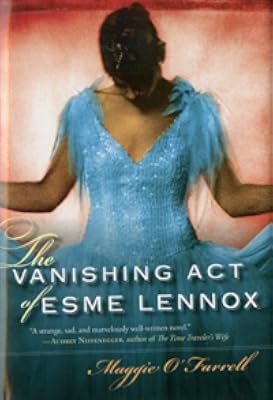
The Vanishing Act of Esme Lennox
by Maggie O'Farrell
On This Page
Description
In the middle of tending to the everyday business at her vintage-clothing shop and sidestepping her married boyfriend's attempts at commitment, Iris Lockhart receives a stunning phone call: Her great-aunt Esme, whom she never knew existed, is being released from Cauldstone Hospital--where she has been locked away for more than sixty-one years. Iris's grandmother Kitty always claimed to be an only child. But Esme's papers prove she is Kitty's sister, and Iris can see the shadow of her dead show more father in Esme's face. Esme has been labeled harmless--sane enough to coexist with the rest of the world. But she's still basically a stranger, a family member never mentioned by the family, and one who is sure to bring life-altering secrets with her when she leaves the ward. If Iris takes her in, what dangerous truths might she inherit?--Publisher description. show lessTags
Recommendations






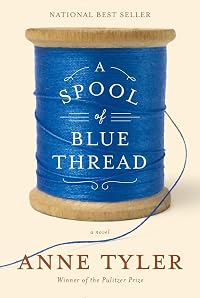
Member Recommendations



Member Reviews
Maggie O'Farrell is becoming one of my favorite authors, and I'm happy to be delving into her backlist. This novel is about two sisters, Esme and Kitty, and the secrets they have kept. When Iris, in the present day, gets a call about a great-Aunt she's never heard of, she starts to discover the truth about her family's past. Esme has been in a mental institution for the past 60 years, and Iris never even knew she existed. The story is slowly revealed through Esme's memories, Kitty's memories (who has dementia), and present-day clues that Iris starts to piece together.
At first, I was a bit confused by the voice/memory shifts and timeline, but as I read I started to see the brilliance of how O'Farrell puts it all together and reveals the show more story.
I loved the exploration of women's lives just a few generations ago, the failures of the sisters' and mother/daughters' relationships, and the emotion of the novel. A great find at the end of 2023! show less
At first, I was a bit confused by the voice/memory shifts and timeline, but as I read I started to see the brilliance of how O'Farrell puts it all together and reveals the show more story.
I loved the exploration of women's lives just a few generations ago, the failures of the sisters' and mother/daughters' relationships, and the emotion of the novel. A great find at the end of 2023! show less
The Vanishing Act of Esme Lennox is a bit like a three-legged stool; two of the legs are sturdy, but the one that isn't brings the structure crashing to the floor. The entwined tale of two sisters, Esme and Kitty, would have made an intriguing story on its own, as O'Farrell's interest clearly lies with exploring these characters and elucidating the devastating effects that social strictures had on women in the early to mid-20th century. I wasn't bothered by Kitty's stream of consciousness ramblings nor the shifts in time and place, and felt that they lent texture to what is essentially a straightforward plot. I was, however, left completely cold by the story set in the present that focused on Esme's only living relative, Iris. Iris has show more three salient characteristics: she runs a vintage clothing shop, which takes up surprisingly little of her energy and comes across as an afterthought on the author's part; she is having an affair with a married man; and she has had a quasi-incestuous affair with her stepbrother which has never totally ended (although they aren't actually related, they were raised as brother and sister for a few years). And that's it for Iris, aside from one other plot point that exists solely to tie her and Esme together. It's hard to believe that an editor wouldn't have suggested jettisoning Iris and developing the twin poles of the far more compelling narrative centered on Esme and Kitty. Although Kitty does some despicable things to Esme, O'Farrell provides enough background and nuance for the reader to understand why she may have done them. No such subtlety animates Iris, an automaton whose clockwork motions (her dog doesn't even warrant a name) drag the story to a halt whenever she appears. show less
The Vanishing Act of Esme Lennox by Maggie O’Farrell is a complex story told from multiple viewpoints, but first and foremost, it is about family secrets, both old and new.
Iris has a full plate with her second-hand clothing store, her affair with a married man, her grandmother having Alzheimer’s and her conflicted feelings about her step-brother Alex. Then she is contacted by the Cauldstone Mental Hospital and informed that her great-aunt Esme, whom she never knew existed, is being released after more than 60 years in confinement. After ascertaining that Esme is indeed a relative, Iris agrees to house her until suitable accommodation can be found.
There are actually four narratives to follow in this book, that of Iris and Esme in show more the present and then Esme and her sister Kitty revealing flashbacks from their childhood. The narratives are woven together seamlessly and, at first, I was a little confused by whose memories we were hearing, but I very quickly was able to separate each character’s voice.
As children the two sisters were very different. Kitty was the quiet, well behaved, well mannered child while Esme was often to be found misbehaving, an inquisitive and independent child who did not fit the role that her parents wanted her to. Then when she was sixteen, something occurred at a party that Esme couldn’t properly explain and her parents had their unruly child committed to Cauldstone.
As the family’s secrets start to be revealed I was both horrified and heart broken.
This is a moving story that I will be thinking of for some time. The author has created interesting and believable characters in a beautifully written, emotionally captivating story that details the Edwardian mindset of locking away those who did not conform to the social conventions of the day. The depth of emotion conveyed in this short book is astounding and Maggie O’Farrell has become an author whose work I need to explore more of. show less
Iris has a full plate with her second-hand clothing store, her affair with a married man, her grandmother having Alzheimer’s and her conflicted feelings about her step-brother Alex. Then she is contacted by the Cauldstone Mental Hospital and informed that her great-aunt Esme, whom she never knew existed, is being released after more than 60 years in confinement. After ascertaining that Esme is indeed a relative, Iris agrees to house her until suitable accommodation can be found.
There are actually four narratives to follow in this book, that of Iris and Esme in show more the present and then Esme and her sister Kitty revealing flashbacks from their childhood. The narratives are woven together seamlessly and, at first, I was a little confused by whose memories we were hearing, but I very quickly was able to separate each character’s voice.
As children the two sisters were very different. Kitty was the quiet, well behaved, well mannered child while Esme was often to be found misbehaving, an inquisitive and independent child who did not fit the role that her parents wanted her to. Then when she was sixteen, something occurred at a party that Esme couldn’t properly explain and her parents had their unruly child committed to Cauldstone.
As the family’s secrets start to be revealed I was both horrified and heart broken.
This is a moving story that I will be thinking of for some time. The author has created interesting and believable characters in a beautifully written, emotionally captivating story that details the Edwardian mindset of locking away those who did not conform to the social conventions of the day. The depth of emotion conveyed in this short book is astounding and Maggie O’Farrell has become an author whose work I need to explore more of. show less
This is the story of Iris, a young woman who suddenly learns that she has a great aunt who has spent her entire life in an asylum, which is now being shut down. Iris goes to meet the aunt, and in a rash act of compassion, brings her home. She grapples with how to take care of this woman who hasn't left the asylum in decades, while grappling with her own relationships with her step-brother and a married lover. Interspersed with this story are flashbacks to the aunt's childhood in India and the tragedy that led to her living in an asylum.
O'Farrell does a brilliant job here of telling a story obliquely. Even more important than what happens in the story, what scenes we see, is what doesn't happen, and what scenes are hidden from the show more reader. Those missing scenes are the meat of the story, and the reader gets to piece together the mystery of who this great aunt really is and how her life played out. We are constantly questioning whether she is insane, senile, or completely healthy.
O'Farrell is a brilliant writer, and a master at creating believable and complex characters. Even though the action of this book is a bit slow and sometimes confusing, the writing is thoroughly enjoyable. show less
O'Farrell does a brilliant job here of telling a story obliquely. Even more important than what happens in the story, what scenes we see, is what doesn't happen, and what scenes are hidden from the show more reader. Those missing scenes are the meat of the story, and the reader gets to piece together the mystery of who this great aunt really is and how her life played out. We are constantly questioning whether she is insane, senile, or completely healthy.
O'Farrell is a brilliant writer, and a master at creating believable and complex characters. Even though the action of this book is a bit slow and sometimes confusing, the writing is thoroughly enjoyable. show less
World Book Night gifted my wife with a book. 'The Vanishing Act of Esme Lennox' sat next to our front door for a couple of nights before I decided to have a look at it. Two women, one at the beginning of the 20th century, the other at the start of the 21st. Both have issues.
I could see where the troubles for the older woman lay. The story tells of the troubled childhood of Esme Lennox, a girl with her own take on life and a need for something more than marriage. Esme witnesses something terrible in her youth that distances her from her intolerant parents, and then falls into the shadow of her sister, Kitty, who represents the family ideal of the perfect young woman.
Iris, an independent woman, with her own business and a troubled affair show more with a married man, discovers a relative she never knew existed. As an asylum seeks to offload the last patients in its care, Iris meets Esme for the first time and we follow her over the course of weekend. Both women have something to discover for themselves, some sense of their position in the world, some grip of the events that have moulded their existence.
I didn't know what I would make of it, but in the end I found I couldn't put it down. I know you read that sort of blurb on the cover of books all the time, but I'm serious. I consumed this book in the space of a week, or less. I don't normally read at that sort of pace, but whenever I sat near it the book leapt into my hands and I struggled to stop leafing through the pages. I found the writing style light and engaging. At the same time, when it needed to be serious or distracted and disjointed, Maggie O'Farrell does that well, too. I can see why someone might recommend it, why World Book Night chose to include amongst the volumes on offer. I'm aware of how institutions and families treated women at the end of the Victorian period and into the early part of the 20th century. I felt for Esme and her trials, and this could all so easily refer to a true story rather than simply an act of fiction. I'm sure many women suffered the same fate, and that leaves me troubled, touched.
I thoroughly recommend this read and will definitely pass it on for others to enjoy. show less
I could see where the troubles for the older woman lay. The story tells of the troubled childhood of Esme Lennox, a girl with her own take on life and a need for something more than marriage. Esme witnesses something terrible in her youth that distances her from her intolerant parents, and then falls into the shadow of her sister, Kitty, who represents the family ideal of the perfect young woman.
Iris, an independent woman, with her own business and a troubled affair show more with a married man, discovers a relative she never knew existed. As an asylum seeks to offload the last patients in its care, Iris meets Esme for the first time and we follow her over the course of weekend. Both women have something to discover for themselves, some sense of their position in the world, some grip of the events that have moulded their existence.
I didn't know what I would make of it, but in the end I found I couldn't put it down. I know you read that sort of blurb on the cover of books all the time, but I'm serious. I consumed this book in the space of a week, or less. I don't normally read at that sort of pace, but whenever I sat near it the book leapt into my hands and I struggled to stop leafing through the pages. I found the writing style light and engaging. At the same time, when it needed to be serious or distracted and disjointed, Maggie O'Farrell does that well, too. I can see why someone might recommend it, why World Book Night chose to include amongst the volumes on offer. I'm aware of how institutions and families treated women at the end of the Victorian period and into the early part of the 20th century. I felt for Esme and her trials, and this could all so easily refer to a true story rather than simply an act of fiction. I'm sure many women suffered the same fate, and that leaves me troubled, touched.
I thoroughly recommend this read and will definitely pass it on for others to enjoy. show less
Maggie O’Farrell’s The Vanishing Act of Esme Lennox is very intricate.
One bounces back and forth in time, in different locations with different
characters, with very different points of view.
Iris Lockhart owns a clothing shop in Edinburgh. Out of the blue, she learns she has a power
of attorney for her great aunt Esme Lennox, who Iris never knew or even knew existed.
Esme has been interred in a mental institution (read imprisoned against her will) for over
60 years. The institution is closing. What is to happen to Esme?
Layers upon layers upon layers of Lockhart family secrets begin to be revealed as Iris tries
to piece together the early life of Esme and why she was sent away / hidden away /
discarded / imprisoned for most of her show more life.
The book moves very quickly. It is tense, dramatic, troubling, infuriating, shocking and haunting.
**** show less
One bounces back and forth in time, in different locations with different
characters, with very different points of view.
Iris Lockhart owns a clothing shop in Edinburgh. Out of the blue, she learns she has a power
of attorney for her great aunt Esme Lennox, who Iris never knew or even knew existed.
Esme has been interred in a mental institution (read imprisoned against her will) for over
60 years. The institution is closing. What is to happen to Esme?
Layers upon layers upon layers of Lockhart family secrets begin to be revealed as Iris tries
to piece together the early life of Esme and why she was sent away / hidden away /
discarded / imprisoned for most of her show more life.
The book moves very quickly. It is tense, dramatic, troubling, infuriating, shocking and haunting.
**** show less
“Vestis virum facit” (clothes maketh the man) - Erasmus.
Quite ordinary clothes can have a totemic power over our memories. Clothes are draped over this story of how sixteen-year old Esme was locked up in a mental asylum for sixty years.
It opens with “whirling skirts” at a dance, and one girl in “a dark red frock that doesn’t suit her”. Thereafter, all significant events are subtly marked by an iconic item of clothing - and one of the main characters has a vintage clothes shop.
A careful tangle
The story is cleverly told, with a mix of points of view, timelines, and tenses. Although it leaves loose ends, the main plot points are all predictable. That doesn’t matter because the real fascination is in the rustle of burgundy show more taffeta, the frantic longing for a length of green cloth, the “cold caress” of a silk negligee belonging to another, a switched blazer, a borrowed jacket, and the feel of pebbles beneath one’s feet.
Image: The cold caress of red silk (Source)
The main strands are Esme’s childhood and her old age. In the latter, the asylum is about to close and a young woman called Iris is involved in what happens to her next.
Esme and Kitty grew up in a big house in a beautiful part of India. After a tragedy, the family “return” to the parents’ native Scotland. They move into their imperious grandmother’s Edinburgh home. Esme is intelligent, and a good pianist, but outspoken and unconventional. She resists the preparation for society and a good marriage that Kitty, six years older, accepts.
The threads of Esme, Kitty, and Iris’ lives are tangled to show the parallels, contrasts, and reversals.
“We are all… just vessels through which identities pass: we are lent features, gestures, habits, then we hand them on. Nothing is our own. We begin in the world as anagrams of our antecedents.”
Released at last, Esme’s quiet bewilderment at being “among unsuspicious people” who show small kindnesses is tragic, joyful, and understated. But it’s elderly Kitty who has the diatribe of grievances and no longer remembers whether she likes yoghurt.
Sensational
There are scandals (yet a strange relationship in the contemporary story is barely portrayed as such because social mores have changed), but it’s the other meaning of “sensation” that matters. Throughout her life, Esme deconstructs sights and sounds, and is profoundly aware of tactile sensations. They are a form of self-soothing in the moment and, as memory hooks, they’re a source of comfort and sometimes pain. Her traumas, exacerbated by a code of silence, are explored via touch and the remembrance of it.
Image: Bare feet on a pebble beach (Source)
“The edges of their white clothes shimmer in the heat. Esme narrows her eyes until her parents blur into two hazy shapes, her mother a triangle and her father a line.”
Esme can unfocus her eyes and unsee the world around. In this quasi-fugue state, she becomes almost invisible herself - two of at least three types of titular vanishing.
“She stares and stares until they begin to lose their third dimension, until they begin to look unfamiliar, insubstantial. Like the way words said over and over become just a slurry of sound.”
She hears trees crying as they leak rubber, tunes out conversation, and is the only blurry person in a family photo.
To modern eyes, she has traits of PTSD, high-functioning ASD and maybe OCD (she notes the numbers 9 and 28, but 6, 16, and 60 are significant in the story).
Quotes
• “The scratch of lace, the heat of a body underneath white cotton.”
• “Ladders of sun drop through the gaps in high buildings.”
• “The ritualised publicising of a private relationship, the endless speeches given by men on behalf of women.” [weddings]
• “She walks slowly. She wants to feel the prick, the push of every bit of gravel under her shoe. She wants to feel every scratch, every discomfort of this… her leaving walk.”
• “She finds herself haunted by the life she has left, been pulled out of.”
See also
• The ease with which people could be condemned to a lifetime in a psychiatric institution was explored in the Rosenhan pseudopatient experiment, aka the “thud” experiment.
• There was a “mental hospital” near where I grew up. Most of the residents were there for life, a few because they had mild learning difficulties, but many put away by husbands or parents for being unruly or pregnant out of wedlock. Some of them were allowed into the village at weekends to buy sweets from the shop or attend church. It was one of two such institutions featured in a 1981 exposé, Silent Minority. It closed in 1993. The residents were sent to semi-independent living, and the mansion was converted to hugely expensive apartments, HERE.
Image: A newspaper response to “Silent Minority”: “New deal urged for mentally ill”, though many of the patients weren’t mentally ill when they were committed. (Source)
• Sebastian Barry’s The Secret Scripture also features the mysteries surrounding an elderly woman who's lived most of her life in such an institution that is about to be closed down. See my review, HERE.
• A more benign residential institution was my boarding school. I’ve just written about my time there, in lieu of a review of Ysenda Maxtone Graham’s Terms & Conditions, HERE.
• Magdalen laundries in Claire Keegan's Small Things Like These, HERE.
• A young girl is sent away to family she doesn't know in Claire Keegan's Foster, HERE.
• People seeking lost relatives are a staple of fact (TV show Who Do You Think You Are? and Jeanette Winterson’s Why be Happy when you Could be Normal?) and fiction (The Wife of Martin Guerre and Cold Mountain, for example). People who have them thrust upon them are less common - but maybe comments will prove otherwise. show less
Quite ordinary clothes can have a totemic power over our memories. Clothes are draped over this story of how sixteen-year old Esme was locked up in a mental asylum for sixty years.
It opens with “whirling skirts” at a dance, and one girl in “a dark red frock that doesn’t suit her”. Thereafter, all significant events are subtly marked by an iconic item of clothing - and one of the main characters has a vintage clothes shop.
A careful tangle
The story is cleverly told, with a mix of points of view, timelines, and tenses. Although it leaves loose ends, the main plot points are all predictable. That doesn’t matter because the real fascination is in the rustle of burgundy show more taffeta, the frantic longing for a length of green cloth, the “cold caress” of a silk negligee belonging to another, a switched blazer, a borrowed jacket, and the feel of pebbles beneath one’s feet.
Image: The cold caress of red silk (Source)
The main strands are Esme’s childhood and her old age. In the latter, the asylum is about to close and a young woman called Iris is involved in what happens to her next.
Esme and Kitty grew up in a big house in a beautiful part of India. After a tragedy, the family “return” to the parents’ native Scotland. They move into their imperious grandmother’s Edinburgh home. Esme is intelligent, and a good pianist, but outspoken and unconventional. She resists the preparation for society and a good marriage that Kitty, six years older, accepts.
The threads of Esme, Kitty, and Iris’ lives are tangled to show the parallels, contrasts, and reversals.
“We are all… just vessels through which identities pass: we are lent features, gestures, habits, then we hand them on. Nothing is our own. We begin in the world as anagrams of our antecedents.”
Released at last, Esme’s quiet bewilderment at being “among unsuspicious people” who show small kindnesses is tragic, joyful, and understated. But it’s elderly Kitty who has the diatribe of grievances and no longer remembers whether she likes yoghurt.
Sensational
There are scandals (yet a strange relationship in the contemporary story is barely portrayed as such because social mores have changed), but it’s the other meaning of “sensation” that matters. Throughout her life, Esme deconstructs sights and sounds, and is profoundly aware of tactile sensations. They are a form of self-soothing in the moment and, as memory hooks, they’re a source of comfort and sometimes pain. Her traumas, exacerbated by a code of silence, are explored via touch and the remembrance of it.
Image: Bare feet on a pebble beach (Source)
“The edges of their white clothes shimmer in the heat. Esme narrows her eyes until her parents blur into two hazy shapes, her mother a triangle and her father a line.”
Esme can unfocus her eyes and unsee the world around. In this quasi-fugue state, she becomes almost invisible herself - two of at least three types of titular vanishing.
“She stares and stares until they begin to lose their third dimension, until they begin to look unfamiliar, insubstantial. Like the way words said over and over become just a slurry of sound.”
She hears trees crying as they leak rubber, tunes out conversation, and is the only blurry person in a family photo.
To modern eyes, she has traits of PTSD, high-functioning ASD and maybe OCD (she notes the numbers 9 and 28, but 6, 16, and 60 are significant in the story).
Quotes
• “The scratch of lace, the heat of a body underneath white cotton.”
• “Ladders of sun drop through the gaps in high buildings.”
• “The ritualised publicising of a private relationship, the endless speeches given by men on behalf of women.” [weddings]
• “She walks slowly. She wants to feel the prick, the push of every bit of gravel under her shoe. She wants to feel every scratch, every discomfort of this… her leaving walk.”
• “She finds herself haunted by the life she has left, been pulled out of.”
See also
• The ease with which people could be condemned to a lifetime in a psychiatric institution was explored in the Rosenhan pseudopatient experiment, aka the “thud” experiment.
• There was a “mental hospital” near where I grew up. Most of the residents were there for life, a few because they had mild learning difficulties, but many put away by husbands or parents for being unruly or pregnant out of wedlock. Some of them were allowed into the village at weekends to buy sweets from the shop or attend church. It was one of two such institutions featured in a 1981 exposé, Silent Minority. It closed in 1993. The residents were sent to semi-independent living, and the mansion was converted to hugely expensive apartments, HERE.
Image: A newspaper response to “Silent Minority”: “New deal urged for mentally ill”, though many of the patients weren’t mentally ill when they were committed. (Source)
• Sebastian Barry’s The Secret Scripture also features the mysteries surrounding an elderly woman who's lived most of her life in such an institution that is about to be closed down. See my review, HERE.
• A more benign residential institution was my boarding school. I’ve just written about my time there, in lieu of a review of Ysenda Maxtone Graham’s Terms & Conditions, HERE.
• Magdalen laundries in Claire Keegan's Small Things Like These, HERE.
• A young girl is sent away to family she doesn't know in Claire Keegan's Foster, HERE.
• People seeking lost relatives are a staple of fact (TV show Who Do You Think You Are? and Jeanette Winterson’s Why be Happy when you Could be Normal?) and fiction (The Wife of Martin Guerre and Cold Mountain, for example). People who have them thrust upon them are less common - but maybe comments will prove otherwise. show less
Members
- Recently Added By
Lists

Best 21st Century Books (So Far)
670 works; 86 members

BBC Radio 4 Bookclub
340 works; 13 members

Books Read in 2020
4,379 works; 124 members

Books Read in 2024
4,623 works; 126 members
Author Information

24+ Works 20,611 Members
Maggie O'Farrell is the author of several novels including After You'd Gone, My Lover's Lover, The Vanishing Act of Esme Lennox, Instructions for a Heatwave, and This Must Be the Place. She received a Somerset Maugham Award for The Distance Between Us and the 2010 Costa Novel Award for The Hand That First Held Mine. (Bowker Author Biography)
Some Editions
Awards and Honors
Work Relationships
Is contained in
Common Knowledge
- Canonical title*
- Het verdwenen leven van Esme Lennox
- Original title
- The Vanishing Act of Esme Lennox
- Original publication date
- 2006
- People/Characters
- Iris Lockhart; Esme Lennox; Kitty Lockhart
- Important places
- Scotland, UK; India; Edinburgh, Scotland, UK
- Epigraph
- Much Madness is divinest Sense--
To a discerning eye--
Much Sense--the starkest Madness--
'Tis the Majority
In this, as All, prevail--
Assent--and you are sane--
Demur--and you're str... (show all)aightaway dangerous--
And handled with a Chain--
Emily Dickinson
I couldn't have my happiness made out of a wrong-- an unfairness-- to somebody else . . . What sort of a life could we build on such foundations?
Edith Wharton - Dedication
- for Saul Seamus
- First words
- Let us begin with two girls at a dance.
- Quotations
- This girl is remarkable to her. She is a marvel. From all her family – her and Kitty and Hugo and all the other babies and her parents – from all of them, there is only this girl. She is the only one left. They have al... (show all)l narrowed down to this black-haired girl sitting o the sand, who has no idea that her hands and her eyes and the tilt of her head and the fall of her hair belong to Esme's mother. We are all, Esme decides, just vessels through which identities pass: we are lent features, gestures, habits, then we hand them on. Nothing is our own. We begin in the world as anagrams of our antecedents.
It is always the meaningless tasks that endure: the washing, the cooking, the clearing, the cleaning. Never anything majestic or sigificant, just the tiny rituals that hold together the seams of human life. (p. 2)
We are all, Esme decides, just vessels through which identities pass: we are lent features, gestures, habits, then we hand them on. Nothing is our own. We begin in the world as anagrams of our antecedents. (p. 118)
But for now she will sit here. She will take just a few minutes for this. She wants to watch until the sun goes in again, until the sundial loses its marker, until the garden sinks into softness, into shadow. (p. 241) - Last words
- (Click to show. Warning: May contain spoilers.)She will go with it, she will follow it, through the white, through the crowd, out of the room, into the corridor and beyond.
- Blurbers
- Niffenegger, Audrey; Smith, Ali; Parkhurst, Carolyn
*Some information comes from Common Knowledge in other languages. Click "Edit" for more information.
Classifications
Statistics
- Members
- 3,418
- Popularity
- 4,892
- Reviews
- 214
- Rating
- (3.81)
- Languages
- 12 — Catalan, Danish, Dutch, English, French, German, Norwegian (Bokmål), Norwegian, Portuguese, Spanish, Swedish, Turkish
- Media
- Paper, Audiobook, Ebook
- ISBNs
- 63
- ASINs
- 24