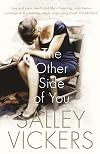
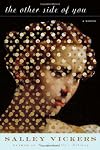
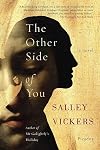
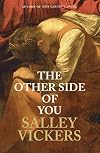
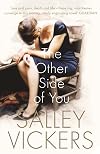
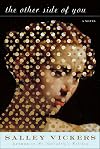
The Other Side of You
by Salley Vickers
On This Page
Description
For psychiatrist and psychoanalyst Dr. David McBride, death exerts an unusual draw. Despite his profession, he has never come to terms with the violent accident that took his brother's life, a trauma that has shaped his personality and subsequent choice of career. But when a failed suicide, Elizabeth Cruikshank, comes into his care, he finds the deepest reaches of his suppressed history being reactivated. Elizabeth is mysteriously reticent about her own past and it is not until David recalls show more a painting by the Italian artist Caravaggio that she finally yields her story. As she recounts the chance encounter which took her to Rome, and her tragic tale of passion and betrayal, David begins to find a strange and disturbing reflection of his own loss in the haunted "other side" of this elusive woman. Through one long night's dialogue they journey together into a past which brings painful new insight and uncertain resolution to each of them.The Other Side of You is a powerful meditation on art, and on love in all its manifestations. In distinctive, graceful prose, Salley Vickers explores the ways both love and art can penetrate the complexities of the human heart, to invade and change our being, and the possibilities of regeneration through another's vision and understanding. show lessTags
Recommendations



















Member Recommendations
Member Reviews
“After so devastating a disappointment it would make sense to turn to a Neil”
I read one of Vickers’ previous novels in my pre-blogging days, Miss Garnet’s Angel, and remember that it was mostly about a painting of Tobit or Tobias or Toblerone or some such personage. I did remember enjoying it though. And thus I seemed to be stepping into very familiar territory with The Other Side of You, which has a simple enough narrative structure – a few days in the life of psychologist and analyst Davey McBride, in which he treats some patients and interacts with colleagues and tries to figure out why his wife is being a bit strange.
One patient proves particularly challenging, a suicide outside the normal mood of desperation and cries for show more help; rather a woman who had no wish to continue living. Our protagonist feels a deep affinity with Mrs Cruikshank, but she takes a frustratingly long time to open up to him. What she does yield is a passion for Caravaggio, one shared by the doctor’s mentor. And this is where Vickers shines – her narrative is a pleasant enough construct for an emotional response to a series of Caravaggio’s artworks; Dr McBride returns to the National Gallery at one point and falls in love with Caravaggio’s The Last Supper.
The novel is religious without being proselytising – Vickers engrosses us in the culture of faith, not the practice. McBride makes numerous references to the men on the road to Emmaus, a story I’ve never understood well (what is its point? That Jesus chose to reveal Himself resurrected away from the crowd? That He wanted to test their loyalty first?) and delves into the tragedy of the men who have just lost their friend and leader, rather than the joy of reunion.
*minor spoiler alert* I’m so bored with infidelity. It seems to be in every book. It’s always the slightly controversial story on the side. That’s all I’m going to say here – Vickers takes the adultery storyline quite a lot further than most, with it being the focus of both Elizabeth and Olivia’s stories. Is there no other source of drama in adult interaction? *end spoilers*
Clever writing, fascinating characters and a bridge into the art world. I want to take the book with me back to all those Roman churches The Book Accumulator dragged me around when I was 14. show less
I read one of Vickers’ previous novels in my pre-blogging days, Miss Garnet’s Angel, and remember that it was mostly about a painting of Tobit or Tobias or Toblerone or some such personage. I did remember enjoying it though. And thus I seemed to be stepping into very familiar territory with The Other Side of You, which has a simple enough narrative structure – a few days in the life of psychologist and analyst Davey McBride, in which he treats some patients and interacts with colleagues and tries to figure out why his wife is being a bit strange.
One patient proves particularly challenging, a suicide outside the normal mood of desperation and cries for show more help; rather a woman who had no wish to continue living. Our protagonist feels a deep affinity with Mrs Cruikshank, but she takes a frustratingly long time to open up to him. What she does yield is a passion for Caravaggio, one shared by the doctor’s mentor. And this is where Vickers shines – her narrative is a pleasant enough construct for an emotional response to a series of Caravaggio’s artworks; Dr McBride returns to the National Gallery at one point and falls in love with Caravaggio’s The Last Supper.
The novel is religious without being proselytising – Vickers engrosses us in the culture of faith, not the practice. McBride makes numerous references to the men on the road to Emmaus, a story I’ve never understood well (what is its point? That Jesus chose to reveal Himself resurrected away from the crowd? That He wanted to test their loyalty first?) and delves into the tragedy of the men who have just lost their friend and leader, rather than the joy of reunion.
*minor spoiler alert* I’m so bored with infidelity. It seems to be in every book. It’s always the slightly controversial story on the side. That’s all I’m going to say here – Vickers takes the adultery storyline quite a lot further than most, with it being the focus of both Elizabeth and Olivia’s stories. Is there no other source of drama in adult interaction? *end spoilers*
Clever writing, fascinating characters and a bridge into the art world. I want to take the book with me back to all those Roman churches The Book Accumulator dragged me around when I was 14. show less
For psychiatrist and psychoanalyst Dr. David McBride, death exerts an unusual draw. Despite his profession, he has never come to terms with the violent accident that took his brother's life, a trauma that has shaped his personality and subsequent choice of career. But when a failed suicide, Elizabeth Cruikshank, comes into his care, he finds the deepest reaches of his suppressed history being reactivated. Elizabeth is mysteriously reticent about her own past, and it is not until David recalls a painting by the Italian artist, Caravaggio, that she finally yields her story.
Epigrath from T. S. Eliot
Who is the third who walks always beside you?
When I count, there are only you and I together
But when I look ahead up the white road
There is show more always another one walking beside you.
....
-But who is that on the other side of you? from The Waste Land show less
Epigrath from T. S. Eliot
Who is the third who walks always beside you?
When I count, there are only you and I together
But when I look ahead up the white road
There is show more always another one walking beside you.
....
-But who is that on the other side of you? from The Waste Land show less
David McBride is a psychiatrist. He appears to be a patient doctor and good at his job. His new patient Elizabeth sits in his room and says little. David has a lively and fun friend, Gus, and he introduces David to Caravaggio and this turns out to be his way in to reach Elizabeth. We also meet David's wife and Bar, who he had a previous relationship with and has now married his best friend. The novel moves from the claustrophobic consulting room and Gus' shabby room to the extensive beauty of Rome. Elizabeth's story resonates with David and his life changes. A good read.
I absolutely loved this. I'm not really that interested in art but it was such a fascinating story, and so well written. As soon as I finished it I was so tempted to flip back to the first page and start it all over again, which is pretty rare for me. Deeply moving and engrossing.
I found this book a little tedious in parts, but never for too long to spoil my enjoyment of it. It's a multi-layered story of lost love, redemption and repentance. We hear the story through the voice of the main character David, who is a psychiatrist. As he begins to learn the reasons for his patient’s suicide attempt, he begins to feel that the 'other side' of her has a special meaning for him.
I particularly empathised with David on hearing that he took solace in his love of reading - as do all bibliophiles sometimes.
I think that art lovers and anyone who enjoyed Tracy Chevalier's Girl with a Pearl Earring would enjoy this book.
I particularly empathised with David on hearing that he took solace in his love of reading - as do all bibliophiles sometimes.
I think that art lovers and anyone who enjoyed Tracy Chevalier's Girl with a Pearl Earring would enjoy this book.
My first forage into the world of this author. I was attracted to this because of the similar setting to Patrick's McGrath's Asylum (which I adored.) This is a much different book though - much gentler, possibly more realistic, and full of psychological insight. Interesting how the psychologist's life is sometimes as chaotic as that of his patients!
Beautifully written, the novel deals with grief, love, and art, specifically Caravaggio whose paintings form a backdrop to this tale told of a psychiatrist and his patient.
Members
- Recently Added By
Published Reviews
Salley Vickers's new novel has two hearts. The first is an extraordinary, boundary-busting seven-hour exchange between a psychiatrist and his patient, a middle-aged woman who has attempted suicide for reasons that she has been unwilling to disclose and who seems intent on trying again. The second is an account of a briefly brilliant but doomed love affair between a married woman and an art show more historian, Thomas Carrington. The failed suicide and the married woman are one and the same, Elizabeth Cruikshank. show less
added by KayCliff
Love and pain, death and life, self-knowledge and insensibility - all these big, vital themes converge in this moving, utterly engrossing new novel by Salley Vickers, author of Miss Garnet's Angel and Mr Golightly's Holiday. The word "love" appears on nearly every page, yet Vickers is neither sentimental nor cynical in her treatment of the subject. A former psychoanalyst, she handles her show more material with a carer's sensitivity. Caring matters in her world more than anything; so much, in fact, that not only is a patient "put right" by her analyst's care, the analyst, too, comes to re-evaluate the wrong turns in his life. show less
added by KayCliff
Author Information

21+ Works 4,288 Members
Common Knowledge
- Canonical title
- The Other Side of You
- Original publication date
- 2006
- People/Characters
- Michelangelo Merisi da Caravaggio
- Epigraph
- Who is the third who walks always beside you?
When I count, there are only you and I together
But when I look ahead up the white road
There is always another one walking beside you
...
–Bu... (show all)t who is that on the other side of you?
T.S. Eliot, The Waste Land - Dedication
- For Xopher
- First words
- She was a slight woman, pale, with two wings of dark hair which framed her face and gave it the faintly bird-like quality that characterised her person.
- Quotations
- ...the stark fact that nothing is ever settled between two human souls, for nothing is or can be settled until we are finally done and gone. But lovers are children; and I suppose that when you feel you have made true love, y... (show all)ou believe you've found a back door into eternity and cannot afford the notion that it may not be open to you on your return.
I renewed my acquaintance with Titian's Man with a Blue Sleeve. I like that blue.
She held the egg in her open palm.
“It’s a heavenly blue.”
“I think so.”
Thomas would have matched it to some painter’s palette."
The structure of existence, which he attempted to convey to me, was a thrilling and disturbing one, a tentative world of ambiguous possibilities, rather than things or facts. Electrons, he explained, existed as a sort of mist... (show all)y potential, occupying no space in the material world but summoned into being only when a human measurement was made to determine their location.
What I was hearing in my patient's account was something I recognised in myself: the faltering spirit that cunningly allies itself with decency.
There exist irresistible affinities in nature, and the human psyche is only a part of that vast pool of possibilities. So it is not improbable that there are souls who, though some undetermined radar, recognise a natural rapp... (show all)ort without recourse to the usual blundering empirical means.
Two people with open hearts, and the willingness to speak from them, create a reality more powerful and more salient than either individual.
"'Thomas had this devastating eye. He could see the essence of people.'
'It's a great gift.'
'I'm afraid it makes you lonely.'
'It would make you lonely. Great gifts do.'"
They were sad, because they believed they had lost the person they loved, as I had done, as Elizabeth Cruikshank had. They had lost their heart's best treasure, and as they walked, it was natural that they should talk of this... (show all) grievous loss. Except that most of us don't. Most of us haven't the knack of opening our hearts to another without reserve. - Last words
- (Click to show. Warning: May contain spoilers.)Beneath it she had signed her name.
Classifications
Statistics
- Members
- 540
- Popularity
- 55,028
- Reviews
- 16
- Rating
- (3.85)
- Languages
- English, German, Polish, Portuguese
- Media
- Paper, Audiobook, Ebook
- ISBNs
- 17
- ASINs
- 4