On This Page
Description
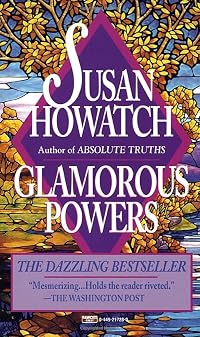
Follows the career of Jon Darrow, an Anglican minister, as he copes with church politics and the demands of marriage.Tags
Recommendations

























Member Recommendations

Member Reviews
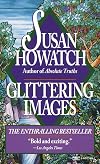
The world is teetering on the fringe of World War II. Abbot Jonathan Darrow experiences visions that tell him he must leave the Order. He has had the Glamorous Power of second sight since he was fourteen years old. (Readers will recognize Darrow as the pivotal spiritual advisor to Charles Ashworth in Glittering Images.) Despite his vision calling him to leave the Order, Darrow must undergo a thorough psychological analysis. Only Abbot-General Francis can grant his release and only after Francis determines it is in Darrow's best interest to leave. The decision cannot be one borne out of spiritual crisis or impulse brought on by false visions. It is such a twist of fate from the pages of Glittering Images when it was Jonathan Darrow show more analyzing and healing Charles Ashworth's psyche.
One of the delectable elements of the Stargate series is how soap opera dramatic the writing is. Emotions are turned up to eleven and events are earth-shattering. Words like terror, shock, harrowing, disastrous, horror, hostile, garish, rage, disturbed, diabolical, disgraceful, despair, doomed, menace, monster, disaster, tragedy, troubled, appalling, cruel, chaos, and crisis. Everyone trembles, feel faint or actually does faint, or gasps loudly in utter dismay. Some of Darrow's angst is warranted. He experiences sensory overload while visiting his modern daughter. He is not used to the sharpness of the outside world. In time, Darrow discovers the work he is supposed to do on the outside. Glamorous Powers examines the sins of the father, handed down. Who will break the cycle? show less
One of the delectable elements of the Stargate series is how soap opera dramatic the writing is. Emotions are turned up to eleven and events are earth-shattering. Words like terror, shock, harrowing, disastrous, horror, hostile, garish, rage, disturbed, diabolical, disgraceful, despair, doomed, menace, monster, disaster, tragedy, troubled, appalling, cruel, chaos, and crisis. Everyone trembles, feel faint or actually does faint, or gasps loudly in utter dismay. Some of Darrow's angst is warranted. He experiences sensory overload while visiting his modern daughter. He is not used to the sharpness of the outside world. In time, Darrow discovers the work he is supposed to do on the outside. Glamorous Powers examines the sins of the father, handed down. Who will break the cycle? show less
If I could I would have given this book 2.5 stars. The second book in the Strabridge sereies it takes one of the characters from the first story and tells us his story.
Jon Darrow is an Anglican monk who comes to the realisation that it's time to leave the monastery and go into the world. It then tells of his trials and tribulations and his problems with reconciling his faith with what he finds there.
Although I enjoyed this book I think in many ways it would be enjoyed better by a non-Christian as a pure story rather than myself as a Christian who found some of it very hard to accept as portraying Christianity in any real way.
My main problem is Jon Darrow's use of his glamorous powers which seem to consist of such things as hypnotism show more and his belief that he alone can heal people. This is totally contrary to the bible and in fact hypnotism is specifically forbidden. It seems strange that someone so senior in the church would be led astray in this way.
I was also very uncomfortable with the whole Catholic input. I was aware of High Anglicans but not to the extent featured in the book and it seems very wrong for him to impose such alien practices into the small village church.
All in all a good book and I look forward to reading the next in the series. show less
Jon Darrow is an Anglican monk who comes to the realisation that it's time to leave the monastery and go into the world. It then tells of his trials and tribulations and his problems with reconciling his faith with what he finds there.
Although I enjoyed this book I think in many ways it would be enjoyed better by a non-Christian as a pure story rather than myself as a Christian who found some of it very hard to accept as portraying Christianity in any real way.
My main problem is Jon Darrow's use of his glamorous powers which seem to consist of such things as hypnotism show more and his belief that he alone can heal people. This is totally contrary to the bible and in fact hypnotism is specifically forbidden. It seems strange that someone so senior in the church would be led astray in this way.
I was also very uncomfortable with the whole Catholic input. I was aware of High Anglicans but not to the extent featured in the book and it seems very wrong for him to impose such alien practices into the small village church.
All in all a good book and I look forward to reading the next in the series. show less
Second in the Starbridge series about the Church of England.
Another brilliant psychological novel featuring Jon Darrow as he leaves the monastic life and tries to follow God's will in the world. His insecurities and hangups gradually come to light, as he begin to accept healing.
Utterly enthralling, with totally believable people, situations and conversation. Wonderful.
Stands alone, but best to read after 'Glittering Images'. Eminently re-readable.
Another brilliant psychological novel featuring Jon Darrow as he leaves the monastic life and tries to follow God's will in the world. His insecurities and hangups gradually come to light, as he begin to accept healing.
Utterly enthralling, with totally believable people, situations and conversation. Wonderful.
Stands alone, but best to read after 'Glittering Images'. Eminently re-readable.
This is book two of the Starbridge series. I didn't enjoy it as much as Glittering Images / I got slightly muddled in the middle of this one, but upon finishing it, I went to the library and checked out the third book.
This book is narrated by Jon Darrow, the man who was Charles Ashworth's spiritual director in the first book. This more intimate portrait of Darrow reveals a man who is conflicted, proud, dishonest and concealing and self deluded. I think this is one of the reasons I found the middle of this book difficult. In Glittering Images Darrow was wise and insightful and always incisive in his analysis of others. A bit like Gandalf. This book his feet are more clay and his inner life is a mess.
However it is an interesting plot. show more Darrow turns sixty, has a vision, petitions to leave the monastery (which leads to a discernment process with his Abbot General which occupies the first third of the book. In the second part of the book, he acclimates to the outside world, falls in love, gets married, becomes a parish priest, starts on a career as a healer and an exorcist, has a spiritual breakdown where he thinks he's possessed. The conclusion involves him working through relational issues with his kids, and his wife and his past. He even has an interaction with the chief antagonist from the first book (and that sets the stage for book 3).
As an ecclesial fiction this is still pretty good. Darrow's mysticism is of a Neo Platonic variety (styled by Howatch after William Inge). In this novel the counterpoint of his Abbot-General's rationalism provides a nice balance. There thus for has been no intelligent low-church voice in Starbridge. show less
This book is narrated by Jon Darrow, the man who was Charles Ashworth's spiritual director in the first book. This more intimate portrait of Darrow reveals a man who is conflicted, proud, dishonest and concealing and self deluded. I think this is one of the reasons I found the middle of this book difficult. In Glittering Images Darrow was wise and insightful and always incisive in his analysis of others. A bit like Gandalf. This book his feet are more clay and his inner life is a mess.
However it is an interesting plot. show more Darrow turns sixty, has a vision, petitions to leave the monastery (which leads to a discernment process with his Abbot General which occupies the first third of the book. In the second part of the book, he acclimates to the outside world, falls in love, gets married, becomes a parish priest, starts on a career as a healer and an exorcist, has a spiritual breakdown where he thinks he's possessed. The conclusion involves him working through relational issues with his kids, and his wife and his past. He even has an interaction with the chief antagonist from the first book (and that sets the stage for book 3).
As an ecclesial fiction this is still pretty good. Darrow's mysticism is of a Neo Platonic variety (styled by Howatch after William Inge). In this novel the counterpoint of his Abbot-General's rationalism provides a nice balance. There thus for has been no intelligent low-church voice in Starbridge. show less
I was very disappointed by this book having enjoyed the first book in the Starbridge series. This one felt very dated - not in the sense that it was set in the past but more by the outlook and attitudes shown by the author. I felt entirely unsympathetic to the main character and many of the long discussions about his inner life - whilst familiar ground - were very dull. I finished it but won't hurry to read any more of the Starbridge books now.
A mystical blend of psychology and theology wraps this novel of Darrow's transition from Monk back to Pastor and beyond. This is the second in Howatch's Church of England series. The first is a wonderful mystery and introduction into the power of spiritual direction. The second in the series is a journey into the intersection of spirituality and psychology.
The book follows five transition points - leaving the cloister; reuniting with his children; marriage; pastoral ministry and beyond. I gave it a three because Susan explores very well the first and next to last but highly neglects and even rushes too quickly the middle two.
There are moments the dialogue seems fairly heavy against Darrow, but hang on because some intense therapy is show more going on. show less
The book follows five transition points - leaving the cloister; reuniting with his children; marriage; pastoral ministry and beyond. I gave it a three because Susan explores very well the first and next to last but highly neglects and even rushes too quickly the middle two.
There are moments the dialogue seems fairly heavy against Darrow, but hang on because some intense therapy is show more going on. show less
e time is 1940. Jonathan Darrow is an Anglican priest when he receives a shattering vision and knows he must leave the monastery that has been his home for seventeen years. As he plunges into the temptations of the real world, a crisis sends him into the labyrinth of his past to pluck out the buried truth beneath the deceptions he has been living through.
When I picked this up, I thought that there would be a certain approach taken on the narrator's psychic powers, and the initial scene, where he has a vision, added to my belief. How wrong I was!
The main character is a 60 year old widow and father of two who has spent the last 17 years in religious order. The first quarter of the book covers 2 months of discussions with his superior as show more he tries to leave the order. When he finally does, he travels around a bit, alienates his daughter and (let's face it) homosexual alcoholic son, then gets married to a woman half his age he's only known for 2 months, and gets set up as a local curate.
This book is very heavy on the Christian church process, very wordy, sometimes very heavy. Sometimes his very "deep" discources (e.g. on the afterworld/grief) appear more of a lecture to the reader, and makes his listener (in the above case, his wife), appear to be rather stupid.
I dont believe I completed it, as I struggled to get beyond halfway show less
When I picked this up, I thought that there would be a certain approach taken on the narrator's psychic powers, and the initial scene, where he has a vision, added to my belief. How wrong I was!
The main character is a 60 year old widow and father of two who has spent the last 17 years in religious order. The first quarter of the book covers 2 months of discussions with his superior as show more he tries to leave the order. When he finally does, he travels around a bit, alienates his daughter and (let's face it) homosexual alcoholic son, then gets married to a woman half his age he's only known for 2 months, and gets set up as a local curate.
This book is very heavy on the Christian church process, very wordy, sometimes very heavy. Sometimes his very "deep" discources (e.g. on the afterworld/grief) appear more of a lecture to the reader, and makes his listener (in the above case, his wife), appear to be rather stupid.
I dont believe I completed it, as I struggled to get beyond halfway show less
Members
- Recently Added By
Published Reviews
In this witty, wise novel, the question, ``Does God exist?'' is always understood and, true to life, ambiguously answered.
added by KayCliff
Author Information

64+ Works 8,182 Members
Susan Howatch was born on July 14, 1940 in England. She graduated from the University of London in 1961 and served as a law clerk and secretary in the early 1960s before becoming a full-time writer. She writes in a variety of genres, including mystery, romance, and historical fiction. Her books include The Dark Shore, April's Grave, Penmarric, and show more the six-volume Starbridge series. (Bowker Author Biography) show less
Series

Common Knowledge
- Original publication date
- 1988
- People/Characters
- Jon Darrow; W. R. Inge (quoted); Francis Ingram
- Important places
- Grantchester, Starmouth; England, UK
- First words
- The vision began at a quarter to six; around me the room was suffused with light, not the pellucid light of a fine midsummer morning but the dim light of a wet dawn in May.
- Quotations
- The rock-bottom truth about sexual intercourse, a truth which it is becoming increasingly fashionable to forget, is that no matter how delightful the experience it only wastes energy which could be more profitably spent elsew... (show all)here.
- Last words
- (Click to show. Warning: May contain spoilers.)There are times when I think "Victorian hypocrisy", the younger generation's label for an attitude which values tact, discretion and good taste above boorishness, boastfulness and vulgarity, has been greatly maligned.
Classifications
Statistics
- Members
- 560
- Popularity
- 52,631
- Reviews
- 9
- Rating
- (4.02)
- Languages
- English
- Media
- Paper, Audiobook, Ebook
- ISBNs
- 21
- ASINs
- 11