On This Page
Description
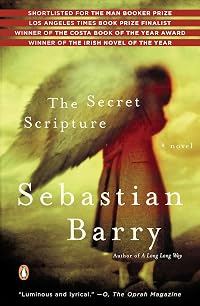
Roseanne McNulty, once one of the most beautiful and beguiling girls in County Sligo, Ireland, is now an elderly patient at Roscommon Regional Mental Hospital. As her hundredth year draws near, she decides to record the events of her life, hiding the manuscript beneath the floorboards. Meanwhile, the hospital is preparing to close and is evaluating its patients to determine whether they can return to society. Dr. Grene, Roseanne's caretaker, takes a special interest in her case. In his show more research, he discovers a document written by a local priest that tells a very different story of Roseanne's life than what she recalls. As doctor and patient attempt to understand each other, they begin to uncover long-buried secrets about themselves. show lessTags
Recommendations









Member Recommendations

Member Reviews
I can't think when I have read a more stunning novel. Barry's writing is just beautiful and I was thinking while I read 'what a lovely book'. Which is a strange reaction to such a dark tale.
The Secret Scripture is told in two voices: the first is Roseanne McNulty, an Irish centenarian who has spent the last seventy years of her life in mental institutions; the second voice is Dr. Grene, Roseanne's psychiatrist and the head doctor of the asylum she resides in currently. Barry slowly unravels two stories - Roseanne's through a secret document she is writing detailing her early life and Dr. Grene's through a personal document which includes his notes on Roseanne as well as his own history.
Dr. Grene is charged with evaluating the patients show more in the crumbling asylum to determine which of them can be returned to society as the new building will not hold everyone. His efforts to find out the reason behind Roseanne's incarceration meet with resistance from her. Slowly he acquires old documents which shed some light on the terrible events which overtook Roseanne.
Roseanne is writing from a distance of seventy or more years and she questions her memory many times. The book is as much a meditation on the uses and abuses of memory as it is a sharp tale of conditions in Ireland in the twenties and thirties of the previous century. At that time the turbulence was, if not at its height, certainly quite high. The catholic clergy had a stranglehold on the citizenry and far too much power to determine the fate of protestants and women. There is a priest in the story who, according to Dr. Grene, if sane, makes sanity look deplorable. This priest, Fr. Gaunt (good name), is instrumental in everything that falls upon Roseanne's shoulders. When Dr. Grene finds an old account written by Fr. Gaunt we see that it diverges from Roseanne's memories in many places.
Eventually Roseanne's document falls into Dr. Grene's hands and further information from the original asylum she was in leads him to answers about himself as well as her. The ending was quite shocking and I have read that many reviewers felt the ending was too contrived. Maybe on a second reading I might think so but at first account it was totally unexpected to me and I thought it was very satisfactory. show less
The Secret Scripture is told in two voices: the first is Roseanne McNulty, an Irish centenarian who has spent the last seventy years of her life in mental institutions; the second voice is Dr. Grene, Roseanne's psychiatrist and the head doctor of the asylum she resides in currently. Barry slowly unravels two stories - Roseanne's through a secret document she is writing detailing her early life and Dr. Grene's through a personal document which includes his notes on Roseanne as well as his own history.
Dr. Grene is charged with evaluating the patients show more in the crumbling asylum to determine which of them can be returned to society as the new building will not hold everyone. His efforts to find out the reason behind Roseanne's incarceration meet with resistance from her. Slowly he acquires old documents which shed some light on the terrible events which overtook Roseanne.
Roseanne is writing from a distance of seventy or more years and she questions her memory many times. The book is as much a meditation on the uses and abuses of memory as it is a sharp tale of conditions in Ireland in the twenties and thirties of the previous century. At that time the turbulence was, if not at its height, certainly quite high. The catholic clergy had a stranglehold on the citizenry and far too much power to determine the fate of protestants and women. There is a priest in the story who, according to Dr. Grene, if sane, makes sanity look deplorable. This priest, Fr. Gaunt (good name), is instrumental in everything that falls upon Roseanne's shoulders. When Dr. Grene finds an old account written by Fr. Gaunt we see that it diverges from Roseanne's memories in many places.
Eventually Roseanne's document falls into Dr. Grene's hands and further information from the original asylum she was in leads him to answers about himself as well as her. The ending was quite shocking and I have read that many reviewers felt the ending was too contrived. Maybe on a second reading I might think so but at first account it was totally unexpected to me and I thought it was very satisfactory. show less
I hardly know how to describe this book. On the surface, the plot is slow and fairly predictable, but the way the characters' lives and thoughts are expressed is so humane, you are drawn in and find yourself caring deeply about what happens to them. Some of the events depicted are brutal, but they are written about with a detachment that prevented me from burning up with anger.
Some of the book's themes that resonated particularly with me were the nature of memory and the reliability or otherwise of history, the helpfulness or otherwise of the "helping" professions, the various manifestations of love, and the destructiveness of ideology.
A touching novel that manages to be both powerful and gentle at the same time. Remarkable.
Some of the book's themes that resonated particularly with me were the nature of memory and the reliability or otherwise of history, the helpfulness or otherwise of the "helping" professions, the various manifestations of love, and the destructiveness of ideology.
A touching novel that manages to be both powerful and gentle at the same time. Remarkable.
Are you an honest person? Truly?
Perhaps you instinctively think “Yes”, even as you realise you are not always scrupulously so, often for the best of reasons. Often. But not always.
One can’t be totally honest all the time, can one? Can one?
What is “truth” anyway, but a social construct?!
“What's wrong about her account if she sincerely believes it?”
“There is no factual truth.”
It matters more that the person is “admirable, living, and complete” - what a curious trio of adjectives.
In a post-truth era, on a big day for possibly “fake news” (a euphemism for lies and propaganda), our collective ability to recognise truth slips ever further from our grasp.
Stories
This is stories of centenarian Roseanne’s lives. The show more tides of two world wars and a civil war bring opportunity, fear, birth, death, deceit, despair, and change - crashing, crushing, on the shores of Sligo.
She’s approaching her 100th birthday, and has been in asylums for around seventy years. Dr Grene has to gently uncover Roseanne’s story to see if she should move to a new, smaller institution or if the truth will set her “free” for care in the community (a term he knows is inaccurate).
This isn’t really about madness versus sanity (though it’s an issue for many characters) or even incarceration. It’s about telling stories – to hide the truth as well as to reveal it.
Roseanne and Dr Grene are both writing accounts of the past, especially Roseanne’s past, in part to avoid considering the future. Each is unaware the other is doing so.
The reader experiences layers of contradiction, distance and distortion from the passage of time, deep trauma, and efforts to protect from shame or guilt.
And then there is a third written testimony, from Fr Gaunt, and remnants of official records (“A little apocryphal gospel”) which readers get second hand via Dr Grene, and which are further muddied when the doctor realises he’s filling in gaps that Fr Gaunt did not. Another layer of embroidery.
And what about the unknown hand who brought all the narratives together? How do we untangle the truth? Which version of the tower and feathers and hammers is true? Could it even be both?!
Why are they writing?
No plot spoilers, just background notes and detail.
• Roseanne wants “an honest-minded history of myself” because “My secrets are my fortune and my sanity.” She has experienced the dire consequences of gossip and presumption more than once, so “There must be accuracy and rightness.”
• Dr Grene’s writing is an extension of his work, a distraction from personal loss, and “a sign of ongoing inner life” that triggers ideas and insight.
• Fr Gaunt’s “desire... to tell the story illuminates it. He is unburdening himself, as he might a sin.”
A person without stories that outlive them becomes lost to family, lost to history, “sad black names on within family trees, with half a date dangling after and a question mark”.
Roseanne’s father relished telling stories from his life, but mother is “singularly without stories” and eventually mute. She vanishes from the story.
Words
No plot spoilers, just background notes and detail.
The writing it beautiful and lyrical (see quotes below, especially about sea, ran, weather, and light), but some words have special weight. The pages are infused with religious people, language, and symbols (a priest, the church, visions that might be angels, and roast lamb in a sacrificial context).
• Is “Roseanne’s Testimony of herself” her title or someone else’s?
• Is “secret scripture” an oxymoron – and who calls it that?
• What is sacred about it – the story or the telling of it?
• Dr Grene’s record is merely his “Commonplace Book”.
Perhaps because she has been deemed unclean by some, Roseanne notes cleanliness a great deal:
• “My father was the cleanest man in all the Christian world.”
• Father Gaunt is “cleaner than the daylight moon” and later, his “cleanliness made me fearful”.
• Dr Grene sits on Roseanne’s bed “as if it were the cleanest bed in all Christendom”.
• And she only writes her notes on clean sheets of paper.
Names may tell us something:
• Clear is the surname of Roseanne’s family, but their history is opaque.
• Grene, the doctor’s surname, is an important colour, as well as being associated with Ireland generally.
• Gaunt can never be good, can it?
• Roseanne loves flowers, especially roses, as does Dr Grene’s wife, and when he visits Roseanne’s old house, he finds and plucks a rose.
Roses are not the only hybrids. It’s significant that some people are part English and part Irish.
Poisoned Chalices
Female beauty and sexuality are poisoned chalices in a society where only women are shamed and punished for the consequences of both. Mere existence “Caused him… displeasure and disquiet at the nature of a woman.”
What Matters in The End?
I guessed the main twist (and others) well before it was revealed. I didn’t mind. But what did dilute the book’s power was the rushed but detailed explanation of the complex chain of events, involving many people, that made it possible. Far better had it been chance (fate) or merely unexplained. More credible, too.
If one strives to be the architect of one’s own life, it’s not much of a stretch to be the curator of one’s own history, editing a little along the way, is it?
And if you trust or blame fate instead, perhaps you have even more cause to write yourself a happier beginning, middle, and end.
I ask again: Are you an honest person? Truly? Is anyone?
Quotes
No plot spoilers, but hidden for brevity and easy scrolling. They’re worth the click, though. It’s not just the setting that is typically Irish, but the writing, too.
History, Memory, Truth, and Stories Quotes
• “No one has the monopoly on truth.”
• “History… is not the arrangement of what happened… but a fabulous arrangement of surmises and guesses held up as a banner against the assault of withering truth.” Fabulous in more than one sense.
• “The written word assumes authority but it may not have it.”
• “I thought others were the authors of my sort of misfortune.”
• “A child is never the author of his own history.”
• “I am only the midwife to my own old story.”
• “Memory… if it is neglected becomes like a box room… the contents jumbled about.”
• “Everything I remember… may not be real... There was so much turmoil… I took refuge in other impossible histories, in dreams, in fantasies? I don’t know.”
Sanity and Madness Quotes
• "Madness… has many flowers, rising from the same stem."
• “Learned a sort of viral madness” is often the fate of long-term inmates of the asylum. The worse cases are “sleeping towards death, crawling on bleeding knees towards our Lord… I whisper a prayer to hurry up their souls to heaven.”
• “In here, amid the shadows and the distant cries, the greatest virtue is silence.”
• “Sane to a degree that makes sanity almost undesirable.”
Beauty Quotes
• “A more beautiful girl Sligo never saw, she had skin soft as feathers” and “green eyes like American emeralds”. The sort of beauty “no man can protect himself against”.
• “My mother suffered strangely under her halo of beauty.”
• “Beautiful once, but beauty ended.”
• “All that remains of me now is a rumour of beauty.”
People and Relationships Quotes
• “He had that rare ability to let things ease in himself in the company of a child, and be stupid and gay in the parched light.”
• “It is no crime to love your father.”
• “My pride in her was my pride in myself.”
• “Now we are two foreign countries and we simply have our embassies in the same house. Relations are friendly but strictly diplomatic. There is an underlying sense of rumour, of judgement, of memory, like two peoples that have once committed grave crimes against each other, but in another generation.”
• “We have neglected the tiny sentences of life and now the big ones are beyond our reach.”
Sea, Rain, Weather, and Light Quotes
Humans came from the sea and therefore still long for it. Many characters walk the shore for peace or escape, and one is dramatically rescued from drowning.
• “The rain drives everyone indoors and history with it… our world in its inner truth is so wet, the surprised greens of the fields and hills seem to burn with a sort of bewilderment, a wonderment.”
• “Always the deluge of rain falling... making the houses shiver and huddle like people at a football match. Falling fantastically, in enormous amounts, the contents of a hundred rivers. And the river itself... swelling up, the beautiful swans taken by surprise, riding the torrent, being swept down under the bridge and reappearing the other side like unsuccessful suicides, their mysterious eyes shocked and black, their mysterious grace unassailed.”
• “Sideways spring sunlight, that seemed to have crept in through the window-glass with an almost apologetic delicacy.”
• “The wind was dancing about… so you didn’t know where the rain would catch you.”
• “Rain striking the surface of the road and leaping about with a sort of anger.”
• “The rain was like huge skirts, swirling and lifting.”
• “The galloping sound of the sea, as it rushed in eagerly to take the empty places in its arms.”
The famous Metal Man is “Solid and eternal… faithfully and stoically pointing down into the deep water.”
Other Quotes
• “A cold town. Even the mountains stood away.”
• “Any effort at gardening… is an effort to drag to earth the colours and importances of heaven.”
• “Grief is two years long.” So says Fr Gaunt.
• “My head was aflame with the deep dark pulse of grief, that beats like a physical pain, like a rat got into your brains, a rat on fire.”
• “At close of day the ship we sail in is the soul, not the body.”
• “His veritable gospel was Religio Medici by Sir Thomas Browne.”
• “Slight as a watercolour, a mere gesture of bones and features.”
• Café women “like veritable hens in a yard… the chat and gossip rising from them like dust from a desert caravan of camels.”
• “Accents like beer bottles being smashed in a back lane.”
Image Sources
Hand on Bible:
https://goo.gl/images/52IiZm
Poisoned chalice:
https://s3-eu-central-1.amazonaws.com/centaur-wp/moneymarketing/prod/content/upl....
Metal Man, Coney Island, near Sligo:
http://seafishingsligo.ie/wp-content/uploads/2015/04/metal-man2.png
The truth will set you free (John 8:32):
http://pictures.agodman.com/wp-content/uploads/2014/03/RM-john-8-32-and-you-shal....
See also
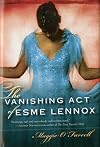
Maggie O'Farrell’s The Vanishing Act of Esme Lennox also features the mysteries surrounding an elderly woman who's lived most of her life in such an institution that is about to be closed down. See my review, HERE. show less
Perhaps you instinctively think “Yes”, even as you realise you are not always scrupulously so, often for the best of reasons. Often. But not always.
One can’t be totally honest all the time, can one? Can one?
What is “truth” anyway, but a social construct?!
“What's wrong about her account if she sincerely believes it?”
“There is no factual truth.”
It matters more that the person is “admirable, living, and complete” - what a curious trio of adjectives.
In a post-truth era, on a big day for possibly “fake news” (a euphemism for lies and propaganda), our collective ability to recognise truth slips ever further from our grasp.
Stories
This is stories of centenarian Roseanne’s lives. The show more tides of two world wars and a civil war bring opportunity, fear, birth, death, deceit, despair, and change - crashing, crushing, on the shores of Sligo.
She’s approaching her 100th birthday, and has been in asylums for around seventy years. Dr Grene has to gently uncover Roseanne’s story to see if she should move to a new, smaller institution or if the truth will set her “free” for care in the community (a term he knows is inaccurate).
This isn’t really about madness versus sanity (though it’s an issue for many characters) or even incarceration. It’s about telling stories – to hide the truth as well as to reveal it.
Roseanne and Dr Grene are both writing accounts of the past, especially Roseanne’s past, in part to avoid considering the future. Each is unaware the other is doing so.
The reader experiences layers of contradiction, distance and distortion from the passage of time, deep trauma, and efforts to protect from shame or guilt.
And then there is a third written testimony, from Fr Gaunt, and remnants of official records (“A little apocryphal gospel”) which readers get second hand via Dr Grene, and which are further muddied when the doctor realises he’s filling in gaps that Fr Gaunt did not. Another layer of embroidery.
And what about the unknown hand who brought all the narratives together? How do we untangle the truth? Which version of the tower and feathers and hammers is true? Could it even be both?!
Why are they writing?
No plot spoilers, just background notes and detail.
• Roseanne wants “an honest-minded history of myself” because “My secrets are my fortune and my sanity.” She has experienced the dire consequences of gossip and presumption more than once, so “There must be accuracy and rightness.”
• Dr Grene’s writing is an extension of his work, a distraction from personal loss, and “a sign of ongoing inner life” that triggers ideas and insight.
• Fr Gaunt’s “desire... to tell the story illuminates it. He is unburdening himself, as he might a sin.”
A person without stories that outlive them becomes lost to family, lost to history, “sad black names on within family trees, with half a date dangling after and a question mark”.
Roseanne’s father relished telling stories from his life, but mother is “singularly without stories” and eventually mute. She vanishes from the story.
Words
No plot spoilers, just background notes and detail.
The writing it beautiful and lyrical (see quotes below, especially about sea, ran, weather, and light), but some words have special weight. The pages are infused with religious people, language, and symbols (a priest, the church, visions that might be angels, and roast lamb in a sacrificial context).
• Is “Roseanne’s Testimony of herself” her title or someone else’s?
• Is “secret scripture” an oxymoron – and who calls it that?
• What is sacred about it – the story or the telling of it?
• Dr Grene’s record is merely his “Commonplace Book”.
Perhaps because she has been deemed unclean by some, Roseanne notes cleanliness a great deal:
• “My father was the cleanest man in all the Christian world.”
• Father Gaunt is “cleaner than the daylight moon” and later, his “cleanliness made me fearful”.
• Dr Grene sits on Roseanne’s bed “as if it were the cleanest bed in all Christendom”.
• And she only writes her notes on clean sheets of paper.
Names may tell us something:
• Clear is the surname of Roseanne’s family, but their history is opaque.
• Grene, the doctor’s surname, is an important colour, as well as being associated with Ireland generally.
• Gaunt can never be good, can it?
• Roseanne loves flowers, especially roses, as does Dr Grene’s wife, and when he visits Roseanne’s old house, he finds and plucks a rose.
Roses are not the only hybrids. It’s significant that some people are part English and part Irish.
Poisoned Chalices
Female beauty and sexuality are poisoned chalices in a society where only women are shamed and punished for the consequences of both. Mere existence “Caused him… displeasure and disquiet at the nature of a woman.”
What Matters in The End?
I guessed the main twist (and others) well before it was revealed. I didn’t mind. But what did dilute the book’s power was the rushed but detailed explanation of the complex chain of events, involving many people, that made it possible. Far better had it been chance (fate) or merely unexplained. More credible, too.
If one strives to be the architect of one’s own life, it’s not much of a stretch to be the curator of one’s own history, editing a little along the way, is it?
And if you trust or blame fate instead, perhaps you have even more cause to write yourself a happier beginning, middle, and end.
I ask again: Are you an honest person? Truly? Is anyone?
Quotes
No plot spoilers, but hidden for brevity and easy scrolling. They’re worth the click, though. It’s not just the setting that is typically Irish, but the writing, too.
History, Memory, Truth, and Stories Quotes
• “No one has the monopoly on truth.”
• “History… is not the arrangement of what happened… but a fabulous arrangement of surmises and guesses held up as a banner against the assault of withering truth.” Fabulous in more than one sense.
• “The written word assumes authority but it may not have it.”
• “I thought others were the authors of my sort of misfortune.”
• “A child is never the author of his own history.”
• “I am only the midwife to my own old story.”
• “Memory… if it is neglected becomes like a box room… the contents jumbled about.”
• “Everything I remember… may not be real... There was so much turmoil… I took refuge in other impossible histories, in dreams, in fantasies? I don’t know.”
Sanity and Madness Quotes
• "Madness… has many flowers, rising from the same stem."
• “Learned a sort of viral madness” is often the fate of long-term inmates of the asylum. The worse cases are “sleeping towards death, crawling on bleeding knees towards our Lord… I whisper a prayer to hurry up their souls to heaven.”
• “In here, amid the shadows and the distant cries, the greatest virtue is silence.”
• “Sane to a degree that makes sanity almost undesirable.”
Beauty Quotes
• “A more beautiful girl Sligo never saw, she had skin soft as feathers” and “green eyes like American emeralds”. The sort of beauty “no man can protect himself against”.
• “My mother suffered strangely under her halo of beauty.”
• “Beautiful once, but beauty ended.”
• “All that remains of me now is a rumour of beauty.”
People and Relationships Quotes
• “He had that rare ability to let things ease in himself in the company of a child, and be stupid and gay in the parched light.”
• “It is no crime to love your father.”
• “My pride in her was my pride in myself.”
• “Now we are two foreign countries and we simply have our embassies in the same house. Relations are friendly but strictly diplomatic. There is an underlying sense of rumour, of judgement, of memory, like two peoples that have once committed grave crimes against each other, but in another generation.”
• “We have neglected the tiny sentences of life and now the big ones are beyond our reach.”
Sea, Rain, Weather, and Light Quotes
Humans came from the sea and therefore still long for it. Many characters walk the shore for peace or escape, and one is dramatically rescued from drowning.
• “The rain drives everyone indoors and history with it… our world in its inner truth is so wet, the surprised greens of the fields and hills seem to burn with a sort of bewilderment, a wonderment.”
• “Always the deluge of rain falling... making the houses shiver and huddle like people at a football match. Falling fantastically, in enormous amounts, the contents of a hundred rivers. And the river itself... swelling up, the beautiful swans taken by surprise, riding the torrent, being swept down under the bridge and reappearing the other side like unsuccessful suicides, their mysterious eyes shocked and black, their mysterious grace unassailed.”
• “Sideways spring sunlight, that seemed to have crept in through the window-glass with an almost apologetic delicacy.”
• “The wind was dancing about… so you didn’t know where the rain would catch you.”
• “Rain striking the surface of the road and leaping about with a sort of anger.”
• “The rain was like huge skirts, swirling and lifting.”
• “The galloping sound of the sea, as it rushed in eagerly to take the empty places in its arms.”
The famous Metal Man is “Solid and eternal… faithfully and stoically pointing down into the deep water.”
Other Quotes
• “A cold town. Even the mountains stood away.”
• “Any effort at gardening… is an effort to drag to earth the colours and importances of heaven.”
• “Grief is two years long.” So says Fr Gaunt.
• “My head was aflame with the deep dark pulse of grief, that beats like a physical pain, like a rat got into your brains, a rat on fire.”
• “At close of day the ship we sail in is the soul, not the body.”
• “His veritable gospel was Religio Medici by Sir Thomas Browne.”
• “Slight as a watercolour, a mere gesture of bones and features.”
• Café women “like veritable hens in a yard… the chat and gossip rising from them like dust from a desert caravan of camels.”
• “Accents like beer bottles being smashed in a back lane.”
Image Sources
Hand on Bible:
https://goo.gl/images/52IiZm
Poisoned chalice:
https://s3-eu-central-1.amazonaws.com/centaur-wp/moneymarketing/prod/content/upl....
Metal Man, Coney Island, near Sligo:
http://seafishingsligo.ie/wp-content/uploads/2015/04/metal-man2.png
The truth will set you free (John 8:32):
http://pictures.agodman.com/wp-content/uploads/2014/03/RM-john-8-32-and-you-shal....
See also
Maggie O'Farrell’s The Vanishing Act of Esme Lennox also features the mysteries surrounding an elderly woman who's lived most of her life in such an institution that is about to be closed down. See my review, HERE. show less
"There is seldom a difficulty with religion where there is friendship."
Religion and politics are rarely cosy bedfellows and nowhere during the 20th century in Western Europe is this more evident than in Ireland with its sectarianism. In "The Secret Scripture" Barry tries to expose some very painful truths done to the country and its inhabitants in the name of religion.
Set in Sligo the narration is shared between Roseanne McNulty, a centurion who has spent over sixty years in a psychiatric institution, and her psychiatrist Dr Grene. Roseanne's records have long been lost but as the hospital nears closure, Dr Grene must try to assess whether or not she can be rehabilitated back 'into the community'.
Roseanne is reluctant to confide in Dr show more Grene but writes down her secrets and hides them under the floorboards. She is an old lady with secrets to hide, whose memories may not be truly accurate and who may or may not have been committed for good reason. What is not in any doubt is that she has been the victim of those who should have had her welfare in mind. Roseanne’s story is uncomfortable because although she may be fictional, her situation is not.
Roseanne comes from a Presbyterian family, her mother is English and when her father, who had once been a Police officer, dies she finds herself with nobody to speak for her. Even the reader is encouraged to distrust her, her view of events is undermined by what scraps of documentation remain. Dr Grene must decide which of his patients were committed on social rather than medical grounds.
The scars of sectarianism run deep in Ireland and Roseanne is an obvious metaphor for the country itself. She too bears the scars of crimes wrought by religion, she sought sanctuary in marriage to the man she loved but her past and the local priest would not let her. Roseanne's own faith is disregarded and she suffers because she refuses to convert to Catholicism.
Whilst it's easy to see Roseanne's story as simply a tale of how local priests were often omnipotent and that women were often the victims of their power, this book is also a timely reminder that the old too have stories of their own. They may now live in a home, have no immediate family to visit them but they too have histories, loves, losses, beliefs and therefore deserve to be treated with dignity and respect.
"We are never old to ourselves. That is because at the close of the day the ship we sail in is the soul, not the body."
I should point out that this is actually the fourth in a series about the McNulty family and I haven't read any of the previous books. This may influence my opinion but I still think that this book stands on its own merits. This is a book that leaves you with as many questions as answers and whilst I found the ending as the author tries to tie up the loose endings too neat and twee for my taste it was still well written. It also annoyed me that Dr Grene ultimately decided to keep the truth from Roseanne at the end like so many men who had preceded him.
It isn't always any easy tale to read, some of the events are quite disturbing and heart-rending yet there is also love and hope, that events within it can one day be consigned to the history books. show less
Religion and politics are rarely cosy bedfellows and nowhere during the 20th century in Western Europe is this more evident than in Ireland with its sectarianism. In "The Secret Scripture" Barry tries to expose some very painful truths done to the country and its inhabitants in the name of religion.
Set in Sligo the narration is shared between Roseanne McNulty, a centurion who has spent over sixty years in a psychiatric institution, and her psychiatrist Dr Grene. Roseanne's records have long been lost but as the hospital nears closure, Dr Grene must try to assess whether or not she can be rehabilitated back 'into the community'.
Roseanne is reluctant to confide in Dr show more Grene but writes down her secrets and hides them under the floorboards. She is an old lady with secrets to hide, whose memories may not be truly accurate and who may or may not have been committed for good reason. What is not in any doubt is that she has been the victim of those who should have had her welfare in mind. Roseanne’s story is uncomfortable because although she may be fictional, her situation is not.
Roseanne comes from a Presbyterian family, her mother is English and when her father, who had once been a Police officer, dies she finds herself with nobody to speak for her. Even the reader is encouraged to distrust her, her view of events is undermined by what scraps of documentation remain. Dr Grene must decide which of his patients were committed on social rather than medical grounds.
The scars of sectarianism run deep in Ireland and Roseanne is an obvious metaphor for the country itself. She too bears the scars of crimes wrought by religion, she sought sanctuary in marriage to the man she loved but her past and the local priest would not let her. Roseanne's own faith is disregarded and she suffers because she refuses to convert to Catholicism.
Whilst it's easy to see Roseanne's story as simply a tale of how local priests were often omnipotent and that women were often the victims of their power, this book is also a timely reminder that the old too have stories of their own. They may now live in a home, have no immediate family to visit them but they too have histories, loves, losses, beliefs and therefore deserve to be treated with dignity and respect.
"We are never old to ourselves. That is because at the close of the day the ship we sail in is the soul, not the body."
I should point out that this is actually the fourth in a series about the McNulty family and I haven't read any of the previous books. This may influence my opinion but I still think that this book stands on its own merits. This is a book that leaves you with as many questions as answers and whilst I found the ending as the author tries to tie up the loose endings too neat and twee for my taste it was still well written. It also annoyed me that Dr Grene ultimately decided to keep the truth from Roseanne at the end like so many men who had preceded him.
It isn't always any easy tale to read, some of the events are quite disturbing and heart-rending yet there is also love and hope, that events within it can one day be consigned to the history books. show less
THE SECRET SCRIPTURE (2008) is the second Sebastian Barry book I've read, and is also apparently the middle book of a trilogy featuring the McNulty family of Sligo. Its a compelling story told by two different narrators in journal form. One is Roseanne (Clear) McNulty, who is nearly a hundred years old and a longtime occupant of an insane asylum. The other is Dr William Grene, the resident psychiatrist of the ancient institution, which is slated for closure and demolition. Dr Green has spent most of his career there, is recently widowed and near retirement, and has formed a close connection with Roseanne, the oldest of his patients who has been there longer than he has, and he is tasked with determining which patients might be released show more back into the community. Roseanne's hidden, secret journal reveals her days as a young beauty who grew up near a graveyard which her father was in charge of, unaware that he had once been a policeman and thus an enemy of the Irish rebels and much involved in the infamous "Troubles" of the 1920s and before. As a Protestant, she runs afoul of the local priest when she marries "Young Tom" McNulty. And the McNulty matriarch doesn't approve either, sooo ... if gets complicated. Suffice it to say, perhaps, that both narrators have a way with words, and, ever so gradually, the two stories begin to come together in a most shocking and surprising manner that will nearly take your breath away. And yes, as other blurbs and reviews have noted, the language, the prose, the sentences employed herein are indeed quite beautiful. Sebastian Barry is a wordsmith par excellence. I was reminded of another Irish writer I have been following for the past several years with great interest, Donal Ryan.
Oh, and the other Barry book I read a few years ago was A LONG LONG WAY, set in the years of the Great War, was also the second book in a trilogy, that one about the Dunne family (and of course those "Troubles" are in there too). And I may have enjoyed that one even a pinch more than I did this one. Bottom line: Barry is a marvelous writer, and THE SECRET SCRIPTURE is a fascinating, riveting read.
- Tim Bazzett, author of the memoir, BOOKLOVER show less
Oh, and the other Barry book I read a few years ago was A LONG LONG WAY, set in the years of the Great War, was also the second book in a trilogy, that one about the Dunne family (and of course those "Troubles" are in there too). And I may have enjoyed that one even a pinch more than I did this one. Bottom line: Barry is a marvelous writer, and THE SECRET SCRIPTURE is a fascinating, riveting read.
- Tim Bazzett, author of the memoir, BOOKLOVER show less
Centenarian Roseanne Clear McNulty has been confined in a mental institution in rural Ireland for over four decades. The institution is being replaced, and her psychiatrist, Dr. Grene, must determine if she should be released or sent to the new smaller facility. Roseanne is writing her life story, hiding it under the floorboards of her room. Dr. Grene is writing his “Book of Commonplace,” a journal of sorts, recording observations about Roseanne and events in his own life.
This book is a deep character study of two individuals set against a backdrop of political and religious rivalries in Irish history. The plot revolves around the reasons Roseanne was initially confined, leading to up to a decision regarding her mental health. The show more story is artfully told, gradually revealing more information to uncover the secrets of the past. It explores the relationships among memory, fact, history, and the stories we tell ourselves. The writing is evocative. The prose sequences are reminiscent of a Victorian novel, though the time period covered here is the early 1900s through 2007. It is an emotional book about trauma, loss, betrayal, injustice, aging, and hope. I found it beautifully told, thought-provoking, and memorable. show less
This book is a deep character study of two individuals set against a backdrop of political and religious rivalries in Irish history. The plot revolves around the reasons Roseanne was initially confined, leading to up to a decision regarding her mental health. The show more story is artfully told, gradually revealing more information to uncover the secrets of the past. It explores the relationships among memory, fact, history, and the stories we tell ourselves. The writing is evocative. The prose sequences are reminiscent of a Victorian novel, though the time period covered here is the early 1900s through 2007. It is an emotional book about trauma, loss, betrayal, injustice, aging, and hope. I found it beautifully told, thought-provoking, and memorable. show less
Although it’s been several days since I finished reading this book, I have been avoiding writing a review. I realise now that that’s because to write a review I have to notice how I am feeling when I think about the book, and how I am feeling as I do is that I want to cry.
Sebastian Barry paints a very complete picture of the interiors of two people coming to an enormous turning point in their lives. Rosanne, at 100 years old, has lived in an institution for much of her life. Dr. Grene has overseen her institutionalisation for several decades. As the time grows near to close down the hospital and move remaining patients to a smaller building, thus necessitating a cull, he needs to assess each patient's candidacy for release. In the show more process he finds himself spending more and more time in the presence of this elderly woman, and attempting to reconstruct her story, one which she refuses to tell.
They both must explore her past: what led to her incarceration, and whether or not it had occurred because she was truly mentally ill or if it had been provoked for other reasons and she should be freed.
Roseanne is a beautiful presence. I loved spending time in her head. Even with the very limited sphere of life she is consigned to she is able to find interest and joy. The narrative of course eventually reveals a painful story and my sorrow at what this woman endured, what so many of us have endured in one way or another, is real and intense.
I am not at all sorry I read this beautiful Irish book, and I was absorbed by it the entire time I read. It is not a complete tragedy, but if this book doesn’t spark your compassion, I’m not sure what would. show less
Sebastian Barry paints a very complete picture of the interiors of two people coming to an enormous turning point in their lives. Rosanne, at 100 years old, has lived in an institution for much of her life. Dr. Grene has overseen her institutionalisation for several decades. As the time grows near to close down the hospital and move remaining patients to a smaller building, thus necessitating a cull, he needs to assess each patient's candidacy for release. In the show more process he finds himself spending more and more time in the presence of this elderly woman, and attempting to reconstruct her story, one which she refuses to tell.
They both must explore her past: what led to her incarceration, and whether or not it had occurred because she was truly mentally ill or if it had been provoked for other reasons and she should be freed.
Roseanne is a beautiful presence. I loved spending time in her head. Even with the very limited sphere of life she is consigned to she is able to find interest and joy. The narrative of course eventually reveals a painful story and my sorrow at what this woman endured, what so many of us have endured in one way or another, is real and intense.
I am not at all sorry I read this beautiful Irish book, and I was absorbed by it the entire time I read. It is not a complete tragedy, but if this book doesn’t spark your compassion, I’m not sure what would. show less
Members
- Recently Added By
Lists

Recommend the 20 best books you've read in the last five years
2,168 works; 601 members

Booker Prize
491 works; 62 members

Best 21st Century Books (So Far)
670 works; 85 members

Mental health fiction
55 works; 18 members

Best of Irish Literature
37 works; 7 members

A Novel Cure
742 works; 23 members

BBC Radio 4 Bookclub
341 works; 13 members

Man Booker Prize Longlist 2008
13 works; 2 members

New Authors to Read
21 works; 3 members

Best Domestic Fiction
77 works; 6 members

Books Read in 2016
4,666 works; 197 members

Booker Prize Shortlist: Titles Not Yet Read
161 works; 4 members

Books Read in 2020
4,379 works; 124 members

KayStJ's to-read list
1,616 works; 11 members

BBC World Book Club
265 works; 5 members

Fiction (Non-Fantasy) by Irish Authors Set in Ireland
87 works; 3 members

Take Four Books
130 works; 1 member

World Book Club (BBC World Service)
212 works; 1 member
Author Information

43+ Works 9,654 Members
Sebastian Barry is a playwright whose work has been produced in London, Dublin, Sydney, and New York. He lives in Wicklow, Ireland, with his wife and three children. Sebastian Barry is an Irish writer and playwright, born in 1955. He is the author of two novels, A Long Long Way and Days Without End, which won the Costa Book Award for best novel. show more His other awards include the Kerry Group Irish Fiction Prize, the Irish Book Awards Novel of the Year, the Independent Booksellers Prize and the James Tait Black Memorial Prize. (Bowker Author Biography) show less
Some Editions
Awards and Honors
Awards
Distinctions
Series

Belongs to Publisher Series
Common Knowledge
- Canonical title
- The Secret Scripture
- Original title
- The Secret Scripture
- Original publication date
- 2008 (1e édition originale anglaise, Faber and Faber) (1e édition originale anglaise, Faber and Faber); 2009-09-03 (1e traduction et édition française, Littérature étrangère, Editions Joëlle Losfeld) (1e traduction et édition française, Littérature étrangère, Editions Joëlle Losfeld); 2011-01-20 (Réédition française, Folio, Gallimard) (Réédition française, Folio, Gallimard)
- People/Characters
- Roseanne McNulty; Dr William Grene; Roseanne Clear; Eneas McNulty; Tom McNulty; Jack McNulty
- Important places
- Sligo, County Sligo, Ireland; Roscommon Mental Hospital, Sligo, County Sligo, Ireland; Ireland
- Important events
- Irish Civil War
- Related movies
- The Secret Scripture (2016 | IMDb)
- Epigraph
- The greatest imperfection is in out inward sight that is to be ghosts unto our own eyes.
--Sir Thomas Browne Christian Morals
Of the numbers who study or at least read history, how few derive any advantage from th... (show all)eir labours! . . . Besides there is much uncertainty even in the best authenticated ancient and modern histories; and that love of truth, which in some minds is innate and immutable, necessarily leads to a love of secret memoirs and private anecdotes.
--Maria Edgeworth, Preface to Castle Rackrent - Dedication
- For Margaret Synge
- First words
- The world begins anew with every birth, my father used to say.
- Last words
- (Click to show. Warning: May contain spoilers.)I carefully peeled off a sprig as recommended in the books in the chapters on propagation, and slipped it in my pocket, feeling almost guilty, as if I were stealing something that didn't belong to me.
- Blurbers
- Fraser, Antonia; Cahill, Thomas; Livesey, Margot
- Original language*
- Anglais (Irlande) (Irlande)
*Some information comes from Common Knowledge in other languages. Click "Edit" for more information.
Classifications
Statistics
- Members
- 3,110
- Popularity
- 5,673
- Reviews
- 168
- Rating
- (3.86)
- Languages
- 19 — Catalan, Chinese, Czech, Danish, Dutch, English, Estonian, French, German, Italian, Korean, Norwegian (Bokmål), Portuguese, Russian, Croatian, Slovenian, Spanish, Swedish, Turkish
- Media
- Paper, Audiobook, Ebook
- ISBNs
- 57
- UPCs
- 1
- ASINs
- 14