On This Page
Description
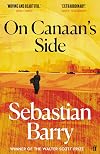
Forced to flee from Ireland and the wrath of the IRA, Lilly Bere and her teenage son start anew in America. However, tragedy strikes when her fiance is murdered in Chicago and, years later, her husband mysteriously vanishes from their Washington, DC home. After settling in Bridgehampton, her son Ed disappears after returning home from Vietnam, prompting Mr. Nolan, a family friend, to locate him. However, Nolan returns with Bill, Ed's young son, who Lilly raises as her own.Tags
Recommendations






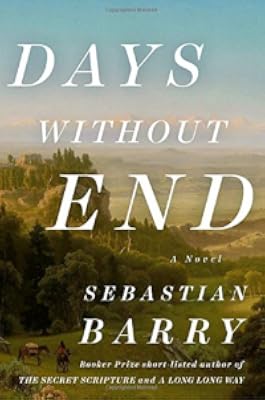

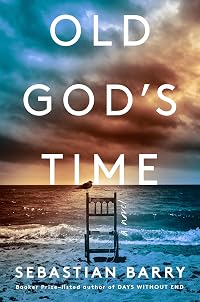






Member Recommendations
Member Reviews
“I am cold because I cannot find my heart.” (Ch 2)
Now eighty-nine years old, Lilly Bere fled Ireland as a young woman with her first love, Tadg, after the first World War. She has lived out her life in domestic service to wealthy patrons on the east coast of the US, “Canaan’s Side.” Lilly is recording her life’s memories as she reels with grief at the recent loss of her grandson, Bill. Lilly has endured far more than her share of loss: brother, husband, father, son, grandson. Keenly aware of the terror of grief, she knows that at last “there is solace in nothing.” (Ch 1) Still, the power of human memory dictates that one is never free from revisiting cumulative losses:
“We may be immune to typhoid, tetanus, chickenpox, show more diphtheria, but never memory. There is no inoculation against that.” (Ch 7)
Beautifully written and achingly beautiful, On Canaan’s Side moves seamlessly between past and present. Chapters are named for the number of days which have passed since Bill’s death. For me, the prominent theme in the novel is the hollowing out of the soul – as Lilly’s brother and son are hollowed out by the experience of war, Lilly is hollowed out by grief. Undoubtedly, the novel is immersed in great sadness, almost too much, but I don’t remember writing more fluid, more lovely. show less
Now eighty-nine years old, Lilly Bere fled Ireland as a young woman with her first love, Tadg, after the first World War. She has lived out her life in domestic service to wealthy patrons on the east coast of the US, “Canaan’s Side.” Lilly is recording her life’s memories as she reels with grief at the recent loss of her grandson, Bill. Lilly has endured far more than her share of loss: brother, husband, father, son, grandson. Keenly aware of the terror of grief, she knows that at last “there is solace in nothing.” (Ch 1) Still, the power of human memory dictates that one is never free from revisiting cumulative losses:
“We may be immune to typhoid, tetanus, chickenpox, show more diphtheria, but never memory. There is no inoculation against that.” (Ch 7)
Beautifully written and achingly beautiful, On Canaan’s Side moves seamlessly between past and present. Chapters are named for the number of days which have passed since Bill’s death. For me, the prominent theme in the novel is the hollowing out of the soul – as Lilly’s brother and son are hollowed out by the experience of war, Lilly is hollowed out by grief. Undoubtedly, the novel is immersed in great sadness, almost too much, but I don’t remember writing more fluid, more lovely. show less
Lilly is still a young girl when she is forced to flee her home of Ireland shortly after the first world war. She washes up in Chicago with her new husband. Just when they feel safe, a strange man shows up and shoots her husband. Alone in America with no connections, Lilly must reinvent her life and discover her own way to survive. The narrative of her life is told over several days as part of an elaborate suicide note. After the death of her grandson, Lilly decides to end her life, but first, she relives it one more time. This story is not particularly moving for me, but it is so beautifully and lyrically told that it makes up for it. Lovely.
I started with a few quotations from Barry, to show the poetry of it all, and realized that I would end up quoting most of the book . What is the point?
When I read, it is for myself alone: the closer and more personal the reading, in fact, the less I can speak of it to the outside world; and so, in the end, only the vaguest of impressions become transmuted, eventually, into a paragraph or two on the meaning of what I've just read: a phrase, a sentence to jog the memory and bring back to mind the beauty that I just experienced; or the stone in my heart that he lodged there.
Lilly Bere's life is all of that, as she writes in her 89th year and recalls the forces that moved her from Ireland to America. Forces that moved her: because she did show more not go willingly; and yet paradoxically, willingly she sailed with her first beau, to escape a sentence of death cast on their lives.
She went neither willingly, nor unwillingly, but ... unobjectionably ... the word Barry uses to describe her plight; and most apt it is. Lilly's entire existence was a long stream of unobjectionable circumstances that occurred to her, or fell on her like fate, or she took into herself, like a prayer.
Tag was a circumstance that happened to her; Kinderman was her fate; Ed and Bill were her prayers.
In 256 pages, Barry manages to hold and round out the history of Ireland and America in a way that ten history books could not do: how the thousands, millions of individual souls that crossed the wide, roiling sea came to rest on stranger ground to build a house and home, without leaving behind the house and home in Ireland; how they encountered others, leading parallel lives who in their minds longed to reverse the voyage undertaken by Lilly: to go home to the heather and the hearth fire, who in their own dreams hear Lilly's echoed life:
... And I am remembering other things, the bell-flowers on the ditches that we could burst between thumb and index finger; .... and the blackthorn blossom in April, a greyish white, and the mayblossom itself in May, a different white, a whiter white, and the gorse as yellow as a blackbird's bill in May also, with its own smell, the smell as near as bedamn to the smell of a baby's mouth after drinking its mother's milk, I do bellieve. And the rooks rowing in the old high trees above Kelshabeg, such fractious birds, yet married to the one bird all their life like good Catholics, and the wren in its tiny kingdoms in the earthen banks, and the wood pigeon offering its one remark, over and over, and where there were storms out in the Wicklow sea we heard the seagulls bickering and badgering on the winds, and in the dense copses the badgers themselves in the night-time, choosing among roots, and the fox both feared and admired, the red renegade, coming down to test our henhouse for weakness in the dark, and the nightingales and the stormy spring the fresh arrowheads of the house martins and the swallows, could even God tell the difference between? And Maud and me, before any of our life took darkness to it, ... going along without a thought for tiredness, it did not exist and when we got to the cottage there was the bucket at the door to pull a drink out of, and a stew sitting on the hearth and bread perfected in the pot-oven on the yard and then tea to kill the thirst, the best drink for thirst and then bright early in the morning to get up in the sun and set to all the tasks. ... I am writing it, I am writing it and I spill it all out on m lap like very money, like riches , beyond the dreams of avarice.
Such is the life of the immigrant soul.
And then, like a current, like a silent underground river that moves beneath it all, the echoes of the war drums: The First World War, The Second World War, Vietnam, The Gulf War ... the thudding echo, like a heartbeat that will not die, from William Dunne to William Dunne Kinderman Bere, all of them, may they rest in peace.
It is possible, Barry suggests, to finally lay down the implements of war. Robert Doherty did, beyond all reason and logic, truer to the human heart than the political one. Lilly Bere did, truer to her compassion than to her fear, even as she steps across the seas again, at the end of life's light. show less
When I read, it is for myself alone: the closer and more personal the reading, in fact, the less I can speak of it to the outside world; and so, in the end, only the vaguest of impressions become transmuted, eventually, into a paragraph or two on the meaning of what I've just read: a phrase, a sentence to jog the memory and bring back to mind the beauty that I just experienced; or the stone in my heart that he lodged there.
Lilly Bere's life is all of that, as she writes in her 89th year and recalls the forces that moved her from Ireland to America. Forces that moved her: because she did show more not go willingly; and yet paradoxically, willingly she sailed with her first beau, to escape a sentence of death cast on their lives.
She went neither willingly, nor unwillingly, but ... unobjectionably ... the word Barry uses to describe her plight; and most apt it is. Lilly's entire existence was a long stream of unobjectionable circumstances that occurred to her, or fell on her like fate, or she took into herself, like a prayer.
Tag was a circumstance that happened to her; Kinderman was her fate; Ed and Bill were her prayers.
In 256 pages, Barry manages to hold and round out the history of Ireland and America in a way that ten history books could not do: how the thousands, millions of individual souls that crossed the wide, roiling sea came to rest on stranger ground to build a house and home, without leaving behind the house and home in Ireland; how they encountered others, leading parallel lives who in their minds longed to reverse the voyage undertaken by Lilly: to go home to the heather and the hearth fire, who in their own dreams hear Lilly's echoed life:
... And I am remembering other things, the bell-flowers on the ditches that we could burst between thumb and index finger; .... and the blackthorn blossom in April, a greyish white, and the mayblossom itself in May, a different white, a whiter white, and the gorse as yellow as a blackbird's bill in May also, with its own smell, the smell as near as bedamn to the smell of a baby's mouth after drinking its mother's milk, I do bellieve. And the rooks rowing in the old high trees above Kelshabeg, such fractious birds, yet married to the one bird all their life like good Catholics, and the wren in its tiny kingdoms in the earthen banks, and the wood pigeon offering its one remark, over and over, and where there were storms out in the Wicklow sea we heard the seagulls bickering and badgering on the winds, and in the dense copses the badgers themselves in the night-time, choosing among roots, and the fox both feared and admired, the red renegade, coming down to test our henhouse for weakness in the dark, and the nightingales and the stormy spring the fresh arrowheads of the house martins and the swallows, could even God tell the difference between? And Maud and me, before any of our life took darkness to it, ... going along without a thought for tiredness, it did not exist and when we got to the cottage there was the bucket at the door to pull a drink out of, and a stew sitting on the hearth and bread perfected in the pot-oven on the yard and then tea to kill the thirst, the best drink for thirst and then bright early in the morning to get up in the sun and set to all the tasks. ... I am writing it, I am writing it and I spill it all out on m lap like very money, like riches , beyond the dreams of avarice.
Such is the life of the immigrant soul.
And then, like a current, like a silent underground river that moves beneath it all, the echoes of the war drums: The First World War, The Second World War, Vietnam, The Gulf War ... the thudding echo, like a heartbeat that will not die, from William Dunne to William Dunne Kinderman Bere, all of them, may they rest in peace.
It is possible, Barry suggests, to finally lay down the implements of war. Robert Doherty did, beyond all reason and logic, truer to the human heart than the political one. Lilly Bere did, truer to her compassion than to her fear, even as she steps across the seas again, at the end of life's light. show less
If you like this book, either you know nothing about Ireland, or you subscribe to the shabbiest clichés. There aren't any other options.
The book has some real empathy and emotion, and it is written tenderly, as Colm Tóibín says. But the onslaught of clichés begins on the first page and never lets up. At first I thought it was ironic, and later I hoped it might be an attempt to create a period feeling, but the clichés are unremitting. There are entire pages made up of nothing but clichés about old Ireland, Irishness, the Irish landscape, the Irish character. I wouldn't mind an evocation of the clichés of the past, since this is, after all, a narrative about an 89-year old woman. But Barry himself swims in this stuff. There is no show more authorial distance. A reader wades in thickened nostalgia for ideas that were old even in their generation.
Not every Irish reference in the book is a cliché, but those that aren't tend to be introduced, guidebook fashion. There are arch references and explanations for some of the more local usages; at one point Barry informs us that people in Dublin call packages "messages." Who, exactly, is he imagining as his readers? Apparently it's the aging, theater-going diaspora of second- and third-generation Irish emigrants.
Sometimes the sheer number of clichés is itself astounding: it's amazing an entire book can be made out of things so worn and used, so treacly, so illegitimately nostalgic, so inappropriate, so hopelessly removed from any sense of what Ireland has become. The line that stopped me -- I will never finish this book, or read anything else of his! -- is on page 128, when he brings the hoariest of all clichés onstage, the wirra-wirra. But the way he does it makes it clear that he doesn't think he needs to frame it, take any distance from it, or treat it with any kind of circumspection:
"Wirra-wirra cried the old keeners around the coffins in vanished Wicklow days."
It's the phrase, "vanished Wicklow days," that did it. If you can read that without an inadvertent shiver, then you aren't aware of anything that's happened in Ireland since 1921. show less
The book has some real empathy and emotion, and it is written tenderly, as Colm Tóibín says. But the onslaught of clichés begins on the first page and never lets up. At first I thought it was ironic, and later I hoped it might be an attempt to create a period feeling, but the clichés are unremitting. There are entire pages made up of nothing but clichés about old Ireland, Irishness, the Irish landscape, the Irish character. I wouldn't mind an evocation of the clichés of the past, since this is, after all, a narrative about an 89-year old woman. But Barry himself swims in this stuff. There is no show more authorial distance. A reader wades in thickened nostalgia for ideas that were old even in their generation.
Not every Irish reference in the book is a cliché, but those that aren't tend to be introduced, guidebook fashion. There are arch references and explanations for some of the more local usages; at one point Barry informs us that people in Dublin call packages "messages." Who, exactly, is he imagining as his readers? Apparently it's the aging, theater-going diaspora of second- and third-generation Irish emigrants.
Sometimes the sheer number of clichés is itself astounding: it's amazing an entire book can be made out of things so worn and used, so treacly, so illegitimately nostalgic, so inappropriate, so hopelessly removed from any sense of what Ireland has become. The line that stopped me -- I will never finish this book, or read anything else of his! -- is on page 128, when he brings the hoariest of all clichés onstage, the wirra-wirra. But the way he does it makes it clear that he doesn't think he needs to frame it, take any distance from it, or treat it with any kind of circumspection:
"Wirra-wirra cried the old keeners around the coffins in vanished Wicklow days."
It's the phrase, "vanished Wicklow days," that did it. If you can read that without an inadvertent shiver, then you aren't aware of anything that's happened in Ireland since 1921. show less
The narrator is 89-year-old Lily Bere. Over seventeen days after the death of her grandson, she recounts the major events of her life beginning with her childhood in Ireland and continuing through her adulthood in America.
America does not prove to be Canaan, the Biblical Promised Land. America is not a place of refuge since Lily's life and the lives of her loved ones are dominated by violence. Her story includes many of the historical events of the twentieth century (war, racial tensions). These events are not detailed; the focus is on the damage they leave in their wake. Her presence in the wings of so many momentous events might seem far-fetched, but there is an emotional truth in Lily's narrative.
Lily is a character who will long show more remain with the reader. Her life story is full of hatred and vengefulness, but it is told by a humble, kind, non-judgmental, and compassionate woman. Her stoicism and indomitable will in the face of multiple bereavements and separations and hardships is remarkable, as is her joy in small pleasures. Lily attributes all of these qualities to Mrs. Wolohan, her long-time employer, not realizing she herself possesses them in abundance.
Obviously, this is a novel of memory and remembrance. Early in her "confession" Lily mentions that "There is no inoculation against [memory]" (83). It is this very remembering that brings her deliverance: "To remember sometimes is a great sorrow, but when the remembering has been done, there comes afterwards a very curious peacefulness. Because you have planted your flag on the summit of the sorrow. You have climbed it" (217).
Barry's language is wonderfully poetic. The figurative diction is reminiscent of T. S. Eliot: "The sea sat out on the beach like a thousand patients at a surgery, still, vexed, worrisome" (253) and "the sun was falling away under the table of the world, like a drinking man" (254). The book is worth a re-read just to savour the lyricism.
Sebastian Barry has appeared on the Man Booker lists three times. I predict that someday he WILL win this award or the Nobel Prize for Literature. show less
America does not prove to be Canaan, the Biblical Promised Land. America is not a place of refuge since Lily's life and the lives of her loved ones are dominated by violence. Her story includes many of the historical events of the twentieth century (war, racial tensions). These events are not detailed; the focus is on the damage they leave in their wake. Her presence in the wings of so many momentous events might seem far-fetched, but there is an emotional truth in Lily's narrative.
Lily is a character who will long show more remain with the reader. Her life story is full of hatred and vengefulness, but it is told by a humble, kind, non-judgmental, and compassionate woman. Her stoicism and indomitable will in the face of multiple bereavements and separations and hardships is remarkable, as is her joy in small pleasures. Lily attributes all of these qualities to Mrs. Wolohan, her long-time employer, not realizing she herself possesses them in abundance.
Obviously, this is a novel of memory and remembrance. Early in her "confession" Lily mentions that "There is no inoculation against [memory]" (83). It is this very remembering that brings her deliverance: "To remember sometimes is a great sorrow, but when the remembering has been done, there comes afterwards a very curious peacefulness. Because you have planted your flag on the summit of the sorrow. You have climbed it" (217).
Barry's language is wonderfully poetic. The figurative diction is reminiscent of T. S. Eliot: "The sea sat out on the beach like a thousand patients at a surgery, still, vexed, worrisome" (253) and "the sun was falling away under the table of the world, like a drinking man" (254). The book is worth a re-read just to savour the lyricism.
Sebastian Barry has appeared on the Man Booker lists three times. I predict that someday he WILL win this award or the Nobel Prize for Literature. show less
"Part 1: First Day Without Bill
Bill is gone. What is the sound of an 89 year-old heart breaking? It might not be much more than silence, and certainly a small, slight sound."*
Lily Bere has just lost her grandson Bill. She is 89 years old and, having lived a long life filled with heartbreak and loss, she has decided that she no longer wants to go on. She is determined to take her life, but first, she decides to write her memoirs, with each chapter's heading counting off the days since the loss of her grandson. During seventeen days and seventeen chapters, she recalls the events of her life which have led her to the present circumstances; from her girlhood with her family in Ireland, to a pressing escape to America with her beloved, and show more all the many people, adventures and experiences she has accumulated. Though her story is filled with sorrow, the telling of it is sometimes quite amusing. Though she writes in what could be considered a conversational tone, there is also much poetry in the choosing of her words. To say I loved this book does it little justice. I was completely immersed in it, and felt like I was living life right alongside Lily. I'm sure one of the things that made it such an unforgettable experience, was the fact that the audiobook I listened to is narrated by the excellent Wanda McCaddon, aka Nadia May, whose sensitive reading along with the slight Irish accent she uses made Lily seem that much more real. Wholeheartedly recommended, and I predict: one of my favourites of the year.
"To remember sometimes, is a great sorrow. But when the remembering has been done, there comes afterwards a very curious peacefulness—because you have planted your flag on the summit of the sorrow, you have climbed it. And I notice again in the writing of this confession that there is nothing called "long ago" after all. When things are summoned up, it is all present time, pure and simple. So that much to my surprise, people I have loved are allowed to live again." —Fifteenth Day Without Bill
*quotes are transcripts from the audio version, and as such aren't fully consistent with the original, though I've tried to render them as meticulously as possible. show less
Bill is gone. What is the sound of an 89 year-old heart breaking? It might not be much more than silence, and certainly a small, slight sound."*
Lily Bere has just lost her grandson Bill. She is 89 years old and, having lived a long life filled with heartbreak and loss, she has decided that she no longer wants to go on. She is determined to take her life, but first, she decides to write her memoirs, with each chapter's heading counting off the days since the loss of her grandson. During seventeen days and seventeen chapters, she recalls the events of her life which have led her to the present circumstances; from her girlhood with her family in Ireland, to a pressing escape to America with her beloved, and show more all the many people, adventures and experiences she has accumulated. Though her story is filled with sorrow, the telling of it is sometimes quite amusing. Though she writes in what could be considered a conversational tone, there is also much poetry in the choosing of her words. To say I loved this book does it little justice. I was completely immersed in it, and felt like I was living life right alongside Lily. I'm sure one of the things that made it such an unforgettable experience, was the fact that the audiobook I listened to is narrated by the excellent Wanda McCaddon, aka Nadia May, whose sensitive reading along with the slight Irish accent she uses made Lily seem that much more real. Wholeheartedly recommended, and I predict: one of my favourites of the year.
"To remember sometimes, is a great sorrow. But when the remembering has been done, there comes afterwards a very curious peacefulness—because you have planted your flag on the summit of the sorrow, you have climbed it. And I notice again in the writing of this confession that there is nothing called "long ago" after all. When things are summoned up, it is all present time, pure and simple. So that much to my surprise, people I have loved are allowed to live again." —Fifteenth Day Without Bill
*quotes are transcripts from the audio version, and as such aren't fully consistent with the original, though I've tried to render them as meticulously as possible. show less
Brilliant and brilliantly read by Grania ?? Narrated by a simple warm-hearted woman who loses men to almost all the wars of the 20th century,from WW1 to Iraq including the Irish troubles on the way. She loves, suffers, observes, survives. Beats most other 'survey of the century' novels by a wide margin. Helped by not name-checking the famous - only one who appears is Martin Luther King, briefly and credibly.
Members
- Recently Added By
Lists

Booker Prize
491 works; 62 members

Man Booker Prize Longlist 2011
13 works; 2 members

Walter Scott Prize Winners and Shortlist
66 works; 6 members
Talk Discussions
Past Discussions
On Canaan's Side by Sebastian Barry in Booker Prize (September 2011)
Author Information

55+ Works 9,650 Members
Sebastian Barry is a playwright whose work has been produced in London, Dublin, Sydney, and New York. He lives in Wicklow, Ireland, with his wife and three children. Sebastian Barry is an Irish writer and playwright, born in 1955. He is the author of two novels, A Long Long Way and Days Without End, which won the Costa Book Award for best novel. show more His other awards include the Kerry Group Irish Fiction Prize, the Irish Book Awards Novel of the Year, the Independent Booksellers Prize and the James Tait Black Memorial Prize. (Bowker Author Biography) show less
Some Editions
Awards and Honors
Awards
Distinctions
Series

Belongs to Publisher Series
Common Knowledge
- Canonical title
- On Canaan's Side
- Original publication date
- 2011 (1e édition originale anglaise, Faber and Faber) (1e édition originale anglaise, Faber and Faber); 2012-08-30 (1e traduction et édition française, Littérature étrangère, Joëlle Losfeld) (1e traduction et édition française, Littérature étrangère, Joëlle Losfeld); 2014-01-23 (Réédition française, Folio, Gallimard) (Réédition française, Folio, Gallimard)
- People/Characters
- Lilly Bere
- Important places
- Ireland
- Important events*
- Guerre du Koweit; Guerre du Vietnam; L'explosion de gaz de Cleveland East Ohio (1944-1020); 2e guerre mondiale; Indépendance de l'Irlande; 1e guerre mondiale
- Epigraph
- Livin' on Caanan's side , Egypt behind
Crossed over Jordan wide, gladness to find.
AMERICAN HYMN - Dedication
- For Dermot and Bernie
- First words
- Bill is gone.
- Quotations*
- [...]. L'obscurité se referma sur elle-même, comme un brouillard miniature, elle tourna, tourna et avança, et dessina soudain, avec une grande clarté et une adorable simplicité, une créature qui dansait, dansait lenteme... (show all)nt, son collier incrusté de verroterie, lisant sombrement, dansant, dansant, la longue silhouette souple d'un ours.
- Blurbers
- O'Neill, Joseph; McGuinness, Frank
- Original language*
- Anglais (Irlande) (Irlande)
*Some information comes from Common Knowledge in other languages. Click "Edit" for more information.
Classifications
Statistics
- Members
- 794
- Popularity
- 34,983
- Reviews
- 48
- Rating
- (3.87)
- Languages
- 7 — Catalan, Dutch, English, French, German, Portuguese, Spanish
- Media
- Paper, Audiobook, Ebook
- ISBNs
- 35
- ASINs
- 12