On This Page
Description
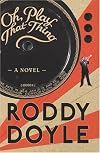
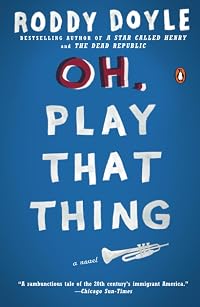
On the last page of A Star Called Henry, the first volume of the The Last Roundup trilogy, we left Henry Smart on the run from his Republican paymasters, the men for whom he had perpetrated murder and mayhem. He flees from Dublin to Liverpool and from thence to Ellis Island, New York, America. And this is where Oh, Play That Thing begins... It's 1924, and New York is the centre of the universe. Henry falls on his feet, as a handsome man with a sandwich board, and - this being Prohibition - show more behind his sandwich board a stash of hooch for the speakeasies of the Lower East Side. When he starts hiring kids to carry boards for him, he catches the attention of the mobsters who run the district and soon there are eyes on his back and men in the shadows. It is time to leave, for another America: Chicago. In Chicago there is no past waiting to jump on Henry. The place is wild, as new as he is, and newest of all is the music. Furious, wild, happy music played by a man with a trumpet and bleeding lips called Louis Armstrong. His music is everywhere, coming from every open door, every phonograph. But Armstrong is a prisoner of his colour; there are places a black man cannot go, things he cannot do. And the mob is in Chicago too: they own every stage - and they own the man up on the stage. Armstrong needs a man, a white man, and the man he chooses is Henry Smart. This is a novel of prodigious energy and invention. Its language and its rhythms are as breathtaking as the music it celebrates. It shows yet again that as a writer Roddy Doyle is unequalled in his vision, his ambition, his ability to surprise us with each new novel. It is nothing less than a triumph. show lessTags
Recommendations


Member Recommendations
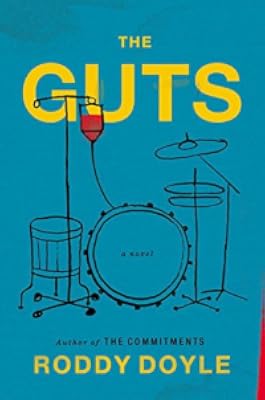
bsiemens Taken at face value, both books are about the jazz subculture during the early 20th century: 'Half Blood Blues' is set in France during the 1930s & 'Oh, Play That Thing' is set in America during the 1920s. The writing style is also quite similar.

Member Reviews
I adore Roddy Doyle. He is, far and away, one of my favourite authors. Keep that in mind when I say that I *hated* this book. Really hated it. Fifty pages in, I was fighting an uphill battle to finish it, which is really astounding, considering that Doyle's prose usually flies off of the page at the reader with a speed that is both easy and remarkable. Henry Smart in Ireland is fast, witty, and amusing. Henry Smart in America, however, is a slow-thinking, grating man, in love with repetitive slang.
This is a book I wish I had never read. "A Star Called Henry" was a remarkable novel, and one that should not be sullied by the travesty that is "Oh, Play That Thing". While I understand the ambition behind this work, and I do see wonderful show more aspects of the author's style throughout the narrative, any positive features of "Oh, Play That Thing" are overshadowed by the feelings of boredom and frustration that this novel evoked in me.
Roddy Doyle, what were you thinking? show less
This is a book I wish I had never read. "A Star Called Henry" was a remarkable novel, and one that should not be sullied by the travesty that is "Oh, Play That Thing". While I understand the ambition behind this work, and I do see wonderful show more aspects of the author's style throughout the narrative, any positive features of "Oh, Play That Thing" are overshadowed by the feelings of boredom and frustration that this novel evoked in me.
Roddy Doyle, what were you thinking? show less
I love the work of Roddy Doyle. It started when I read The Commitments when it first came out and it has never wavered. His unique voice, complete with Irish as it’s spoken on the ground and in the neighborhoods of Dublin, is just a pure pleasure to read. I picked up this book before I realized that there was a book that came before it. I am given to understand that this is a kind of prequel or sequel to the other. Either way, I am glad I read this one first.
Henry Smart was a paid assassin for the IRA in the early 1900’s. He is forced to live on the run in Ireland and so leaves his wife and child to hide out and re-invent himself in the roaring twenties in America. The book opens with Henry exiting the boat on Ellis Island with all show more the other early immigrants of that period who came with the same idea – reinvention of self.
Henry starts out on the streets of New York. He is a bit of a grifter and born with the gift of Irish gab. He sets up his own business with street signs - people standing with sandwich boards over their shoulders advertising anything and everything. And, since Prohibition is in full swing, they also sell illegal hooch from their pockets beneath the boards.
Although Henry misses his wife and child, he is still a young man in a relatively new world and he takes up with a variety of women of all ages. But he can’t escape his IRA past and the streets of New York have plenty of keen eyed Irishmen willing to turn Henry over to the Irish mob for some pieces of silver.
Henry and one of his molls end up running a scam that runs them out of town and almost gets Henry killed. He does a little time and in an effort to put more land between Ireland and himself, he hot foots it off to Chicago. There, he starts to earn some money the way many Irishmen before him did – settling in the Back O’ The Yards and working in the meat packing plants. But for Henry, this is merely a pit stop in his adventures.
He meets a young musician on the rise – Louis Armstrong. He becomes Armstrong’s bodyguard, driver and general all-purpose man. Chicago is good to both of them. To help themselves survive, they take up petty theft and during the nighttime robbery of the widow of Marshall Field (yes, that one, of department store fame and Frangos), Henry discovers his wife and child. His wife has been searching for him, and now works as a housekeeper. His daughter was a baby last time he saw her and is now a savvy seven year old.
From there, more and more things happen. Both good and bad and reflecting well America from about 1924 to 1938 or so. The story has wonderful highs and some sad lows. In this time of great discussion regarding race relations in America, the book has some thought provoking ideas on same. If for no other reason, it might be a timely read for that alone.
It is a great story about America and the individuals who choose to come here and have always chosen to come here to re-invent themselves. Perhaps that is more the real American dream than any other. And that re-invention is a constant. The story also touches on organized crime, wealth and poverty, the immigrant experience, the outlaw as myth and fact and jazz.
Roddy Doyle has a writing style that for those that have not read anything by him, at first may be distracting. Sentences can be short and choppy as voices overlap. He writes in a way that reflects how people actually speak. Once you get into the rhythm of the work however, you become used to it and appreciate just how unusual and unique that voice is – and also, distinctly Irish. He uses a lot of Irish slang and some Celtic words. I love it personally.
The other thing I found is that his style of writing complements the jazz presented by Armstrong. Jazz has a unique musical voice itself. It stops and starts and bebop’s along and the words felt like jazz, if that makes any sense. That choppy stop and go with fast, crazy action complimenting slow, melancholy layers. Not only could you picture the jazz clubs and gangsters but you could almost hear in your head the music.
I love Roddy Doyle’s work and I highly recommend it to anyone who loves a good story. He is a fantastic teller of tales and you won’t be disappointed. He is also not confined to fiction. He has written at least one non-fiction book, some plays and some children’s stories. He also has a great facebook page and he often writes little ditties as a day to day practice which makes it one of my more entertaining social media stops. show less
Henry Smart was a paid assassin for the IRA in the early 1900’s. He is forced to live on the run in Ireland and so leaves his wife and child to hide out and re-invent himself in the roaring twenties in America. The book opens with Henry exiting the boat on Ellis Island with all show more the other early immigrants of that period who came with the same idea – reinvention of self.
Henry starts out on the streets of New York. He is a bit of a grifter and born with the gift of Irish gab. He sets up his own business with street signs - people standing with sandwich boards over their shoulders advertising anything and everything. And, since Prohibition is in full swing, they also sell illegal hooch from their pockets beneath the boards.
Although Henry misses his wife and child, he is still a young man in a relatively new world and he takes up with a variety of women of all ages. But he can’t escape his IRA past and the streets of New York have plenty of keen eyed Irishmen willing to turn Henry over to the Irish mob for some pieces of silver.
Henry and one of his molls end up running a scam that runs them out of town and almost gets Henry killed. He does a little time and in an effort to put more land between Ireland and himself, he hot foots it off to Chicago. There, he starts to earn some money the way many Irishmen before him did – settling in the Back O’ The Yards and working in the meat packing plants. But for Henry, this is merely a pit stop in his adventures.
He meets a young musician on the rise – Louis Armstrong. He becomes Armstrong’s bodyguard, driver and general all-purpose man. Chicago is good to both of them. To help themselves survive, they take up petty theft and during the nighttime robbery of the widow of Marshall Field (yes, that one, of department store fame and Frangos), Henry discovers his wife and child. His wife has been searching for him, and now works as a housekeeper. His daughter was a baby last time he saw her and is now a savvy seven year old.
From there, more and more things happen. Both good and bad and reflecting well America from about 1924 to 1938 or so. The story has wonderful highs and some sad lows. In this time of great discussion regarding race relations in America, the book has some thought provoking ideas on same. If for no other reason, it might be a timely read for that alone.
It is a great story about America and the individuals who choose to come here and have always chosen to come here to re-invent themselves. Perhaps that is more the real American dream than any other. And that re-invention is a constant. The story also touches on organized crime, wealth and poverty, the immigrant experience, the outlaw as myth and fact and jazz.
Roddy Doyle has a writing style that for those that have not read anything by him, at first may be distracting. Sentences can be short and choppy as voices overlap. He writes in a way that reflects how people actually speak. Once you get into the rhythm of the work however, you become used to it and appreciate just how unusual and unique that voice is – and also, distinctly Irish. He uses a lot of Irish slang and some Celtic words. I love it personally.
The other thing I found is that his style of writing complements the jazz presented by Armstrong. Jazz has a unique musical voice itself. It stops and starts and bebop’s along and the words felt like jazz, if that makes any sense. That choppy stop and go with fast, crazy action complimenting slow, melancholy layers. Not only could you picture the jazz clubs and gangsters but you could almost hear in your head the music.
I love Roddy Doyle’s work and I highly recommend it to anyone who loves a good story. He is a fantastic teller of tales and you won’t be disappointed. He is also not confined to fiction. He has written at least one non-fiction book, some plays and some children’s stories. He also has a great facebook page and he often writes little ditties as a day to day practice which makes it one of my more entertaining social media stops. show less
Day by day, in every way, I am getting better and better, sings Fat Olaf’s half-sister throughout the pages of Oh, Play That Thing. And so, presumably, does author Roddy Doyle.
The Irish author has indeed gotten better with each novel he writes. Deservedly earning 1993’s Booker Award for Paddy Clarke Ha Ha Ha, Doyle has warranted acclaim for his unique take on modern-day Ireland, delivering captivating characters and quietly astonishing tragedies while capturing the urban patois of Irish speech.
What a shock, then, when Doyle released A Star Called Henry in 1999, unveiling a hitherto unseen tool in his arsenal: ferocity. A historical novel of Ireland’s violent past, Star was brash, lyrical, and often visionary, an abrupt turnabout show more from Doyle’s standard offbeat fare.
Now, in Oh, Play That Thing, Star’s tremendous follow-up, Doyle takes his riskiest step yet; he leaves Ireland altogether for 1920s America. The risk pays off handsomely. Doyle appears to be incapable of writing a bad novel.
Henry Smart, Doyle’s wily protagonist, has just immigrated to Manhattan, a city that “made tiny things of the people around me, all gawking at the manmade cliffs, and the ranks of even higher cliffs behind them . . . I could see the terror in their eyes.” It is already an America of slick admen and crass opportunism, and Henry will not be left out.
A natural charmer, Henry throws himself into the new world with gusto. But when his usual practice of skimming off the top draws attention to his past, he flees to Chicago, where he sees a man playing the trumpet so viciously “[h]is lips were bleeding – I saw drops fall like notes to his patent leather shoes – but he was the happiest man on earth.” The man is Louis Armstrong, and Henry’s life is taking an unexpected detour.
Coming from the author of The Commitments, a novel that disparagingly regarded jazz as “sound for the sake of sound,” it may surprise readers how passionately Doyle evokes Armstrong’s music. What is not surprising is how fluently Doyle weaves musical tempos and lyrics into the rhythm of the story, crafting entire scenes around songs that lend both ambience and potency to Henry’s life.
As usual, Doyle maintains his mastery of distinctive yet realistic dialogue, a rapid-fire staccato similar to the works of American authors James Ellroy or David Mamet. But the real pleasure is witnessing Doyle’s continual evolution as a stylist, expanding his stories beyond the fabulous dialogue of his earlier novels with gritty atmosphere and astonishing physicality.
Henry Smart is a spectacular character; ceaselessly moving and thinking, luckier than he is smart, callous yet eminently likeable. As he moves from the embedded violence of Ireland to the ingrained racism of America, Henry begins to recognize more than simply his own desires. The growth Doyle allows Henry is remarkable, matched perfectly with Doyle’s perpetual inventiveness.
Oh, Play That Thing is a coup of imagination and verve, the equal to A Star Called Henry, and a triumph on its own. When Henry’s story eventually continues, Doyle will have his work cut out for him. show less
The Irish author has indeed gotten better with each novel he writes. Deservedly earning 1993’s Booker Award for Paddy Clarke Ha Ha Ha, Doyle has warranted acclaim for his unique take on modern-day Ireland, delivering captivating characters and quietly astonishing tragedies while capturing the urban patois of Irish speech.
What a shock, then, when Doyle released A Star Called Henry in 1999, unveiling a hitherto unseen tool in his arsenal: ferocity. A historical novel of Ireland’s violent past, Star was brash, lyrical, and often visionary, an abrupt turnabout show more from Doyle’s standard offbeat fare.
Now, in Oh, Play That Thing, Star’s tremendous follow-up, Doyle takes his riskiest step yet; he leaves Ireland altogether for 1920s America. The risk pays off handsomely. Doyle appears to be incapable of writing a bad novel.
Henry Smart, Doyle’s wily protagonist, has just immigrated to Manhattan, a city that “made tiny things of the people around me, all gawking at the manmade cliffs, and the ranks of even higher cliffs behind them . . . I could see the terror in their eyes.” It is already an America of slick admen and crass opportunism, and Henry will not be left out.
A natural charmer, Henry throws himself into the new world with gusto. But when his usual practice of skimming off the top draws attention to his past, he flees to Chicago, where he sees a man playing the trumpet so viciously “[h]is lips were bleeding – I saw drops fall like notes to his patent leather shoes – but he was the happiest man on earth.” The man is Louis Armstrong, and Henry’s life is taking an unexpected detour.
Coming from the author of The Commitments, a novel that disparagingly regarded jazz as “sound for the sake of sound,” it may surprise readers how passionately Doyle evokes Armstrong’s music. What is not surprising is how fluently Doyle weaves musical tempos and lyrics into the rhythm of the story, crafting entire scenes around songs that lend both ambience and potency to Henry’s life.
As usual, Doyle maintains his mastery of distinctive yet realistic dialogue, a rapid-fire staccato similar to the works of American authors James Ellroy or David Mamet. But the real pleasure is witnessing Doyle’s continual evolution as a stylist, expanding his stories beyond the fabulous dialogue of his earlier novels with gritty atmosphere and astonishing physicality.
Henry Smart is a spectacular character; ceaselessly moving and thinking, luckier than he is smart, callous yet eminently likeable. As he moves from the embedded violence of Ireland to the ingrained racism of America, Henry begins to recognize more than simply his own desires. The growth Doyle allows Henry is remarkable, matched perfectly with Doyle’s perpetual inventiveness.
Oh, Play That Thing is a coup of imagination and verve, the equal to A Star Called Henry, and a triumph on its own. When Henry’s story eventually continues, Doyle will have his work cut out for him. show less
(7.5)One bad reading experience almost had me casting this aside, as well as Doyle’s writing style failing to engage me, initially. However, I persevered. Doyle relies heavily on dialogue to tell his stories. The dialogue is often terse sentences with no guidance as to who is speaking and can leave the reader feeling very confused. Eventually I adjusted to the rhythm and tenor of the story.
This is a sequel to A Star Called Henry and commences with Henry’s arrival in New York in the 1920’s fleeing the IRA and seeking a new life.
He turns his hand to any number of odd jobs but starts up his own sandwich board advertising business. He soon steps on the toes of the local mobsters and flees New York for Chicago. Here he meets Louis show more Armstrong after hearing him play at a club. Armstrong feels a prisoner of his colour and decides he needs a white man as his companion to gain him access to places he can’t go. This is early in Armstrong’s music career and at times they resort to crime to survive.
On one such breaking and entering escapade, Henry discovers his wife. (a little far-fetched).
Doyle creates a picture of depression America. The book is far from uplifting but I did manage to finish it. There is a third in the series which I should read sooner rather than later. show less
This is a sequel to A Star Called Henry and commences with Henry’s arrival in New York in the 1920’s fleeing the IRA and seeking a new life.
He turns his hand to any number of odd jobs but starts up his own sandwich board advertising business. He soon steps on the toes of the local mobsters and flees New York for Chicago. Here he meets Louis show more Armstrong after hearing him play at a club. Armstrong feels a prisoner of his colour and decides he needs a white man as his companion to gain him access to places he can’t go. This is early in Armstrong’s music career and at times they resort to crime to survive.
On one such breaking and entering escapade, Henry discovers his wife. (a little far-fetched).
Doyle creates a picture of depression America. The book is far from uplifting but I did manage to finish it. There is a third in the series which I should read sooner rather than later. show less
Man! That was a mouthful!! This is a sprawling novel that might have been better shorter, or made into two seperate books. There was much to absorb between Henry's New York, Chicago and western US adventures. I chaffed a little at the unlikely partnership between Henry and Louis Armstrong, but kept at it. At times it had the flavor of Joyce's Ulysses. It was an effort of will to perservere through some points in the novel, but it was worth it. Not as good as the first installment and now I'm on the hook for the third! :^)
Henry Smart is on the run. Fleeing from his Irish Republican Army paymasters, the men for whom he committed murder and mayhem, he has left behind his wife, Miss O’Shea, in a Dublin jail, and his infant daughter. When show more he lands in America, it's 1924, and New York is the center of the universe. Henry, ever resourceful, a pearl gray fedora parked on his head, has a sandwich board and a hidden stash of hooch for the speakeasies of the Lower East Side. When he starts hiring kids to carry boards for him, he catches the attention of the mobsters who run the district. It is time to leave, for another, newer America.
In Chicago there is no past waiting to jump on Henry. Music is everywhere, in the streets, in nightclubs, on phonograph records: furious, wild, happy music played by a man with a trumpet and bleeding lips called Louis Armstrong. But Armstrong is a prisoner of his color, and the mob is in Chicago too: they own every stage—and they own the man up on the stage. Armstrong needs a man, a white man, and the man he chooses is Henry Smart. show less
Henry Smart is on the run. Fleeing from his Irish Republican Army paymasters, the men for whom he committed murder and mayhem, he has left behind his wife, Miss O’Shea, in a Dublin jail, and his infant daughter. When show more he lands in America, it's 1924, and New York is the center of the universe. Henry, ever resourceful, a pearl gray fedora parked on his head, has a sandwich board and a hidden stash of hooch for the speakeasies of the Lower East Side. When he starts hiring kids to carry boards for him, he catches the attention of the mobsters who run the district. It is time to leave, for another, newer America.
In Chicago there is no past waiting to jump on Henry. Music is everywhere, in the streets, in nightclubs, on phonograph records: furious, wild, happy music played by a man with a trumpet and bleeding lips called Louis Armstrong. But Armstrong is a prisoner of his color, and the mob is in Chicago too: they own every stage—and they own the man up on the stage. Armstrong needs a man, a white man, and the man he chooses is Henry Smart. show less
I’m thinking that whoever reads this book would have to be familiar with Roddy Doyle’s writing and decide it’s up his alley before starting this book. Oh Play That Thing is the second book of a trilogy by this Irish author whose first book of this series was A Star Called Henry, the story of young poverty-stricken Henry Smart who takes up the cause of the Irish Republican Army in Dublin, Ireland. In Oh Play That Thing, Henry Smart has come to America to avoid being killed by those who are hunting for him in Ireland. He leaves behind a wife and child and starts life anew first in New York and again later in Chicago.
This is a fast-paced book with short, sharp, and witty dialogue, often not entirely clear when spoken but later show more understood in context. Among my favorite characters in the book are Olaf’s half sister (who remains without a name in the first half of the book) and Louis Armstrong. Yes, it’s the same musician that we all know from the history of jazz and black America.
This book is long and rollicking. Henry Smart assumes multiple names and remains on the run for the whole book. Being that the United States is about the enter the Depression, Henry Smart never seems to make it above poverty level despite his work as a sandwich board man and Louis Armstrong’s “white boy”.
This is probably a book I’d never have read had I just had the hard copy. I was fortunate to have borrowed the CD narrated by Christian Conn from my library. This narrator not only brought this book to life, but almost had the characters jumping out of my CD player. His was an amazing performance. I guess reading this book would have been fun as well, but I hardly think the experience would have been comparable. show less
This is a fast-paced book with short, sharp, and witty dialogue, often not entirely clear when spoken but later show more understood in context. Among my favorite characters in the book are Olaf’s half sister (who remains without a name in the first half of the book) and Louis Armstrong. Yes, it’s the same musician that we all know from the history of jazz and black America.
This book is long and rollicking. Henry Smart assumes multiple names and remains on the run for the whole book. Being that the United States is about the enter the Depression, Henry Smart never seems to make it above poverty level despite his work as a sandwich board man and Louis Armstrong’s “white boy”.
This is probably a book I’d never have read had I just had the hard copy. I was fortunate to have borrowed the CD narrated by Christian Conn from my library. This narrator not only brought this book to life, but almost had the characters jumping out of my CD player. His was an amazing performance. I guess reading this book would have been fun as well, but I hardly think the experience would have been comparable. show less
An uneven sequel to A Star Called Henry follows the protagonist / narrator Henry Smart on the run to New York, then Chicago, and then across the country. In a Forrest Gump way he interacts with celebrities of the Roaring Twenties and Depression era, most prominently a friendship with a young Louis Armstrong that dominates the central portion of the book. Doyle captures the intense paranoia of Henry Smart, as well as the jazz age riffs of South Side Chicago. He fails in that the narrative is plodding and directionless. You could actually see where he runs out of ideas and relies instead on "the amazing coincidence" and "unbelievable reunion." A section in which he becomes a priest for a libertine evangelical woman (seemingly based on show more Aimee Semple McPherson) is totally boring and confusing and falls on its face. Doyle's increasing obtuse writing style seems more of a rip-off than a tribute to James Joyce. Things pick up again in a humorous yet fantastical bit where Henry Smart travels across the dust bowl listening to stories of the heists of his wife and children. But it's really too little too late at that point. One hopes Doyle can finish strong with the third installment of the trilogy, but I'm not looking forward to it so much. The cliff-hanger ending with John Ford doesn't really have me sitting on the edge of my seat. show less
Members
- Recently Added By
Lists

Irish writers
87 works; 17 members

Biggest Disappointments
606 works; 163 members
Author Information

73+ Works 21,394 Members
Roddy Doyle is the author of five previous novels, including a Booker Prize nominee, The Van, and a Booker Prize winning international bestseller Paddy Clarke Ha Ha Ha. He has also written several screenplays, most recently When Brendan Met Trudy. His first children's book, The Giggler Treatment, will be published in September by Scholastic. He show more lives in Dublin. (Publisher Provided) Roddy Doyle was born in Dublin on May 8, 1958, and grew up in Kilbarrack, Ireland. Doyle graduated with a Bachelor of Arts degree from University College Dublin. He spent several years as an English and geography teacher before becoming a full-time writer in 1993. His personal notes and work books reside at the National Library of Ireland. Doyle's first three novels, The Commitments (1987), The Snapper (1990) and The Van (1991) comprise The Barrytown Trilogy, a trilogy centred around the Rabbitte family. All three novels were made into successful films. In 1993, Doyle published Paddy Clarke Ha Ha Ha, winner of the 1993 Man Booker Prize. Doyle is the author of ten novels for adults, seven books for children, seven plays and screenplays, and dozens of short stories. His work is set primarily in Ireland, especially working-class Dublin, and is notable for its heavy use of dialogue written in slang and Irish English dialect. (Bowker Author Biography) show less
Awards and Honors
Notable Lists
Series

Common Knowledge
- Canonical title
- Oh, Play That Thing
- Original title
- Oh, Play That Thing
- Original publication date
- 2004
- People/Characters
- Louis Armstrong; Henry Smart
- Important places
- Chicago, Illinois, USA; Illinois, USA; New York, USA; New York, New York, USA
- Important events
- Great Depression
- Epigraph
- 'One never knows, do one?' - Fats Waller
- Dedication
- This book is dedicated to Stephen Byrne
- First words
- I could bury myself in New York.
- Last words
- (Click to show. Warning: May contain spoilers.)I was alive. I was forty-five. I was Henry Smart.
Classifications
Statistics
- Members
- 866
- Popularity
- 31,365
- Reviews
- 18
- Rating
- (3.15)
- Languages
- 9 — Danish, Dutch, English, Finnish, German, Italian, Multiple languages, Spanish, Swedish
- Media
- Paper, Audiobook, Ebook
- ISBNs
- 33
- ASINs
- 9