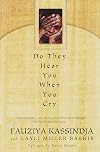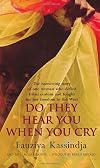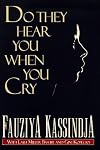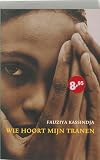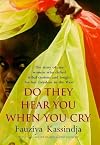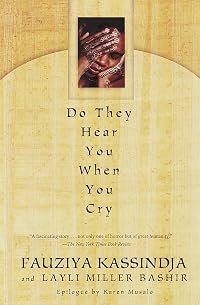
Do They Hear You When You Cry
by Fauziya Kassindja, Layli Miller Bashir (Contributor)
On This Page
Description
"A true story of persecution, friendship, and ultimate triumph, Do They Hear You When You Cry chronicles the struggles of two extraordinary women: Fauziya Kassindja, who fled her African homeland to escape female genital mutilation only to be locked up in American prisons for sixteen months; and Layli Miller Bashir, a driven young law student who fought for Fauziya's freedom." "Here, for the first time, is Fauziya's dramatic personal story, told in her own words, vividly detailing her life show more as a young woman in Togo and her nightmarish day-to-day existence in U.S. prisons. It is a story of faith and freedom, courage and inspiration."--Jacket. show lessTags
Recommendations


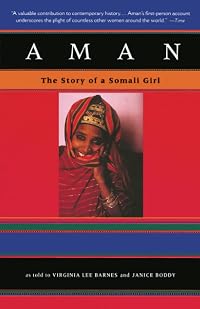

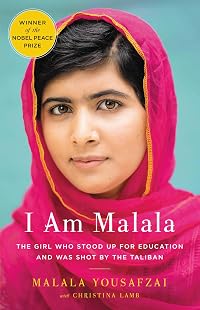
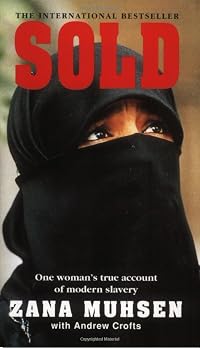

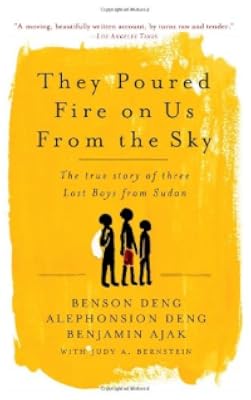




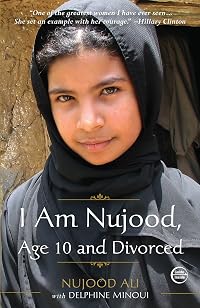
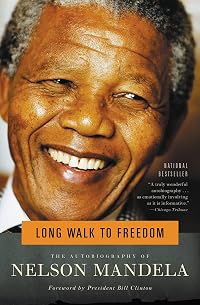
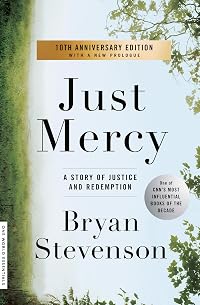



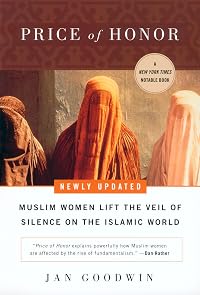



Member Recommendations

Member Reviews
Born into a happy middle class family in Togo, the author's life suddenly undergoes a horrific change when her beloved father suddenly dies. His siblings - hostile to his wife- seize the property, evict her, and arrange for the teenage author to be removed from school and become fourth wife to a much older man...and undergo FGM first. But her escape to Germany, and later the US brings a lengthy spell i grim American detention centres and jails until human rights workers can get the ruling against her overturned.
There are a number of autobiographies on this theme, and I found this more readable and engrossing than some others. It certainly gives a depressing slant on the whole topic of how immigrants are treated.
I did find it (at almost show more 700 pages) a tad long. show less
There are a number of autobiographies on this theme, and I found this more readable and engrossing than some others. It certainly gives a depressing slant on the whole topic of how immigrants are treated.
I did find it (at almost show more 700 pages) a tad long. show less
Fauziya courageously escapes the horrible fate that awaits her--a prison constructed by culture and tradition. She hopefully seeks political asylum in the U.S., and her nightmare actually begins as she's bound in a prison of steel, brutality, and bureaucracy. I read this candid autobiographical story in one night, and I'm not a speed reader! It's suspenseful, depressing, and thought-provoking. Fauziya has a lot to show us about culture, human rights, the nonsensical & hypocritical politics of the U.S., human nature, and "freedom." Fauziya fights for the right to be recognized as human, and ultimately succeeds.
Julie
Julie
True story told by Fauziya Kassindja of her life growing up in Togo Africa in a loving, wealthy family with a father who adored her, a loving mother and many sisters and 2 brothers. She tell us about what her life is like as a child, and a muslim and a cherished child. When her father dies the family's future is turned over to her father's brother and we see the darker side of tribal customs mainly, arranged marriages. Fauziya is to be married to a much older man who already has 3 wives. She also will be circumcised in what is know as Female Genital mutilation. With her sister's help she escapes and is one a plane to Germany. From Germany she flies to the US where is asks for asylum but gets thrown in jail where she suffers horribly. show more The rest of the story shows us the terrible treatment a refugee faces in prison and also shows us Fauziya's immense courage. We meet her legal tam and follow the events that lead to her eventual parole and release.
it's nearly impossible to believe that this is a true story.
A totally amazing book. So glad I read it. show less
it's nearly impossible to believe that this is a true story.
A totally amazing book. So glad I read it. show less
This is an excellent, powerful and disturbing memoir/true story about a Togolese woman's escape from genital mutilation at the hands of her decades-older husband (of which, she is the fourth wife) and cruel aunt ~ all on the heels of her Father's death (whom she loved greatly). Ms. Kassindja's story is harrowing enough right there, but most of her story, in fact, takes place in U.S. prisons, where asylum seekers live out their days. As with most people, how horribly these already persecuted refugees are treated is one of the biggest eye openers in decades of reading. At times, they are treated more cruelly and worse than American prisoners in for murder or other felonies. The ending is ultimately uplifting, as it says on the cover, as show more Ms. Kassindja does get asylum, but at a very, very steep price. This is a well written book and the law was fascinating (I am a lawyer though), the hearings and process frighteningly realistic and as they often are, futile and frustrating. I do feel this book was a bit long and could have been edited down some, but that is a small complaint. A lot happened and Kassindja paved the way way for other women seeking asylum based on gender-based persecution (rape, FGM and torture). Highly recommended for a reader who would like to seek change in the world on a global level and to find out what really happens to asylum seekers once they enter the United States, and the legal system as well. show less
I was so ashamed of the U.S. reading this book! This is such a personal and vivid account of what Fauziya went through in order to live freely. I was inspired and awed by her strength as well as the strength of those who worked in the legal system on her behalf. I'll never forget this book. I highly recommend.
One of the trickiest issues in today’s world is that of cultural relativism and cultural imperialism – most sensitive and intelligent people realize that different cultures have not only different customs, but also an entirely different mindset and very different ways of navigating the shoals of life. But when is a custom, however rooted in tradition and antiquity, just plain wrong – and who gives us the right to make that decision? I have always relied on the venerable philosophy of the late, great Robert A. Heinlein to determine what “sin” is – anything that hurts another unnecessarily. For others, “sin” is whatever their holy scriptures defines as evil. Today, a major contentious international and cultural issue is show more that of FGM (female genital mutilation) – the custom in many tribal cultures of ceremonially removing a woman’s external sexual parts. While many Western human rights organizations label this custom criminal, particularly since often it seems to be done without the girl’s consent, others believe that Westerners have no business judging another culture’s traditions – however shocking and horrifying we may find these.
This book is about one young girl’s determination to escape the traditional customs of her tribe – female genital mutilation, and a forced marriage to a man she didn’t love and did not wish to marry. Unfortunately, her efforts to escape her fate landed her in several American “prisons” – known as detention facilities, they were indeed prisons in all but name. This true story is mostly about Fauziya Kassindja’s struggles to survive emotionally and spiritually in American detention, but I found the earlier chapters of the book the most fascinating. Growing up in a fairly wealthy family in Togo, Africa, Fauziya enjoyed a privileged childhood and adolescence. But her description of her life in Togo and the operating principles of her culture (which she loves and still misses) vividly brought home to me just how different the Western mindset is from many tribal-based cultures. Our attitudes toward family, poverty, social injustice, social equality, and religion seem literally worlds apart from the culture in which Fauziya grew up.
This book gave me much food for thought, and was an enlightening and sobering look at just how divergent tribal culture is from Western thought. show less
This book is about one young girl’s determination to escape the traditional customs of her tribe – female genital mutilation, and a forced marriage to a man she didn’t love and did not wish to marry. Unfortunately, her efforts to escape her fate landed her in several American “prisons” – known as detention facilities, they were indeed prisons in all but name. This true story is mostly about Fauziya Kassindja’s struggles to survive emotionally and spiritually in American detention, but I found the earlier chapters of the book the most fascinating. Growing up in a fairly wealthy family in Togo, Africa, Fauziya enjoyed a privileged childhood and adolescence. But her description of her life in Togo and the operating principles of her culture (which she loves and still misses) vividly brought home to me just how different the Western mindset is from many tribal-based cultures. Our attitudes toward family, poverty, social injustice, social equality, and religion seem literally worlds apart from the culture in which Fauziya grew up.
This book gave me much food for thought, and was an enlightening and sobering look at just how divergent tribal culture is from Western thought. show less
This is a first-hand account of what happens inside the women's section of an immigrant detention center (or the sections of a state prison or local jail that receive money from the INS to cage immigrants). The account is clearly written and the descriptions are horrifying. Either Kassindja or the person who helped her write the book also included facts and stats that put some of these horrifying realities into the context of racism (e.g. Kassindja had assumed that, because all of the immigrants around her are people of color, Whites do not have immigration issues. However, she (or her co-author) notes that, in reality, White immigrants facing deportation hearings or asylum proceedings are far more likely to be allowed to stay *outside* show more of prison while awaiting their hearings) and profit (e.g. the INS, in the mid-1990s, paid app $50 a day per person to the jails/prisons that agreed to cage them).
What bothered me (enough to take 2 stars off the book) is how the book falls into the binary of "good immigrants" and "bad criminals," as if women who have broken the law are somehow deserving of all the inhumanities and atrocities. While the book doesn't explicitly state that, it does give that general feeling, esp when Kassindja describes being housed with non-immigrant "convict" women. I understand that, at the time, she was frightened and probably bought all of the myths about women in prison, but given that someone (Kassindja or her co-author or her editor) took the time to put the farce of immigrant detention policies into context, I wish that that person (or those persons) had also added some facts in about the reality of women who end up in prison (i.e. they don't all smash chairs into each others' heads and they are not all scary monsters). For example, Kassindja was frightened when placed in a cell with a non-immigrant woman who had been convicted and sentenced to prison. The woman was a chain smoker, but when Kassindja, whose asthma got worse when around cigarette smoke, timidly asked her not to smoke in their shared cell, the woman agreed not to. But nowhere in that part of the book--or after--do any of the writers point out that, contrary to popular tv shows, women who end up in prison are not any more unreasonable, scary, violent, etc., than most of the women who never set foot inside a prison. (As someone who has worked with women currently in prison and women who have been released from prison for over a decade, I can attest to this.)
I also found the last chapters, which outlined the media exposure strategy that Kassindja's legal team used, very interesting and helpful, especially the lesson (not explicitly stated) that one can't rely on the government to do the right thing, but that public opinion and media exposure can shame them into doing so. (It did make me wonder though just how much more public opinion & media exposure would be needed today since all of the atrocities that Kassindja endured while in prison still exist today) show less
What bothered me (enough to take 2 stars off the book) is how the book falls into the binary of "good immigrants" and "bad criminals," as if women who have broken the law are somehow deserving of all the inhumanities and atrocities. While the book doesn't explicitly state that, it does give that general feeling, esp when Kassindja describes being housed with non-immigrant "convict" women. I understand that, at the time, she was frightened and probably bought all of the myths about women in prison, but given that someone (Kassindja or her co-author or her editor) took the time to put the farce of immigrant detention policies into context, I wish that that person (or those persons) had also added some facts in about the reality of women who end up in prison (i.e. they don't all smash chairs into each others' heads and they are not all scary monsters). For example, Kassindja was frightened when placed in a cell with a non-immigrant woman who had been convicted and sentenced to prison. The woman was a chain smoker, but when Kassindja, whose asthma got worse when around cigarette smoke, timidly asked her not to smoke in their shared cell, the woman agreed not to. But nowhere in that part of the book--or after--do any of the writers point out that, contrary to popular tv shows, women who end up in prison are not any more unreasonable, scary, violent, etc., than most of the women who never set foot inside a prison. (As someone who has worked with women currently in prison and women who have been released from prison for over a decade, I can attest to this.)
I also found the last chapters, which outlined the media exposure strategy that Kassindja's legal team used, very interesting and helpful, especially the lesson (not explicitly stated) that one can't rely on the government to do the right thing, but that public opinion and media exposure can shame them into doing so. (It did make me wonder though just how much more public opinion & media exposure would be needed today since all of the atrocities that Kassindja endured while in prison still exist today) show less
Members
- Recently Added By
Author Information

4+ Works 533 Members
Some Editions
Awards and Honors
Notable Lists
Common Knowledge
- Canonical title*
- Niemand sieht dich, wenn du weinst
- Original title
- Do they hear you when you cry
- Original publication date
- 1998
- People/Characters
- Layli Miller Bashir; Karen Musalo
- Important places
- Togo; USA
- First words
- I returned to my cell after lunch.
- Last words
- (Click to show. Warning: May contain spoilers.)It's their story too.
- Original language*
- Amerikanisch
*Some information comes from Common Knowledge in other languages. Click "Edit" for more information.
Classifications
- Genres
- Biography & Memoir, Nonfiction, General Nonfiction, Sexuality and Gender Studies
- DDC/MDS
- 305.48691 — Society, government, & culture Social sciences, sociology & anthropology Social group - Age, Gender, Ethnicity Women Specific groups of women Women and religion
- LCC
- JV6601 .K37 — Political Science Colonies and colonization. Emigration and immigration. International migration Colonies and colonization. Emigration and Emigration and immigration. International United States
- BISAC
Statistics
- Members
- 530
- Popularity
- 56,288
- Reviews
- 20
- Rating
- (4.07)
- Languages
- 7 — Dutch, English, German, Norwegian (Bokmål), Portuguese, Spanish, Swedish
- Media
- Paper, Audiobook, Ebook
- ISBNs
- 20
- ASINs
- 4