On This Page
Description
When the freighter on which they are traveling is torpedoed by a German submarine during World War II, an adolescent white boy, blinded by a blow on the head, and an old black man are stranded on a tiny Caribbean island where the boy acquires a new kind of vision, courage, and love from his old companion.Tags
Recommendations
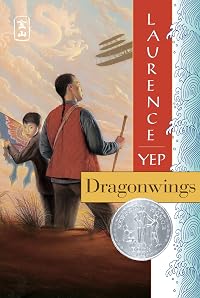


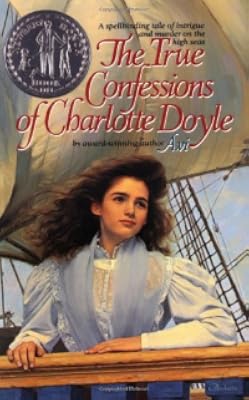
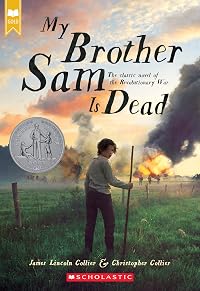
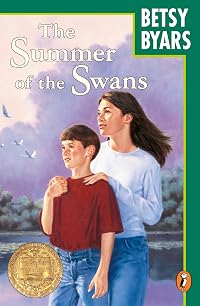
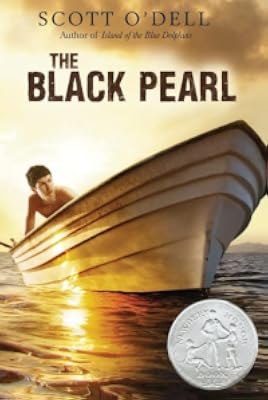
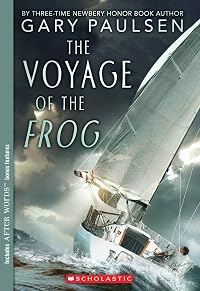
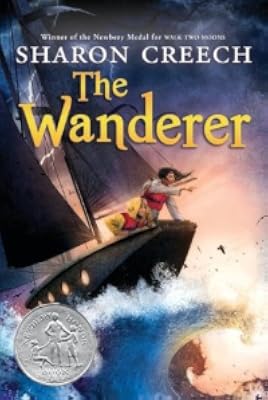
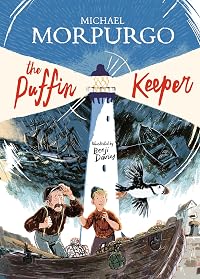

Member Recommendations



by bookel
Member Reviews
Phillip is excited when the Germans invade the small island of Curaçao. War has always been a game to him, and he's eager to glimpse it firsthand - until the freighter he and his mother are traveling to the United States on is torpedoed.
When Phillip comes to, he is on a small raft in the middle of the sea. Besides Stew Cat, his only companion is an old West Indian, Timothy. Phillip remembers his mother's warning about black people: "They are different, and they live differently."
But by the time the castaways arrive on a small island, Phillip's head injury has made him blind and dependent on Timothy.
When Phillip comes to, he is on a small raft in the middle of the sea. Besides Stew Cat, his only companion is an old West Indian, Timothy. Phillip remembers his mother's warning about black people: "They are different, and they live differently."
But by the time the castaways arrive on a small island, Phillip's head injury has made him blind and dependent on Timothy.
Considering that I absolutely hated this book as a child, I can't say for certain what compelled me to pick it up again after all of these years. Perhaps I wanted to see if I still felt the way 10-year-old me had felt when she first read it. But regardless of what forces drew me towards this book, I can say without a doubt that 10-year-old me had it so wrong.
After Nazis torpedo and sink their ship, Phillip, a young white boy, and Timothy, an older black man from the West Indies, find themselves stranded on a small, uncharted cay together. They, alongside their furry companion, Stew Cat, must learn to lean on one another if they hope to survive long enough to be saved...if they are saved at all.
What seems like a simple tale of survival show more soon reveals itself to be a wonderful lesson about race, ability, and faith. It's no wonder that it was dedicated to Martin Luther King Jr. This book thoroughly touched my heart, and by the end I had shed more than a couple of tears. There are a few places where the text is a bit dry and repetitive, but it is easy to forgive when the book is so fantastic as a whole.
If you were like me and first read and hated The Cay as a child, I absolutely recommend picking it up again to experience it through your newly minted adult eyes. Because if you were truly like me, you'll find a beautiful story awaiting you that you won't believe your former child-self did not enjoy. 4 out of 5 stars. show less
After Nazis torpedo and sink their ship, Phillip, a young white boy, and Timothy, an older black man from the West Indies, find themselves stranded on a small, uncharted cay together. They, alongside their furry companion, Stew Cat, must learn to lean on one another if they hope to survive long enough to be saved...if they are saved at all.
What seems like a simple tale of survival show more soon reveals itself to be a wonderful lesson about race, ability, and faith. It's no wonder that it was dedicated to Martin Luther King Jr. This book thoroughly touched my heart, and by the end I had shed more than a couple of tears. There are a few places where the text is a bit dry and repetitive, but it is easy to forgive when the book is so fantastic as a whole.
If you were like me and first read and hated The Cay as a child, I absolutely recommend picking it up again to experience it through your newly minted adult eyes. Because if you were truly like me, you'll find a beautiful story awaiting you that you won't believe your former child-self did not enjoy. 4 out of 5 stars. show less
(Original Review, 1981-02-15)
I have some sympathy with some people in the sense that it is disappointing to re-read a cherished childhood book and have these once-unquestioned prejudices jump off the page. Quite disconcerting. However, when we were ourselves children, it was water off a duck's back. We were reading for the story, not the attitudes.
Of course we do not want to perpetuate racism or stereotypes. But our history is our history. And sometimes we have to face it, even in forms that were once considered benign. Why the books were published in the first place and what this says about the prevailing society is a question worth asking, however. That discussion is what can make them pertinent.
I still vividly recall one favorite show more book with absolutely brilliant illustrations done by the author. In the era of my childhood, it was wonderful to read about the friendship between a white American kid and and a black man. It was one of those battered-spine books even then. The stereotypes now so obvious to me were not on my screen when I was ten, mostly because I longed for adventures and a friend like that. It was a book that took me to another world. In other words, despite what I now see as cringe-worthy aspects of the story, the abiding lesson I drew in childhood was that friends come from unexpected places, from across cultures, and from across races. Not a bad place to start.
When I was ten I was blazing through Tolkien, Lewis, and Lloyd Alexander; for me they were not only stomping great stories. I also drew massive, permanent lessons from them about strength of character, perseverance, good and evil. In those old pre-Internet days at age ten I'd no idea that Tolkien and Lewis knew each other, no idea of any religious undertones or subtleties. When I re-read them now through my prism of a long life lived, I still thoroughly enjoy them while being much more aware. It's a different experience - that is not to say a negative one, but an additional one. Childhood reading is like hearing a great song for the very first time. It's free, exuberant, entirely unfettered. I too understand the dismay expressed by some modern readers. show less
I have some sympathy with some people in the sense that it is disappointing to re-read a cherished childhood book and have these once-unquestioned prejudices jump off the page. Quite disconcerting. However, when we were ourselves children, it was water off a duck's back. We were reading for the story, not the attitudes.
Of course we do not want to perpetuate racism or stereotypes. But our history is our history. And sometimes we have to face it, even in forms that were once considered benign. Why the books were published in the first place and what this says about the prevailing society is a question worth asking, however. That discussion is what can make them pertinent.
I still vividly recall one favorite show more book with absolutely brilliant illustrations done by the author. In the era of my childhood, it was wonderful to read about the friendship between a white American kid and and a black man. It was one of those battered-spine books even then. The stereotypes now so obvious to me were not on my screen when I was ten, mostly because I longed for adventures and a friend like that. It was a book that took me to another world. In other words, despite what I now see as cringe-worthy aspects of the story, the abiding lesson I drew in childhood was that friends come from unexpected places, from across cultures, and from across races. Not a bad place to start.
When I was ten I was blazing through Tolkien, Lewis, and Lloyd Alexander; for me they were not only stomping great stories. I also drew massive, permanent lessons from them about strength of character, perseverance, good and evil. In those old pre-Internet days at age ten I'd no idea that Tolkien and Lewis knew each other, no idea of any religious undertones or subtleties. When I re-read them now through my prism of a long life lived, I still thoroughly enjoy them while being much more aware. It's a different experience - that is not to say a negative one, but an additional one. Childhood reading is like hearing a great song for the very first time. It's free, exuberant, entirely unfettered. I too understand the dismay expressed by some modern readers. show less
This is not only a gripping story of survival, but also a powerful story of letting go of prejudice. Taking place in the Caribbean during World War II, twelve your old Phillip was on the torpedoed ship, Hato, with his mother. When Phillip awakes he is floating in a raft with Timothy, an older black deckhand. They will reach a coral island where Timothy will teach Phillip, who is now blind, how to survive. Phillip learns more than survival. He will finally "see" Timothy's kindness, caring and strength and realize that his earlier notions were wrong. This historical fiction book would be good for demonstrating how racism and prejudice may have looked during the time period around World War II (1940s) . As the Jane Addams Children's Book show more Award stated "This historic novel...arguably shows that if only people would see and value each other as individual human beings, there would be no racism." show less
I listened to this one as an audio book and enjoyed the Calypso accent of Timothy (character) rendered by Michael Boatman (narrator). Young Phillip must learn that his mother's attitude about others, based purely on their color is unreasonable and unkind, much like his new companion's superstition about their third companion, a black cat, as fate rips the three of them from their lives and leaves them to fend for themselves against all odds. A great story of companionship and survival for any age.
As an adult reading this book 50 years after its publication I can say two things. 1) I enjoyed the survival aspects of this story a lot. 2) I was a little uneasy with the representation of the character of Timothy.
"The Cay" is an exciting, entertaining read for the young adult. Phillip, an American boy living in Curacao, is on a boat back to America with his mother and several other passengers when the small boat is sunk by a German U-Boat's torpedo.
Phillip wakes up on a life raft, with a splitting headache and the company of a cat ("Stew Cat") and an aged black man from the West Indies named Timothy. Several days later, Phillip awakes blind, and shortly after the raft ends up on a small cay in the "Devil's Mouth" - an area unforgiving for ships to travel.
The survival story speaks of overcoming racism imposed by authority figures/culture. What better way to portray a person realizing there is no difference in race than that person being blind show more and reliant solely upon a person of differing race?
Taylor writes with authority - short, terse prose reminiscent of Hemingway. Although the story is written for the young adult, it is an interesting and highly provocative read and a great story for all ages. The ending, however, is less than desirable as the last chapter wraps up the remainder of the story - which could have been several chapters in itself - in only a few pages. show less
Phillip wakes up on a life raft, with a splitting headache and the company of a cat ("Stew Cat") and an aged black man from the West Indies named Timothy. Several days later, Phillip awakes blind, and shortly after the raft ends up on a small cay in the "Devil's Mouth" - an area unforgiving for ships to travel.
The survival story speaks of overcoming racism imposed by authority figures/culture. What better way to portray a person realizing there is no difference in race than that person being blind show more and reliant solely upon a person of differing race?
Taylor writes with authority - short, terse prose reminiscent of Hemingway. Although the story is written for the young adult, it is an interesting and highly provocative read and a great story for all ages. The ending, however, is less than desirable as the last chapter wraps up the remainder of the story - which could have been several chapters in itself - in only a few pages. show less
Members
- Recently Added By
Published Reviews
ThingScore 75
Mary Purucker (KLIATT Review, July 2005 (Vol. 39, No. 4))
Twelve-year-old Philip's ordeal as a castaway after the ship he was on was torpedoed in 1942 has never lost its appeal as a strong survival tale with two strong characters. When German submarines increase their activity off the coast of Venezuela, Philip's mother insists that the two of them leave the island of Curacao where his father show more works for an oil refinery, but she refuses to fly and they take passage on a ship. Not many days go by before they are blown out of the water and Philip finds himself on a raft with a gigantic elderly black man and the ship's cat. His mother's prejudices at first make him uncomfortable with Timothy, but he learns to love and respect him. Suffering from a severe blow to his head, in a few days Philip becomes totally blind and totally dependent on Timothy. When they finally land on a small island, a cay, Timothy teaches him the skills to survive even if he is left alone. Michael Boatman narrates in a straightforward way, easily giving Phillip a slight Southern accent and Timothy's voice a West Indian flavor. The pacing and timing are perfect as the pair battle the elements, get to know each other, and prepare for potential rescue. Category: Fiction Audiobooks. KLIATT Codes: J*--Exceptional book, recommended for junior high school students. 2005 (orig. 1969), Listening Library, 3 cds. 3 hrs.; Vinyl; plot, author, reader notes., $30.00. Ages 12 to 15. show less
Twelve-year-old Philip's ordeal as a castaway after the ship he was on was torpedoed in 1942 has never lost its appeal as a strong survival tale with two strong characters. When German submarines increase their activity off the coast of Venezuela, Philip's mother insists that the two of them leave the island of Curacao where his father show more works for an oil refinery, but she refuses to fly and they take passage on a ship. Not many days go by before they are blown out of the water and Philip finds himself on a raft with a gigantic elderly black man and the ship's cat. His mother's prejudices at first make him uncomfortable with Timothy, but he learns to love and respect him. Suffering from a severe blow to his head, in a few days Philip becomes totally blind and totally dependent on Timothy. When they finally land on a small island, a cay, Timothy teaches him the skills to survive even if he is left alone. Michael Boatman narrates in a straightforward way, easily giving Phillip a slight Southern accent and Timothy's voice a West Indian flavor. The pacing and timing are perfect as the pair battle the elements, get to know each other, and prepare for potential rescue. Category: Fiction Audiobooks. KLIATT Codes: J*--Exceptional book, recommended for junior high school students. 2005 (orig. 1969), Listening Library, 3 cds. 3 hrs.; Vinyl; plot, author, reader notes., $30.00. Ages 12 to 15. show less
added by kthomp25
Lists

Favorite Childhood Books
1,646 works; 518 members

Elevenses
316 works; 88 members
Honey For a Child's Heart
1,152 works; 25 members

Satori Smiles Children's Book List
262 works; 7 members

Children's Literature, Briefly Historical Fiction Reading List
44 works; 4 members

Survival, islands -- children's/young adult fiction
123 works; 7 members

Survival, shipwrecks -- children's/young adult fiction
104 works; 4 members

Books You Read During High School (For School)
301 works; 52 members
Children's Adventure
53 works; 4 members

Two faces on cover -- children's/young adult fiction
120 works; 2 members

Books About Boys
175 works; 15 members

Books Read in 2023
5,547 works; 145 members

Boy/girl trees/nature/water etc cover--children's/YA fiction
316 works; 5 members

1970s
657 works; 23 members

Books We Loved As Children
603 works; 252 members
Author Information

51+ Works 10,574 Members
Author Theodore Taylor was born in Statesville, North Carolina on June 23, 1921. At the age of seventeen, he became a copyboy at the Washington, D. C. Daily News and was writing radio network sports for NBC in New York two years later. During World War II, he joined the merchant marines and earned a commission as an ensign in the U. S. Navy. He show more was recalled to active duty during the Korean War. In 1955, he became a press agent for Paramount Pictures and later became a story editor and an associate producer. He has written over fifty fiction and non-fiction books for young adults and adults. He has received numerous awards for his works including the Lewis Carroll Shelf Award for The Cay, the 1992 Edgar Allen Poe Award for Best Young Adult Mystery for The Weirdo, and the 1996 Scott O'Dell Award for historical fiction for The Bomb. He died on October 26, 2006. (Bowker Author Biography) show less
Awards and Honors
Awards
Series

Belongs to Publisher Series
Work Relationships
Is contained in
Has as a teacher's guide
Common Knowledge
- Canonical title
- The Cay
- Original publication date
- 1969
- People/Characters
- Phillip Enright; Timothy; Mrs. Enright; Mr. Enright; Stew Cat; Henrik van Boven
- Important places
- Curaçao; the cay
- Related movies
- The Cay (1974 | IMDb)
- Dedication
- To Dr. King's dream, which can only come true if the very young know and understand it.
- First words
- Like silent, hungry sharks that swim in the darkness of the sea, the German submarines arrived in the middle of the night.
- Last words
- (Click to show. Warning: May contain spoilers.)I'll say, "Dis b'dat outrageous cay, eh, Timothy?"
Classifications
- Genres
- Fiction and Literature, Kids, Children's Books
- DDC/MDS
- 813.54 — Literature & rhetoric American literature in English American fiction in English 1900-1999 1945-1999
- LCC
- PZ7 .T2186 .C — Language and Literature Fiction and juvenile belles lettres Fiction and juvenile belles lettres Juvenile belles lettres
- BISAC
Statistics
- Members
- 5,141
- Popularity
- 2,674
- Reviews
- 88
- Rating
- (3.83)
- Languages
- 7 — Dutch, English, French, German, Hungarian, Norwegian (Bokmål), Spanish
- Media
- Paper, Audiobook, Ebook
- ISBNs
- 60
- UPCs
- 1
- ASINs
- 24