On This Page
Description
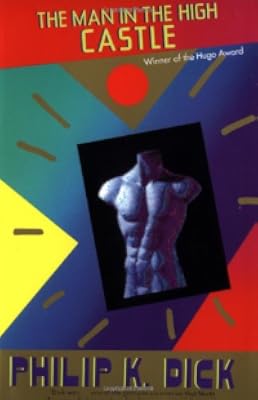
This “interesting and excited to read” spiritual sequel to The Man in The High Castle focuses on the New Japanese Empire—from an acclaimed author and essayist (io9)Decades ago, Japan won the Second World War. Americans worship their infallible Emperor, and nobody believes that Japan’s conduct in the war was anything but exemplary. Nobody, that is, except the George Washingtons—a shadowy group of rebels fighting for freedom. Their latest subversive tactic is to distribute an show more illegal video game that asks players to imagine what the world might be like if the United States had won the war instead.
Captain Beniko Ishimura’s job is to censor video games, and he’s tasked with getting to the bottom of this disturbing new development. But Ishimura’s hiding something . . . He’s slowly been discovering that the case of the George Washingtons is more complicated than it seems, and the subversive videogame’s origins are even more controversial and dangerous than the censors originally suspected.
Part detective story, part brutal alternate history, United States of Japan is a stunning successor to Philip K Dick’s The Man in the High Castle.
File under: Science Fiction [ Gamechanger | Area #11 | Robot Wars | Strike Back the Empire ]. show less
Tags
Recommendations




Member Reviews
The beginning of this book is a knock-out. From the first sentence you know you're in for a provocative view of history as written by a different winner of WWII. That kind of 'disturbing' appeals to me. However, the extreme violence made it difficult to stay with the narrative. The empire seems exaggerated in its paranoia and use of torture. The Mecha and video gaming aspects worked well for me - just enough to spice things up. Overall, a good read with poignant moments and interesting twists.
Thanks for the free copy via Goodreads Giveaway.
Thanks for the free copy via Goodreads Giveaway.
Author Peter Tieryas has done his homework in spinning this taut tale of mystery, violence, persecution and politics in an alternate universe where Japan won World War II and occupies the United States of Japan (USJ). Oddly enough, the book this brought to mind was not referenced by the author in his afterword/acknowledgements: Battle Royale by Koushun Takami.
Protagonist Beniko "Ben" Ishimura is a wastrel, an elite hacker, and is a Captain in the military mostly due to his turning in his parents to the authorities for treason when he was a child. Combine this with his official job as censor for computer games in this future USJ, his growing relationship with a psychopathic member of the secret police (Tokko), and the backdrop of the show more incredibly vicious "George Washingtons" who are suicide terrorists on "our" side and you get a novel difficult to put down.
What I probably found most fascinating was the subtle way Mr. Tieryas confuses the various sides of an ongoing conflict which is disturbingly familiar to our contemporary "War on Terror." His protagonists are on the side of what is a rigid bureaucracy blithely complicit in the murder of millions as it organically (and apparently successfully) protects its own existence. The George Washingtons are no less sympathetic, if not understandable. Empathy for terrorists is a disturbing motif. Overall, all humans are pretty much cogs in a totally screwed up world that is all too comparable to our own. Amidst the misanthropy there are glimmers of hope, but no mistake, this is a dark, dark, dark novel.
It was also refreshing to see technology mostly take a back seat to character and plot development. There are familiar tropes, such as the USJ's mecha corps, but Mr. Tieryas does not overplay the technology. Still, he produces a couple of satisfying set pieces that wouldn't be out of place in the movie Pacific Rim.
Finally, though the parallels to Philip K. Dick's The Man in the High Castle are undeniable (and acknowledged strongly by the author) this is a book that stands alone. The author has built on the work of many others, but that is often the way of art of the novel.
Final warning: this is not for the faint of heart. The violence and war depicted is as brutal as it comes.
I loved this book. show less
Protagonist Beniko "Ben" Ishimura is a wastrel, an elite hacker, and is a Captain in the military mostly due to his turning in his parents to the authorities for treason when he was a child. Combine this with his official job as censor for computer games in this future USJ, his growing relationship with a psychopathic member of the secret police (Tokko), and the backdrop of the show more incredibly vicious "George Washingtons" who are suicide terrorists on "our" side and you get a novel difficult to put down.
What I probably found most fascinating was the subtle way Mr. Tieryas confuses the various sides of an ongoing conflict which is disturbingly familiar to our contemporary "War on Terror." His protagonists are on the side of what is a rigid bureaucracy blithely complicit in the murder of millions as it organically (and apparently successfully) protects its own existence. The George Washingtons are no less sympathetic, if not understandable. Empathy for terrorists is a disturbing motif. Overall, all humans are pretty much cogs in a totally screwed up world that is all too comparable to our own. Amidst the misanthropy there are glimmers of hope, but no mistake, this is a dark, dark, dark novel.
It was also refreshing to see technology mostly take a back seat to character and plot development. There are familiar tropes, such as the USJ's mecha corps, but Mr. Tieryas does not overplay the technology. Still, he produces a couple of satisfying set pieces that wouldn't be out of place in the movie Pacific Rim.
Finally, though the parallels to Philip K. Dick's The Man in the High Castle are undeniable (and acknowledged strongly by the author) this is a book that stands alone. The author has built on the work of many others, but that is often the way of art of the novel.
Final warning: this is not for the faint of heart. The violence and war depicted is as brutal as it comes.
I loved this book. show less
United States of Japan by Peter Tieryas
Peter Tieryas’s third book, United States of Japan (USJ) is an homage to the work of Philip K. Dick, a fact Tieryas freely admits. Primarily concerned with reimagining the core conceit of The Man in the High Castle—the Axis having emerged victorious in World War II, America has become a partitioned land, one divided between Japanese and Nazi rule—Tieryas has created a broader tribute to Dick by sprinkling elemnets of his most famous conceits throughout. Still, to label USJ a PKD knock-off would be grossly unfair. Tieryas’s novel stands on its own as a fast-paced, whimsical, disturbing, reflective, and at times even poignant trip through a world very different from our own, one nonetheless show more similar enough to be terrifying in its implications.
In USJ, Tieryas brings us a broad temporal picture of what the post-American world might have looked like. Spanning the Pacific War’s end in 1948 through the 60’s and on to the late 80’s, USJ is the story of game developer and censor, Beniko “Ben” Ishimura, once a resident of an American concentration camp, now a captain in the Japanese army. Central to the book as a whole, and certainly to Ben’s character, is the issue of loyalty, not only to his divine emperor, but to the people around him and even the lost United States of America.
The book is driven primarily by Ben’s interactions with Tokko agent, Akiko Tsukino. Seemingly ruthless, intent on service to emperor and empire (and perhaps above all things her sense of personal honor) Akiko is sometimes foil, sometimes ally, always unpredictable. As Ben and she delve into the conspiracy surounding a treasonous underground game sweeping the USJ, the body count inexorably rises (a la many a first-person shooter); new revelations made not only concerning this conspiracy, but the world Tieryas has created.
Featuring porticals (multipurpose personal devices with capabilities and applications far beyond those of today’s smartphones), mechas (giant battlebots capable of leveling cities), and computer games used as everything from a method of execution to active counter-intelligence—never mind robotic limbs (with firearm attachments), packs of genetically-engineered killer pomeranians, and murder clubs—Tieryas developes a world that is fascinating and engrossing. One that, in perhaps his greatest tribute to Philip K. Dick, you feel you haven’t fully explored even at the book’s end.
http://www.thenervousbreakdown.com/kbaumeister/2016/08/the-nervous-breakdowns-re... show less
Peter Tieryas’s third book, United States of Japan (USJ) is an homage to the work of Philip K. Dick, a fact Tieryas freely admits. Primarily concerned with reimagining the core conceit of The Man in the High Castle—the Axis having emerged victorious in World War II, America has become a partitioned land, one divided between Japanese and Nazi rule—Tieryas has created a broader tribute to Dick by sprinkling elemnets of his most famous conceits throughout. Still, to label USJ a PKD knock-off would be grossly unfair. Tieryas’s novel stands on its own as a fast-paced, whimsical, disturbing, reflective, and at times even poignant trip through a world very different from our own, one nonetheless show more similar enough to be terrifying in its implications.
In USJ, Tieryas brings us a broad temporal picture of what the post-American world might have looked like. Spanning the Pacific War’s end in 1948 through the 60’s and on to the late 80’s, USJ is the story of game developer and censor, Beniko “Ben” Ishimura, once a resident of an American concentration camp, now a captain in the Japanese army. Central to the book as a whole, and certainly to Ben’s character, is the issue of loyalty, not only to his divine emperor, but to the people around him and even the lost United States of America.
The book is driven primarily by Ben’s interactions with Tokko agent, Akiko Tsukino. Seemingly ruthless, intent on service to emperor and empire (and perhaps above all things her sense of personal honor) Akiko is sometimes foil, sometimes ally, always unpredictable. As Ben and she delve into the conspiracy surounding a treasonous underground game sweeping the USJ, the body count inexorably rises (a la many a first-person shooter); new revelations made not only concerning this conspiracy, but the world Tieryas has created.
Featuring porticals (multipurpose personal devices with capabilities and applications far beyond those of today’s smartphones), mechas (giant battlebots capable of leveling cities), and computer games used as everything from a method of execution to active counter-intelligence—never mind robotic limbs (with firearm attachments), packs of genetically-engineered killer pomeranians, and murder clubs—Tieryas developes a world that is fascinating and engrossing. One that, in perhaps his greatest tribute to Philip K. Dick, you feel you haven’t fully explored even at the book’s end.
http://www.thenervousbreakdown.com/kbaumeister/2016/08/the-nervous-breakdowns-re... show less
Though the plot is developing between different decorations, it resembles [b:The Man in the High Castle|216363|The Man in the High Castle|Philip K. Dick|https://d2arxad8u2l0g7.cloudfront.net/books/1448756803s/216363.jpg|2398287] very much. Not only there are similar settings of Japan occupying parts of the USA as a result of WWII, but the real world of Japaneese rule and the imaginary world of Allied Victory are present as well.
The protagonist, Beniko Ishimura, is not a likable person and neither are any of the other characters. However, some of them are redeemed by the end of the book. The plot movements are uneven, but are logically expected. The description of the atrocities of the totalitarian regine, the life under secret police, show more the conformity of the majority and non-conformity of some is very precicely shown throu examples.
I liked the book, but it won't be a one to return to. show less
The protagonist, Beniko Ishimura, is not a likable person and neither are any of the other characters. However, some of them are redeemed by the end of the book. The plot movements are uneven, but are logically expected. The description of the atrocities of the totalitarian regine, the life under secret police, show more the conformity of the majority and non-conformity of some is very precicely shown throu examples.
I liked the book, but it won't be a one to return to. show less
Alt-history. What if Japan and Germany won? Japan got the atomic bomb first and used it on the US. They divide up the US and there is no one to stop the cruelty of the captors. The George Wahingtons are leading the resistance but there is a terrible price to be paid on both sides. Strong characters, interesting varient.
I received an advanced copy of the book from the publisher via NetGalley.
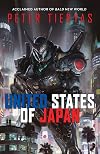
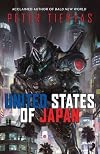
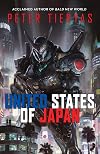
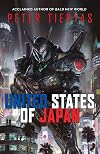
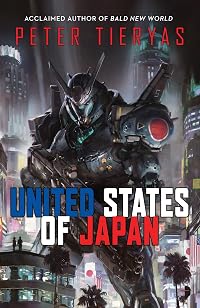
Tieryas draws inspiration from Philip K. Dick's Man in the High Castle in this new release from Angry Robot (which has one of the coolest covers I've seen in recent months). This alternate history largely takes place in a 1988 California where Japan rules and Nazis possess the eastern seaboard. Beniko Ishimura is given top billing in the cover copy and at the start of the book, but he shares the book with Akiko Tsukino, a female agent of the secret police and antagonist. The two form an unlikely alliance as they delve into the truth behind a an illegal video game that portrays a United States victory in World War II.
It's a tense and intriguing read, a blend of alt show more history and cyberpunk and thriller. I confess, the style wasn't to my preference since it was fairly dry in the way of a golden age scifi novel, with heavy reliance on dialogue and minimal description. I was left wanting more insight at times. That said, I still thoroughly enjoyed the book. I mean, 1988 California where San Diego is a razed landscape home to American rebels, and Japanese mechas patrol the coast? Heck yes! show less
Tieryas draws inspiration from Philip K. Dick's Man in the High Castle in this new release from Angry Robot (which has one of the coolest covers I've seen in recent months). This alternate history largely takes place in a 1988 California where Japan rules and Nazis possess the eastern seaboard. Beniko Ishimura is given top billing in the cover copy and at the start of the book, but he shares the book with Akiko Tsukino, a female agent of the secret police and antagonist. The two form an unlikely alliance as they delve into the truth behind a an illegal video game that portrays a United States victory in World War II.
It's a tense and intriguing read, a blend of alt show more history and cyberpunk and thriller. I confess, the style wasn't to my preference since it was fairly dry in the way of a golden age scifi novel, with heavy reliance on dialogue and minimal description. I was left wanting more insight at times. That said, I still thoroughly enjoyed the book. I mean, 1988 California where San Diego is a razed landscape home to American rebels, and Japanese mechas patrol the coast? Heck yes! show less
I actually had a pretty good time with this novel, expecting more of a carry-over from [b:The Man in the High Castle|216363|The Man in the High Castle|Philip K. Dick|https://d.gr-assets.com/books/1448756803s/216363.jpg|2398287], in the same vein as [b:The Time Ships|62992|The Time Ships|Stephen Baxter|https://d.gr-assets.com/books/1300997637s/62992.jpg|61184] carrying forward [b:The Time Machine|2493|The Time Machine|H.G. Wells|https://d.gr-assets.com/books/1327942880s/2493.jpg|3234863], but instead we've got a fast forward to modern day with modern day trappings in an America dominated by Japan, with a virtual game taking the place of the The Grasshopper Lies Heavy, an awesome (but short) stint in a huge mecha-robot, and a completely show more torn-apart California.
It doesn't quite have the same weight as the original, but I certainly loved all the modern storytelling, the pacing, the characters, and, of course, all the trappings. Who doesn't love a good hacker or enraged "hackers"?
The culture and the conspiracy and the deeply submerged idealism worked really well for me, too, and the characters worked fine for me, too. The plots and the twists were quite decent.
Just because it's not breaking horribly new ground doesn't mean that it can't appeal more to modern readers than the original, because it can. The game may not have had the same deeply convincing effect as the underground novel, alas, but practically everything else was a better *story* than the original.
No props for the unique way the original was written for this one, though, and that's fine. I still had a good time. :) show less
It doesn't quite have the same weight as the original, but I certainly loved all the modern storytelling, the pacing, the characters, and, of course, all the trappings. Who doesn't love a good hacker or enraged "hackers"?
The culture and the conspiracy and the deeply submerged idealism worked really well for me, too, and the characters worked fine for me, too. The plots and the twists were quite decent.
Just because it's not breaking horribly new ground doesn't mean that it can't appeal more to modern readers than the original, because it can. The game may not have had the same deeply convincing effect as the underground novel, alas, but practically everything else was a better *story* than the original.
No props for the unique way the original was written for this one, though, and that's fine. I still had a good time. :) show less
Members
- Recently Added By
Lists

Want To Read
5 works; 1 member

2016 Science Fiction and Fantasy Books I'm Looking Forward To.
54 works; 6 members

2017 Hugo Eligible Novels
145 works; 14 members
Author Information

9+ Works 553 Members

Peter Tieryas is a LibraryThing Author, an author who lists their personal library on LibraryThing.
Awards and Honors
Series

Common Knowledge
- Dedication
- Dedicated to the two Phils who changed my life:
Phil K Dick, for firing the imagination of my youth.
And Phil Jourdan, for believing in me. - First words
- The death of the United States of America began with a series of signatures.
Classifications
Statistics
- Members
- 355
- Popularity
- 88,898
- Reviews
- 18
- Rating
- (3.33)
- Languages
- English, Spanish
- Media
- Paper, Audiobook, Ebook
- ISBNs
- 8
- ASINs
- 4