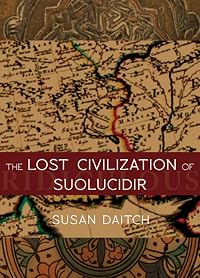
The Lost Civilization of Suolucidir
by Susan Daitch
On This Page
Description
"A series of archeological expeditions unfolds through time, each one looking for the ruins of a fabled underground city-state that once flourished in a remote province near the border of present-day Iran, Pakistan, and Afghanistan. Sealed off for centuries by seismic activity, Suolucidir beckons with the promise of plunder and the glory of discovery, fantasies as varied as the imaginations of her aspiring modern-day conquerors. As the tumult of the twentieth century's great wars, imperial show more land grabs and anti-colonial revolutions swirl across its barren, deserted landscape, the ancient city remains entombed below the surface of the earth. A succession of adventurers, speculators and unsavory characters arrive in search of their prize, be it archeological treasure, oil, or evidence of crimes and punishments. Intrigue, conspiracies, and counter-plots abound, and contemporary events interfere with each expedition, whether in the form of the Axis advance, British Petroleum, or the Revolutionary Guards. People disappear, relics are stolen, and the city closes in upon itself once more. A satiric, post-colonial adventure story of mythic proportions, The Lost Civilization of Suolucidir takes place against a background of actual events, in a part of the world with a particular historical relationship to Russia and the West. But though we are treated to visual "evidence" of its actual existence, Suolucidir remains a mystery, perhaps an invention of those who seek it, a place where history and identity are subject to revision, and the boundaries between East and West are anything but solid, reliable, or predictable"-- show lessTags
Recommendations



























Member Reviews
I really loved how this story was told and how it pulled all the different time periods together. I could hardly put the book down.
The Lost Civilization of Suolucidir
Author: Susan Daitch
Publisher: City Lights Books
Published In: San Francisco, CA
Date: 2016
Pgs: 310
REVIEW MAY CONTAIN SPOILERS
Summary:
A fabled, lost underground city-state near the present borders of Iran, Pakistan, and Afghanistan. Sealed away for centuries, prey to glory hunters, archaeologist, soldiers, adventurers, plunderers, robbers, and thieves. Expeditions over time search and find...or almost find. Seismic activity makes the promise of plunder and discovery come at a price. Modern day conquerors chase their fantasies through the border regions. Imperial land grabs, anti-colonialism, treasure, oil, crime, punishment, intrigue, conspiracy, plot and counterplot. The Axis, British Petroleum, the show more Revolutionary Guards. People, relics, and the city itself, all could disappear back into the darkness and mystery. Suolucidir awaits, but it doesn’t necessarily want to be found.
Genre:
Academics
Adventure
Alternate History
Ancient Knowledge
Fiction
Historical fiction
Pulp
Why this book:
Indiana Jones vs the modern world with a fabled city in the balance. Yeah, I’m in.
______________________________________________________________________________
Least Favorite Character:
Ruth Kopek. She is so focused on her own study and academia that she doesn’t see what the narrator is chasing. That’s not really fair, but his recollection of the dissolution of their marriage and their short married life together colors the interpretation of her character. She doesn’t come across well. This colors the early pages of the book and drags the narrative off course from the point of the book.
The Feel:
The narrator’s “I’ll show her and she’ll come running back to me” attitude toward his cheating wife as he sets out for Tehran and the hunt for Suolucidir almost made me put the book down. I know it is a real life attitude. But it strikes such a sour note in the course of the text that it is coloring my enjoyment.
Feels like Ocean’s Eleven without an exit strategy.
Pacing:
Through the early stages of the book, the brief touch on Suolucidir is excellent. The all too brief touchstone where we learn about the Nieumachers and the narrator’s father’s coming into possession of their books and writings is well paced as well. The pace falls flat when we visit the pages detailing the narrator’s married life with Ruth and his attempt to convince her to join him in his search for Suolucidir.
By and large, many of the paragraphs are too pregnant, too trucked with meaning, overly adverbed and adjectived. They may be beautiful, but they are just too much for story flow and dynamics.
Plot Holes/Out of Character:
Lots of circuitousness and repetition with similar events occurring to characters traveling in similar circles at different points in the timeline.
Hmm Moments:
The narrator searching for Suolucidir artifacts and the city itself when he notices that everywhere he goes he’s being shadowed. The Iranian secret police are following him. Though whether this is the Shah’s SAVAK or the Ayatollah's followers is unclear at the time he notices them the first time.
The Nieumachers’ forger past casts their scroll, that Bokser had, in a different light.
Meh / PFFT Moments:
The Suolucidir that he finds just as the hostages are taken in 1979 Tehran is too perfect. Unburied, just in an underground cavern. Too perfectly preserved. This challenges the suspension of disbelief. A near pristine cavernous city instead of a Pompei-like buried civilization.
The narrator, Ariel Bokser, esacpes Khomeini’s Iran way too easily for a man without a passport, especially an American in that Great Satan era. Scene reads like Affleck’s Argo without the drama.
So...a German archaeology professor who is actually a Latvian Jew escapes prewar Berlin to pretend to be a French dealer in antiquities and foregeries in the south of France. In Marsailles, he reencounters two of his German students who were also pretending to be French who in Berlin were German Jews, but were actually Russian and who to find Suolucidir carry on pretending to be fake French involved in a faux Franco-Soviet Friendship Dig in Iran where they are the fake French and the fake Soviets aren’t coming. ...Boris and Natasha. ...where are Moose and Squirrel? And the Jewish Latvian German archaeology professor nee French dealer in antiquities nee receiver of stolen goods is named Feigen...Fagin...Oliver Twist...meh. Combine this with the Ariel Bokser-Jahanshah Rostami masquerade switch from Part One in which a third man was killed and believed to be Ariel Bokser while both of them were both pretending to be Bokser after the real Bokser’s return from post-Shah Iran. Phew. I really feel like we need a scorecard to keep up with who is pretending to be who and when and where.
______________________________________________________________________________
Last Page Sound:
It’s all chimera. It’s all smoke. It’s all cheshire. No revelation. Other than a comment on all who search for Suolucidir seeing and being reflections, which was telegraphed so hard all the way through that it hardly needed mentioning. I expected something from this book that wasn’t here.
Author Assessment:
No. I’m afraid I’ll pass.
Editorial Assessment:
The real history of Reagan-Khomeini era Iran is mashed together in this book. Time is noticeably compressed. We seemed to go from the embassy hostages to Iran Contra way too fast considering the other events in Bokser’s life.
I almost put the book down just before the end of Part 1. The Ariel Bokser-Jahanshah Rostami section could have stood a little closer to the editor’s pen.
Trude Feigen’s fate. The paragraph where it is described in one instance we are told that the woman couldn’t be identified and in the next we’re told that it is Trude. But her husband disappeared and isn’t seen again locally. Double but, how did they know it was her? Shrug.
If you hang the muddled no-one-is-who-they-seem-to-be characters together with the fast and loose real timeline events, this becomes a difficult read to stay on top of.
Knee Jerk Reaction:
not as good as I was lead to believe
Disposition of Book:
Irving Public Library
South Campus
Irving, TX
Dewey Decimal System:
F
DAI
Would recommend to:
no one
______________________________________________________________________________ show less
Author: Susan Daitch
Publisher: City Lights Books
Published In: San Francisco, CA
Date: 2016
Pgs: 310
REVIEW MAY CONTAIN SPOILERS
Summary:
A fabled, lost underground city-state near the present borders of Iran, Pakistan, and Afghanistan. Sealed away for centuries, prey to glory hunters, archaeologist, soldiers, adventurers, plunderers, robbers, and thieves. Expeditions over time search and find...or almost find. Seismic activity makes the promise of plunder and discovery come at a price. Modern day conquerors chase their fantasies through the border regions. Imperial land grabs, anti-colonialism, treasure, oil, crime, punishment, intrigue, conspiracy, plot and counterplot. The Axis, British Petroleum, the show more Revolutionary Guards. People, relics, and the city itself, all could disappear back into the darkness and mystery. Suolucidir awaits, but it doesn’t necessarily want to be found.
Genre:
Academics
Adventure
Alternate History
Ancient Knowledge
Fiction
Historical fiction
Pulp
Why this book:
Indiana Jones vs the modern world with a fabled city in the balance. Yeah, I’m in.
______________________________________________________________________________
Least Favorite Character:
Ruth Kopek. She is so focused on her own study and academia that she doesn’t see what the narrator is chasing. That’s not really fair, but his recollection of the dissolution of their marriage and their short married life together colors the interpretation of her character. She doesn’t come across well. This colors the early pages of the book and drags the narrative off course from the point of the book.
The Feel:
The narrator’s “I’ll show her and she’ll come running back to me” attitude toward his cheating wife as he sets out for Tehran and the hunt for Suolucidir almost made me put the book down. I know it is a real life attitude. But it strikes such a sour note in the course of the text that it is coloring my enjoyment.
Feels like Ocean’s Eleven without an exit strategy.
Pacing:
Through the early stages of the book, the brief touch on Suolucidir is excellent. The all too brief touchstone where we learn about the Nieumachers and the narrator’s father’s coming into possession of their books and writings is well paced as well. The pace falls flat when we visit the pages detailing the narrator’s married life with Ruth and his attempt to convince her to join him in his search for Suolucidir.
By and large, many of the paragraphs are too pregnant, too trucked with meaning, overly adverbed and adjectived. They may be beautiful, but they are just too much for story flow and dynamics.
Plot Holes/Out of Character:
Lots of circuitousness and repetition with similar events occurring to characters traveling in similar circles at different points in the timeline.
Hmm Moments:
The narrator searching for Suolucidir artifacts and the city itself when he notices that everywhere he goes he’s being shadowed. The Iranian secret police are following him. Though whether this is the Shah’s SAVAK or the Ayatollah's followers is unclear at the time he notices them the first time.
The Nieumachers’ forger past casts their scroll, that Bokser had, in a different light.
Meh / PFFT Moments:
The Suolucidir that he finds just as the hostages are taken in 1979 Tehran is too perfect. Unburied, just in an underground cavern. Too perfectly preserved. This challenges the suspension of disbelief. A near pristine cavernous city instead of a Pompei-like buried civilization.
The narrator, Ariel Bokser, esacpes Khomeini’s Iran way too easily for a man without a passport, especially an American in that Great Satan era. Scene reads like Affleck’s Argo without the drama.
So...a German archaeology professor who is actually a Latvian Jew escapes prewar Berlin to pretend to be a French dealer in antiquities and foregeries in the south of France. In Marsailles, he reencounters two of his German students who were also pretending to be French who in Berlin were German Jews, but were actually Russian and who to find Suolucidir carry on pretending to be fake French involved in a faux Franco-Soviet Friendship Dig in Iran where they are the fake French and the fake Soviets aren’t coming. ...Boris and Natasha. ...where are Moose and Squirrel? And the Jewish Latvian German archaeology professor nee French dealer in antiquities nee receiver of stolen goods is named Feigen...Fagin...Oliver Twist...meh. Combine this with the Ariel Bokser-Jahanshah Rostami masquerade switch from Part One in which a third man was killed and believed to be Ariel Bokser while both of them were both pretending to be Bokser after the real Bokser’s return from post-Shah Iran. Phew. I really feel like we need a scorecard to keep up with who is pretending to be who and when and where.
______________________________________________________________________________
Last Page Sound:
It’s all chimera. It’s all smoke. It’s all cheshire. No revelation. Other than a comment on all who search for Suolucidir seeing and being reflections, which was telegraphed so hard all the way through that it hardly needed mentioning. I expected something from this book that wasn’t here.
Author Assessment:
No. I’m afraid I’ll pass.
Editorial Assessment:
The real history of Reagan-Khomeini era Iran is mashed together in this book. Time is noticeably compressed. We seemed to go from the embassy hostages to Iran Contra way too fast considering the other events in Bokser’s life.
I almost put the book down just before the end of Part 1. The Ariel Bokser-Jahanshah Rostami section could have stood a little closer to the editor’s pen.
Trude Feigen’s fate. The paragraph where it is described in one instance we are told that the woman couldn’t be identified and in the next we’re told that it is Trude. But her husband disappeared and isn’t seen again locally. Double but, how did they know it was her? Shrug.
If you hang the muddled no-one-is-who-they-seem-to-be characters together with the fast and loose real timeline events, this becomes a difficult read to stay on top of.
Knee Jerk Reaction:
not as good as I was lead to believe
Disposition of Book:
Irving Public Library
South Campus
Irving, TX
Dewey Decimal System:
F
DAI
Would recommend to:
no one
______________________________________________________________________________ show less
Ratings
Members
- Recently Added By
Lists

Book Riot's 100 must-read works of Jewish Fiction
100 works; 8 members

Islam & the Middle East
127 works; 1 member
Author Information

10+ Works 256 Members
Awards and Honors
Distinctions
Classifications
- Genres
- Fiction and Literature, General Fiction, Historical Fiction, Mystery
- DDC/MDS
- 813.54 — Literature & rhetoric American literature in English American fiction in English 1900-1999 1945-1999
- LCC
- PS3554 .A33 .L67 — Language and Literature American literature American literature Individual authors 1961-
- BISAC
Statistics
- Members
- 32
- Popularity
- 877,964
- Reviews
- 2
- Rating
- (3.36)
- Languages
- English
- Media
- Paper, Ebook
- ISBNs
- 2
- ASINs
- 1