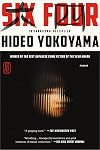
Six Four
by Hideo Yokoyama
On This Page
Description
"The nightmare no parent could endure. The case no detective could solve. The twist no reader could predict. For five days in January 1989, the parents of a seven-year-old Tokyo schoolgirl sat and listened to the demands of their daughter's kidnapper. They would never learn his identity. They would never see their daughter again. For the fourteen years that followed, the Japanese public listened to the police's apologies. They would never forget the botched investigation that became known as show more Six Four. They would never forgive the authorities for their failure. For one week in late 2002, the press officer attached to the police department in question confronted an anomaly in the case. He could never imagine what he would uncover. He would never have looked if he'd known what he would find. "-- show lessTags
Recommendations


























Member Recommendations

wandering_star Reportage about crime and policing in Japan - a good non-fiction counterpart to Six Four.
Member Reviews
Almost 14 years earlier, in the last days of the Showa period (January 1989 in our calendar), a 7 years old girl was kidnapped and then, after the family paid the ransom, found dead. In the current time, December 2002, another girl is missing - a 16 years old ran from home 3 months earlier. The two incidents, albeit not connected on their own, get a connection through a police detective, Mikami, - he was part of the initial team on the first and the second is his own daughter.
That's how this novel opens - with a missing girl and the ghost of a dead one. But as the book progresses, you realize that they are not the main focus of the book - they are always somewhere there in the shadows, they drive Mikami and most of the story but they show more are not the main story.
Six Four (the title derives from the Japanese calendar - that last Showa year, which lasted only 7 days, was the 64th) is a slow burn of a crime novel which is more interested in exploring the police and its relationships than deal with high speed chases (although that will also be there) and gruesome deaths.
Mikami, a career officer in the police in Prefecture D's HQ, had recently been promoted and moved from the Investigative branch to the Administration side to lead the Media Relations department. And while this novel is not told in the first person, it may have been - we have Mikami's actions and thoughts and we never see anything he does not see, hear or think (I wonder if this is not because of how Japanese works as a language - do they have first person narratives at all?). There is a war going in between the two branches and at the time of the opening of the novel it is close to its peak - with Mikami caught in the middle, distrusted in some ways from both sides.
And the ghost of the girl who died as part of the 64 kidnapping is used as the excuse for that war to get even worse - the kidnapper and murderer was never caught, the statute of limitation for the crime is 15 years so in a year or so, even if he gets caught after that, he will never be brought to justice and everyone seems to have their own agenda.
For most of the novel I was pretty sure that there was a play with the names of the characters - they sounded too close to each other - but as with a lot of translations, I assumed that there is a hidden story in there, untranslatable out from the Japanese. I was right - and I was wrong. The names did make sense -- at least some of them - even in the translation. Every unrelated event through the first 500 pages of the novel was there for a reason - even the ones that sounded like filler.
Media Relations of a police department is not a department one would usually want to read about. But between it being traditionally Japanese and Mikami, it works. The story flows slowly and slows you down while you are reading - while uncovering more and more of what happened both during the original case and in the current times. Even the repetitions make sense - we are in Mikami's head and he obsesses and worries about the same things more than once. It has an almost hypnotic quality - you can read a few thousand more pages about the day to day life of the police and its internal battles.
And then the author finally picks up all the dangling threads together and pushes the story in gear. The sleepy style is gone and the story speeds towards its end, bringing the truth to the fore. And then it slows again - because once the truth is out there, it is time to stop and make sure it is not squandered and lost.
And yet, a few strands escape the end -- they remain in the wind. Not forgotten but there. Because this is how life is - things don't resolve each other at the same time.
If you are looking for a thriller which moves fast, look elsewhere. 64 is anything but. But if you are ready to read a very Japanese novel and follow a slow path, you may enjoy this novel as much as I did.
Even though this was the first novel by the author in English, it was not his first work about Prefecture D apparently. It stands on its own - but I wonder if some of those names, especially the ones that show up rarely, won't be easier to remember if we had met them before. show less
That's how this novel opens - with a missing girl and the ghost of a dead one. But as the book progresses, you realize that they are not the main focus of the book - they are always somewhere there in the shadows, they drive Mikami and most of the story but they show more are not the main story.
Six Four (the title derives from the Japanese calendar - that last Showa year, which lasted only 7 days, was the 64th) is a slow burn of a crime novel which is more interested in exploring the police and its relationships than deal with high speed chases (although that will also be there) and gruesome deaths.
Mikami, a career officer in the police in Prefecture D's HQ, had recently been promoted and moved from the Investigative branch to the Administration side to lead the Media Relations department. And while this novel is not told in the first person, it may have been - we have Mikami's actions and thoughts and we never see anything he does not see, hear or think (I wonder if this is not because of how Japanese works as a language - do they have first person narratives at all?). There is a war going in between the two branches and at the time of the opening of the novel it is close to its peak - with Mikami caught in the middle, distrusted in some ways from both sides.
And the ghost of the girl who died as part of the 64 kidnapping is used as the excuse for that war to get even worse - the kidnapper and murderer was never caught, the statute of limitation for the crime is 15 years so in a year or so, even if he gets caught after that, he will never be brought to justice and everyone seems to have their own agenda.
For most of the novel I was pretty sure that there was a play with the names of the characters - they sounded too close to each other - but as with a lot of translations, I assumed that there is a hidden story in there, untranslatable out from the Japanese. I was right - and I was wrong. The names did make sense -- at least some of them - even in the translation. Every unrelated event through the first 500 pages of the novel was there for a reason - even the ones that sounded like filler.
Media Relations of a police department is not a department one would usually want to read about. But between it being traditionally Japanese and Mikami, it works. The story flows slowly and slows you down while you are reading - while uncovering more and more of what happened both during the original case and in the current times. Even the repetitions make sense - we are in Mikami's head and he obsesses and worries about the same things more than once. It has an almost hypnotic quality - you can read a few thousand more pages about the day to day life of the police and its internal battles.
And then the author finally picks up all the dangling threads together and pushes the story in gear. The sleepy style is gone and the story speeds towards its end, bringing the truth to the fore. And then it slows again - because once the truth is out there, it is time to stop and make sure it is not squandered and lost.
And yet, a few strands escape the end -- they remain in the wind. Not forgotten but there. Because this is how life is - things don't resolve each other at the same time.
If you are looking for a thriller which moves fast, look elsewhere. 64 is anything but. But if you are ready to read a very Japanese novel and follow a slow path, you may enjoy this novel as much as I did.
Even though this was the first novel by the author in English, it was not his first work about Prefecture D apparently. It stands on its own - but I wonder if some of those names, especially the ones that show up rarely, won't be easier to remember if we had met them before. show less
This novel begins with the fourteen year old cold case kidnapping and murder of a seven year old girl, but that's just the scaffolding. Really this is a novel about the internal politics of a Japanese police prefecture and the machinations between departments and officers jockeying for position.
Mikami is a detective reassigned to the press office, a forgotten corner of administration where he leads a group of three working out of a too-small office. As the novel begins, they are stuck between the administration department and an increasingly angry press as they seek to keep the name of a driver who hit a pedestrian secret. At the same time, Mikami is asked to set up the press for a visit from the top police commissioner from Tokyo and show more things rapidly fall apart as he is torn between what he is being asked to do and what he feels is right, between the responsibilities of his current job and his allegiance to the career he had as a detective and in finding out what exactly went so wrong fourteen years ago. Miakami and his wife are also searching for their runaway daughter.
I can't tell you why a novel focused on the internal struggles of a police department should be so fascinating, but I enjoyed every single page. Mikami was just such a great character to spend time with as he methodically works to figure out what exactly is going on and gains some understanding of himself, his wife and his career. show less
Mikami is a detective reassigned to the press office, a forgotten corner of administration where he leads a group of three working out of a too-small office. As the novel begins, they are stuck between the administration department and an increasingly angry press as they seek to keep the name of a driver who hit a pedestrian secret. At the same time, Mikami is asked to set up the press for a visit from the top police commissioner from Tokyo and show more things rapidly fall apart as he is torn between what he is being asked to do and what he feels is right, between the responsibilities of his current job and his allegiance to the career he had as a detective and in finding out what exactly went so wrong fourteen years ago. Miakami and his wife are also searching for their runaway daughter.
I can't tell you why a novel focused on the internal struggles of a police department should be so fascinating, but I enjoyed every single page. Mikami was just such a great character to spend time with as he methodically works to figure out what exactly is going on and gains some understanding of himself, his wife and his career. show less
This is a Japanese police procedural that focuses mostly on interdepartmental politics and the police force's relationship with the press while remembering a cold case. Also, it is very long. At that description, you could be forgiven for thinking you'd never want to read the book. But. What if it was the absolute apex, the most perfect version possible of a Japanese police procedure that focuses on interdepartmental politics, media relations, with a dash of cold case investigation? Like, the best one that could ever exist, and also a book that you'll read until 3am, rolling forward through nimble prose, finding yourself physically present with the main character? That's what this is. Six Four. Recommended. Those who know, know.
SIX FOUR is one of those books that demands considerable commitment from readers. At a whopping 656 pages, it's a considerable weight to be holding onto for a long period of time, which you will be, as it's a very detailed, dense and potentially frustrating read.
A form of police procedural crime novel, set within the confines of a police station and a stalled investigation, SIX FOUR, is, in the beginning, a study in police / media relationships. The central protagonist, Mikami, a career police officer now seconded to the media office, has a brief to improve co-operation between the media and the police. The media have their own press office within the police station with ongoing access to information about cases. A large part of this show more novel is devoted to the building, unravelling and reconstructing of this relationship with the demands from the media particularly startling. Aside from the fact that this ongoing temper tantrum from them distracts constantly from Mikami's concerns about a 14 year old open case of the kidnap and murder of a seven-year-old girl, the media's behaviour is breathtakingly over the top, and drawn out. Oh so very very drawn out.
Readers may therefore find themselves drawing considerably on reserves of patience, unless of course, this ongoing sort of quasi-political / power battle is of particular interest. For fans of more traditional crime fiction, when aspects of the cold case manage to work their way into the narrative there is much to reward. It's hard not to be struck by the coincidence of patience required by the reader and the patience that Mikami shows in doggedly wanting to solve this old case, perhaps for the sake of a still grieving father more than anything else. He has though, a very personal reason for reacting that way, and the trials of Mikami and his wife Minako, the constant wonder he feels over his beautiful wife choosing him, his downplaying of his intelligence and his compassion, these aspects of SIX FOUR are part of what also rewards that patient reader. And a word of warning - you may also find that a tendency for names to be very similar will have you backtracking to check who is who, or resorting to a handy character / job description list to keep track.
Lacking, as it does, a form of "procedural arc", instead SIX FOUR relies on Mikami's chasing down of loose ends, some of them particularly odd to his acute investigative eye. Towards the end of the novel, once the obsession with media relationships has been sated, and the real possibility of solving a fourteen year old case starts to burn more brightly, there is an unexpected sense of tension and expectation. There's also a lot of descriptive elements, and a hefty dose of distractions and seemingly inconsequential elements built in, even at this stage of the book.
SIX FOUR isn't going to be to everyone's taste, no doubt whatever about that. There will be readers that will want to run screaming from the media pack and their unfettered grab for power (and for that matter their astounding laziness), and there will be readers that want to slap each and very boss / higher-up that Mikami has to deal with. There will also be readers that are absolutely enthralled by the detailed manner in which so many aspects of this community, it's police station and their media work. For them, the 656 pages may not feel like such a hefty level of commitment.
https://www.austcrimefiction.org/review/review-six-four-hideo-yokoyama show less
A form of police procedural crime novel, set within the confines of a police station and a stalled investigation, SIX FOUR, is, in the beginning, a study in police / media relationships. The central protagonist, Mikami, a career police officer now seconded to the media office, has a brief to improve co-operation between the media and the police. The media have their own press office within the police station with ongoing access to information about cases. A large part of this show more novel is devoted to the building, unravelling and reconstructing of this relationship with the demands from the media particularly startling. Aside from the fact that this ongoing temper tantrum from them distracts constantly from Mikami's concerns about a 14 year old open case of the kidnap and murder of a seven-year-old girl, the media's behaviour is breathtakingly over the top, and drawn out. Oh so very very drawn out.
Readers may therefore find themselves drawing considerably on reserves of patience, unless of course, this ongoing sort of quasi-political / power battle is of particular interest. For fans of more traditional crime fiction, when aspects of the cold case manage to work their way into the narrative there is much to reward. It's hard not to be struck by the coincidence of patience required by the reader and the patience that Mikami shows in doggedly wanting to solve this old case, perhaps for the sake of a still grieving father more than anything else. He has though, a very personal reason for reacting that way, and the trials of Mikami and his wife Minako, the constant wonder he feels over his beautiful wife choosing him, his downplaying of his intelligence and his compassion, these aspects of SIX FOUR are part of what also rewards that patient reader. And a word of warning - you may also find that a tendency for names to be very similar will have you backtracking to check who is who, or resorting to a handy character / job description list to keep track.
Lacking, as it does, a form of "procedural arc", instead SIX FOUR relies on Mikami's chasing down of loose ends, some of them particularly odd to his acute investigative eye. Towards the end of the novel, once the obsession with media relationships has been sated, and the real possibility of solving a fourteen year old case starts to burn more brightly, there is an unexpected sense of tension and expectation. There's also a lot of descriptive elements, and a hefty dose of distractions and seemingly inconsequential elements built in, even at this stage of the book.
SIX FOUR isn't going to be to everyone's taste, no doubt whatever about that. There will be readers that will want to run screaming from the media pack and their unfettered grab for power (and for that matter their astounding laziness), and there will be readers that want to slap each and very boss / higher-up that Mikami has to deal with. There will also be readers that are absolutely enthralled by the detailed manner in which so many aspects of this community, it's police station and their media work. For them, the 656 pages may not feel like such a hefty level of commitment.
https://www.austcrimefiction.org/review/review-six-four-hideo-yokoyama show less
Wow, what a wild ride! I stayed up way to late getting to the end of this page turner. I found this to be a fascinating look inside the politics of the Japanese police force. I was interested by some of the turns of phrase and the detail concerning the depth of bows. I enjoyed the twists and turns in the plot. I read this in print and listened to parts when my husband was listening. I found the narrator to be frustratingly slow in his delivery. My husband chose to speed up the recording but that was less than entirely satisfactory.
This novel was a huge seller in Japan and is the first of Yokoyama’s to be translated into English.
Six Four is the code name for a fourteen-year-old cold case, the kidnapping and murder of a 7-year-old girl named Shoko. Yoshinobu Mikami, press director for the Profecture D police, is charged with organizing a visit by the police commissioner to Shoko’s family. The ostensible reason of the visit is to publicize a renewed effort to solve the case, but Mikami discovers there is a hidden agenda. Mikami, who was a detective for most of his career and had some involvement in the investigation, begins revisiting the Six Four case. In the process, as he faces professional crises with the press, he uncovers police cover-ups and inadvertently show more becomes involved in police department machinations and power plays. At the same time, he is dealing with the disappearance of Ayumi, his teenaged daughter, who has run away from home.
Though there is a case to solve, this is not a typical police procedural or crime thriller. Much of the focus is on Mikami’s investigation into the real reason for the commissioner’s visit and on his difficulties with the media outlets who feel that Mikami and the three other members of the Media Relations department are not sufficiently forthcoming with information about various cases. Surprisingly, I found myself being drawn into the infighting and bureaucratic maneuverings.
Mikami is an interesting protagonist. He is conflicted since his transfer to Media Relations was unwelcomed, and he hopes to someday return to Criminal Investigations where apparently he distinguished himself. He has much less success in his current position and finds himself being manipulated by officers who have little respect for it and want to use him for their own purposes. He must tread carefully or jeopardize his return to his coveted role of detective.
And then there’s his personal life. Mikami’s wife has become withdrawn after Ayumi’s disappearance three months earlier. Mikami also feels responsible for his daughter’s unhappiness. She inherited her looks from her father rather than from her beautiful mother; though “Ayumi’s looks were no different to those of any other normal girl, the kind you saw everywhere,” she suffers from dysmorphophobia and hates her resemblance to her father. He realizes that he has not really made much effort to understand his wife and daughter: “A gentle wife who kept to herself. A daughter, spoiled but kind at heart. He’d been quick to label them for whatever reason, then leave the classification unchecked, unaltered, as five, then ten years had gone by. Had he known Ayumi at all?”
Mikami is not naturally an introspective person, but he is forced to do some self-examination. As a result, he comes to some realizations and grows and changes. Since his thoughts are so thoroughly detailed, his character change is totally convincing. The ability to portray a dynamic character realistically is always an indication of good writing.
The book is a great immersion in Japanese culture. The hierarchical nature of Japanese society is amply obvious as is the concern to avoid losing face. The tradition of buying rice crackers as a home-visiting gift was new to me. Even the role of women in Japanese society is touched on.
The relationship between police and media is examined in considerable detail. I wouldn’t have thought the subject to be especially interesting, but it proved to be. The point of view of each side in the debate is given. Perhaps the issue of freedom of the press has become more important because of events in the U.S. since the election of Trump?
There is suspense throughout: Will Ayumi be found? Will Mikami be able to solve the mystery surrounding the commissioner’s visit? Will Mikami be able to convince Shoko’s father to accept a visit from the commissioner? Will the conflict with the media be resolved in time or will Mikami be held responsible for a media boycott of the visit? Will Mikami be transferred back to Criminal Investigations or will his actions and his confrontations with certain officials ruin his chances? Can the cold case be solved before the looming statute of limitations comes into effect? There are several twists and turns and the ending comes as a surprise, though a totally credible one. There are some loose ends, but they are appropriate.
This book requires a patient, intelligent reader. Non-Japanese readers may find some difficulty with the many “M” names (Mikami, Mizuki Murakushi, Minako, Mikumo, Matsuoka, Meikawa, etc,) and the various positions within the police force. But one’s patience will be rewarded.
The novel is complex and demanding and totally immersive. It was first published in Japan in 2012 in two volumes, so it is not just dense, but lengthy as well. It is definitely recommended to anyone willing to expand his/her reading horizons.
Please check out my reader's blog (http://schatjesshelves.blogspot.ca/) and follow me on Twitter (@DCYakabuski). show less
Six Four is the code name for a fourteen-year-old cold case, the kidnapping and murder of a 7-year-old girl named Shoko. Yoshinobu Mikami, press director for the Profecture D police, is charged with organizing a visit by the police commissioner to Shoko’s family. The ostensible reason of the visit is to publicize a renewed effort to solve the case, but Mikami discovers there is a hidden agenda. Mikami, who was a detective for most of his career and had some involvement in the investigation, begins revisiting the Six Four case. In the process, as he faces professional crises with the press, he uncovers police cover-ups and inadvertently show more becomes involved in police department machinations and power plays. At the same time, he is dealing with the disappearance of Ayumi, his teenaged daughter, who has run away from home.
Though there is a case to solve, this is not a typical police procedural or crime thriller. Much of the focus is on Mikami’s investigation into the real reason for the commissioner’s visit and on his difficulties with the media outlets who feel that Mikami and the three other members of the Media Relations department are not sufficiently forthcoming with information about various cases. Surprisingly, I found myself being drawn into the infighting and bureaucratic maneuverings.
Mikami is an interesting protagonist. He is conflicted since his transfer to Media Relations was unwelcomed, and he hopes to someday return to Criminal Investigations where apparently he distinguished himself. He has much less success in his current position and finds himself being manipulated by officers who have little respect for it and want to use him for their own purposes. He must tread carefully or jeopardize his return to his coveted role of detective.
And then there’s his personal life. Mikami’s wife has become withdrawn after Ayumi’s disappearance three months earlier. Mikami also feels responsible for his daughter’s unhappiness. She inherited her looks from her father rather than from her beautiful mother; though “Ayumi’s looks were no different to those of any other normal girl, the kind you saw everywhere,” she suffers from dysmorphophobia and hates her resemblance to her father. He realizes that he has not really made much effort to understand his wife and daughter: “A gentle wife who kept to herself. A daughter, spoiled but kind at heart. He’d been quick to label them for whatever reason, then leave the classification unchecked, unaltered, as five, then ten years had gone by. Had he known Ayumi at all?”
Mikami is not naturally an introspective person, but he is forced to do some self-examination. As a result, he comes to some realizations and grows and changes. Since his thoughts are so thoroughly detailed, his character change is totally convincing. The ability to portray a dynamic character realistically is always an indication of good writing.
The book is a great immersion in Japanese culture. The hierarchical nature of Japanese society is amply obvious as is the concern to avoid losing face. The tradition of buying rice crackers as a home-visiting gift was new to me. Even the role of women in Japanese society is touched on.
The relationship between police and media is examined in considerable detail. I wouldn’t have thought the subject to be especially interesting, but it proved to be. The point of view of each side in the debate is given. Perhaps the issue of freedom of the press has become more important because of events in the U.S. since the election of Trump?
There is suspense throughout: Will Ayumi be found? Will Mikami be able to solve the mystery surrounding the commissioner’s visit? Will Mikami be able to convince Shoko’s father to accept a visit from the commissioner? Will the conflict with the media be resolved in time or will Mikami be held responsible for a media boycott of the visit? Will Mikami be transferred back to Criminal Investigations or will his actions and his confrontations with certain officials ruin his chances? Can the cold case be solved before the looming statute of limitations comes into effect? There are several twists and turns and the ending comes as a surprise, though a totally credible one. There are some loose ends, but they are appropriate.
This book requires a patient, intelligent reader. Non-Japanese readers may find some difficulty with the many “M” names (Mikami, Mizuki Murakushi, Minako, Mikumo, Matsuoka, Meikawa, etc,) and the various positions within the police force. But one’s patience will be rewarded.
The novel is complex and demanding and totally immersive. It was first published in Japan in 2012 in two volumes, so it is not just dense, but lengthy as well. It is definitely recommended to anyone willing to expand his/her reading horizons.
Please check out my reader's blog (http://schatjesshelves.blogspot.ca/) and follow me on Twitter (@DCYakabuski). show less
Glimpses into cultures not our own are far more discomforting than any science fiction or horror story can ever be. This thriller set in a provincial Japanese city gives us a detailed and rarely seen look at the workings of ordinary Japanese life and the ways in which that culture deals with everyday obstacles - office politics, attitudes to women, dealing with colleagues, both competent and stupid.
Yoshinubi Mikami is a police detective reassigned to the police press office and charged with organising a visit from a senior officer from Tokyo on the anniversary of a child kidnapping that was never solved and the child never recovered. Weaving through the complex political machinations behind the visit and dealing with the fractious local show more press relationships leads Mikami to unravel the original crime.
Pure police procedural with an added twist that the procedural rules and the personal and professional relationships that underpin those rules are largely unknown to a Western audience. This is a fascinating look into a different world using the familiar tropes of the crime novel. show less
Yoshinubi Mikami is a police detective reassigned to the police press office and charged with organising a visit from a senior officer from Tokyo on the anniversary of a child kidnapping that was never solved and the child never recovered. Weaving through the complex political machinations behind the visit and dealing with the fractious local show more press relationships leads Mikami to unravel the original crime.
Pure police procedural with an added twist that the procedural rules and the personal and professional relationships that underpin those rules are largely unknown to a Western audience. This is a fascinating look into a different world using the familiar tropes of the crime novel. show less
Members
- Recently Added By
Published Reviews
ThingScore 75
(Lang)drøy spenning fra Japan
En japansk thriller? «Seks fire» er altfor lang, men også bryet verdt.
Mens vi følger Mikami inn i det byråkratiske vepsebolet blir Hideo Yokoyamas roman også en fortelling om Japan i samtiden – om blind tro på maktstrukturer og hierarki, om pliktfølelse, lojalistkrav og en villighet til underkastelse som kan sjokkere en leser. Men også om forholdet show more mellom menn og kvinner, også der viser Yokoyama frem elementer av underkastelse og beskyttelse, uten å bli moraliserende – bare tydelig sterkt beskrivende.
Det tar lang tid før «Seks fire» begynner å ligne en thriller i vanlig forstand, men når det først rører på seg og Mikamis endeløse sjelekvaler og spekulasjoner begynner å lede til konklusjoner, handling og resultater, blir boken også på spenningsplanet riktig interessant og medrivende – for ikke å si bevegende. show less
En japansk thriller? «Seks fire» er altfor lang, men også bryet verdt.
Mens vi følger Mikami inn i det byråkratiske vepsebolet blir Hideo Yokoyamas roman også en fortelling om Japan i samtiden – om blind tro på maktstrukturer og hierarki, om pliktfølelse, lojalistkrav og en villighet til underkastelse som kan sjokkere en leser. Men også om forholdet show more mellom menn og kvinner, også der viser Yokoyama frem elementer av underkastelse og beskyttelse, uten å bli moraliserende – bare tydelig sterkt beskrivende.
Det tar lang tid før «Seks fire» begynner å ligne en thriller i vanlig forstand, men når det først rører på seg og Mikamis endeløse sjelekvaler og spekulasjoner begynner å lede til konklusjoner, handling og resultater, blir boken også på spenningsplanet riktig interessant og medrivende – for ikke å si bevegende. show less
added by annek49
Six Four by Hideo Yokoyama review – riveting, slow-burn thriller
Hideo Yokoyama’s bestseller combines classic crime elements with a twisting journey to the heart of Japan’s police establishment.
At times, it is too easy to get lost in the morass of detail and characters and passionate concerns over issues it is hard to get worked up over. But the twist and the pay-off are worth the wait, show more and if the slightly misleading packaging means more people give this unique addition to the genre a try, then so much the better. show less
Hideo Yokoyama’s bestseller combines classic crime elements with a twisting journey to the heart of Japan’s police establishment.
At times, it is too easy to get lost in the morass of detail and characters and passionate concerns over issues it is hard to get worked up over. But the twist and the pay-off are worth the wait, show more and if the slightly misleading packaging means more people give this unique addition to the genre a try, then so much the better. show less
added by annek49
Lists

100 Best Thrillers of All Time
100 works; 6 members

KayStJ's to-read list
1,616 works; 11 members

Books Read in 2017
4,249 works; 129 members

Global Mysteries
90 works; 6 members

Global Reads: Books Set in East Asia
139 works; 12 members

Best Japanese Fiction
41 works; 10 members

Japanese Literature
230 works; 40 members

The 100 Best Crime Novels and Thrillers since 1945
100 works; 6 members
Author Information

18 Works 1,415 Members
Some Editions
Awards and Honors
Awards
Distinctions
Common Knowledge
- Canonical title
- Six Four
- Original title
- 六四
- Alternate titles*
- Rokuyon; Sechs Vier
- Original publication date
- 2012
- People/Characters*
- Mikami Yoshinobu; Mikami Minako; Minaki Ayumi; Suwa; Kuramae; Mikumo
- Important places
- Japan
- First words
- Snowflakes danced through the evening light.
- Last words
- (Click to show. Warning: May contain spoilers.)The white brought to mind his discovery of the Christmas rose.
- Original language
- Japanese
- Canonical DDC/MDS
- 895.636
- Canonical LCC
- PL877.5.O369
*Some information comes from Common Knowledge in other languages. Click "Edit" for more information.
Classifications
- Genres
- Fiction and Literature, Mystery
- DDC/MDS
- 895.636 — Literature & rhetoric Literatures of other languages Literatures of East and Southeast Asia Japanese Japanese fiction 2000–
- LCC
- PL877.5 .O369 — Language and Literature Languages and literatures of Eastern Asia, Africa, Oceania Languages of Eastern Asia, Africa, Oceania Japanese language and literature Japanese literature
- BISAC
Statistics
- Members
- 979
- Popularity
- 26,865
- Reviews
- 42
- Rating
- (3.40)
- Languages
- 11 — Czech, Dutch, English, Finnish, French, German, Italian, Japanese, Korean, Spanish, Swedish
- Media
- Paper, Audiobook, Ebook
- ISBNs
- 43
- ASINs
- 11