On This Page
Description
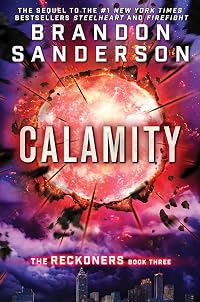
Order the sequel to the #1 New York Times bestselling novel Firefight today!From the bestselling author of the Mistborn series and Words of Radiance comes Calamity, the final book in the #1 New York Times bestselling Reckoners series: Steelheart, Firefight, and Calamity.
When Calamity lit up the sky, the Epics were born. David’s fate has been tied to their villainy ever since that historic night. Steelheart killed his father. Firefight stole his heart. And now Regalia has turned show more his closest ally into a dangerous enemy.
David knew Prof’s secret, and kept it even when Prof struggled to control the effects of his Epic powers. But facing Obliteration in Babilar was too much. Once the Reckoners’ leader, Prof has now embraced his Epic destiny. He’s disappeared into those murky shadows of menace Epics are infamous for the world over, and everyone knows there’s no turning back. . . .
But everyone is wrong. Redemption is possible for Epics—Megan proved it. They’re not lost. Not completely. And David is just about crazy enough to face down the most powerful High Epic of all to get his friend back. Or die trying.
Praise for the Reckoners Series:
#1 New York Times Bestselling Series
“The suspense is relentless and the climax explosive.” —James Dashner, #1 New York Times bestselling author of the Maze Runner series
“Another win for Sanderson . . . he’s simply a brilliant writer. Period.” —Patrick Rothfuss, author of the New York Times and USA Today bestseller The Name of the Wind
“Action-packed.” —EW.com
“Compelling. . . . Sanderson uses plot twists that he teases enough for readers to pick up on to distract from the more dramatic reveals he has in store.” —The A.V. Club. show less
Tags
Recommendations






Member Reviews
3.5 stars? So much of the first 75% is 5-star material, like the first two books in the series. Character interactions, creative action sequences, fun dialogue, and a nudging at "deep stuff" that also occurs in the first two books of this trilogy. Plus this one boasts even better writing craft in terms of resisting explanations/repetition.
Then I got to the last quarter of the book, and I am left wondering what on earth happened.
The pacing of that final 20-25% is so absurdly fast, I couldn't process a thing, and neither could the characters. The resolutions in the last ten percent hit one after another like automatic weapons fire (how's that for an attempt at David Charleston simile?). Not a minute to spare for emotional fallout or show more closure. And ... I hate to say it (I really do; I loved the first two books that much) but even the vanquishing of Calamity felt anticlimactic, and I wasn't convinced.
And now a few spoiler-filled thoughts ...My main trepidation going into this book was that Prof wouldn't survive. Justice has to be served (or so I thought); Prof himself would want to pay for these crimes with his life, were he in his right mind. Besides that, after the heinous things he's done, I wasn't sure his sanity would be intact even if he were able to fight back the darkness of the powers. Note Prof has always been my favorite character, so this makes even worse the anticlimactic feeling, not of how we got him back but of how quickly the story moved on from that moment. Am I glad he's alive? Of course. But his "rescue" happened so late in the book and was then so void of character reactions to it, I could hardly care. After the first two books did such a great job exploring the mentor/friend, father/son bond between him and David (my favorite character relationship in the series) ... we got one paragraph of dialogue as our resolution, and in the middle of a battle no less. "I hate you for saving me, but thanks for it too." That's it. And in our final mention of Prof, he's not even in the scene (i.e. Megan saying "he'll have to live with it, the way I do ..." which didn't tell us anything we didn't already know). I needed an aftermath scene between Prof and David. Something meaningful. I feel robbed.
After the exploration of good vs. evil in the first two books, now to find out that "humans are inherently good, every evil thing we've done has been Calamity's fault!" is simply not satisfying. Granted, I personally believe that humans are not inherently good but inherently the opposite (check out the news; we don't have a Calamity in our sky), hence the reason redemption in fictional tales strikes such a strong chord among readers of every culture and generation. David's discovery of Calamity's influence on everybody negates the need for redemption; actually, all the Epics needed all this time was for Calamity to stop "infecting" them and they'd go back to being unselfish good guys. Yes, David's interaction with Obliteration after Calamity is gone does suggest that some people are "just crazy" and will do bad things no matter what, etc. And yes, David, Megan, and Prof are able to "claim" their powers despite Calamity. But ultimately, the conclusion David makes is that Calamity's influence is to blame for the majority of the evil that Epics have done. It's simply not satisfying and negates some of the philosophical nudging of topics that came before in the other two books.
While I love David and Megan together as always, I spent much of this book frustrated with him for repeatedly challenging her to extend the use of her powers. Surely Prof's devastation at the end of the last book should have given him cause for more caution in this. And Megan's warnings to him should carry more weight; she's been dark before, not to mention he's in love with her and respects her. This seems to be something David is incorrigibly blind about, which would have been an intriguing character flaw had it (like everything else in the end) been fully explored and had David really had to face it. Calamity calls him on it, but these accusations aren't dealt with on a character level. And since Megan does beat the darkness in the end, maybe we're not supposed to take issue with David's pushing her. I still did. It leaves me feeling that David hasn't grown as much as I thought he had.
And finally. This whole parallel world where David's dad is alive. Just ... no. For one thing, it negates a huge piece of who David is. It gives something back to him (in the last five percent of the book!) that I for one had never felt the need to get back. His dad's death is an intrinsic part of who he is. I loved the scene in which David cries while riding the bicycle, finally admitting how much it hurts that his dad is gone. It held a real emotional impact and hope that this character is finally starting to deal with loss in a healthy way. Tacking on a "here's your dad back" at the end undermines all of this, not to mention the sense of consequences over the entire series. For another thing, it undermines the father/son relationship between him and Prof. Prof's importance to David stems in part from his lack of a father figure, and that has always been poignant for both characters (even as Prof tells him "I'm not your father"). The epilogue should have belonged to Prof and David, two characters who have been allowed to grow in the reader's heart over the course of three books. Not to David and a man he hasn't seen in ten years, about whom the reader does not know or care.
Then there's the whole "one scene of fatherly love made Calamity realize the error of his ways" thing. Not buying that for a moment. Too easy, and if I give this too much thought, I'm pretty sure doesn't even make consistent sense for Calamity's character.
And ... sigh, typing out these gripes has made me realize that 4 stars is too high a rating.
Am I glad I read the series? Yes. Will I buy the paperback of this one? Yes, because I plan to keep the first two, and this one wasn't bad. But it should have been at least a 500-page book, expanding the final hundred-or-so into 200 that fleshed out fully the events dealing with Prof and with Calamity (and, if we had to have that parallel universe--in spoilers I explain why I do not want it--that needed more fleshing out as well).
Honestly, I wondered at one point if the publisher put a word-count cap on this that stifled the author's ability to resolve all his threads. That last quarter is so, so rushed. Would anyone have complained if this book were 100 pages longer? I think not. show less
Then I got to the last quarter of the book, and I am left wondering what on earth happened.
The pacing of that final 20-25% is so absurdly fast, I couldn't process a thing, and neither could the characters. The resolutions in the last ten percent hit one after another like automatic weapons fire (how's that for an attempt at David Charleston simile?). Not a minute to spare for emotional fallout or show more closure. And ... I hate to say it (I really do; I loved the first two books that much) but even the vanquishing of Calamity felt anticlimactic, and I wasn't convinced.
And now a few spoiler-filled thoughts ...
After the exploration of good vs. evil in the first two books, now to find out that "humans are inherently good, every evil thing we've done has been Calamity's fault!" is simply not satisfying. Granted, I personally believe that humans are not inherently good but inherently the opposite (check out the news; we don't have a Calamity in our sky), hence the reason redemption in fictional tales strikes such a strong chord among readers of every culture and generation. David's discovery of Calamity's influence on everybody negates the need for redemption; actually, all the Epics needed all this time was for Calamity to stop "infecting" them and they'd go back to being unselfish good guys. Yes, David's interaction with Obliteration after Calamity is gone does suggest that some people are "just crazy" and will do bad things no matter what, etc. And yes, David, Megan, and Prof are able to "claim" their powers despite Calamity. But ultimately, the conclusion David makes is that Calamity's influence is to blame for the majority of the evil that Epics have done. It's simply not satisfying and negates some of the philosophical nudging of topics that came before in the other two books.
While I love David and Megan together as always, I spent much of this book frustrated with him for repeatedly challenging her to extend the use of her powers. Surely Prof's devastation at the end of the last book should have given him cause for more caution in this. And Megan's warnings to him should carry more weight; she's been dark before, not to mention he's in love with her and respects her. This seems to be something David is incorrigibly blind about, which would have been an intriguing character flaw had it (like everything else in the end) been fully explored and had David really had to face it. Calamity calls him on it, but these accusations aren't dealt with on a character level. And since Megan does beat the darkness in the end, maybe we're not supposed to take issue with David's pushing her. I still did. It leaves me feeling that David hasn't grown as much as I thought he had.
And finally. This whole parallel world where David's dad is alive. Just ... no. For one thing, it negates a huge piece of who David is. It gives something back to him (in the last five percent of the book!) that I for one had never felt the need to get back. His dad's death is an intrinsic part of who he is. I loved the scene in which David cries while riding the bicycle, finally admitting how much it hurts that his dad is gone. It held a real emotional impact and hope that this character is finally starting to deal with loss in a healthy way. Tacking on a "here's your dad back" at the end undermines all of this, not to mention the sense of consequences over the entire series. For another thing, it undermines the father/son relationship between him and Prof. Prof's importance to David stems in part from his lack of a father figure, and that has always been poignant for both characters (even as Prof tells him "I'm not your father"). The epilogue should have belonged to Prof and David, two characters who have been allowed to grow in the reader's heart over the course of three books. Not to David and a man he hasn't seen in ten years, about whom the reader does not know or care.
Then there's the whole "one scene of fatherly love made Calamity realize the error of his ways" thing. Not buying that for a moment. Too easy, and if I give this too much thought, I'm pretty sure doesn't even make consistent sense for Calamity's character.
And ... sigh, typing out these gripes has made me realize that 4 stars is too high a rating.
Am I glad I read the series? Yes. Will I buy the paperback of this one? Yes, because I plan to keep the first two, and this one wasn't bad. But it should have been at least a 500-page book, expanding the final hundred-or-so into 200 that fleshed out fully the events dealing with Prof and with Calamity (and, if we had to have that parallel universe--in spoilers I explain why I do not want it--that needed more fleshing out as well).
Honestly, I wondered at one point if the publisher put a word-count cap on this that stifled the author's ability to resolve all his threads. That last quarter is so, so rushed. Would anyone have complained if this book were 100 pages longer? I think not. show less
Een mooi einde van de trilogie.
Brandon Sanderson draaide in deze trilogie de wereld een beetje om. De mensen met superkrachten waren nu de vijand. Toen ruim 10 jaar geleden Calamity aan het firmament verscheen kregen sommige mensen opeens superkrachten. Zij werden 'Epics' genoemd.
In het eerste deel Staalhart sloot David zich aan bij een groep 'Wrekers', mensen zonder krachten die tegen de Epics streden. Na de belevenissen in Staalhart en Vlammenwerper blijkt dat de leider van de groep 'Prof' Jonathan zelf een epic is. Uiteindelijk kon hij de druk van het 'Duister' niet aan. Toch is David er van overtuigd dat er nog goeds zit in de prof., en denkt dat hij een manier heeft gevonden om de prof. te helpen.
Het verhaal begint weer op de show more typische Sanderson manier, met veel actie. Nadat de prof. is overgelopen wijst de groep David aan als nieuwe leider. Hij besluit om in te breken in bij Nighthawk Foundation om aan wapens te komen. Dit loopt echter niet zoals verwacht
Er is veel actie en je leest (of luistert in mijn geval) graag door naar nog een hoofdstuk. De spanning bouwt zich langzaam op. De metaforen die David af en toe gebruikt zijn geniaal, juist doordat ze nergens op slaan. We leren ook iets meer van David's verleden en hoe hij daar mee worstelt. Zijn vader is door Staalhart gedood, en de jonge David groeide op als een wees. Al op vroege leeftijd werkte hij in een wapenfabriek samen met andere kinderen.
Persoonlijk had ik nog wel wat meer willen weren over deze wereld. Hoe was het leven daar. Werken alleen de weeskinderen al op jonge leeftijd in fabrieken of was het daar de norm? show less
Brandon Sanderson draaide in deze trilogie de wereld een beetje om. De mensen met superkrachten waren nu de vijand. Toen ruim 10 jaar geleden Calamity aan het firmament verscheen kregen sommige mensen opeens superkrachten. Zij werden 'Epics' genoemd.
In het eerste deel Staalhart sloot David zich aan bij een groep 'Wrekers', mensen zonder krachten die tegen de Epics streden. Na de belevenissen in Staalhart en Vlammenwerper blijkt dat de leider van de groep 'Prof' Jonathan zelf een epic is. Uiteindelijk kon hij de druk van het 'Duister' niet aan. Toch is David er van overtuigd dat er nog goeds zit in de prof., en denkt dat hij een manier heeft gevonden om de prof. te helpen.
Het verhaal begint weer op de show more typische Sanderson manier, met veel actie. Nadat de prof. is overgelopen wijst de groep David aan als nieuwe leider. Hij besluit om in te breken in bij Nighthawk Foundation om aan wapens te komen. Dit loopt echter niet zoals verwacht
Er is veel actie en je leest (of luistert in mijn geval) graag door naar nog een hoofdstuk. De spanning bouwt zich langzaam op. De metaforen die David af en toe gebruikt zijn geniaal, juist doordat ze nergens op slaan. We leren ook iets meer van David's verleden en hoe hij daar mee worstelt. Zijn vader is door Staalhart gedood, en de jonge David groeide op als een wees. Al op vroege leeftijd werkte hij in een wapenfabriek samen met andere kinderen.
Persoonlijk had ik nog wel wat meer willen weren over deze wereld. Hoe was het leven daar. Werken alleen de weeskinderen al op jonge leeftijd in fabrieken of was het daar de norm? show less
One of Sanderson's strengths, as a self-admitted heavy outliner, are endings. He's claimed as much himself, noting it as a strength of his. It's hard not to agree with him when almost every book I've read by him has a knock out ending. Hard not to agree when the end of the original Mistborn trilogy amazed and astonished. Hard not to agree when that series transitioned into a post industrial period flawlessly. You could practically taste the forethought, the careful planning far in advance that he must've done. The work of a master outliner indeed.
And so, I am left wondering how he took his fantastically fun Reckoners series, by all accounts a much simpler and more manageable YA story compared to his typical complicated epic fantasy show more tomes, and completely flubbed the ending. This book was a five star book for me pretty much until the very end. Well, maybe a four star book. It is a little sloppier than the previous two, admittedly, but still tons of fun right up until the end, which is downright terrible. I don't even have the energy to go into the whys and critically break it apart, but know that I think there are very objective reasons why it's bad and that it's not a matter of taste. There are plot holes, there are Deus Ex Machinas, there's saccharine heart-string pulling that's completely unearned and falls completely flat as a result. It's a bad ending. It just is. I'm sad, disappointed, and am about to dive right into another book to get my mind off of it.
If you've read the first two books, you should still read this one as most of the ride is very enjoyable and you might as well finish the series, but you will be disappointed by the ending unless you have much lower standards than me, or are are so obsessed with Sanderson that you are incapable of thinking critically about his work.
What a disappointing capstone to a great series. Never expected Sanderson to let me down like this. Man... show less
And so, I am left wondering how he took his fantastically fun Reckoners series, by all accounts a much simpler and more manageable YA story compared to his typical complicated epic fantasy show more tomes, and completely flubbed the ending. This book was a five star book for me pretty much until the very end. Well, maybe a four star book. It is a little sloppier than the previous two, admittedly, but still tons of fun right up until the end, which is downright terrible. I don't even have the energy to go into the whys and critically break it apart, but know that I think there are very objective reasons why it's bad and that it's not a matter of taste. There are plot holes, there are Deus Ex Machinas, there's saccharine heart-string pulling that's completely unearned and falls completely flat as a result. It's a bad ending. It just is. I'm sad, disappointed, and am about to dive right into another book to get my mind off of it.
If you've read the first two books, you should still read this one as most of the ride is very enjoyable and you might as well finish the series, but you will be disappointed by the ending unless you have much lower standards than me, or are are so obsessed with Sanderson that you are incapable of thinking critically about his work.
What a disappointing capstone to a great series. Never expected Sanderson to let me down like this. Man... show less
Reading some of the other reviews on Goodreads, I was afraid that Calamity wouldn't live up to the expectation of the previous two Reckoners books. Luckily, at least so far as I'm concerned, it not only met the expectations I had for it, it exceeded them.
So far as the world building / settings go, each of the Reckoners books takes an ordinary city in the former United States and weirds it. First, we had Chicago made of steel. Then New York, mostly underwater and covered with glowing spray paint. This time around? The city of Atlanta, made of salt and on the move. It's just such a bizarre visual that it could carry a decent bit of the story just on that alone. All the little details that entails (sweat breaks down the salt, buildings show more crumble) just make it all the more interesting.
Characterwise, I like David far more than I did in the first book, even though I think he had it too easy in his encounter with Calamity the first time around (starts at the end of Firefight, continues here). I like how his relationship with the team has grown and changed in a big way in this book, especially how it actually lets Megan and him be together.
Plotwise, I'm intrigued by the extra detail we got about Calamity and in particular the wider exploration of Megan's powers and the alternate realities. I actually wish there had been a lot more. By the time we figure everything out and are about to get into the final battle... It just sort of ends. I wanted to know more! Particularly about how the relationship between powers and weaknesses actually did work. So it goes.
It's still an enjoyable read. Well worth it if you either love reading Sanderson or slightly stranger superhero stories (or both like me!). show less
So far as the world building / settings go, each of the Reckoners books takes an ordinary city in the former United States and weirds it. First, we had Chicago made of steel. Then New York, mostly underwater and covered with glowing spray paint. This time around? The city of Atlanta, made of salt and on the move. It's just such a bizarre visual that it could carry a decent bit of the story just on that alone. All the little details that entails (sweat breaks down the salt, buildings show more crumble) just make it all the more interesting.
Characterwise, I like David far more than I did in the first book, even though I think he had it too easy in his encounter with Calamity the first time around (starts at the end of Firefight, continues here). I like how his relationship with the team has grown and changed in a big way in this book, especially how it actually lets Megan and him be together.
Plotwise, I'm intrigued by the extra detail we got about Calamity and in particular the wider exploration of Megan's powers and the alternate realities. I actually wish there had been a lot more. By the time we figure everything out and are about to get into the final battle... It just sort of ends. I wanted to know more! Particularly about how the relationship between powers and weaknesses actually did work. So it goes.
It's still an enjoyable read. Well worth it if you either love reading Sanderson or slightly stranger superhero stories (or both like me!). show less
Epic.
Okay. Too easy. I mean, some low hanging fruit can be knocked off the tree by Tom Thumb, but Come On, can't you see that was too EASY?
Seriously. I can't remember when I've had so much plain simple evil superhero FUN.
Are all my expectations met? You betcha.
Did sit excitedly through the entire tale, piecing together all the things that came before to make this come to a great end? Yes. Was I truly satisfied? Yes. Yes I was.
It's an easy tale that rides all our superhero expectations and toys with us in interesting ways, but most importantly, it always thinks through the ramifications of powers and weaknesses in such a nicely thorough way that it still pops this series ahead, at least in my head, from any other similar piece.
Yes. I'm show more including Vicious, ppl.
Antiheroes are overrated. We've got tons of baddies here. What I really wanted was a severely underpowered HERO. :) Woot Woot!
I love all the slow character changes most. They're all as clear and impressive as day, and the whole story is logical and writ large. This is the definition of popcorn fiction. :)
What a beautiful scene at the end. :) show less
Okay. Too easy. I mean, some low hanging fruit can be knocked off the tree by Tom Thumb, but Come On, can't you see that was too EASY?
Seriously. I can't remember when I've had so much plain simple evil superhero FUN.
Are all my expectations met? You betcha.
Did sit excitedly through the entire tale, piecing together all the things that came before to make this come to a great end? Yes. Was I truly satisfied? Yes. Yes I was.
It's an easy tale that rides all our superhero expectations and toys with us in interesting ways, but most importantly, it always thinks through the ramifications of powers and weaknesses in such a nicely thorough way that it still pops this series ahead, at least in my head, from any other similar piece.
Yes. I'm show more including Vicious, ppl.
Antiheroes are overrated. We've got tons of baddies here. What I really wanted was a severely underpowered HERO. :) Woot Woot!
I love all the slow character changes most. They're all as clear and impressive as day, and the whole story is logical and writ large. This is the definition of popcorn fiction. :)
What a beautiful scene at the end. :) show less
4.5 stars, rounded up.
Reckoners founder Professor Jonathan Phaedrus ("Prof") has become their most dangerous enemy: the tyrannical High Epic, Limelight. And that is only the beginning of the problems the Reckoners face in "Calamity," the climactic finale of this YA trilogy.
The book starts off slowly compared to the previous two books, but the pace picks up quickly when the heroes make their way to Ildithia, turning into a grim, action-packed tale that breathlessly moves toward the ultimate clash between Reckoners and Epics.
Only a few of the original team remains after the disaster in Babilar: David, Mizzy, Megan, Cody, and Abraham. After a brief visit with Knighthawk, the inventor of the motivators, they set out for Prof’s location in show more Ildithia, a moving city constructed of crystalline salt. He's in the process of completely taking over the city, seeking out the power-stealing Larcener... but David is convinced that the kind-hearted Prof is somewhere inside Limelight, and that they can redeem him. (Sounds a lot like Luke Skywalker trying to save Darth Vader/Anakin Skywalker, no?)
The Reckoners gain an interesting “ally” on the way: Larcener, a bratty Epic who doesn't want to actually fight. Their attempts to stop Limelight lead to an extremely vicious battle, and the discovery of a devastating plan that could give him the ultimate Epic power. The only chance for the human race is if the Reckoners somehow neutralize Limelight -- and even if that happens, what about Calamity?
Oddly, this book feels more like a middle volume than a grand finale, focusing primarily on defeating Limelight/Prof rather than on Calamity itself. It also begins in slow fashion for a climactic ending, with a long stay at Knighthawk's castle, which feels more like a parenthetical novella (like [b:Mitosis|18966322|Mitosis (Reckoners, #1.5)|Brandon Sanderson|https://d.gr-assets.com/books/1385570447s/18966322.jpg|26984416]) than part of the overall plot, even if it is essential to the story.
Once the team makes it to Ildithia, Sanderson weaves a trio of dense subplots, packing the entire story with plenty of explosive, flaming, light-spear-flinging fights. It hurtles towards the climax with breathless speed, occasionally darting into the parallel universes, then twisting back into the battle with Limelight. After that, Sanderson shoots us right into the grand finale, ending with an epic cosmic twist that reminded me a lot of Star Trek’s Q Continuum.
Calamity is much grimmer than the previous two books, simply because they are that this is their last stand. Thankfully David's eccentric quirks and foibles keep some humor in Sanderson's writing, along with his earnest belief that he can redeem the Epics. In fact, David remains the bright spot of the series: earnest, optimistic, and determined to never give up in his quest to stop the darkness that consumes the Epics. Sanderson delivers emotional gut-punches through David, particularly when he discovers the emotions that ultimately fuel Prof. His purity of spirit is something that seems to radiate to all those around him, forcing everyone, even those who see only corruption and darkness, to see the world the way he sees it. I almost believed that his ability to bend people to his way of thinking was an Epic power in and of itself.
Even though the pacing is uneven, many questions left unanswered (like what happened in Abraham's military past--a court martial--that he won't talk about?), and the ending abrupt, "Calamity" is powerfully written and a solid finale to this outstanding trilogy. show less
Reckoners founder Professor Jonathan Phaedrus ("Prof") has become their most dangerous enemy: the tyrannical High Epic, Limelight. And that is only the beginning of the problems the Reckoners face in "Calamity," the climactic finale of this YA trilogy.
The book starts off slowly compared to the previous two books, but the pace picks up quickly when the heroes make their way to Ildithia, turning into a grim, action-packed tale that breathlessly moves toward the ultimate clash between Reckoners and Epics.
Only a few of the original team remains after the disaster in Babilar: David, Mizzy, Megan, Cody, and Abraham. After a brief visit with Knighthawk, the inventor of the motivators, they set out for Prof’s location in show more Ildithia, a moving city constructed of crystalline salt. He's in the process of completely taking over the city, seeking out the power-stealing Larcener... but David is convinced that the kind-hearted Prof is somewhere inside Limelight, and that they can redeem him. (Sounds a lot like Luke Skywalker trying to save Darth Vader/Anakin Skywalker, no?)
The Reckoners gain an interesting “ally” on the way: Larcener, a bratty Epic who doesn't want to actually fight. Their attempts to stop Limelight lead to an extremely vicious battle, and the discovery of a devastating plan that could give him the ultimate Epic power. The only chance for the human race is if the Reckoners somehow neutralize Limelight -- and even if that happens, what about Calamity?
Oddly, this book feels more like a middle volume than a grand finale, focusing primarily on defeating Limelight/Prof rather than on Calamity itself. It also begins in slow fashion for a climactic ending, with a long stay at Knighthawk's castle, which feels more like a parenthetical novella (like [b:Mitosis|18966322|Mitosis (Reckoners, #1.5)|Brandon Sanderson|https://d.gr-assets.com/books/1385570447s/18966322.jpg|26984416]) than part of the overall plot, even if it is essential to the story.
Once the team makes it to Ildithia, Sanderson weaves a trio of dense subplots, packing the entire story with plenty of explosive, flaming, light-spear-flinging fights. It hurtles towards the climax with breathless speed, occasionally darting into the parallel universes, then twisting back into the battle with Limelight. After that, Sanderson shoots us right into the grand finale, ending with an epic cosmic twist that reminded me a lot of Star Trek’s Q Continuum.
Calamity is much grimmer than the previous two books, simply because they are that this is their last stand. Thankfully David's eccentric quirks and foibles keep some humor in Sanderson's writing, along with his earnest belief that he can redeem the Epics. In fact, David remains the bright spot of the series: earnest, optimistic, and determined to never give up in his quest to stop the darkness that consumes the Epics. Sanderson delivers emotional gut-punches through David, particularly when he discovers the emotions that ultimately fuel Prof. His purity of spirit is something that seems to radiate to all those around him, forcing everyone, even those who see only corruption and darkness, to see the world the way he sees it. I almost believed that his ability to bend people to his way of thinking was an Epic power in and of itself.
Even though the pacing is uneven, many questions left unanswered (like what happened in Abraham's military past--a court martial--that he won't talk about?), and the ending abrupt, "Calamity" is powerfully written and a solid finale to this outstanding trilogy. show less
This was a fast-paced and entertaining read. David and what’s left of the Reckoners travel to the city of Illithia (a future version of Atlanta). Illithia is a city made completely of salt that constantly moves; the city unbuilding and rebuilding itself in a continuous march across the plains. I loved the concept of this city, it was really quite unique.
Prof is trying to take over the city from the current Epics that run it and David is determined, not only to stop Prof from taking over, but to save Prof from the hatred and evil his Epic powers have infected Prof with.
There is a ton of action and we meet some great new Epics. Megan is in the book a lot; we learn her backstory and history and also get to see her bend realities in some show more truly awesome ways. Alternate realities play a big role in the story this time and that added an incredibly interesting aspect to the story.
I loved the Epilogue it did such an awesome job of tying up the story in an upbeat way. I also really enjoyed all the witty dialogue and humor throughout. The addition of the character Knighthawk, also livened things up quite a bit. I also really continued to enjoy David and his constant mixing of metaphors.
Overall this was an excellent conclusion to a superb series. I would recommend to those who like action packed science fiction type stories full of superhero goodness (or would it be badness in this case…). Can’t wait to see what Sanderson comes up with next. show less
Prof is trying to take over the city from the current Epics that run it and David is determined, not only to stop Prof from taking over, but to save Prof from the hatred and evil his Epic powers have infected Prof with.
There is a ton of action and we meet some great new Epics. Megan is in the book a lot; we learn her backstory and history and also get to see her bend realities in some show more truly awesome ways. Alternate realities play a big role in the story this time and that added an incredibly interesting aspect to the story.
I loved the Epilogue it did such an awesome job of tying up the story in an upbeat way. I also really enjoyed all the witty dialogue and humor throughout. The addition of the character Knighthawk, also livened things up quite a bit. I also really continued to enjoy David and his constant mixing of metaphors.
Overall this was an excellent conclusion to a superb series. I would recommend to those who like action packed science fiction type stories full of superhero goodness (or would it be badness in this case…). Can’t wait to see what Sanderson comes up with next. show less
Members
- Recently Added By
Lists

2016 Science Fiction and Fantasy Books I'm Looking Forward To.
54 works; 6 members

Fantasy Fiction
69 works; 3 members

Series
86 works; 2 members

Books Read in 2016
4,666 works; 197 members

2017 Hugo Eligible Novels
145 works; 14 members

Superhero Fantasy
81 works; 7 members
Author Information

379+ Works 185,897 Members
Brandon Sanderson was born on December 19, 1975 in Lincoln, Nebraska. He received a bachelor's degree in English and a master's degree in creative writing from Brigham Young University. His first book, Elantris, was published in 2005. His other works include the Mistborn series, the Stormlight Archive series, Alcatraz Versus the Evil Librarians show more series, and the Reckoners series. In 2007, he was chosen by Harriet Rigney to complete A Memory of Light, book twelve in Robert Jordan's Wheel of Time series. He has continued the series with Towers of Midnight and A Memory of Light. In 2018 his title, White Sand Volume 2, made the Best Seller List. (Bowker Author Biography) show less

Brandon Sanderson is a LibraryThing Author, an author who lists their personal library on LibraryThing.
Some Editions
Awards and Honors
Series

Common Knowledge
- Canonical title
- Calamity
- Original title
- Calamity
- Original publication date
- 2016-02-26
- People/Characters*
- David
- Dedication
- For Kaylynn ZoBell
A writer, reader, critiquer, and friend,
who has spent ten years in a writing group
with a bunch of loudmouths
and still raises her hand politely to make comments,
instead of murdering us. - First words
- I've witnessed the fearsome depths.
- Last words
- (Click to show. Warning: May contain spoilers.)"Dad, I can think of nothing I'd like more."
- Blurbers
- Dashner, James; Rothfuss, Patrick
- Original language
- English
*Some information comes from Common Knowledge in other languages. Click "Edit" for more information.
Classifications
- Genres
- Fiction and Literature, Teen, Young Adult, Fantasy
- DDC/MDS
- 813.6 — Literature & rhetoric American literature in English American fiction in English 2000-
- LCC
- PZ7 .S19797 .C — Language and Literature Fiction and juvenile belles lettres Fiction and juvenile belles lettres Juvenile belles lettres
- BISAC
Statistics
- Members
- 2,234
- Popularity
- 9,071
- Reviews
- 66
- Rating
- (3.99)
- Languages
- 12 — Chinese, Danish, Dutch, English, Estonian, French, German, Italian, Polish, Spanish, Turkish, Portuguese (Portugal)
- Media
- Paper, Audiobook, Ebook
- ISBNs
- 38
- ASINs
- 14