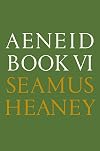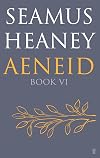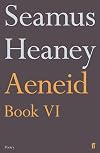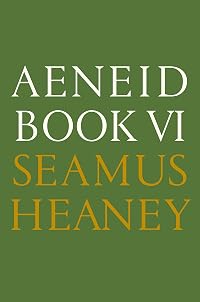
Aeneid: Book VI [in translation]
by Seamus Heaney (Translator)
On This Page
Description
"A melancholy masterpiece from one of the greatest poets of the century. In a momentous publication, Seamus Heaney's translation of Book VI of the Aeneid, Virgil's epic poem composed sometime between 29 and 19 BC, follows the hero, Aeneas, on his descent into the underworld. In Stepping Stones, a book of interviews conducted by Dennis O'Driscoll, Heaney acknowledged the significance of the poem to his writing, noting that "there's one Virgilian journey that has indeed been a constant show more presence, and that is Aeneas's venture into the underworld. The motifs in Book VI have been in my head for years--the golden bough, Charon's barge, the quest to meet the shade of the father." In this new translation, Heaney employs the same deft handling of the original combined with the immediacy of language and sophisticated poetic voice as was on show in his translation of Beowulf, a reimagining which, in the words of James Wood, "created something imperishable and great that is stainless--stainless, because its force as poetry makes it untouchable by the claw of literalism: it lives singly, as an English language poem"-- show lessTags
Recommendations







Member Reviews
Heaney's version actually reflects the original (unlike his adaptations of Sophocles), but it is not Vergil. Part of that is the English language vs. Latin. Heaney has written good poetry and largely translates the Latin, but uses 1222 lines to Vergil's 901. Good poetry, but lacking the concision and elegance of Latin. I found myself constantly looking at the Latin on the facing page and finding it far superior.
In the brief introduction Heaney notes a fundamental problem that he and modern readers are likely to have. He finds the catalogue of Roman heroes at the end boring and imperialistic. Well, duh, it was an empire. But more than that, this was the central and perhaps most important part to a Roman reader. Noble Roman families show more paraded busts of distinguished ancestors at funerals. Roman literature is full of exempla from the past to illustrate virtutes Romanae. As a society we mostly don't value tradition; the Romans did.
If you like Heaney's poetry or can't read Latin, this remains a very good version. show less
In the brief introduction Heaney notes a fundamental problem that he and modern readers are likely to have. He finds the catalogue of Roman heroes at the end boring and imperialistic. Well, duh, it was an empire. But more than that, this was the central and perhaps most important part to a Roman reader. Noble Roman families show more paraded busts of distinguished ancestors at funerals. Roman literature is full of exempla from the past to illustrate virtutes Romanae. As a society we mostly don't value tradition; the Romans did.
If you like Heaney's poetry or can't read Latin, this remains a very good version. show less
Brilliant version of Book 6 of the "Aeneid": Aeneas's journey to the Underworld. Masterful; I can see a poet's hand here. Vivid. Heaney even makes the boring last section interesting where Anchises enumerates the Roman heroes-to-be to his son and speaks of Rome's "Manifest Destiny" to rule a large Empire.
Heartily recommended, even for those who may have read other translations.
Heartily recommended, even for those who may have read other translations.
https://nwhyte.livejournal.com/3066044.html
I think that Heaney does manage to get across the dark tone of the poem, and his verse also sounds better when read aloud.
I think that Heaney does manage to get across the dark tone of the poem, and his verse also sounds better when read aloud.
Ratings
Members
- Recently Added By
Author Information

Seamus Heaney was born in Mossbawn, Ireland on April 13, 1939. He received a degree in English from Queen's College in Belfast in 1961. After earning his teacher's certificate in English from St. Joseph's College in Belfast the following year, he took a position at the school as an English teacher. During his time as a teacher at St. Joseph's, he show more wrote and published work in the university magazine under the pen name Incertus. In 1966, he became an English literature lecturer at Queen's College in Belfast. His first volume of poems, Death of a Naturalist, went on to receive the E.C. Gregory Award, the Cholmondeley Award, the Somerset Maugham Award, and the Geoffrey Faber Memorial Prize. After the death of his parents, Heaney published the poetry volumes The Haw Lantern, which includes a sonnet sequence memorializing his mother, and Seeing Things, a collection containing numerous poems for his father. His other works included Field Work, Opened Ground: Poems 1966-1996, and Human Chain. Heaney was a professor at Harvard from 1981 to 1997 and its Poet in Residence from 1988 to 2006. From 1989 to 1994 he was also the Professor of Poetry at Oxford and in 1996 was made a Commandeur de l'Ordre des Arts et Lettres. Other awards that he received include the Geoffrey Faber Memorial Prize (1968), the E. M. Forster Award (1975), the PEN Translation Prize (1985), the Golden Wreath of Poetry (2001), T. S. Eliot Prize (2006) and two Whitbread Prizes (1996 and 1999). In 2012, he was awarded the Lifetime Recognition Award from the Griffin Trust For Excellence In Poetry. His literary papers are held by the National Library of Ireland. He died following a short illness on August 30, 2013 at the age of 74. Heaney's last words were in a text to his wife Marie, "Noli timere", which means "Do not be afraid." (Bowker Author Biography) Seamus Heaney lives in Dublin and teaches at Harvard University. He was awarded the Nobel Prize in literature in 1995. (Publisher Provided) Seamus Heaney was born in 1939 in Northern Ireland. He was awarded the Nobel Prize in Literature in 1995. A resident of Dublin, he has taught poetry at Oxford University and Harvard University. (Publisher Provided) show less
Awards and Honors
Distinctions
The Guardian Book of the Day (2016-03-08)
Notable Lists
Work Relationships
Common Knowledge
- Canonical title
- Aeneid: Book VI [in translation]
- Original publication date
- ca. 29 - 19 BC; 2016
Classifications
- Genres
- Poetry, Fiction and Literature
- DDC/MDS
- 873.01 — Literature & rhetoric Latin & Italic literatures Latin epic poetry and fiction to ca. 499, Roman period
- LCC
- PA6807 .A5 .H436 — Language and Literature Greek language and literature. Latin language and literature Roman literature Individual authors Vergilius Maro, Publius (Virgil)
- BISAC
Statistics
- Members
- 264
- Popularity
- 122,622
- Reviews
- 4
- Rating
- (4.33)
- Languages
- English
- Media
- Paper, Audiobook, Ebook
- ISBNs
- 8
- ASINs
- 4