On This Page
Description
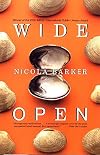
A novel about stripping off layers of prejudice and lies, about the possibility of redemption, and laying bare the truth. It is also about coming to terms with the past, and about the fantasies people construct in order to protect their fragile inner selves.Tags
Recommendations
















Member Reviews
Weird Shit Indeed.
What is it about the Thames Estuary that produces both legions of nutters and scribes of authors attempting to somehow convey this liminal happenstance of humanity to normal people?
Nicola Barker is obviously one gell who is both unafraid and equipped to wade into this quagmire. Caught between tides of both water and synchronicity she deftly weaves a path over this unstable firmament.
So let's start with Ronny 1 who meets Ronny 2 and Ronny 1 makes a joke about "The Two Ronnies" which goes over the head of Ronny 2 so Ronnie 2 says to Ronny 1 lets call you Jim from now. So Ronny 1 has a brother called Nathan who goes looking for Ronny 1 and when he asks for Ronny 1 he gets directed to Ronny 2 who is known as Ronny but show more instead sees Jim who is in fact Ronny 1. But Nathan never talks to Ronny 1 anyway. You with me so far?
Meanwhile, everyone in the story so far is treading on egg shells, all the bloody time.
If you are looking for something for normal people like Gone Girl or Woman on a Train you will realise very early on that you are well and truly on the wrong road completely.
If, however, you start to enjoy this story you will no doubt realise that you are on the wrong road in life, a realisation that brings no comfort except for the fact that this is the first book in a trilogy.
So where does all this go? It ventures into other marginal lives along the way but never strays far from the main line of the narrative. I loved it.
One of the characters is a photographer/pornographer who made his money producing porno photos with the juicy bits removed and replaced with a series of dots to produce "join the dots" porno images. His revelation is that many things are defined/described/understood, not by what's there, but by what's not there.
Which brings us back to the Thames Estuary, which is the main character in the story, has very little presence but is, at the same time, all pervasive.
Would you like this? Depends on your latitude for difference and other. Actually, just looking at you, you probably wouldn't. You should just go back to your Girl On A Train life and just stay the fuck away from the Thames Estuary. show less
What is it about the Thames Estuary that produces both legions of nutters and scribes of authors attempting to somehow convey this liminal happenstance of humanity to normal people?
Nicola Barker is obviously one gell who is both unafraid and equipped to wade into this quagmire. Caught between tides of both water and synchronicity she deftly weaves a path over this unstable firmament.
So let's start with Ronny 1 who meets Ronny 2 and Ronny 1 makes a joke about "The Two Ronnies" which goes over the head of Ronny 2 so Ronnie 2 says to Ronny 1 lets call you Jim from now. So Ronny 1 has a brother called Nathan who goes looking for Ronny 1 and when he asks for Ronny 1 he gets directed to Ronny 2 who is known as Ronny but show more instead sees Jim who is in fact Ronny 1. But Nathan never talks to Ronny 1 anyway. You with me so far?
Meanwhile, everyone in the story so far is treading on egg shells, all the bloody time.
If you are looking for something for normal people like Gone Girl or Woman on a Train you will realise very early on that you are well and truly on the wrong road completely.
If, however, you start to enjoy this story you will no doubt realise that you are on the wrong road in life, a realisation that brings no comfort except for the fact that this is the first book in a trilogy.
So where does all this go? It ventures into other marginal lives along the way but never strays far from the main line of the narrative. I loved it.
One of the characters is a photographer/pornographer who made his money producing porno photos with the juicy bits removed and replaced with a series of dots to produce "join the dots" porno images. His revelation is that many things are defined/described/understood, not by what's there, but by what's not there.
Which brings us back to the Thames Estuary, which is the main character in the story, has very little presence but is, at the same time, all pervasive.
Would you like this? Depends on your latitude for difference and other. Actually, just looking at you, you probably wouldn't. You should just go back to your Girl On A Train life and just stay the fuck away from the Thames Estuary. show less
This book cannot be trusted. It lures you in by being ostensibly a British comedy filled with endearingly eccentric characters and funny dialogue and then, once you are completely drawn in, begins to peel back the layers and to bit by bit reveal the darkness that lies at the core of all that apparent quirkiness. But then, the novel keeps you on your toes right from the start, beginning with the way it presents a parade of apparently unrelated characters, sending the reader to hunt for clues on how they might be connected, to scower the novel for hints, which are collected and then arranged in more or less meaningful patterns – much like one of the novel’s character’s does with shells he finds on the beach.
It is not just the show more relation of the characters to each other that is a puzzle but also their relation to themselves – I’m not sure how to even refer to two of the novel’s main protagonists, as they exchange names at one point and the novel and everyone else calls them by their new name from their on, as if they had indeed become the other person. But it is not as easy as that, because they both have a past that sticks with them even after the name change. And it does not help that those histories also have to be pieced together by the reader from scattered scraps and throwaway mentions - and remain so to some part even after the end of the novel, not every thread is neatly tied up by the finale. Or that is how it seemed to me, maybe I just need to dig deeper, search more thoroughly, try out different patterns…
Eventually, everything converges in the somewhat unlikely location of the Isle of Sheppey in Kent; everyone is brought together for a grand finale, and things get quite dramatic, there are even gunshots fired. At the same time, nothing is really resolved, but each of the characters have had their inner selves revealed to each other and to the reader, have been laid wide open. The catalyst for that, Jim/Ronny (not to be confused with Ronny /Jim), however, even though we find out some things about him and even though he is in some respects the most vulnerable of all the novel’s protagonists, remains largely a mystery even by the end.
Wide Open is a novel that is both very funny and deeply disturbing. Interestingly though – and this, I think, is what makes this novel special – it does not follow the strategy of making us laugh at something essentially horrifying in order to enhance the horror (like, to just take the first example that enters my mind, Catch 22 does). The funny and the frightening connect in a quite different way in Wide Open, or rather they connect by not really connecting at all – the quirkiness of the novel’s characters, their lovable oddities conceal the darkness underneath, a world of hurts received and given, of mental scars and unresolved trauma, of a potential for cruelty and violence that can burst forth every moment given the right provocation. But even as it lays bare its characters’ dark core, the novel still remains very funny, containing lots of genuinely comic dialogue and not shying back from outright slapstick humour either – in a way, the horror here is as deadpan as the humour.
All in all, it makes for a very disconcerting, at times even positively uncomfortable reading experience, also a very unique one. I can’t really think of anyone to compare her to - maybe Robert Walser, but in a very remote way and mostly due to his works inducing a similarly unsettling sensation in me. This was the first book by Nicola Barker I have read, and while I wouldn’t say that I exactly liked it, I found it very intriguing and will likely be reading more of her work. show less
It is not just the show more relation of the characters to each other that is a puzzle but also their relation to themselves – I’m not sure how to even refer to two of the novel’s main protagonists, as they exchange names at one point and the novel and everyone else calls them by their new name from their on, as if they had indeed become the other person. But it is not as easy as that, because they both have a past that sticks with them even after the name change. And it does not help that those histories also have to be pieced together by the reader from scattered scraps and throwaway mentions - and remain so to some part even after the end of the novel, not every thread is neatly tied up by the finale. Or that is how it seemed to me, maybe I just need to dig deeper, search more thoroughly, try out different patterns…
Eventually, everything converges in the somewhat unlikely location of the Isle of Sheppey in Kent; everyone is brought together for a grand finale, and things get quite dramatic, there are even gunshots fired. At the same time, nothing is really resolved, but each of the characters have had their inner selves revealed to each other and to the reader, have been laid wide open. The catalyst for that, Jim/Ronny (not to be confused with Ronny /Jim), however, even though we find out some things about him and even though he is in some respects the most vulnerable of all the novel’s protagonists, remains largely a mystery even by the end.
Wide Open is a novel that is both very funny and deeply disturbing. Interestingly though – and this, I think, is what makes this novel special – it does not follow the strategy of making us laugh at something essentially horrifying in order to enhance the horror (like, to just take the first example that enters my mind, Catch 22 does). The funny and the frightening connect in a quite different way in Wide Open, or rather they connect by not really connecting at all – the quirkiness of the novel’s characters, their lovable oddities conceal the darkness underneath, a world of hurts received and given, of mental scars and unresolved trauma, of a potential for cruelty and violence that can burst forth every moment given the right provocation. But even as it lays bare its characters’ dark core, the novel still remains very funny, containing lots of genuinely comic dialogue and not shying back from outright slapstick humour either – in a way, the horror here is as deadpan as the humour.
All in all, it makes for a very disconcerting, at times even positively uncomfortable reading experience, also a very unique one. I can’t really think of anyone to compare her to - maybe Robert Walser, but in a very remote way and mostly due to his works inducing a similarly unsettling sensation in me. This was the first book by Nicola Barker I have read, and while I wouldn’t say that I exactly liked it, I found it very intriguing and will likely be reading more of her work. show less
Extraña novela. Una historia desconcertante, y por momentos inquietante, sobre un grupo de personas, todos ellos parias de la sociedad, personajes excéntricos y atenazados por sus miedos personales, que andan a la búsqueda de una vía de escape: esconderse o quedarse totalmente al descubierto.
La escritora británica Nicola Barker, a la que se ha comparado con Martin Amis o Will Self, construye su novela sobre la base de los diálogos, llenos de fuerza, desvelándonos la información de la trama en pequeñas dosis. Entramos en esta extraña historia a través de sus personajes, con unos estados mentales ciertamente inestables, y de sus descripciones particulares del mundo que les rodea.
El inicio es potente, con el encuentro de un show more conductor con un peculiar personaje que saluda a los coches desde un puente. Ronny, el conductor, queda fascinado por esta persona, que también se hace llamar Ronny. Posteriormente, conoceremos a otros personajes, que se convertirán en vecinos accidentales: Lily, una joven impredecible e iracunda; Sara, su madre, que se ha de hacer cargo de la granja de verracos; Nathan, el hermano de Ronny, que vive atormentado por lo sucedido en su infancia; o Luke, un pornógrafo. A lo largo de la narración, iremos conociendo cada vez más datos sobre todos ellos, sobre sus temores reprimidos y sus fragilidades.
Pero la novela no me ha gustado, pese a estos buenos cimientos. Todo parece demasiado accidental, premeditado por la propia Barker y su juego de nombres y equívocos, quedando a veces demasiado artificial. Tampoco he logrado empatizar con los personajes, por lo raros que son y por la estructura deslavazada de la autora. Esperaba mucho más. show less
La escritora británica Nicola Barker, a la que se ha comparado con Martin Amis o Will Self, construye su novela sobre la base de los diálogos, llenos de fuerza, desvelándonos la información de la trama en pequeñas dosis. Entramos en esta extraña historia a través de sus personajes, con unos estados mentales ciertamente inestables, y de sus descripciones particulares del mundo que les rodea.
El inicio es potente, con el encuentro de un show more conductor con un peculiar personaje que saluda a los coches desde un puente. Ronny, el conductor, queda fascinado por esta persona, que también se hace llamar Ronny. Posteriormente, conoceremos a otros personajes, que se convertirán en vecinos accidentales: Lily, una joven impredecible e iracunda; Sara, su madre, que se ha de hacer cargo de la granja de verracos; Nathan, el hermano de Ronny, que vive atormentado por lo sucedido en su infancia; o Luke, un pornógrafo. A lo largo de la narración, iremos conociendo cada vez más datos sobre todos ellos, sobre sus temores reprimidos y sus fragilidades.
Pero la novela no me ha gustado, pese a estos buenos cimientos. Todo parece demasiado accidental, premeditado por la propia Barker y su juego de nombres y equívocos, quedando a veces demasiado artificial. Tampoco he logrado empatizar con los personajes, por lo raros que son y por la estructura deslavazada de la autora. Esperaba mucho más. show less
Nicola Barker's Wide Open is a splendid, even spectacular novel - expertly crafted, refreshingly original, and filled with an oddball cast of characters, none of which could be considered "normal".
Wide Open, which takes place on the Isle of Sheppey, begins with a meeting of two young men: Ronny, who has stopped on his way to work to investigate the mysterious man on the overpass who is out there every day waving at particular cars moving on the highway below. Here's a bit of it that ties in with the book's title (Ronny has had a short conversation around a dead wasp with Jim on the overpass):
The man was silent for awhile. Ronny studied him. He seemed very young but his face was not a very young face. It was lined, vertically, and not in show more the places normal faces creased and wrinkled. It as as thought he'd only just woken up from a hard sleep but his face hadn't shaken it, hadn't hurled off its hard sleep and its blankets yet to get on with the business of living. He seemed ludicrously pliant and tractable, but singular. He seemed. . . Ronny shuddered at the thought. . . he seemed wide, wide open. But you couldn't survive that way. Not in this world. Not for long, Ronny knew it.
In fact he prided himself on being shut right up. Like an oyster. Like a tomb. Like a beach-hut in the winter; all bolted, all boarded. Like the bright lips of an old wound. Resolutely sealed.
Ronny's and the man's odd conversation hooked me in just a few pages. And from here on we are introduced to a circus-like set of characters: Nathan, who works in the Tube's lost property department, and the aforementioned Ronny, bald and usually suited up like an astronaut because he works various jobs involving noxious chemicals - they are brothers who have not seen each other in ten years. There's Sarah, a farmer of wild boars, and her rebellious, college-aged daughter, who is prone to killing chickens on the sly; Luke, a professional photographers and pornographer, squatting off-season in a summer prefab ; Connie, an optometrist on a mission; and, of course, the weirdly strange Jim, who seems to be homeless, unnaturally thin, and oddly wise. There's no point in trying to give a synopsis, except to say that each of them connects to another to form kind of loose web which slowly over the course of the book tightens in like a spiral. As the reader, I felt kind of like I slowly got caught in a literary Chinese finger puzzle that I could not back out of—and did not care to.
Barker's craftsmanship is impressive. Oh, it's not just the prose, or the way she affectionately makes these people so real, but after I had finished the book, looking back, I realized that nothing in the book is wasted, everything is made to service the story; and although she is telling a story that is often funny, it's an moving exploration about how individuals cope with trauma and abuse.
This novel won the Impac Dublin Award in 2000 and, when I began the book, I wondered why; but as I continued, I could see that the connection lay not just in the power of the story, but in its originality and craftsmanship much like Muller's The Land of Green Plums or Rawi Hage's DeNiro's Game, also winners of the award. A splendid book for those who appreciate something a little quirky, a bit different. show less
Wide Open, which takes place on the Isle of Sheppey, begins with a meeting of two young men: Ronny, who has stopped on his way to work to investigate the mysterious man on the overpass who is out there every day waving at particular cars moving on the highway below. Here's a bit of it that ties in with the book's title (Ronny has had a short conversation around a dead wasp with Jim on the overpass):
The man was silent for awhile. Ronny studied him. He seemed very young but his face was not a very young face. It was lined, vertically, and not in show more the places normal faces creased and wrinkled. It as as thought he'd only just woken up from a hard sleep but his face hadn't shaken it, hadn't hurled off its hard sleep and its blankets yet to get on with the business of living. He seemed ludicrously pliant and tractable, but singular. He seemed. . . Ronny shuddered at the thought. . . he seemed wide, wide open. But you couldn't survive that way. Not in this world. Not for long, Ronny knew it.
In fact he prided himself on being shut right up. Like an oyster. Like a tomb. Like a beach-hut in the winter; all bolted, all boarded. Like the bright lips of an old wound. Resolutely sealed.
Ronny's and the man's odd conversation hooked me in just a few pages. And from here on we are introduced to a circus-like set of characters: Nathan, who works in the Tube's lost property department, and the aforementioned Ronny, bald and usually suited up like an astronaut because he works various jobs involving noxious chemicals - they are brothers who have not seen each other in ten years. There's Sarah, a farmer of wild boars, and her rebellious, college-aged daughter, who is prone to killing chickens on the sly; Luke, a professional photographers and pornographer, squatting off-season in a summer prefab ; Connie, an optometrist on a mission; and, of course, the weirdly strange Jim, who seems to be homeless, unnaturally thin, and oddly wise. There's no point in trying to give a synopsis, except to say that each of them connects to another to form kind of loose web which slowly over the course of the book tightens in like a spiral. As the reader, I felt kind of like I slowly got caught in a literary Chinese finger puzzle that I could not back out of—and did not care to.
Barker's craftsmanship is impressive. Oh, it's not just the prose, or the way she affectionately makes these people so real, but after I had finished the book, looking back, I realized that nothing in the book is wasted, everything is made to service the story; and although she is telling a story that is often funny, it's an moving exploration about how individuals cope with trauma and abuse.
This novel won the Impac Dublin Award in 2000 and, when I began the book, I wondered why; but as I continued, I could see that the connection lay not just in the power of the story, but in its originality and craftsmanship much like Muller's The Land of Green Plums or Rawi Hage's DeNiro's Game, also winners of the award. A splendid book for those who appreciate something a little quirky, a bit different. show less
This was an oddly compelling literary experience, repellent yet fascinating, like rifling through the neighbours’ dustbin just for the hell of it. Electric, daring prose from start to finish, and a highly original novel.
I doubt whether it did much for tourism on the Isle of Sheppey, rather giving the impression that everyone there is sad, mad, bad or quite possibly all three. The most sane character of the lot appears to be a pornographer. It wasn’t long before I desperately wanted to slap the character Ronny (repeatedly and quite hard as it happens) but had to wait and hope that one of the other characters would do it for me.
In the first half of the novel, an intricate framework of links between the various characters is built up, show more and every time the narrative threatens to cross the line that separates tantalising from baffling, facts are dropped in to keep things on the level. Unfortunately in the last quarter of the book I started to lose the thread, and by the end I found I couldn’t pinpoint what it was that had brought the various characters to their ultimate salvation. I suspect I would need multiple re-readings to really understand it properly. show less
I doubt whether it did much for tourism on the Isle of Sheppey, rather giving the impression that everyone there is sad, mad, bad or quite possibly all three. The most sane character of the lot appears to be a pornographer. It wasn’t long before I desperately wanted to slap the character Ronny (repeatedly and quite hard as it happens) but had to wait and hope that one of the other characters would do it for me.
In the first half of the novel, an intricate framework of links between the various characters is built up, show more and every time the narrative threatens to cross the line that separates tantalising from baffling, facts are dropped in to keep things on the level. Unfortunately in the last quarter of the book I started to lose the thread, and by the end I found I couldn’t pinpoint what it was that had brought the various characters to their ultimate salvation. I suspect I would need multiple re-readings to really understand it properly. show less
Here’s what you need to know about Nicola Barker. She’ll trick you. She’ll lure you into believing that she writes quirky characters in something resembling reality – when she’s really a sly surrealist with realist manners, utterly uninterested in wrapping things up and providing any kinds of answers. I read and enjoyed Darkmans a few years ago, but for the first several hundred pages I thought I was reading a completely different kind of book than it turned out to be. This time I came prepared. Or so I thought.
Wide open has an extremely complicated plot, with a bunch of characters intertwined with each other in a hundred different ways. To make matters worse, two of the main characters swap identity (and names) fairly early show more on, and stick to their new ones throughout. I won’t even try to go into what goes on here, but it revolves around – among other things - a bunch of letters sent from an expedition to Java in search of a toeless monkey, a toeless man waving on a motorway bridge, a pornographer with hurt feelings, a boar farm, a lost and found worker who is the son of a pedophile, a small chicken killing monster in a box, and a young girl whose blood refuses to clot.
I wish it was as exciting as it might seem. I was prepared for the openness implied in the title, but this book is slippery and overthought. I found my mind constantly wandering rather than wondering. I just wasn’t interested enough in the intricate pattern Barker weaves here. For me, this was one of those rare instances where I found myself thinking “Oh wait, Connie and Luke, what did they have to do with each other again?” but couldn’t be bothered to back and check. I think this book needs way more concentration than I was prepared to give it. show less
Wide open has an extremely complicated plot, with a bunch of characters intertwined with each other in a hundred different ways. To make matters worse, two of the main characters swap identity (and names) fairly early show more on, and stick to their new ones throughout. I won’t even try to go into what goes on here, but it revolves around – among other things - a bunch of letters sent from an expedition to Java in search of a toeless monkey, a toeless man waving on a motorway bridge, a pornographer with hurt feelings, a boar farm, a lost and found worker who is the son of a pedophile, a small chicken killing monster in a box, and a young girl whose blood refuses to clot.
I wish it was as exciting as it might seem. I was prepared for the openness implied in the title, but this book is slippery and overthought. I found my mind constantly wandering rather than wondering. I just wasn’t interested enough in the intricate pattern Barker weaves here. For me, this was one of those rare instances where I found myself thinking “Oh wait, Connie and Luke, what did they have to do with each other again?” but couldn’t be bothered to back and check. I think this book needs way more concentration than I was prepared to give it. show less
I saw Darkmans recommended and then found out oh hell it's #3 and scrounged up the first two. I don't know anything much about the author or her books. I approached this one gingerly and as issues of severely disturbed mental health and then childhood abuse emerged I got a bit more tentative about it. But it grew on me and did not cause me to fling it away in disgust. I liked the ending and will try the second book. The language is clear and well thought out. I cannot relax with these characters but I do want to hear what happens next.
Members
- Recently Added By
Lists

International IMPAC Dublin Literary Award
179 works; 6 members
Author Information

23+ Works 2,967 Members
Nicola Barker is a Senior Lecturer at Kent Law School, University of Kent, UK.
Some Editions
Awards and Honors
Awards
Notable Lists
Series

Common Knowledge
- Original publication date
- 1998
- Important places
- Isle Of Sheppey
- Epigraph
- I dreamed I saw you in a dead place by the water. A ravaged place. All flat and empty and wide open.
- First words
- Each day Ronny saw the same man waving.
- Last words
- (Click to show. Warning: May contain spoilers.)There is nothing beyond.
Only me.
Classifications
Statistics
- Members
- 394
- Popularity
- 79,363
- Reviews
- 14
- Rating
- (3.38)
- Languages
- 6 — Czech, Dutch, English, Finnish, French, German
- Media
- Paper, Ebook
- ISBNs
- 13
- ASINs
- 5