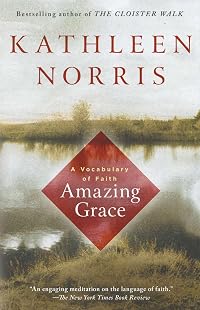
Amazing Grace: A Vocabulary of Faith
by Kathleen Norris
On This Page
Description
The author blends history, memoir, and theology with a strong grasp of language in an investigation into the key words of Christian belief, such as "judgment," "prayer," "faith," and "Christ."Tags
Recommendations

Member Reviews
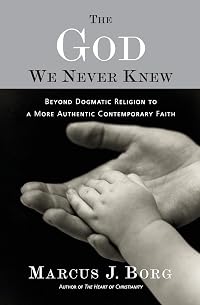
Another GoodReads member describes this book's appeal (better than I could): "This makes the shortlist of books I would hand to skeptics to show them there might be something to this Christianity nonsense after all. Like Speaking Christian by Marcus Borg, it aims to inject new life into theological terms that have become mere jargon; “it is my accommodation of and reconciliation with the vocabulary of Christian faith that has been the measure of my conversion,” Norris writes.
She spent 20 years away from the faith but gradually made her way back, via the simple Presbyterianism of her Dakota relatives but also through becoming an oblate at a Benedictine monastery – two completely different expressions of the same faith. At times show more liturgy has only been like going through the motions for her, but sometimes dutiful action cuts through her doubts. I especially appreciated how she gives personal weight to the term “salvation,” attributing to Christianity the ability to save her marriage after her husband’s severe depression threatened to crush it.
“My book might be seen as a search for lower consciousness, an attempt to remove the patina of abstraction or glassy-eyed piety from religious words, by telling stories about them, by grounding them in the world we live in as mortal and often comically fallible human beings.” And that is exactly what she does: in few-page essays, she gives each word or phrase a rich backstory through anecdote, scripture and lived philosophy. For instance:
Incarnation: “it waits in puzzlement, it hesitates. Coming from Galilee, as it were, from a place of little hope, it reveals the ordinary circumstances of my life to be full of mystery, and gospel, which means ‘good news.’”
Prayer: “is not asking for what you think you want but asking to be changed in ways you can’t imagine. To be made more grateful, more able to see the good in what you have been given instead of always grieving for what might have been. ... I sometimes think of prayer as a certain quality of attention that comes upon me when I’m busy doing something else. When a person—friend or foe—suddenly comes to mind, I take it as a sign to pray for them.”
Church: “When formal worship seems less than worshipful—and it often does—if I am bored by the sheer weight of verbiage in Presbyterian worship—and I often am—I have only to look around at the other people in the pews to remind myself that we are engaged in something important, something that transcends our feeble attempts at worship, let alone my crankiness.”
The book is on the long side, so take it slowly, a few essays at a time. There are too many excellent quotes to copy out here, as my Post-It-strewn paperback attests, so I will simply give this my highest recommendation and say that I mean to read every other book Norris has written (including poetry). She’s the sort of down-to-earth guru I could follow." Rebecca, GoodReads member, @bookishbeck
It took me 6 months, sometimes just snatching a 15 minute devotional read along with my Bible study/prayer time..but I too have my hardback copy strewn with PostIt tags - truly to be savored.
Most especially loved how Norris embraces the mystery of God and His plan through Christ - refreshing to read from one who is so talented with words, so dedicated to understanding, & so humble to be honest enough about her doubts, & her own stumblings. I'm not sure I've met anyone who's pursued the Benedictine (Catholic) cloister practices AND serves as a teacher and longtime member of her prairie town's Presbyterian church? show less
She spent 20 years away from the faith but gradually made her way back, via the simple Presbyterianism of her Dakota relatives but also through becoming an oblate at a Benedictine monastery – two completely different expressions of the same faith. At times show more liturgy has only been like going through the motions for her, but sometimes dutiful action cuts through her doubts. I especially appreciated how she gives personal weight to the term “salvation,” attributing to Christianity the ability to save her marriage after her husband’s severe depression threatened to crush it.
“My book might be seen as a search for lower consciousness, an attempt to remove the patina of abstraction or glassy-eyed piety from religious words, by telling stories about them, by grounding them in the world we live in as mortal and often comically fallible human beings.” And that is exactly what she does: in few-page essays, she gives each word or phrase a rich backstory through anecdote, scripture and lived philosophy. For instance:
Incarnation: “it waits in puzzlement, it hesitates. Coming from Galilee, as it were, from a place of little hope, it reveals the ordinary circumstances of my life to be full of mystery, and gospel, which means ‘good news.’”
Prayer: “is not asking for what you think you want but asking to be changed in ways you can’t imagine. To be made more grateful, more able to see the good in what you have been given instead of always grieving for what might have been. ... I sometimes think of prayer as a certain quality of attention that comes upon me when I’m busy doing something else. When a person—friend or foe—suddenly comes to mind, I take it as a sign to pray for them.”
Church: “When formal worship seems less than worshipful—and it often does—if I am bored by the sheer weight of verbiage in Presbyterian worship—and I often am—I have only to look around at the other people in the pews to remind myself that we are engaged in something important, something that transcends our feeble attempts at worship, let alone my crankiness.”
The book is on the long side, so take it slowly, a few essays at a time. There are too many excellent quotes to copy out here, as my Post-It-strewn paperback attests, so I will simply give this my highest recommendation and say that I mean to read every other book Norris has written (including poetry). She’s the sort of down-to-earth guru I could follow." Rebecca, GoodReads member, @bookishbeck
It took me 6 months, sometimes just snatching a 15 minute devotional read along with my Bible study/prayer time..but I too have my hardback copy strewn with PostIt tags - truly to be savored.
Most especially loved how Norris embraces the mystery of God and His plan through Christ - refreshing to read from one who is so talented with words, so dedicated to understanding, & so humble to be honest enough about her doubts, & her own stumblings. I'm not sure I've met anyone who's pursued the Benedictine (Catholic) cloister practices AND serves as a teacher and longtime member of her prairie town's Presbyterian church? show less
This book is going to be one on my "read again and again" shelf.. It is the first book in years (if ever) that I was compelled to mark up. It is delightfully written. The author was raised in mainstream American protestant religion, then left organized church membership during her college years. As her career as a poet progressed, and her husband endured some incidents of deep depression, she began to visit Benedictine monasteries close to her home in North Dakota, and discovered the poetry of Judaic/christian scripture. Eventually, she re-joined the Presbyterian church of her grandmother, and was called to preach.
Her book is a series of short, beautifully written essays (none more than 5 pages long) about the 'vocabulary of faith' as show more she calls it. There are thoughts on there are excerpts on such words as Heresy, Reprobate, Idolatry, Anger, Herod, Hospitality, Orthodoxy, Ecstacy, Trinity, and a host of others.
It is difficult for me to explain how deeply this book affected me, and how personally inspirational I found it. She certainly is well-studied, but it is the poetic insights that she imparts to traditional scriptural and 'doctrinal' terminology that is so gripping. The fact that she manages to weave her personal story into this is almost a cherry on top a huge sundae.
It may not be the book for everyone, but if you are looking for a positive, beautifully written, easy to read book, you will not go wrong with this one. show less
Her book is a series of short, beautifully written essays (none more than 5 pages long) about the 'vocabulary of faith' as show more she calls it. There are thoughts on there are excerpts on such words as Heresy, Reprobate, Idolatry, Anger, Herod, Hospitality, Orthodoxy, Ecstacy, Trinity, and a host of others.
It is difficult for me to explain how deeply this book affected me, and how personally inspirational I found it. She certainly is well-studied, but it is the poetic insights that she imparts to traditional scriptural and 'doctrinal' terminology that is so gripping. The fact that she manages to weave her personal story into this is almost a cherry on top a huge sundae.
It may not be the book for everyone, but if you are looking for a positive, beautifully written, easy to read book, you will not go wrong with this one. show less
Norris shares lots of very helpful insight into how we practice religion, its meaning, and what it isn't. Each essay is different in tone, length, and purpose, so if you don't like one, you might be floored by the glory in the next. I didn't know what to expect, the title makes it seem like kind of a glossary, and that's not what it is. I read one a day before my Bible reading, and I ended up underlining and bookmarking more than in a typical such book.
It's from the late 1990s, and some of the language is dated. There were some bits that weren't comfortable, but it all made me pray more and see more and recognize more of God's, well, amazing grace.
It's from the late 1990s, and some of the language is dated. There were some bits that weren't comfortable, but it all made me pray more and see more and recognize more of God's, well, amazing grace.
A NEW YORK TIMES NOTABLE BOOK OF THE YEARFrom the New York Times -bestselling author of The Cloister Walk , a book about Christianity, spirituality, and rediscovered faith.Struggling with her return to the Christian church after many years away, Kathleen Norris found it was the language of Christianity that most distanced her from faith. Words like "judgment," "faith," "dogma," "salvation," "sinner"—even "Christ"—formed what she called her "scary vocabulary," words that had become so codified or abstract that their meanings were all but impenetrable. She found she had to wrestle with them and make them her own before they could confer their blessings and their grace. Blending history, theology, storytelling, etymology, and memoir, show more Norris uses these words as a starting point for reflection, and offers a moving account of her own gradual conversion. She evokes a rich spirituality rooted firmly in the chaos of everyday life—and offers believers and doubters alike an illuminating perspective on how we can embrace ancient traditions and find faith in the contemporary world. show less
A wonderful slow muse on religious language as it relates to experience. My favorite ones: Chosen, Pentecostal, Asceticism and Infallibility. Oh, and the one on Prayer was so good I went to the trouble of xeroxing it for a friend. It was bed time reading for over a year, one paragraph at a time. Perfect for tilting the close of the day to peace.
There were times this book annoyed me greatly and I came close to quitting (times when random political comments would pop up with little to do with the subject at hand, and mar the points Norris was making).
Another reviewer said it best, Tjbrowne Browne's review of Amazing Grace: A Vocabulary of Faith:
"Norris' is a word artist, sculpting beautiful imagery from the medium of language. Unfortunately, her sarcastic and cynical political opinions kept awkwardly creeping into a book professing to be about faith."
I did like the moments this did not happen and the latter part of the book was quite beautiful, hence three * rather than two.
Another reviewer said it best, Tjbrowne Browne's review of Amazing Grace: A Vocabulary of Faith:
"Norris' is a word artist, sculpting beautiful imagery from the medium of language. Unfortunately, her sarcastic and cynical political opinions kept awkwardly creeping into a book professing to be about faith."
I did like the moments this did not happen and the latter part of the book was quite beautiful, hence three * rather than two.
Kathleen Norris writes poetically about Christian spirituality. And she has a gift of connecting with her readers both of faith and of doubt. I constantly find that she is putting words to my feelings, and this book is no different.
Amazing Grace is a collection of short stories arranged by topic, and which act as small meditatiions on a theme - grace, incarnation.
Amazing Grace is a collection of short stories arranged by topic, and which act as small meditatiions on a theme - grace, incarnation.
Members
- Recently Added By
Lists

Favourite Books
1,819 works; 316 members
Author Information

22+ Works 9,734 Members
Kathleen Norris is the award-winning author of "Amazing Grace: A Vocabulary of Faith"; "The Cloister Walk"; & the forthcoming "The Virgin of Bennington". She lives in South Dakota & Hawaii. (Bowker Author Biography)
Awards and Honors
Awards
Distinctions
Common Knowledge
- Original publication date
- 1998
- People/Characters
- Kathleen Norris
- Epigraph
- O to grace how great a debtor...Robert Robertson-"Come, Thou Fount of Every Blessing"
- Dedication
- For my husband David
- First words
- I was about sixteen years of age when I discovered the word "eschatology."
- Last words
- (Click to show. Warning: May contain spoilers.)"Light is sown for the righteous, and gladness for the upright of heart"(v.11,KJV). Light a seed, and the city Jerusalem, grounded in peace.
Classifications
- Genres
- Religion & Spirituality, Nonfiction, Biography & Memoir, General Nonfiction
- DDC/MDS
- 230.03 — Religion Christianity Christianity Doctrinal Dogmatics - Theology Dictionaries And Encyclopedias
- LCC
- BV4501.2 .N63 — Philosophy, Psychology and Religion Practical Theology Practical Theology Practical religion. The Christian life
- BISAC
Statistics
- Members
- 2,042
- Popularity
- 10,211
- Reviews
- 19
- Rating
- (4.11)
- Languages
- English
- Media
- Paper, Audiobook, Ebook
- ISBNs
- 13
- ASINs
- 4