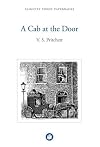
A Cab at the Door
by V. S. Pritchett
On This Page
Tags
Recommendations



























Member Reviews
Victor Sawdon Pritchett was born in 1900 and died in 1997. That period covers two world wars, landing on the moon, the birth control pill--in other words, a remarkable condensation of technological achievement encompassing the fledgling days of the industrial revolution, space and cyberspace. This autobiography focuses on his extraordinary childhood. Eventually he would become a highly respected English writer with “Sir” before his name but he didn’t shun his humble beginnings. In fact, he used them as fodder for his writing.
His father, Walter, was a strutting popinjay of a Yorkshireman who indulged his taste for fine clothes to the point of dandyism, pursuing his dreams relentlessly no matter how many times they flopped, and show more demanding to be above criticism by his family no matter how many times he let them down. The cab of the title had to be called to the door umpteen times to move this unfortunate (and ever growing) family because of his unpaid bills and mismanaged finances. But “father never gives up” so this little tyrant clung to both his dreams and his iron control over his family. His foray into Christian Science was very interesting, if faintly chilling.
V.S.'s mother, Beatrice, was a Cockney born and bred, full of imagination, humour, laughter, music and fun, yet given to tremendous anxiety and moments of despair. How could she not, tethered to Walter and ground down by him and their circumstances. She would be reduced to helpless laughter by the word “bloomers” but the planes attacking London had her spinning in mindless terror, clutching her children to her. She would tear down curtains and sew slapdash pants for her sons. She never could cook but she gamely tried. Yet her focus was on Walter, so that V.S. could never entirely count on her support for himself. He loved her but he could call her “shifty”.
Reading of his childhood, youth and adolescence was like finding a lost novel by Dickens. Despite trips up to Yorkshire at various times, the real heart of the story was in London with its curry coloured fogs, horses and cars comingling in the streets to provide noise and danger, schoolyards full of fighting, brawling boys and shrieking, slapping girls. His stint in the Bermondsey leather trade was remarkable with its insight into the factory trade but even more interesting for the characters who worked there.
At times it felt as though the story wasn’t being told by a writer who was polishing his verbs and setting his adjectives a’twinkle but by a man exhilarated himself by the memories rushing out of him, eager to get them out swiftly because there was another wave of them waiting to dash on to memory’s beach, his pen barely able to keep up.
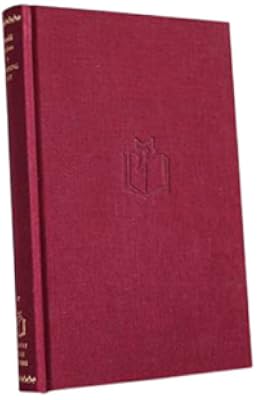
A lovely little book in a gem of a publication by Slightly Foxed (I do love built-in ribbon bookmarks). Recommended. show less
His father, Walter, was a strutting popinjay of a Yorkshireman who indulged his taste for fine clothes to the point of dandyism, pursuing his dreams relentlessly no matter how many times they flopped, and show more demanding to be above criticism by his family no matter how many times he let them down. The cab of the title had to be called to the door umpteen times to move this unfortunate (and ever growing) family because of his unpaid bills and mismanaged finances. But “father never gives up” so this little tyrant clung to both his dreams and his iron control over his family. His foray into Christian Science was very interesting, if faintly chilling.
V.S.'s mother, Beatrice, was a Cockney born and bred, full of imagination, humour, laughter, music and fun, yet given to tremendous anxiety and moments of despair. How could she not, tethered to Walter and ground down by him and their circumstances. She would be reduced to helpless laughter by the word “bloomers” but the planes attacking London had her spinning in mindless terror, clutching her children to her. She would tear down curtains and sew slapdash pants for her sons. She never could cook but she gamely tried. Yet her focus was on Walter, so that V.S. could never entirely count on her support for himself. He loved her but he could call her “shifty”.
Reading of his childhood, youth and adolescence was like finding a lost novel by Dickens. Despite trips up to Yorkshire at various times, the real heart of the story was in London with its curry coloured fogs, horses and cars comingling in the streets to provide noise and danger, schoolyards full of fighting, brawling boys and shrieking, slapping girls. His stint in the Bermondsey leather trade was remarkable with its insight into the factory trade but even more interesting for the characters who worked there.
At times it felt as though the story wasn’t being told by a writer who was polishing his verbs and setting his adjectives a’twinkle but by a man exhilarated himself by the memories rushing out of him, eager to get them out swiftly because there was another wave of them waiting to dash on to memory’s beach, his pen barely able to keep up.
A lovely little book in a gem of a publication by Slightly Foxed (I do love built-in ribbon bookmarks). Recommended. show less
A memoir from my Slightly Foxed collection, this is an older man's recollection of his childhood and youth, up until he left home -- in fact left England fairly permanently--in the 1920s. He deals with a difficult home life (authoritarian, Christian Scientist father and doubting but loyal, sometimes manic, mother), the usual schoolboy troubles, WWI, uncertain family economics and frequent moves (hence the title). Alternately engaging and not-so, for me. There's very little joy or laughter in it, no actual abuse or poverty to be risen above, no nostalgia for lost youth---and although it is implied that Victor was a happier man once he struck out on his own, that is mostly left to the reader's imagination. It just didn't do for me what show more memoirs often do. show less
Super account of childhood in early 20th century. The descriptions of people and places, especially London, are excellent and not to be skipped through.
The writer V. S. Pritchett ended his life crowned with honours, but he never forgot his working-class beginnings in London. In A Cab at the Door he vividly recreates his eccentric, down-at-heel childhood before and during the First World War, the atmosphere of which would permeate his later fiction. Victor’s mother, an irrepressible cockney from Kentish Town, had hoped for a daughter, whom she intended to call after the dying Queen, so when the baby turned out to be a boy, she had to make a hasty adjustment. Life for the Pritchetts was full of hasty adjustments. Pritchett’s father – who later converted to Christian Science – was a reckless, over-optimistic peacock of a man, always embarking on new business ventures which show more inevitably crashed, hence the ’cab at the door’, waiting to bear the family quietly away from yet another set of creditors.
Pritchett captures unforgettably the smells, sounds and voices of London in the first decades of the twentieth century, and the cast of Dickensian characters who made up his childhood world, from his austere Yorkshire grandparents, to the members of his father’s Christian Science church, and the employees and customers of the Bermondsey leather factor’s where he worked as a clerk until he made his getaway to Paris at the age of 20, determined to become a writer. It’s impossible to sum up a book of such vigour and originality in a few words. It simply has to be read. show less
Pritchett captures unforgettably the smells, sounds and voices of London in the first decades of the twentieth century, and the cast of Dickensian characters who made up his childhood world, from his austere Yorkshire grandparents, to the members of his father’s Christian Science church, and the employees and customers of the Bermondsey leather factor’s where he worked as a clerk until he made his getaway to Paris at the age of 20, determined to become a writer. It’s impossible to sum up a book of such vigour and originality in a few words. It simply has to be read. show less
Ratings
Members
- Recently Added By
Lists

Michael Dirda's Desert Island Books
62 works; 5 members

Michael Dirda's 100 Best Comic Novels
100 works; 1 member
Author Information

81+ Works 3,105 Members
Born in Ipswich and educated at Alleyn's School, Dulwich, and Dulwich College, novelist and critic V. S. Pritchett worked in the leather trade and later as a commercial traveler and shop assistant. After World War II, he was literary editor of the New Statesman and Nation and has frequently contributed to American periodicals and the N.Y. Times show more Book Review. He is a distinguished short story writer who has often appeared in the New Yorker. Pritchett has also collaborated with the photographer Evelyn Hofer on three charming and excellent portraits of London, New York, and Dublin. Pritchett, who has been lauded for his fine literary criticism, has also written about many other writers. He received numerous awards including the 1969 Heinemann Award, the 1974 PEN Award, the 1990 W. H. Smith Literary Award, and the 1993 Golden Pen Award. He died from a stroke on March 20, 1997. (Bowker Author Biography) show less
Awards and Honors
Distinctions
Series
Belongs to Publisher Series
Work Relationships
Is contained in
Common Knowledge
- Canonical title
- A Cab at the Door
- Original publication date
- 1968
- First words
- In our family, as far as we are concerned, we were born and what happened before that is a myth.
Classifications
Statistics
- Members
- 162
- Popularity
- 202,627
- Reviews
- 4
- Rating
- (3.65)
- Languages
- English
- Media
- Paper
- ISBNs
- 7
- ASINs
- 9