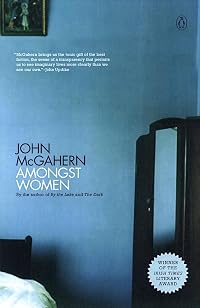
Amongst Women
by John McGahern
On This Page
Description
Moran is an old Republican whose life is transformed forever by his days of glory as a guerrilla leader in the War of Independence. Now, in old age, living out in the country, Moran is still fighting - in a struggle to come to terms with the past.Tags
Recommendations

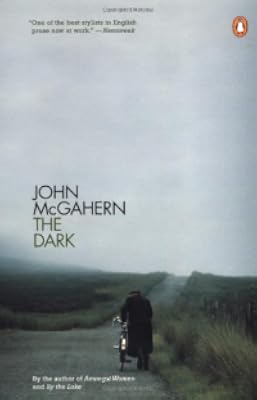
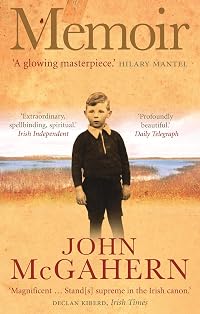




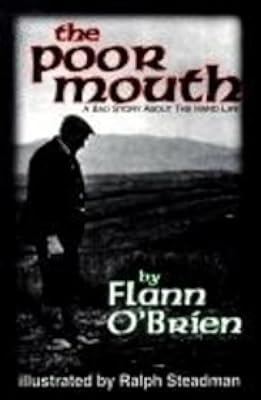
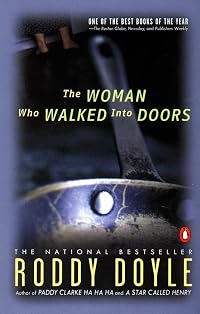
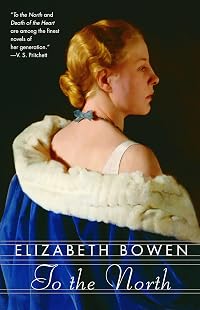

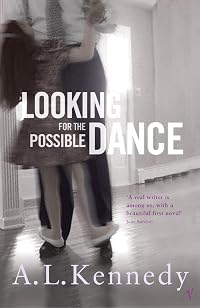

Member Recommendations

Da by Hugh Leonard
by aprille
hdght This is originally a Irish children's story, but it has many important Irish themes such as famine, family, cultural struggle, and mythology.
Member Reviews
This is a short book, only 184 pages, but it packs a punch. It is on the list of 1001 Books to Read Before You Die and it is also one of the 100 Best Novels the Guardian chose a few years ago. It is set in the Republic of Ireland and, although the time period is never given, from clues about the way of life I feel sure that it takes place in the 1950s. It centers on Michael Moran, former freedom fighter during the Irish Civil War of the 1920s, now a farmer in the midland area of the Republic of Ireland.
Moran is the father of five children, three girls and two boys. The children's mother is dead and the oldest girl, Maggie, manages the household for her father. The oldest child, Luke, left home to settle in London and has never returned show more to the family home due to some unnamed argument with Moran. At the post office one night while waiting for the evening mail Moran falls into conversation with Rose who has recently returned to the area from Scotland to help her mother and brother cope with their father's death. Moran walks partway home with Rose and is so charming that she sets her cap for him. She is warned that Moran is different at home but she still marries him.This frees Maggie to go to London to take nurses' training. Shortly the other two girls leave to take civil servant jobs in Dublin although Mona was offered university scholarships. She wanted to go to university and possibly become a doctor but Moran is against that. And what Moran wants, Moran gets. It is true that Moran is far different at home than he is in public. All the children are tense around him and watch him carefully to see if he is having a good or a bad day. The women, Rose and the daughters, seem to be able to manage him when he is in a foul temper but both boys have to leave home in time. Moran is deeply religious; he says the Rosary every night with everyone in the household, goes to church, and says grace before every meal. However, he is of the "wrathful God" type of religion and in his household he expects to be obeyed.
I couldn't help but compare Moran with my own father since they would probably have been of a similar age. Both were farmers and in the 1950s my father's farm would have been much like Moran's.My father left school at age 14 and Moran was about that age as well. However, my father never fought in any wars and I can't help but think that explains why Moran was so dictatorial and my father was easy to get along with. I rarely saw my father in a temper and he certainly never raised a hand to any of us. Or perhaps Moran just had a mercurial personality that he felt free to impose on anyone around. He certainly would have been hard to live with. show less
Moran is the father of five children, three girls and two boys. The children's mother is dead and the oldest girl, Maggie, manages the household for her father. The oldest child, Luke, left home to settle in London and has never returned show more to the family home due to some unnamed argument with Moran. At the post office one night while waiting for the evening mail Moran falls into conversation with Rose who has recently returned to the area from Scotland to help her mother and brother cope with their father's death. Moran walks partway home with Rose and is so charming that she sets her cap for him. She is warned that Moran is different at home but she still marries him.This frees Maggie to go to London to take nurses' training. Shortly the other two girls leave to take civil servant jobs in Dublin although Mona was offered university scholarships. She wanted to go to university and possibly become a doctor but Moran is against that. And what Moran wants, Moran gets. It is true that Moran is far different at home than he is in public. All the children are tense around him and watch him carefully to see if he is having a good or a bad day. The women, Rose and the daughters, seem to be able to manage him when he is in a foul temper but both boys have to leave home in time. Moran is deeply religious; he says the Rosary every night with everyone in the household, goes to church, and says grace before every meal. However, he is of the "wrathful God" type of religion and in his household he expects to be obeyed.
I couldn't help but compare Moran with my own father since they would probably have been of a similar age. Both were farmers and in the 1950s my father's farm would have been much like Moran's.My father left school at age 14 and Moran was about that age as well. However, my father never fought in any wars and I can't help but think that explains why Moran was so dictatorial and my father was easy to get along with. I rarely saw my father in a temper and he certainly never raised a hand to any of us. Or perhaps Moran just had a mercurial personality that he felt free to impose on anyone around. He certainly would have been hard to live with. show less
Amongst Women is my first time reading John McGahern. Beautiful, clear, and pristine. Felt something like panic when the ending came around - a harrowing look at how generational violence enacts itself in both muted and explicit ways. The title comes from the rosary - a relentless motif in the novel - and it's apt, describing how the tacit acceptance of a father's wrath and casual cruelty need not explanation, only a warped form of faith. Moran never changes, and the tragedy is that his daughters do not hold out hope that he would. Rather, like our prayers to God, these women hold their hands wide open, their faith as unyielding as his indifference. The family is a prison, but it is also the first world that we experience; sometimes, it show more can be hard to let that go.
— "They had assumed that time and distance would smooth all but the most angular of differences and they now feared that too much time had already passed. Beneath all differences was the belief that the whole house was essentially one. Together they were one world and could take on the world. Deprived of this sense they were nothing, scattered, individual things. They would put up with anything in order to have this sense of belonging. They would never let it go. No one could be allowed to walk out easily." show less
— "They had assumed that time and distance would smooth all but the most angular of differences and they now feared that too much time had already passed. Beneath all differences was the belief that the whole house was essentially one. Together they were one world and could take on the world. Deprived of this sense they were nothing, scattered, individual things. They would put up with anything in order to have this sense of belonging. They would never let it go. No one could be allowed to walk out easily." show less
This was like spending just under 200 claustrophobic pages with my late grandfather, whom I loved but who, like Michael Moran here, was a dick of a certain generation and type of rural Irish man. The specifics of the events might not match up, but the personality and the vibes absolutely do. Oof. John McGahern's prose is pleasurable and compelling.
Well crafted, structured and layered book. Only 180 pages, but it had an intensity mostly the result of the indoor scenes that set the stage from the beginning and the way the elderly Moran dominated family life as he oppressed the air inside both the rooms and my consciousness at times.
This is a generational story, a transitional moment in modern times. We start in the 1950s, with Moran – a widowed civil war leader and operative and McQuaid his underling who visits every Monaghan Market day to sit, reminisce, drink whiskey while the teenage daughters move around making sure the day is a good one for him. Moran’s rigid catholic, rural, parsimonious world view gets aired early and regularly throughout. He refuses to take the IRA show more pension McQuaid reminds him he deserves. Some staunch gruff reasoning is provided.
But this book is about transitions, and for things to change there must be something there already, speaking of Moran, a neighbour describes him so:
”They say he’s one sort of person when he's out in the open among people – he can be very sweet – but that he’s a different sort of person altogether behind the walls of his own house.”
Though the story takes place on a farm, we rarely get to see the outdoors early on. Moran is a farmer - earning his farm with assistance from the IRA. He has five children. Three daughters still teenagers in the house and Luke who has left for England following an altercation and the very young Michael.
Rose, newly returned from working in Scotland for a family as a housekeeper accepts that Moran may be the one she marries late in life. Her effect on the oppressive house is transformative, as though all the children needed was an outlet for the hardness of life with just their father. Often we experience Moran’s methods with family and Rose through the threat of violence. If a matter is remotely tense, the children have learned to slip out of the room without being noticed.
Transformation is nicely done in this book. Everyone emerges as themselves over time as the 1950s give way to the 1960s and opportunities through education and migration to England arrive for all the children. And they take it because they're all smart. After all, old Moran was the brains behind many successful IRA civil war operations thirty years earlier. Yet he thinks politicians, doctors and priests sucked the value he got out of the war.
Moran can’t stop change, the influences of others on his insular being can’t be held back. He tries to be his same dour self - forged in poverty and war early in the century. But the world changes and he changes, as he perhaps abetted in changing it militarily. And it seems women have the largest role in all this and the males all take a back seat to change. The daughters Mona, Maggie and Sheila have the most to gain from change – jobs, education, decision making in marriage, and defining the idea of family and home.
”by the time Maggie had got back to London they had never felt closer n warmth, even happiness. The closeness was as strong as the pull of their own lives; they lost the pain of individuality within its protection.”
I find it interesting that the outdoors emerges late in the book with scenes of rural life like cutting and stacking the hay - an event described often as the greatest change in family circumstance happens – the daughters go off to Dublin and London once they finish school but return regularly and every summer when the hay cutting occurs on the right day when it’s expected to be dry. This makes for a lovely juxtaposition of the perennial and the modern. The scenes are described in detail, observed as though from afar in their deeply unchanged way – though machinery is used, the way family joins in the most important moment of the summer strongly expresses the central motif of family life.
Family is paramount, an entire society is geared towards and not much gets in its way:
”Such is the primacy of the idea of the family that everyone was able to leave work at once without incurring displeasure.” show less
This is a generational story, a transitional moment in modern times. We start in the 1950s, with Moran – a widowed civil war leader and operative and McQuaid his underling who visits every Monaghan Market day to sit, reminisce, drink whiskey while the teenage daughters move around making sure the day is a good one for him. Moran’s rigid catholic, rural, parsimonious world view gets aired early and regularly throughout. He refuses to take the IRA show more pension McQuaid reminds him he deserves. Some staunch gruff reasoning is provided.
But this book is about transitions, and for things to change there must be something there already, speaking of Moran, a neighbour describes him so:
”They say he’s one sort of person when he's out in the open among people – he can be very sweet – but that he’s a different sort of person altogether behind the walls of his own house.”
Though the story takes place on a farm, we rarely get to see the outdoors early on. Moran is a farmer - earning his farm with assistance from the IRA. He has five children. Three daughters still teenagers in the house and Luke who has left for England following an altercation and the very young Michael.
Rose, newly returned from working in Scotland for a family as a housekeeper accepts that Moran may be the one she marries late in life. Her effect on the oppressive house is transformative, as though all the children needed was an outlet for the hardness of life with just their father. Often we experience Moran’s methods with family and Rose through the threat of violence. If a matter is remotely tense, the children have learned to slip out of the room without being noticed.
Transformation is nicely done in this book. Everyone emerges as themselves over time as the 1950s give way to the 1960s and opportunities through education and migration to England arrive for all the children. And they take it because they're all smart. After all, old Moran was the brains behind many successful IRA civil war operations thirty years earlier. Yet he thinks politicians, doctors and priests sucked the value he got out of the war.
Moran can’t stop change, the influences of others on his insular being can’t be held back. He tries to be his same dour self - forged in poverty and war early in the century. But the world changes and he changes, as he perhaps abetted in changing it militarily. And it seems women have the largest role in all this and the males all take a back seat to change. The daughters Mona, Maggie and Sheila have the most to gain from change – jobs, education, decision making in marriage, and defining the idea of family and home.
”by the time Maggie had got back to London they had never felt closer n warmth, even happiness. The closeness was as strong as the pull of their own lives; they lost the pain of individuality within its protection.”
I find it interesting that the outdoors emerges late in the book with scenes of rural life like cutting and stacking the hay - an event described often as the greatest change in family circumstance happens – the daughters go off to Dublin and London once they finish school but return regularly and every summer when the hay cutting occurs on the right day when it’s expected to be dry. This makes for a lovely juxtaposition of the perennial and the modern. The scenes are described in detail, observed as though from afar in their deeply unchanged way – though machinery is used, the way family joins in the most important moment of the summer strongly expresses the central motif of family life.
Family is paramount, an entire society is geared towards and not much gets in its way:
”Such is the primacy of the idea of the family that everyone was able to leave work at once without incurring displeasure.” show less
In Amongst Women, Irish novelist John McGahern takes us back to the 1950s and inside the home of the Moran family in rural County Sligo. The five children are in their teens as we start, except for Luke, who is already out of the house, living in London, and refusing to communicate with his father or return home for any reason. The mother is evidently dead (she is barely mentioned). The father, Michael (known throughout the narrative almost exclusively as "Moran"), is identified early on as a veteran of the IRA flying columns during the uprising against British rule several decades earlier. He is also identified as a man of smoldering anger whom his children, and soon his second wife, often have to tiptoe around so as not to ignite that show more fury. In the meantime, life is changing in rural Ireland in ways that Moran is not particularly comfortable with.
This book is considered to be McGahern's masterpiece. It is tersely written, with a particularly effective portrayal of the claustrophobia of rural family life. As such, it's not always comfortable to read, as the tension in the household transmits frequently to the reader. The dynamics of family are also well drawn, as the four children and Rose, the new wife, make excuses for Moran's unpleasantness and revel in the times he flashes humor and warmth instead.
The problem for me is that the daughters seemed barely distinguishable as characters. Only the youngest sibling, brother Michael, and Rose get anywhere near a full fleshing out as individuals. Also, the theme of the household with the angry, abusive (in this case chiefly psychologically) father runs through so many Irish novels that, realistic as it may be, I feel by now that I'd occasionally like a break. The family as a unit is the real character, here, and the strength of that unit is shown as unshakeable. The book is engrossing, but perhaps from my California remove I missed some of its resonance. show less
This book is considered to be McGahern's masterpiece. It is tersely written, with a particularly effective portrayal of the claustrophobia of rural family life. As such, it's not always comfortable to read, as the tension in the household transmits frequently to the reader. The dynamics of family are also well drawn, as the four children and Rose, the new wife, make excuses for Moran's unpleasantness and revel in the times he flashes humor and warmth instead.
The problem for me is that the daughters seemed barely distinguishable as characters. Only the youngest sibling, brother Michael, and Rose get anywhere near a full fleshing out as individuals. Also, the theme of the household with the angry, abusive (in this case chiefly psychologically) father runs through so many Irish novels that, realistic as it may be, I feel by now that I'd occasionally like a break. The family as a unit is the real character, here, and the strength of that unit is shown as unshakeable. The book is engrossing, but perhaps from my California remove I missed some of its resonance. show less
Lyrically written as so many Irish novels are, this centres around the inscrutable patriarch of a rural family. Moran rules his family with an iron fist. He’s an old freedom fighter from the days of revolution against British rule and, if we’re being sympathetic to him, he suffers from PTSD.
It’s very hard to be sympathetic to him, though as his constant belligerance keeps his family on edge. He’s already alienated one son as the book gets underway and goes on to alienate another. His daughters tiptoe around him like he’s primed semtex.
In the midst of this storm comes Rose, a local woman who, somehow, manages to marry the man and bring some fur to line the flint. Despite her saintly forebearance, he still manages to push show more everyone to the limit.
The story is well told although none of the characters except Moran are really crafted well enough for you to get to know them too well. And it’s Moran you really want a break from most of the time.
Quite why McGahern titled it Amongst Women eluded me. There’s at least one son at home for most of the novel so it isn’t that Moran has to endure entirely female company. The very useful Wikipedia entry was helpful here, and if I’d had more of a Catholic bent, I’d have picked up the reference; ‘blessed art thou amongst women‘ is a line from the Rosary which Moran faithfully leads his family to pray on many occasions in the book.
The novel was shortlisted for the Booker Prize and lost out to Possession by Byatt, a novel that was written by an author seemingly far more concerned to impress literary judges. McGahern’s storytelling is subtle and measured and, if you let it get to you, moving. Unlike Byatt, he’s well worth reading. show less
It’s very hard to be sympathetic to him, though as his constant belligerance keeps his family on edge. He’s already alienated one son as the book gets underway and goes on to alienate another. His daughters tiptoe around him like he’s primed semtex.
In the midst of this storm comes Rose, a local woman who, somehow, manages to marry the man and bring some fur to line the flint. Despite her saintly forebearance, he still manages to push show more everyone to the limit.
The story is well told although none of the characters except Moran are really crafted well enough for you to get to know them too well. And it’s Moran you really want a break from most of the time.
Quite why McGahern titled it Amongst Women eluded me. There’s at least one son at home for most of the novel so it isn’t that Moran has to endure entirely female company. The very useful Wikipedia entry was helpful here, and if I’d had more of a Catholic bent, I’d have picked up the reference; ‘blessed art thou amongst women‘ is a line from the Rosary which Moran faithfully leads his family to pray on many occasions in the book.
The novel was shortlisted for the Booker Prize and lost out to Possession by Byatt, a novel that was written by an author seemingly far more concerned to impress literary judges. McGahern’s storytelling is subtle and measured and, if you let it get to you, moving. Unlike Byatt, he’s well worth reading. show less
This is a short, austere and powerful story of a family dominated by a proud and petty tyrant. I remember seeing some of a bleak TV adaptation many years ago, which left me doubting whether I would enjoy the book, which I read as part of Goodreads' The Mookse and the Gripes group's latest project to discuss a historic Booker shortlist, this time 1990, which was the year when Possession won the prize.
Moran is a widowed veteran of the Irish wars of independence who runs a small farm with his five children. The opening part of the book introduces the family as they get together in his old age to try and revive his failing spirit. It is already clear in this section that he is a proud and difficult man to live with. The rest of the book is show more chronological, starting when his three daughters and youngest son are teenagers but the eldest son Luke has already left for London. He marries the self-effacing and saintly Rose, who has to do all of the running to get them together but soon forms a powerful bond with the three daughters. Moran's violent temper and unpredictable mood swings are oppressive even to the reader. The story follows Moran as his remaining children move away, with all but the estranged and unforgiving Luke returning to the farm frequently.
McGahern eventually succeeds in making you understand why the family tolerate and even love this monster, and by the end of the book one almost feels sorry for him. This is an eloquent and ultimately rather beautiful book. show less
Moran is a widowed veteran of the Irish wars of independence who runs a small farm with his five children. The opening part of the book introduces the family as they get together in his old age to try and revive his failing spirit. It is already clear in this section that he is a proud and difficult man to live with. The rest of the book is show more chronological, starting when his three daughters and youngest son are teenagers but the eldest son Luke has already left for London. He marries the self-effacing and saintly Rose, who has to do all of the running to get them together but soon forms a powerful bond with the three daughters. Moran's violent temper and unpredictable mood swings are oppressive even to the reader. The story follows Moran as his remaining children move away, with all but the estranged and unforgiving Luke returning to the farm frequently.
McGahern eventually succeeds in making you understand why the family tolerate and even love this monster, and by the end of the book one almost feels sorry for him. This is an eloquent and ultimately rather beautiful book. show less
Members
- Recently Added By
Published Reviews
ThingScore 75
[I]t is that rarest of things in contemporary fiction in English, an achieved and almost perfect work. . . . Rarely nowadays does one come upon a novel that one senses will outlast one’s own time. Amongst Women, despite the quietness of its tone and the limits deliberately imposed upon it by the author, is an example of the novelist’s art at its finest, a work the heart of which beats to show more the rhythm of the world and of life itself. It will endure. show less
added by aprille
Readers familiar with John McGahern will recognize the terrain. In his four previous novels and three collections of stories, Mr. McGahern has often evoked the violence, hidden and overt, of family life. His Irish fathers simmer with envy of their own children - of their opportunities, their schooling, their unblemished bodies and minds. . . . Mr. McGahern's prose often fails to achieve the show more odd mix of the lyrical and the abrupt that has made him, in other books, a writer worth not only reading but listening to. . . . In ''Amongst Women,'' John McGahern walks the line between the beautiful and the archaic, and the result is a kind of double elegy. You feel as if you are saying goodbye not merely to an old man dying, but to a world. It is a world others said goodbye to long ago, and not dissimilarly. Still, reading this determinedly poignant novel, one feels sad all over again. show less
added by aprille
Lists

The Guardian's 1000 Novels Everyone Must Read
1,005 works; 552 members

1001 Books You Must Read Before You Die
1,448 works; 1,137 members

Favourite Booker Prize contenders
73 works; 21 members
Booker Prize
491 works; 62 members

Irish writers
87 works; 17 members

Favourite Books
1,820 works; 316 members
TML 200 Best Books 1950-1999
202 works; 10 members

Man Booker Prize Longlist 1990
6 works; 2 members

Books Read in 2023
5,638 works; 147 members

The Guardian's 100 Best Novels Written in English
105 works; 13 members

A Good Read (Radio 4)
287 works; 1 member

Booker Prize Shortlist: Titles Not Yet Read
161 works; 4 members

1,001 BYMRBYD Concensus
723 works; 27 members

Books Read in 2025
4,128 works; 98 members

Novels set in the Irish Border Region
10 works; 1 member

The Modern Library (The Two Hundred Best Novels....
202 works; 1 member
Author Information

38+ Works 4,486 Members
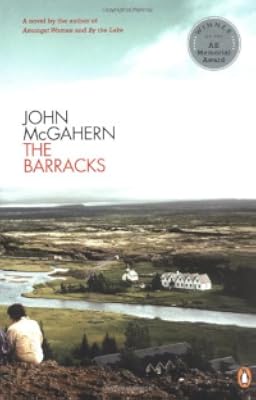
John McGahern was born in Dublin in 1934. He has received several awards for his writing, including the AE Memorial Award in 1952, for the manuscript of "'The Barracks," and British Arts Council awards in 1968, 1970, and 1973. His other books include "The Dark" and "Amongst Women," nominated for the Booker Prize in 1990. (Bowker Author Biography)
Awards and Honors
Awards
Notable Lists
Common Knowledge
- Canonical title
- Amongst Women
- Original publication date
- 1990
- People/Characters
- Moran; Maggie; Rose; Michael; Mona; Sheila (show all 8); Mark Bradley; Luke
- Important places
- Dublin, Ireland; Ireland
- Important events
- War of Independence
- Related movies
- Amongst Women (1998 | IMDb)
- Dedication
- For Madeline
- First words
- As he weakened, Moran became afraid of his daughters.
- Original language
- English
Classifications
Statistics
- Members
- 1,136
- Popularity
- 22,341
- Reviews
- 29
- Rating
- (3.87)
- Languages
- 8 — Czech, Dutch, English, French, German, Italian, Slovenian, Spanish
- Media
- Paper, Audiobook, Ebook
- ISBNs
- 22
- ASINs
- 4