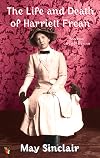
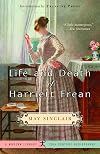
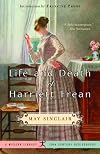
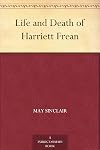
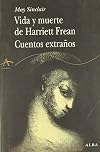
The Life and Death of Harriett Frean
by May Sinclair
On This Page
Description
"In a few short pages," writes Francine Prose in her Introduction, "May Sinclair succeeds in rendering the oppressive weight and strength of the chains of family love." Young Harriett Frean is taught that "behaving beautifully" is paramount, and she becomes a self-sacrificing woman whose choices prove devastating to herself and to those who love her most. An early pioneer ofstream-of-consciousness writing, Sinclair employs the technique brilliantly in this finely crafted psychological novel. show more Evoking the style and depth of her contemporaries Virginia Woolf and D. H. Lawrence, Sinclair's haunting narrative also reflects her keen interest in the theories of Jung and Freud. The text of this Modern Library 20th Century Rediscovery was set from the first American edition of 1922.From the Trade Paperback edition. show lessTags
Recommendations



















Member Recommendations

Member Reviews
"Mamma, did Pussycat see the Queen?"
This feels like the saddest book in the shortest number of pages that I've ever read. And yet, all that happened was Pussycat was distracted by the smallest, least important of things. Pussycat bragged that it went to London to see the Queen, but hardly realized that it did not actually, in fact, see the Queen or anything remotely as worthy of doing.
Not a word too many, not a leitmotif too insignificant, not a thought too small to be tangled, untangled, then tangled again. Not a single beautiful thing remaining undestroyed by the end of the life of Miss Harriett Frean.
May Sinclair, I love you.
86 perfect pages of a blurred life that strove only to behave beautifully and not be selfish.
This feels like the saddest book in the shortest number of pages that I've ever read. And yet, all that happened was Pussycat was distracted by the smallest, least important of things. Pussycat bragged that it went to London to see the Queen, but hardly realized that it did not actually, in fact, see the Queen or anything remotely as worthy of doing.
Not a word too many, not a leitmotif too insignificant, not a thought too small to be tangled, untangled, then tangled again. Not a single beautiful thing remaining undestroyed by the end of the life of Miss Harriett Frean.
May Sinclair, I love you.
86 perfect pages of a blurred life that strove only to behave beautifully and not be selfish.
This could well be the banner for living a life of quiet desperation.
May Sinclair 1898
(Mary Amelia St. Clair, 1863-1946)
Superficially, it is a nothing little book: a child is born, grows up leading a quiet, privileged life, and then seventy-odd years later dies as quietly as a falling leaf. That is the story. Nothing happens. Nothing moves. No breath of wind. No rustling skirt. No shouting children. No gnashing of teeth. No joy. No pain. Nothing. As smooth as proverbial glass, this life unfolds.
There is anguish, and loss, and failure and disappointment; and much unhappiness and heartache and despair, but they all unfold as quietly as the drawing of a veil: all these strong, crippling emotions are felt just below the epidermis, for not show more a ripple of it breaks the skin into a smile, a tear, a frown.
Oh, it's such a frustrating little nothing of a book.
And it is one of the saddest little books I've ever read.
This started as a 3-rating; then moved to 4; and is teetering dangerously on the edge of 5, because while it took me an hour to read, it's been eating away at my heart for the better part of 48; worming its insidious little thoughts into my heart and brain, while I reflect on the nothing-life of Harriet Frean.
This is what an entitled life looks like, ladies and gents. It's a circus act for the rest of us. We gaze, and wonder and admire and envy from a distance. And yet, there is no hell like this one.
Reflective of the privileged "nothing lives" of women who had no choice or voice in a previous era, it is just as effective today, albeit for different reasons; for at that time, it was a still life of a woman; today, it is the most horror-laden of cautionary tales.
Oh, what the hell. This one deserves a full 5 stars. show less
May Sinclair 1898
(Mary Amelia St. Clair, 1863-1946)
Superficially, it is a nothing little book: a child is born, grows up leading a quiet, privileged life, and then seventy-odd years later dies as quietly as a falling leaf. That is the story. Nothing happens. Nothing moves. No breath of wind. No rustling skirt. No shouting children. No gnashing of teeth. No joy. No pain. Nothing. As smooth as proverbial glass, this life unfolds.
There is anguish, and loss, and failure and disappointment; and much unhappiness and heartache and despair, but they all unfold as quietly as the drawing of a veil: all these strong, crippling emotions are felt just below the epidermis, for not show more a ripple of it breaks the skin into a smile, a tear, a frown.
Oh, it's such a frustrating little nothing of a book.
And it is one of the saddest little books I've ever read.
This started as a 3-rating; then moved to 4; and is teetering dangerously on the edge of 5, because while it took me an hour to read, it's been eating away at my heart for the better part of 48; worming its insidious little thoughts into my heart and brain, while I reflect on the nothing-life of Harriet Frean.
This is what an entitled life looks like, ladies and gents. It's a circus act for the rest of us. We gaze, and wonder and admire and envy from a distance. And yet, there is no hell like this one.
Reflective of the privileged "nothing lives" of women who had no choice or voice in a previous era, it is just as effective today, albeit for different reasons; for at that time, it was a still life of a woman; today, it is the most horror-laden of cautionary tales.
Oh, what the hell. This one deserves a full 5 stars. show less
I saw someone else on LibraryThing mentioned this 1001 book as being short and quite good. So, one night when I was having trouble sleeping I pulled it up on my laptop and started it. I didn't finish it that night but I did the next night. Poor Harriet. The only child of a wealthy British financier and his wife she was raised to behave perfectly. So when the fiance of her best friend started expressing an interest in her she turned him down even though she was attracted to him. He married the friend who quite young developed a mysterious paralysis. Meanwhile Harriet continued to live with her father and mother in their large comfortable home. Her father made some bad investments and lost his own fortune and the fortune of several show more clients. He died before he had to move out of the house but Harriet and her mother had to leave soon after his death. Her paralyzed friend died as did her mother who could perhaps have lived longer if she had been willing to spend the money for an operation but refused in order to save Harriet from penury. Her friend's husband married the woman who had nursed the friend but when Harriet finally visited them she found that he had become a semi-invalid who made excessive demands on his new wife. Later in life Harriet learns that her adored father had caused financial difficulties for others. Her one accomplishment, that of denying herself love to benefit her friend, seemed to have made everyone miserable. So at the end of her life she was alone and sick and miserably confused. show less
A short read, and yet one which takes the reader entirely through Miss Frean's life, from infancy to old age.
An only daughter, Harriett soon becomes entirely subject to her parents' will - not through any bullying on their part, for they love her deeply, but through (it seemed to me) a combination of moral conviction and a certain sense of superiority:
"She passed through her fourteenth year sedately, to the sound of Evangeline'. Her upright body, her lifted, delicately obstinate, rather wistful face expressed her small, conscious determination to be good. She was silent with emotion when Mrs Hancock told her she was growing like her mother."
Life is not always clear-cut, and when her friend's fiance starts making advances to Harriet, she show more must decide how to act...
And all the time she is growing older, becoming ever more decidedly an old maid.
I thought the author did a wonderful job portraying a character at different times in her life, from the tiny tot being trained to behave 'properly', to the slightly supercilious young girl...and set-in-her-ways elderly woman. show less
An only daughter, Harriett soon becomes entirely subject to her parents' will - not through any bullying on their part, for they love her deeply, but through (it seemed to me) a combination of moral conviction and a certain sense of superiority:
"She passed through her fourteenth year sedately, to the sound of Evangeline'. Her upright body, her lifted, delicately obstinate, rather wistful face expressed her small, conscious determination to be good. She was silent with emotion when Mrs Hancock told her she was growing like her mother."
Life is not always clear-cut, and when her friend's fiance starts making advances to Harriet, she show more must decide how to act...
And all the time she is growing older, becoming ever more decidedly an old maid.
I thought the author did a wonderful job portraying a character at different times in her life, from the tiny tot being trained to behave 'properly', to the slightly supercilious young girl...and set-in-her-ways elderly woman. show less
This is a very short novel but that doesn’t stop Sinclair constructing a complex character who spends her life bound by moral boundaries. Harriett grows up with parents who ensure she is protected in every way. I think they do their best but you can’t help thinking that Harriett also adds to the mix with a kind of supercilious self-righteousness that makes her kind of irritating to be around.
This is put to the test when she falls for her best friend’s fiancé, but her response is, by this point you realise, typical. Thus, she embarks on a lifetime of chastity as she fights off the demons of regret. Her relationship with her parents is also tested as various skeletons come out of the closet, but she holds fast to what she considers show more to be the best course of action and, as a result, ends life in lonely isolation having built a wall against self-doubt.
You can’t help thinking that the whole point was to tell us that life by moral compass is somehow not a life worth living. It seems that Sinclair’s mother was very strictly religious and perhaps the novel
was in critical response to this. Certainly there are clear autobiographical parallels between the author’s life and her character’s which leads me to believe that she regarded denying oneself for the sake of moral correctness to be worthy of critique.
There’s no guarantee that doing so, however, leads one into a life that is somehow less than we could have had. Life’s too complex for that and, the weakness of the character, for me, was that she was depicted as someone for whom life was as simplistic as always doing what “should” be done. There’s a certain irony in portraying someone who adopts such an approach in simplistic terms, of course, but I did get the point. Just not sure I agree with it.
Sinclair can write, of that there is no doubt, this was an engaging read with characters who you cared about. I just wish she’d taken at least twice as many pages to tell her story. I think she would have a classic on her hands that would be far more well-known than the resulting novella. show less
This is put to the test when she falls for her best friend’s fiancé, but her response is, by this point you realise, typical. Thus, she embarks on a lifetime of chastity as she fights off the demons of regret. Her relationship with her parents is also tested as various skeletons come out of the closet, but she holds fast to what she considers show more to be the best course of action and, as a result, ends life in lonely isolation having built a wall against self-doubt.
You can’t help thinking that the whole point was to tell us that life by moral compass is somehow not a life worth living. It seems that Sinclair’s mother was very strictly religious and perhaps the novel
was in critical response to this. Certainly there are clear autobiographical parallels between the author’s life and her character’s which leads me to believe that she regarded denying oneself for the sake of moral correctness to be worthy of critique.
There’s no guarantee that doing so, however, leads one into a life that is somehow less than we could have had. Life’s too complex for that and, the weakness of the character, for me, was that she was depicted as someone for whom life was as simplistic as always doing what “should” be done. There’s a certain irony in portraying someone who adopts such an approach in simplistic terms, of course, but I did get the point. Just not sure I agree with it.
Sinclair can write, of that there is no doubt, this was an engaging read with characters who you cared about. I just wish she’d taken at least twice as many pages to tell her story. I think she would have a classic on her hands that would be far more well-known than the resulting novella. show less
[The Life and Death of Harriet Frean] by [[May Sinclair]]
This 86 page novella follows the life of Harriet Frean from her childhood to her death. Born to an upper middle class Victorian-era family, Harriet shows some mild misbehavior and the beginnings of a mind of her own during childhood, but she idolizes her parents and chooses to always "behave beautifully". She denies herself a lover and stays with her parents into her adulthood. Her father is financially ruined and dies and she and her mother carry on. Harriet keeps her three best friends into her old age.
This is an interesting book and I'm not sure exactly what to make of it. Harriet lives a small life, but though she seems to choose this life to please her parents, there isn't show more necessarily an indication that she regrets it or could have done more if she'd lived in a different era. It seems to be, upon a first reading, simply about the kind of person who can't see beyond themself and is happy living a narrow life. In that respect, I think it's a commentary on Victorian values. Harriet lives the ultimate Victorian female life and Sinclair shows how small that could be.
There are also many miscommunications. Many of Harriet's seminal life events - giving up her first love, idolizing her father and not understanding that his business failure ruined others as well, never communicating openly with her mother and giving up certain things to make her mother happy that she later finds her mother gave up to make her happy . . . the list goes on. I think these show that Harriet's narrow views even held her back in the small life she chose to lead.
The one thing I didn't see in this book was stream of consciousness writing. Sinclair is often compared to Dorothy Richardson and Virginia Woolf. I didn't get that out of this novella. That's not to say I didn't love it though. I think it's brilliantly done. It's one I'll save to reread for sure. There's a lot to think about in these 86 pages.
Original publication date: 1922
Author’s nationality: British
Original language: English
Length: 86 pages
Rating: 4.5 stars
Format/where I acquired the book: purchased paperback
Publisher: Modern Library
Why I read this: 1001 books list, off the shelf show less
This 86 page novella follows the life of Harriet Frean from her childhood to her death. Born to an upper middle class Victorian-era family, Harriet shows some mild misbehavior and the beginnings of a mind of her own during childhood, but she idolizes her parents and chooses to always "behave beautifully". She denies herself a lover and stays with her parents into her adulthood. Her father is financially ruined and dies and she and her mother carry on. Harriet keeps her three best friends into her old age.
This is an interesting book and I'm not sure exactly what to make of it. Harriet lives a small life, but though she seems to choose this life to please her parents, there isn't show more necessarily an indication that she regrets it or could have done more if she'd lived in a different era. It seems to be, upon a first reading, simply about the kind of person who can't see beyond themself and is happy living a narrow life. In that respect, I think it's a commentary on Victorian values. Harriet lives the ultimate Victorian female life and Sinclair shows how small that could be.
There are also many miscommunications. Many of Harriet's seminal life events - giving up her first love, idolizing her father and not understanding that his business failure ruined others as well, never communicating openly with her mother and giving up certain things to make her mother happy that she later finds her mother gave up to make her happy . . . the list goes on. I think these show that Harriet's narrow views even held her back in the small life she chose to lead.
The one thing I didn't see in this book was stream of consciousness writing. Sinclair is often compared to Dorothy Richardson and Virginia Woolf. I didn't get that out of this novella. That's not to say I didn't love it though. I think it's brilliantly done. It's one I'll save to reread for sure. There's a lot to think about in these 86 pages.
Original publication date: 1922
Author’s nationality: British
Original language: English
Length: 86 pages
Rating: 4.5 stars
Format/where I acquired the book: purchased paperback
Publisher: Modern Library
Why I read this: 1001 books list, off the shelf show less
The Life and Death of Harriet Frean by May Sinclair is a novella sized morality tale about the narrow existence of a Victorian woman. Harriet was an only child and she was brought up in a close family, she was taught that the number one virtue in life is one’s ability to behave correctly at all times. She took her life lesson to heart, even rejecting her own chance of love in order to do the “right” thing. In her efforts to behave beautifully, she didn’t notice the damage she often left behind her. She put her father on a pedestal and it wasn’t until years after his death that she could finally acknowledge to herself that he didn’t always behave in the right manner. She loved her mother dearly but didn’t notice her show more shrinking away from cancer. As her life comes full circle we can see that always behaving in the right manner wasn’t actually the same as doing the right thing.
The Life and Death of Harriet Frean is a critique of nineteenth century middle-class society and the damage that lurks beneath a front of good manners. In bare, bleak and ironic prose, the author covers Harriet’s life, from birth to death, in less than 100 pages. I read this story in one sitting at Project Guttenberg, and it felt more like an impersonal report than the story of one woman’s life. show less
The Life and Death of Harriet Frean is a critique of nineteenth century middle-class society and the damage that lurks beneath a front of good manners. In bare, bleak and ironic prose, the author covers Harriet’s life, from birth to death, in less than 100 pages. I read this story in one sitting at Project Guttenberg, and it felt more like an impersonal report than the story of one woman’s life. show less
Members
- Recently Added By
Lists

1001 Books You Must Read Before You Die
1,448 works; 1,134 members

20th Century Literature
1,161 works; 55 members

Female Author
1,235 works; 67 members

1,001 BYMRBYD Concensus
723 works; 27 members
Books referenced in A Very Great Profession: The Woman's Novel 1914-39
199 works; 6 members

Unmarried women
66 works; 6 members
Author Information

56+ Works 1,290 Members
Some Editions
Awards and Honors
Series
Belongs to Publisher Series
Work Relationships
Is contained in
Common Knowledge
- Canonical title
- The Life and Death of Harriett Frean
- Original title
- The Life and Death of Harriett Frean
- Alternate titles
- Life and Death of Harriett Frean
- Original publication date
- 1922
- People/Characters
- Harriett Frean
- First words
- Pussycat, Pussycat, where have you been?"
"I've been to London, to see the Queen."
"Pussycat, Pussycat, what did you there?"
"I caught a little mouse under the chair,"
Her mother said it three times. And eac... (show all)h time the Baby Harriett laughed. The sound of her laugh was so funny that she laughed again at that; she kept on laughing, with shriller and shriller squeals.
After the First World War, before the emergence of Virginia Woolf as a major writer, May Sinclair was considered the most distinguished woman novelist in England. (Introduction) - Quotations
- They knew what it was now: that horrible thing that even the doctors were afraid to name. They called it "something malignant". When friends called to inquire, Harriet wouldn't tell them what it was; she pretended that she di... (show all)dn't know, that the doctors weren't sure; she covered it up from them as if it had been a secret shame. And they pretended that they didn't know. But they knew.
Harriet Frean was not what she used to be. She was aware of the creeping fret, the poisons and obstructions of decay. It was as if she had parted with her own light, elastic body, and succeeded to somebody else's that was all... (show all) bone, heavy, stiff, irresponsive to her will. - Last words
- (Click to show. Warning: May contain spoilers.)'Mamma-'
(Click to show. Warning: May contain spoilers.)It is an undeniably powerful case which, as T. S. Eliot commented, evokes both 'terror and pity'. (Introduction)
Classifications
Statistics
- Members
- 416
- Popularity
- 74,434
- Reviews
- 13
- Rating
- (3.60)
- Languages
- 5 — English, French, Hebrew, Italian, Spanish
- Media
- Paper, Ebook
- ISBNs
- 38
- UPCs
- 2
- ASINs
- 12