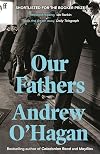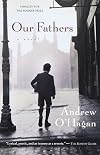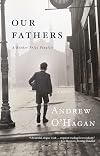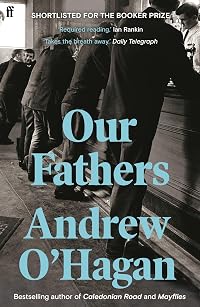
Our Fathers
by Andrew O'Hagan
On This Page
Description
A novel on three generations of Scottish men. They are an idealistic civil servant who created affordable housing in Glasgow, his good-for-nothing son, and the sensitive grandson, a journalist who stays with him as he dies.Tags
Recommendations
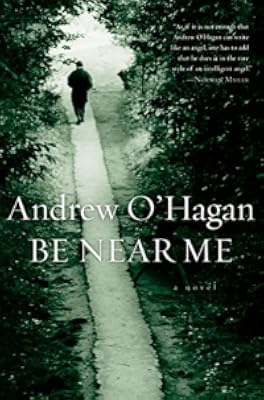
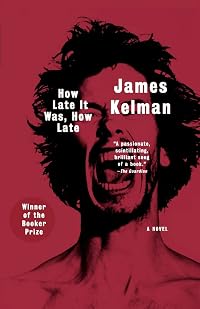
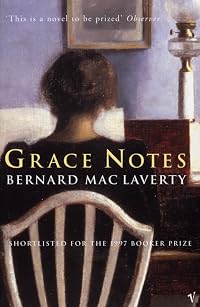
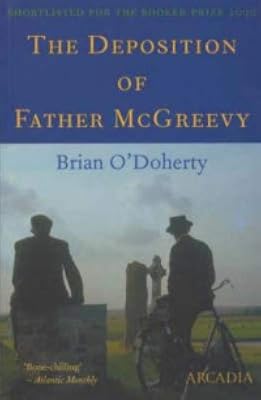









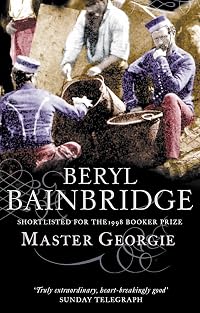
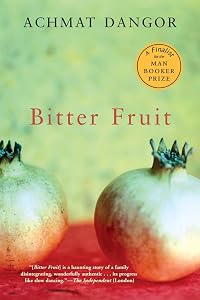


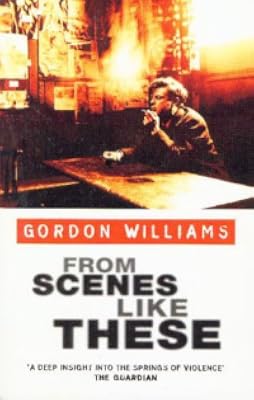

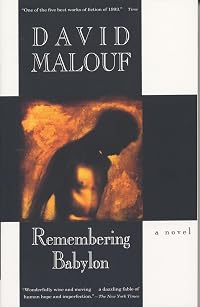

Member Recommendations

Member Reviews
As Hugh Bawn lies dying, his 35-year-old grandson leaves his life in England to care for him. Hugh, a legendary social reformer and local hero known as "Mr. Housing," was a key figure who championed the construction of Glasgow's high-rise tower blocks. Jamie tells the story of three generations of a Scottish family, exploring male grief, national identity, alcoholism, and the shattered ideals of the post-war socialist left as it explores the tragic irony that Hugh’s utopian dream of modern housing ultimately resulted in squalor and buildings that have since become condemned. In an ironic twist, Jamie is employed in the very industry that is responsible for tearing them down.
The book tackles toxic masculinity passed down through show more fathers and sons. Jamie’s grandfather, Hugh, was proud but overbearing, and his father, Robert, an abusive alcoholic. But O'Hagan also uses the family's fractured dynamics to reflect the broader historical disillusionment of post-war Scotland and an anti-English sentiment still seen today in the independance debate.
This book was shortlisted for the 1999 Booker Prize and is certainly a powerful piece of both social and personal history that turns a family saga into a national allegory of anger and defeat. However, as Jamie gradually comes to terms with his relationship with his father and grandfather, I personally feel that it could have done with a few lighter moments as the misery became relentless come the end. Nor did I find the final reconciliation between Jamie and his father very convincing, it seemed so unlikely given what had gone before. However, as this was the author's first novel its also a remarkable piece of writing. show less
The book tackles toxic masculinity passed down through show more fathers and sons. Jamie’s grandfather, Hugh, was proud but overbearing, and his father, Robert, an abusive alcoholic. But O'Hagan also uses the family's fractured dynamics to reflect the broader historical disillusionment of post-war Scotland and an anti-English sentiment still seen today in the independance debate.
This book was shortlisted for the 1999 Booker Prize and is certainly a powerful piece of both social and personal history that turns a family saga into a national allegory of anger and defeat. However, as Jamie gradually comes to terms with his relationship with his father and grandfather, I personally feel that it could have done with a few lighter moments as the misery became relentless come the end. Nor did I find the final reconciliation between Jamie and his father very convincing, it seemed so unlikely given what had gone before. However, as this was the author's first novel its also a remarkable piece of writing. show less
This was Andrew O'Hagan's first novel and as such it was a successful beginning. I found it reminiscent of a memoir as it told the story of a son who returns home for the death of his grandfather and in doing so relates a tale of changes over time of both family and Glasgow.
Jamie recalls his torturous childhood and his enduring relationship with his mother Alice, who tortured her husband for years, while growing up under Robert Bawn, a nasty, raging alcoholic. Jamie eventually left home and lived in with his grandparents, Hugh and Margaret. Robert's father, Hugh, was a "visionary" urban planner who oversaw the development of public housing complexes in Glasgow in the 1970s, tall blocks of concrete and glass like those in the United show more States at the time. Hugh was an enthusiastic, ambitious father figure for young Jamie, and Margaret was a competent teacher.
Years later, when Jamie learns that Hugh is ailing, he rushes from England to help Margaret and Hugh. Robert has since vanished, but Jamie is happy to see Alice newly married and independent. Hugh's passing, however, is not without concern: a probe is looking into the elderly man's alleged misuse of funds while serving as "Mr. Housing," and his cherished buildings are being demolished to make room for the new. Which, Jamie discovers, includes glimpses of Scotland from Trainspotting, a dirty, historically rich, and obviously worn-out country. But Robert shows up at Hugh's funeral and then leaves right away. When Jamie catches up with him, he has calmed down and is now a contented, modest taxi driver. The story ends with a kind of reconciliation and cautious hope.
I enjoyed the novel and was moved tremendously by the emotional moments recounted as both memories of his early life and his experiences upon his return home for the final days of his beloved Grandfather. Most of all the author's gorgeous, almost poetic, prose engaged me in a way that few novels can. I would recommend this to all as I look forward to reading more from the pen of Andrew O'Hagan. show less
Jamie recalls his torturous childhood and his enduring relationship with his mother Alice, who tortured her husband for years, while growing up under Robert Bawn, a nasty, raging alcoholic. Jamie eventually left home and lived in with his grandparents, Hugh and Margaret. Robert's father, Hugh, was a "visionary" urban planner who oversaw the development of public housing complexes in Glasgow in the 1970s, tall blocks of concrete and glass like those in the United show more States at the time. Hugh was an enthusiastic, ambitious father figure for young Jamie, and Margaret was a competent teacher.
Years later, when Jamie learns that Hugh is ailing, he rushes from England to help Margaret and Hugh. Robert has since vanished, but Jamie is happy to see Alice newly married and independent. Hugh's passing, however, is not without concern: a probe is looking into the elderly man's alleged misuse of funds while serving as "Mr. Housing," and his cherished buildings are being demolished to make room for the new. Which, Jamie discovers, includes glimpses of Scotland from Trainspotting, a dirty, historically rich, and obviously worn-out country. But Robert shows up at Hugh's funeral and then leaves right away. When Jamie catches up with him, he has calmed down and is now a contented, modest taxi driver. The story ends with a kind of reconciliation and cautious hope.
I enjoyed the novel and was moved tremendously by the emotional moments recounted as both memories of his early life and his experiences upon his return home for the final days of his beloved Grandfather. Most of all the author's gorgeous, almost poetic, prose engaged me in a way that few novels can. I would recommend this to all as I look forward to reading more from the pen of Andrew O'Hagan. show less
I really liked 'Be Near Me,' and this was truly disappointing. It was lauded by reviewers, and it's easy to see why. It deals seriously with serious themes, and when it's just doing that it's actually very good.
But the style... dear lord in heaven. As we look back on the worst excesses of romantic prose, so shall our grandchildren look back on the worst excesses of 'modernist' prose. And they're all here. Sentences without verbs. They’re the subject of the following sentence. Sometimes. No links between phrases, no temporal progression, no clauses. Each verbal unit stands alone. Short and 'powerful.' All this stated in a matter-of-fact manner. No excrescences. A sudden, unexplained torrent of emotion and sentiment is expressed in a show more nature metaphor. The emotion always grief. The metaphor seems fresh, insightful, stunning. The poetry of it is breathtaking. So are the descriptive passages full of color and life. But this is a lie. Only the sterility of the remaining prose gives this effect. The metaphor and the description are as hackneyed as anything the worst late romantic could erect.
Let us remember the beauty of syntax every now and then, and the benefits of clauses. Perhaps, too, we could take a break from novels of self-pity masquerading as self-criticism- I'm looking at you, Netherlands, and you, Philip Roth. show less
This book made me buy a lot of Andrew O'Hagan's stuff. The prose flows very well and I find myself flowing through the pages. The story itself might be a little on the dull side, although it's worth a read. The other stuff I've read by O'Hagan other than his essays has been too focused on celebrity, or issues I'm not really interested in. If anyone can recommend one of his books to me give me a shout.
Ratings
Members
- Recently Added By
Published Reviews
ThingScore 63
When he was young, to escape his alcoholic father, Jamie Bawn ran away from his home in Berwick to live with his grandparents in Ayrshire. His grandfather, Hugh, “Mr Housing,” was the major driving force behind the building of tower blocks in Scotland and encouraged the taking of short cuts in the construction process to get as many as possible built for the money in order to remove people show more from slums. The generation before, Hugh’s mother Effie was a turn of the century socialist famous for leading a rent strike. Now (in 1995) Jamie has returned to Ayrshire to be with his dying grandfather.
The ramifications of family relationships, how each succeeding generation reacts to - or against - the previous, are the theme of the book - though at one point it does seem that O’Hagan’s title may be more of a reference to the Lord’s Prayer. (Catholicism is a given in the two O’Hagan books I have read.)
As in his later novel Be Near Me O’Hagan has a priest making sexual advances on minors and makes light of it. This is a very small incident in Our Fathers, mentioned in passing, treated as a matter of fact, and as a result it reads oddly after the scandals revealed in recent years.
The meat of the novel is in Hugh Bawn’s unshakeable belief that what he did was for the best. This is something that is perhaps characteristic of those of a religious bent.
The prose can be opaque at times, as if O’Hagan was trying too hard. It was his first novel after all.
Not a lot happens in Our Fathers and the text does not quite live up to the claims made for it on the back cover. But O’Hagan can turn a sentence. show less
The ramifications of family relationships, how each succeeding generation reacts to - or against - the previous, are the theme of the book - though at one point it does seem that O’Hagan’s title may be more of a reference to the Lord’s Prayer. (Catholicism is a given in the two O’Hagan books I have read.)
As in his later novel Be Near Me O’Hagan has a priest making sexual advances on minors and makes light of it. This is a very small incident in Our Fathers, mentioned in passing, treated as a matter of fact, and as a result it reads oddly after the scandals revealed in recent years.
The meat of the novel is in Hugh Bawn’s unshakeable belief that what he did was for the best. This is something that is perhaps characteristic of those of a religious bent.
The prose can be opaque at times, as if O’Hagan was trying too hard. It was his first novel after all.
Not a lot happens in Our Fathers and the text does not quite live up to the claims made for it on the back cover. But O’Hagan can turn a sentence. show less
added by jackdeighton
Der Autor verfügt über die Mittel des modernen Erzählens. Der Roman wechselt souverän die Perspektiven. Er ist eine Mischung aus auktorialer und Ich-Erzählung. Die einzelnen Kapitel springen zwischen verschiedenen zeitlichen Ebenen, und erst nach und nach entsteht die Ahnung eines vollständigen Bildes. Gleichzeitig wird dadurch der Aspekt der Suche nach Vergangenheit und persönlicher show more Wahrheit unterstrichen. Die poetische Sprache lässt Farben und Gerüche unterschiedlichster schottischer Landschaften lebendig werden und fängt die Stimmungen in den verschiedenen Lebensbereichen ein. O´Hagan bringt uns einem Land näher, das wir bisher literarisch wenig bereist haben. show less
added by Indy133
Lists

Booker Prize
491 works; 62 members

International IMPAC Dublin Literary Award
179 works; 6 members

Man Booker Prize Longlist 1999
6 works; 2 members
Author Information

29+ Works 2,959 Members
Andrew O'Hagan was born in 1968 in Glasgow, Scotland. He studied at the University of Strathclyde. He is an Editor at Large for Esquire, London Review of Books and Critic at Large for T: The New York Times Style Magazine. He is a creative writing fellow at King's College London. He has worked as an editor and ghostwriter. He has twice been show more nominated for the Man Booker Prize. He was voted one of Granta's Best of Young British Novelists in 2003. He has won the Los Angeles Times Book Award and the E.M. Forster Award from the American Academy of Arts & Letters, made Honorary Doctor of Letters by University of Strathclyde in 2008, and was made Fellow of the Royal Society of Literature in 2010. His book awards include the 2000 Winifred Holtby Memorial Prize for Our Fathers, the 2003 James Tait Black Memorial Prize (fiction), for Personality, and the 2010 Glenfiddich Spirit of Scotland Award for Writing. His fiction includes Our Fathers, Personality, Be Near Me, The Life and Opinions of Maf the Dog, and of His Friend Marilyn Monroe, The Illuminations. His non-fiction includes The Missing and The Atlantic Ocean. He also has written short stories and book reviews. (Bowker Author Biography) show less
Awards and Honors
Awards
Notable Lists
Common Knowledge
- Canonical title
- Our Fathers
- Original title
- Our Fathers
- Original publication date
- 1999
- Important places
- Scotland, UK
- Dedication
- For Ma father Gerry and my brothers: Michael, Gerald, and Charlie.
- First words
- I know nothing of the house I was born in.
- Last words
- (Click to show. Warning: May contain spoilers.)The place where my grandfather had stared in the bloodless dark, the wending trail to the Scottish night, his head-oils sunk in the pillow, and his every breath going out to the world with a story of love.
- Original language*
- Englisch
*Some information comes from Common Knowledge in other languages. Click "Edit" for more information.
Classifications
Statistics
- Members
- 334
- Popularity
- 95,278
- Reviews
- 4
- Rating
- (3.39)
- Languages
- 9 — Dutch, English, Finnish, French, German, Italian, Portuguese, Spanish, Swedish
- Media
- Paper, Ebook
- ISBNs
- 19
- ASINs
- 2