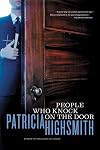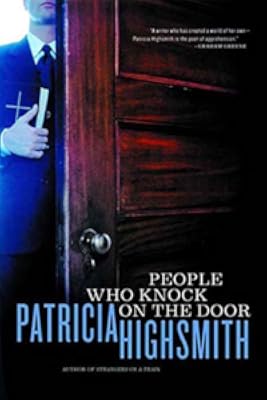
People Who Knock on the Door
by Patricia Highsmith
On This Page
Description
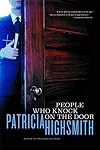
With the savage humor of Evelyn Waugh and the macabre sensibility of Edgar Allan Poe, Patricia Highsmith brought a distinct twentieth-century acuteness to her prolific body of fiction. In her more than twenty novels, psychopaths lie in wait amid the milieu of the mundane, in the neighbor clipping the hedges or the spouse asleep next to you at night. Now, Norton continues the revival of this noir genius with another of her lost masterpieces: a later work from 1983, People Who Knock on the show more Door, is a tale about blind faith and the slippery notion of justice that lies beneath the peculiarly American veneer of righteousness. This novel, out of print for years, again attests to Highsmith's reputation as "the poet of apprehension" (Graham Greene). show lessTags
Recommendations
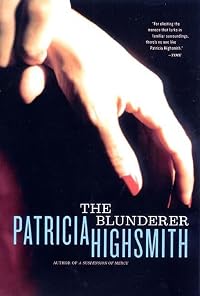
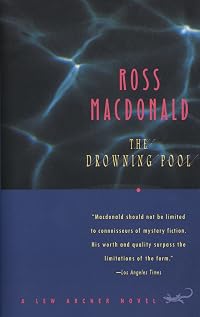


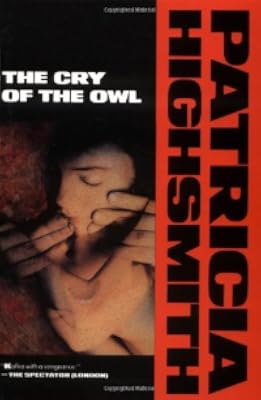
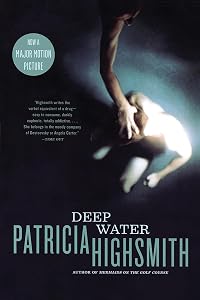









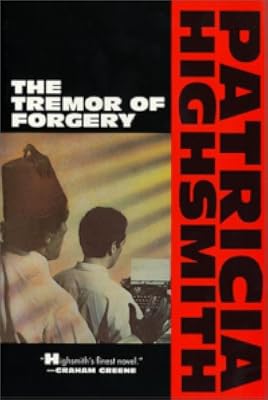
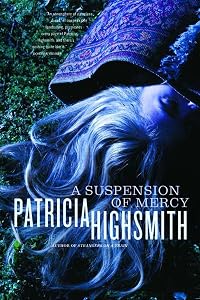





Member Recommendations

Member Reviews
Hollywood has rediscovered her since she died, but during most of her lifetime Patricia Highsmith belonged to that select group of American writers who sold more books in France than they did in the USA. The reasons for her repeated rejection by American readers aren't always as obvious as they were with this book, written in response to the rise of Reagan and the religious right in the early eighties, which for quite some time couldn't even find a publisher in America, although it got good reviews in Britain and elsewhere.
The central character of the book is Arthur, a student living with his family in a small town in Indiana, doing well at high school, and looking forward to going off to college on the East Coast. His plans are messed show more up when his father discovers a new enthusiasm for fundamentalist Christianity.
Highsmith plays her usual trick of bringing a chaotic disturbance into a well-ordered middle-class way of life to destabilise our preconceived ideas about order and morality, and this works very well, leading us gently but firmly into a position where our response to the final crisis will not be the one we expected to have. But the book is undermined by the relative clumsiness of her satirical attack on the evangelicals. Neither she nor any of the sympathetic characters in the book has the least bit of empathy with them and their beliefs - there's no attempt to see inside their heads and we have to take it on trust that they are all either hypocrites or gullible fools. So Highsmith's attacks on them come over more as snobbish prejudice than as the incisive criticism she obviously intended.
Another thing that struck me about the book is that there's a kind of reverse American Graffiti thing going on - it's meant to be set around 1981, and we get occasional mentions of current events to remind us of that, but most of the time Chalmerston, Indiana seems to be locked in something like the Hollywood version of 40s/50s small-town America. Which is presumably largely an accident of Highsmith's biography - when she wrote this book she'd been living in Europe for more than 20 years (and probably hadn't associated with American teenagers for even longer than that); her visit to Indiana to gather local colour was a mere week's stay with some friends in Bloomington. So she must have filled in a lot of the detail from her own experience of earlier times.
Interesting for anyone who wants to chase up Highsmith's career, but really rather a forgettable period piece. show less
The central character of the book is Arthur, a student living with his family in a small town in Indiana, doing well at high school, and looking forward to going off to college on the East Coast. His plans are messed show more up when his father discovers a new enthusiasm for fundamentalist Christianity.
Highsmith plays her usual trick of bringing a chaotic disturbance into a well-ordered middle-class way of life to destabilise our preconceived ideas about order and morality, and this works very well, leading us gently but firmly into a position where our response to the final crisis will not be the one we expected to have. But the book is undermined by the relative clumsiness of her satirical attack on the evangelicals. Neither she nor any of the sympathetic characters in the book has the least bit of empathy with them and their beliefs - there's no attempt to see inside their heads and we have to take it on trust that they are all either hypocrites or gullible fools. So Highsmith's attacks on them come over more as snobbish prejudice than as the incisive criticism she obviously intended.
Another thing that struck me about the book is that there's a kind of reverse American Graffiti thing going on - it's meant to be set around 1981, and we get occasional mentions of current events to remind us of that, but most of the time Chalmerston, Indiana seems to be locked in something like the Hollywood version of 40s/50s small-town America. Which is presumably largely an accident of Highsmith's biography - when she wrote this book she'd been living in Europe for more than 20 years (and probably hadn't associated with American teenagers for even longer than that); her visit to Indiana to gather local colour was a mere week's stay with some friends in Bloomington. So she must have filled in a lot of the detail from her own experience of earlier times.
Interesting for anyone who wants to chase up Highsmith's career, but really rather a forgettable period piece. show less
Patricia Highsmith’s book, one of her last, tells the story of a family pulled into religious fundamentalism through a medical crisis- the youngest son is saved from death through the power of prayer, though it may have been medical intervention, too. The father and youngest son are completely given over to religious rule, the eldest son rejects it and the mother seems ambivalent.
People seems to me to be written in response to the early Reagan years and the short-lived rise of the religious right in American politics. However, Highsmith’s theme of profound and unyielding religious devotion clashing with its surrounding environments and producing sociopathic behavior is relevant today and has been since 9/11.
Patricia Highsmith ranks show more up there with Janis Joplin and Goethe as people I’d like to have a beer with. show less
People seems to me to be written in response to the early Reagan years and the short-lived rise of the religious right in American politics. However, Highsmith’s theme of profound and unyielding religious devotion clashing with its surrounding environments and producing sociopathic behavior is relevant today and has been since 9/11.
Patricia Highsmith ranks show more up there with Janis Joplin and Goethe as people I’d like to have a beer with. show less
This is the first Patricia Highsmith novel I have read but it will not be my last. From the beginning I was drawn in to the life of the Alderman family. Arthur, the eldest son, is the focus of the novel. It is the end of the school year and he is on his way to university and has a girlfriend. His brother Robbie is a couple of years younger. His mother Lois works voluntarily at a children's home and his dad, Richard, sells insurance. Robbie is seriously ill and to Richard, his survival seems miraculous and due to prayer and he becomes a born-again Christian. Robbie embraces this faith too. Arthur is not interested in the church and Lois tries to keep the peace but this proves difficult when the church interferes in Arthur's life. Arthur show more is shown as a hard working young man, he has a summer job, does odd jobs in the neighbourhood and helps his parents. He struggles as the once close family falls apart, reviews his plans without much complaint when things change but he also often has the self-centred attitude of a young man. He is not a perfect human being, but then no one is. Grandma seems kind and thoughtful on her visits and his girlfriends family, who live comfortably, have more liberal attitudes. Everyone seems to drink quite a lot! Set in the 1980s, with the backdrop of the Reagan government, the wealth and hypocrisy of the church are highlighted. The gun culture in the US is also here and to this European this is shocking, considering it was 40+ years ago. This is a novel about people, with twists and turns and failings and moments of kindness. The ending is sudden and the reader is left wondering but otherwise I enjoyed reading it. show less
Summary: When his younger brother Robbie survives a bout with tonsilitis, Arthur Alderman's father Richard becomes a born-again Christian. Robbie is heavily influenced by his father, while Arthur rejects their new-found faith, and their mother just tries to keep the peace. Tensions build in their household, affecting Arthur's love life and education, until the entire situation can't help but explode.
Review: The shelving guide on the back cover of my copy says "Fiction/Mystery/Suspense", this has to be based on Highsmith's other work and not on this book, because only one of those three terms is at all applicable. There's no mystery to speak of, and the only suspense is wondering when the plot is going to start. The book is essentially a show more year in Arthur's life, and while stuff happens, the plot doesn't really have any motor behind it, and nothing particularly interesting happens until at least 3/4 of the way through the book. Furthermore, all of the characters seem pretty flat, even Arthur, without a whole lot of depth or inner complexity. No one really undergoes any growth or transformation over the course of the book - everyone's attitudes are more or less the same at the end as they were at the beginning, making the reader wonder what was the point of the intervening 300 pages. Finally, this book is pretty down on born-again fundamentalist Christians, which in itself is not necessarily a problem for me. However, what did bug me was the fact that it was so easily dismissive of the entire topic without giving even a hint of the other side of things. It's fine to point out the ridiculous hyperbole and hypocrisy of some born-agains, but when what you're knocking down is little more than a cariacatured cardboard cutout, then it makes the "victory" ring a little hollow.
Recommendation: It read pretty quickly, but that's probably because there wasn't a lot of substance there. Not exactly unenjoyable, but on the whole I wouldn't bother. show less
Review: The shelving guide on the back cover of my copy says "Fiction/Mystery/Suspense", this has to be based on Highsmith's other work and not on this book, because only one of those three terms is at all applicable. There's no mystery to speak of, and the only suspense is wondering when the plot is going to start. The book is essentially a show more year in Arthur's life, and while stuff happens, the plot doesn't really have any motor behind it, and nothing particularly interesting happens until at least 3/4 of the way through the book. Furthermore, all of the characters seem pretty flat, even Arthur, without a whole lot of depth or inner complexity. No one really undergoes any growth or transformation over the course of the book - everyone's attitudes are more or less the same at the end as they were at the beginning, making the reader wonder what was the point of the intervening 300 pages. Finally, this book is pretty down on born-again fundamentalist Christians, which in itself is not necessarily a problem for me. However, what did bug me was the fact that it was so easily dismissive of the entire topic without giving even a hint of the other side of things. It's fine to point out the ridiculous hyperbole and hypocrisy of some born-agains, but when what you're knocking down is little more than a cariacatured cardboard cutout, then it makes the "victory" ring a little hollow.
Recommendation: It read pretty quickly, but that's probably because there wasn't a lot of substance there. Not exactly unenjoyable, but on the whole I wouldn't bother. show less
Als seine Gebete erhört werden und sein jüngerer Sohn eine schwere Krankheit übersteht, wird Versicherungsagent Alderman plötzlich 'erleuchtet' und tritt einer christlichen Sekte bei. Er beginnt, die Familie mit Moralpredigten, Kirchenbesuchen und Gebeten zu quälen. Als die Freundin seines siebzehnjährigen Sohnes Arthur schwanger wird, kommt es zur Konfrontation.
8422623994
La scrittura di Highsmith è eccellente. Il testo è scorrevole. Il protagonista Arthur è sia il punto di forza che il punto debole di questo romanzo. È caratterizzato molto bene, come del resto tutti i personaggi del romanzo. Ma non c'è una vera e propria evoluzione del personaggio, che nonostante tutti gli eventi, resta sin troppo fedele a sé stesso.
Apr 27, 2026Italian
Members
- Recently Added By
Author Information

302+ Works 33,022 Members
Patricia Highsmith wrote twenty-one novels including "Strangers on a Train" & the "Ripley" series. She died in 1995 in Switzerland, where she resided much of her life. (Publisher Provided) Patricia Highsmith (January 19, 1921 -- February 4, 1995) was an American novelist and short story writer, most widely known for her psychological thrillers, show more which led to more than two dozen film adaptations. She was born in Fort Worth, Texas. Highsmith grew up with her maternal grandmother in Astoria, Queens, and attended Barnard College. Her first novel, Strangers on a Train (1950), was adapted for stage and screen numerous times, notably by Alfred Hitchcock in 1951. In addition to her acclaimed series about murderer Tom Ripley, which was made into a film in 1955, she wrote many short stories, often macabre, satirical or tinged with black humor. Highsmith liked to examine the ways in which people can get to the point where they are capable of murder, as well as who they become after they have committed a crime. In carefully constructed stories and novels, she integrated this scrutiny of the human psyche into complex plots that often took unexpected twists. In Strangers on a Train, architect Guy Haines meets Charles Bruno on a train. Bruno conceives a plan to have Haines kill Bruno's father, while Bruno will kill Haines's wife. The effect that this plan has on Haines is the focus of the story. Highsmith's awards include: O. Henry Award for best publication of first story, for "The Heroine" in Harper's Bazaar (1946), Grand Prix de Littérature Policière, for The Talented Mr. Ripley (1957), and the Dagger Award -- Category Best Foreign Novel, for The Two Faces of January from the Crime Writers' Association of Great Britain (1964). Highsmith died of aplastic anemia and cancer in Locarno, Switzerland, at age 74. Her last novel, Small G: A Summer Idyll, was published one month after her death in 1995. (Bowker Author Biography) show less
Some Editions
Series
Belongs to Publisher Series
detebe (21349)
Virago Modern Classics (664)
Common Knowledge
- Canonical title*
- Leute die an Türen klopfen
- Original title
- People Who Knock on the Door
- Original publication date
- 1983
- People/Characters
- Arthur Alderman; Richard Alderman; Lois Alderman; Robbie Alderman; Maggie Brewster
- Important places
- Chalmerston, Indiana, USA
- Dedication*
- Gewidmet dem Mut des palästinensischen Volkes und seiner Führer im Kampf um die Rückgewinnung eines Teils ihrer Heimat. Dieses Buch hat mit ihren Problemen nichts zu tun.
- First words
- Arthur flung the stone with calculated aim.
- Last words*
- (Click to show. Warning: May contain spoilers.)"Auf der Strasse kommt man im Grunde ja auch leichter zu Geld als im 'Silver Arrow'", sagte er mit ernster Stimme.
- Blurbers
- Greene, Graham; Symons, Julian
- Original language*
- Amerikanisch
*Some information comes from Common Knowledge in other languages. Click "Edit" for more information.
Classifications
Statistics
- Members
- 338
- Popularity
- 93,972
- Reviews
- 7
- Rating
- (3.47)
- Languages
- 8 — Danish, Dutch, English, French, German, Italian, Portuguese, Spanish
- Media
- Paper, Ebook
- ISBNs
- 30
- ASINs
- 9