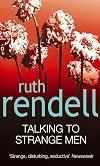
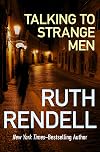
Talking to Strange Men
by Ruth Rendell
On This Page
Description
Fiction. Thriller. A lonely man stumbles into a dangerous game in this twisting novel of psychological suspense by the New York Times–bestselling author of The Crocodile Bird. In a desolate alley on the bank of the Thames, a spy slips through the shadows. Mungo is the Director General of English intelligence, and he knows Moscow Centre has been watching him for weeks, but there is no spy in London better at losing a tail. Satisfied he hasn't been followed, he drops off his message and show more disappears into the night. It's a classic scene of Cold War espionage, save for one detail: Mungo isn't a spy at all. He's a teenager, playing an epic game of make-believe. John Creevey, still reeling from the implosion of his marriage, is dreaming of taking revenge against his wife's lover when he discovers one of Mungo's coded signals. Unaware that the message is simply part of a child's game, he becomes obsessed with uncovering the rest of the spy network—a tragic misunderstanding that threatens to turn this imaginary war into something very real—and very deadly. "Rendell has brilliantly interwoven these compelling strands into one masterful tale of suspense," writes Library Journal. Three-time Edgar Award winner Ruth Rendell was a master of psychological suspense, and Talking to Strange Men is one of the most unusual espionage stories in the history of the Cold War. show lessTags
Recommendations











Member Reviews
John Creevey has lost a lot in his life - his parents, his sister (murdered) and most recently his wife, who just left him to go back to the man she was going to marry until she was dumped at the last minute. He’s got his job running a gardening centre, a couple of casual friends and a hope that he can win his wife back, but mostly he’s just alone. When he stumbles across some coded messages sort of hidden in plain sight, he takes it as a sign that he should try to interpret them, wondering if they were from a violent gang, a drug ring, perhaps international spies - but the truth is far different than his imaginings, and the events he unknowingly sets into motion lead only to death….This is a stand-alone novel by Ruth Rendell from show more 1987, and as with all her work, the inner lives and psychological profiles of her characters are extremely well-drawn and very human. The plot is, also as always, quite involved and convoluted; the reader knows that something is going to happen, but not quite what it will be until nearly the end. I found the main characters to be really unappetizing, though, and so while I enjoyed her writing as much as I have ever done, this book left me somewhat angsty, a bit depressed. show less
It would have worked better if it had been confined to a short story. That's what this book needed - confinement. So much of it is taken up by very uninteresting goings on that when the end finally approaches the reader sighs with relief. John is a boring little man with no life and so of course these coded messages become an obsession; he's got nothing else to do. All of his scenes are either at his boring job at a garden center, him trying to crack the code or alternately pining for Jennifer or drinking with Mark who can only talk about himself. John loathes himself for putting up with him, but doesn't have enough vertebral column to tell him off. The dark, twisted psyche that Rendell is so good at depicting is absent and makes for show more dull reading.
The whole spy thing that John takes so seriously being actually a bunch of kids is pretty funny in an ironic sort of way. The seriousness with which they take the whole enterprise is fun at first; the coded messages, the secrecy, the rivalry, moles, defectors and double-agents. After a while though it's boring and essentially meaningless because there is no intent to harm in anything they do. Even when John slips in his message about Peter Moran, the kids' attention is benign which makes the ending pretty tame even though Moran ends up dead. John didn't intend for him to be harmed and is barely aware of his death before the end of the book. Of course he doesn't get what he wants and seeing Jennifer and Mark together pushes him into (of course, what else can we expect from this loser?) a failed suicide attempt.
I've always thought early Rendell was the best, but this one was a miss. Not enough evil, tension or action to work well as a novel. I've always admired her subtlety, but this one isn't subtle, it's boring. show less
The whole spy thing that John takes so seriously being actually a bunch of kids is pretty funny in an ironic sort of way. The seriousness with which they take the whole enterprise is fun at first; the coded messages, the secrecy, the rivalry, moles, defectors and double-agents. After a while though it's boring and essentially meaningless because there is no intent to harm in anything they do. Even when John slips in his message about Peter Moran, the kids' attention is benign which makes the ending pretty tame even though Moran ends up dead. John didn't intend for him to be harmed and is barely aware of his death before the end of the book. Of course he doesn't get what he wants and seeing Jennifer and Mark together pushes him into (of course, what else can we expect from this loser?) a failed suicide attempt.
I've always thought early Rendell was the best, but this one was a miss. Not enough evil, tension or action to work well as a novel. I've always admired her subtlety, but this one isn't subtle, it's boring. show less
Super dark, and a bit tangled. Child murderer plots turn my stomach. But Rendell doesn't seem to miss very much, there's some power to this story. Another solid portrait of a Bleak British Block.
I'm not really sure what I thought of this "two stories that eventually intersect" story. On the one hand I couldn't follow nor was interested in the schoolboy spies story. On the other I was interested in the "hopelessly wants to get back with his ex-wife" story and the very bizarre revelations that came with it. There was definitely a build up of tension once the stories intersected and I'm very glad that one of those stories didn't go the way it could have as that would have been very hard to read. At the end of it all I felt slightly dissatisfied though I can't articulate why. Maybe it's because of all the descriptive passages that don't really add anything to the story or its mood.
This is the first Ruth Rendell I've read and I really enjoyed it. The plot is very clever and I really liked how the author managed to interweave two apparently separate stories. The characterization was also very well done. It's always great to find an author who combines suspense and mystery with compelling characterizations. There are many crime/mystery writers who are good at plotting and setting up puzzles, but are short on just about every other literary skill. Rendell is the whole package. I will definitely read some more of her works.
I registered this book at BookCrossing.com!
http://www.BookCrossing.com/journal/14829516
A small group of private school boys are engaged in a spy game. It's fairly elaborate - there are two opposing groups, each with a leader and with "drop" locations, safe houses, and coded messages.
John Creevey, an adult suffering from his wife's departure, happens upon one of the drops and starts to copy the messages and try to decipher them. He becomes quite involved in the puzzle, and tries to figure out who the rival groups are. Street gangs? Drug lords? Actual spies?
John is obsessed, however, with getting wife Jennifer back. She has taken off with a former lover, boldly. This lover had left her almost at the altar yet she still wants him. John show more cannot understand it. He tries to find the key - what can he do to win her back?
Through an intersection of John's needs and the boys' spy game, something unexpected and unplanned happens. Was John too careless?
With Rendell you can never be sure of the outcome. She loves to develop complex characters whose motives may not be pure, or may just be muddied. This is a lovely representation of her brilliant mind. show less
http://www.BookCrossing.com/journal/14829516
A small group of private school boys are engaged in a spy game. It's fairly elaborate - there are two opposing groups, each with a leader and with "drop" locations, safe houses, and coded messages.
John Creevey, an adult suffering from his wife's departure, happens upon one of the drops and starts to copy the messages and try to decipher them. He becomes quite involved in the puzzle, and tries to figure out who the rival groups are. Street gangs? Drug lords? Actual spies?
John is obsessed, however, with getting wife Jennifer back. She has taken off with a former lover, boldly. This lover had left her almost at the altar yet she still wants him. John show more cannot understand it. He tries to find the key - what can he do to win her back?
Through an intersection of John's needs and the boys' spy game, something unexpected and unplanned happens. Was John too careless?
With Rendell you can never be sure of the outcome. She loves to develop complex characters whose motives may not be pure, or may just be muddied. This is a lovely representation of her brilliant mind. show less
Neste inspirado romance, Ruth Rendell tece uma rede de ocorrências e personagens, oferecendo ao leitor uma trama cheia de nuances e imprevistos. No centro do enredo estão dois grupos de adolescentes para quem o mundo da espionagem significa o máximo da aventura. Utilizando mensagens em código e esconderijos secretos, os bandos rivais, compostos por colegiais ingleses, vão se envolvendo em investigações de pequenos casos que ocorrem em seu meio familiar e social. Enquanto isso, desenrola-se o drama de John Creevey, um homem simples, gerente de uma loja de plantas, que tempos atrás teve sua irmã assassinada e que acaba de perder a mulher para outro. Creevey intercepta uma mensagem cifrada e, sem saber com quem está lidando
Members
- Recently Added By
Published Reviews
ThingScore 50
A writer who like Rendell refuses to accept the usual limits of the crime story is bound to miss the bull's eye sometimes, and Talking to Strange Men is no more than an outer, even though the main theme is handled with typical assurance...
The idea is ingenious, but even Rendell's skill cannot make the mock spying activities seem plausible, so that the story's would-be tragic finale seems show more merely confected. It may be that at the moment Ruth Rendell is writing too much-an average of two books a year plus short stories is one that nobody except Simenon has maintained for long without some loss of quality. show less
The idea is ingenious, but even Rendell's skill cannot make the mock spying activities seem plausible, so that the story's would-be tragic finale seems show more merely confected. It may be that at the moment Ruth Rendell is writing too much-an average of two books a year plus short stories is one that nobody except Simenon has maintained for long without some loss of quality. show less
added by SnootyBaronet
Lists

British Mystery
469 works; 14 members
Author Information

315+ Works 51,391 Members
Ruth Rendell (1930-2015) Ruth Rendell was born in Essex, England on February 17, 1930. She was educated at Loughton County High School. Rendell began her career as a journalist. She wrote six novels before sending her work in to a publisher. She writes crime novels and psychological thrillers, and is best known for her Inspector Wexford books. show more Rendell also writes under the pseudonym Barbara Vine. Rendell has received many awards for her writing, including the Silver, Gold, and Cartier Diamond Daggers from the Crime Writers' Association, three Edgars from the Mystery Writers of America, The Arts Council National Book Awards, and The Sunday Times Literary Award. She is a fellow of the Royal Society of Literature. Many of her titles have been made into films and made-for-tv movies. Rendell died on May 2, 2015. She was 85 years old. (Bowker Author Biography) show less
Some Editions
Common Knowledge
- Original publication date
- 1987
- People/Characters
- John Creevey; Jennifer Creevey; Peter Moran; Mungo
- Related movies
- Ruth Rendell Mysteries: Talking to Strange Men (1992 | IMDb)
Classifications
Statistics
- Members
- 483
- Popularity
- 62,965
- Reviews
- 12
- Rating
- (3.56)
- Languages
- 9 — Danish, Dutch, English, French, German, Norwegian (Bokmål), Portuguese, Spanish, Swedish
- Media
- Paper, Audiobook, Ebook
- ISBNs
- 41
- ASINs
- 15