On This Page
Description
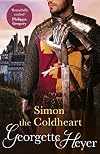
In the early 15th century, during the middle of the Hundred Years' War, England and France were fighting for sovereignty over France. It was a time of hand-to-hand combat, the invention of the longbow, and real knights in armor.Simon Beauvallet was born in 1386, the illegitimate son of Geoffrey of Malvallet. After his mother's death in 1400, he and his half-brother, the legitimate son and heir of his father, became great friends of the Prince, fighting against France. Known for his silence show more and nicknamed "the Coldheart," Simon nonetheless loved children and had a complex and deep personality. After the Battle of Agincourt in 1415, he was sent to besiege Belremy, where he met the lady, Margaret, who eventually surrendered to the English and became his bride.
"She makes the knightly days live again." —Boston Evening Transcript
"An outstanding storyteller." —The Times Literary Supplement
. show less
Tags
Recommendations

































Member Reviews
This is one of my favorite Georgette Heyer books, and I was long overdue for a reread. I love the blending of relatable characters and history. This reread of the book was especially enjoyable as I recently visited the Normandy region of France and recognized many of the place names - especially Bayeux.
Simon is the illegitimate son of Lord Malvallet. When he is fourteen, he wants more than a peasant's life and goes to his father's greatest rival, looking for a place in his household. The meeting between Simon and Fulk of Montlice is hilarious. Simon is cool and determined, while Fulk is a blustering bear of a man. Fulk sees something special in Simon, and within a few years, Simon goes from squire to knight to landowner. Simon is show more called coldhearted, but he is ruthlessly honest and absolutely unflappable in all circumstances. That coolheadedness brings him to the attention of King Henry and sets him on the path to success.
I loved following Simon's career and activities, from his training to battlefield experiences to his work taming his property. The story is rich with the details of his day-to-day life and the life-changing events. The one thing Simon lacks is any knowledge of love, for he has experienced none of it during his life. His two best friends are Alan of Montlice, his mentor's son, and Geoffrey Malvallet, his legitimate half-brother. I enjoyed the strong friendship among these three men who always had each other's backs in battle and life. Their interactions frequently show a different side of Simon than the warrior knight.
Simon's life takes an unexpected turn when he is ordered to take Belremy. Others have failed to best Margaret, Countess of Belremy, who holds the lands. But Simon has never failed to achieve his mission and isn't about to start now. Margot is equally determined to keep her lands. Their first encounter gave a good preview of what they could expect from each other. The sparks between them flew fast and furiously, but underneath the antagonism were sparks of another sort, though neither wanted to acknowledge the attraction. Margaret's stubborn refusal to give in causes her to do something that puts her and her friend Jeanne in grave danger, and it's up to Simon to save them. It was an eye-opening experience for both, and I loved its effect on them. The ending was terrific.
A secondary romance between Geoffrey and Jeanne is a delightful contrast to the fire between Simon and Margaret. It is through Geoffrey and Jeanne that we learn a little more about Simon and Margaret as they share stories about their friends. show less
Simon is the illegitimate son of Lord Malvallet. When he is fourteen, he wants more than a peasant's life and goes to his father's greatest rival, looking for a place in his household. The meeting between Simon and Fulk of Montlice is hilarious. Simon is cool and determined, while Fulk is a blustering bear of a man. Fulk sees something special in Simon, and within a few years, Simon goes from squire to knight to landowner. Simon is show more called coldhearted, but he is ruthlessly honest and absolutely unflappable in all circumstances. That coolheadedness brings him to the attention of King Henry and sets him on the path to success.
I loved following Simon's career and activities, from his training to battlefield experiences to his work taming his property. The story is rich with the details of his day-to-day life and the life-changing events. The one thing Simon lacks is any knowledge of love, for he has experienced none of it during his life. His two best friends are Alan of Montlice, his mentor's son, and Geoffrey Malvallet, his legitimate half-brother. I enjoyed the strong friendship among these three men who always had each other's backs in battle and life. Their interactions frequently show a different side of Simon than the warrior knight.
Simon's life takes an unexpected turn when he is ordered to take Belremy. Others have failed to best Margaret, Countess of Belremy, who holds the lands. But Simon has never failed to achieve his mission and isn't about to start now. Margot is equally determined to keep her lands. Their first encounter gave a good preview of what they could expect from each other. The sparks between them flew fast and furiously, but underneath the antagonism were sparks of another sort, though neither wanted to acknowledge the attraction. Margaret's stubborn refusal to give in causes her to do something that puts her and her friend Jeanne in grave danger, and it's up to Simon to save them. It was an eye-opening experience for both, and I loved its effect on them. The ending was terrific.
A secondary romance between Geoffrey and Jeanne is a delightful contrast to the fire between Simon and Margaret. It is through Geoffrey and Jeanne that we learn a little more about Simon and Margaret as they share stories about their friends. show less
Having read all but this and one other of Ms Heyer’s historical works set before the late 1700s, my hopes were not high for “Simon the Coldheart”. Thus, I was pleasantly surprised to find it a compelling read from start to finish.
I’ve few negative remarks to make, therefore I’ll get them out of the way first. As with most Heyer novels, certain scenes are repeated. In short, the reader witnesses events as they happen, only for these same events to be reworked later on via a dialogue exchange where one or more characters explains to another character(s) what’s happened.
I realise this is the author’s way of showing how the other main players in the story respond, yet this type of repetition would serve better with a short show more sentence, like, “He explained all that occurred when …” and follow this by showing the reaction from whomever is being informed.
The other negative point is one of my pet hates in fiction: the overuse of the word “then”. This lame tool of moving on to what happens next appears more times than I care to remember in this otherwise great work.
Apart from the above criticisms, I found this a great piece of entertainment. The opening drew me in immediately, the ending proved satisfactory and definitive, while everything in between was engaging for one reason or another.
Simon is no effeminate dandy, nor is he the lethargic snuff-taking know-it-all, but rather a fearless warrior with brains to match his brawn. He’s hard but fair, ruthless not reckless, cold but not cruel. Some may argue he’s too good to be true, and although at times he borders on the supernatural, I think the author has created one of her best male characters here.
She’s also created a great female character in the Lady Margaret, who in certain respects is similar in nature to Simon. She possesses brains and beauty, bravery, and consideration for others. She doesn’t appear till halfway through the book, at which point she becomes as vital to the story as Simon. Some of my favourite chapters feature Margaret in the limelight.
Fulk of Montlice is another great character. His scenes with Margaret are highly amusing.
As the book is divided into two halves, the first part being set in England during the 1390s and early 1400s, with the second part set in France in 1417, the reader meets the first two Lancastrian kings of England, Henry IV and his son Henry V. Neither monarch features as a principal character, but when they do appear the author does a great job of bringing them to life.
On the whole, the cast, including the incidental characters, are all brilliantly portrayed.
As for the plot, this essentially is based on what Simon wants from life, which to begin with is to serve Fulk of Montlice. Simon expects to go on to have his own lands but is determined to *earn* them and anything else of value. He’s not one for accepting charity or favours.
The second part of the book features Simon serving in a prominently role in Henry V’s army. But the plot branches out more from here, as there’s storylines for the secondary characters, including love matches, but mainly we see Margret’s determination to thwart Simon who, in serving his king, must conquer the lady’s land.
As mentioned, some chapters featuring Margret’s adventures are my favourite in the novel. Some had potential to be even better and it’s unfortunate that the author didn’t expand these instead of retelling certain scenes on several occasions. But what we have is still superb with never a dull moment.
A regal read. show less
I’ve few negative remarks to make, therefore I’ll get them out of the way first. As with most Heyer novels, certain scenes are repeated. In short, the reader witnesses events as they happen, only for these same events to be reworked later on via a dialogue exchange where one or more characters explains to another character(s) what’s happened.
I realise this is the author’s way of showing how the other main players in the story respond, yet this type of repetition would serve better with a short show more sentence, like, “He explained all that occurred when …” and follow this by showing the reaction from whomever is being informed.
The other negative point is one of my pet hates in fiction: the overuse of the word “then”. This lame tool of moving on to what happens next appears more times than I care to remember in this otherwise great work.
Apart from the above criticisms, I found this a great piece of entertainment. The opening drew me in immediately, the ending proved satisfactory and definitive, while everything in between was engaging for one reason or another.
Simon is no effeminate dandy, nor is he the lethargic snuff-taking know-it-all, but rather a fearless warrior with brains to match his brawn. He’s hard but fair, ruthless not reckless, cold but not cruel. Some may argue he’s too good to be true, and although at times he borders on the supernatural, I think the author has created one of her best male characters here.
She’s also created a great female character in the Lady Margaret, who in certain respects is similar in nature to Simon. She possesses brains and beauty, bravery, and consideration for others. She doesn’t appear till halfway through the book, at which point she becomes as vital to the story as Simon. Some of my favourite chapters feature Margaret in the limelight.
Fulk of Montlice is another great character. His scenes with Margaret are highly amusing.
As the book is divided into two halves, the first part being set in England during the 1390s and early 1400s, with the second part set in France in 1417, the reader meets the first two Lancastrian kings of England, Henry IV and his son Henry V. Neither monarch features as a principal character, but when they do appear the author does a great job of bringing them to life.
On the whole, the cast, including the incidental characters, are all brilliantly portrayed.
As for the plot, this essentially is based on what Simon wants from life, which to begin with is to serve Fulk of Montlice. Simon expects to go on to have his own lands but is determined to *earn* them and anything else of value. He’s not one for accepting charity or favours.
The second part of the book features Simon serving in a prominently role in Henry V’s army. But the plot branches out more from here, as there’s storylines for the secondary characters, including love matches, but mainly we see Margret’s determination to thwart Simon who, in serving his king, must conquer the lady’s land.
As mentioned, some chapters featuring Margret’s adventures are my favourite in the novel. Some had potential to be even better and it’s unfortunate that the author didn’t expand these instead of retelling certain scenes on several occasions. But what we have is still superb with never a dull moment.
A regal read. show less
My rule is, I rate books within their genre. Is this a 5-star book among all the books I've ever read in my life? Absolutely not. Is it a 5-star book among sappy romantic historical fiction? Without a doubt. This novel is unique because you spend quite a lot of time with our hero, waging war and buckling swashes and racking up titles from King Henry II and hangin' with the bros, before you even meet our heroine--who is your typical Heyer heroine, with tons of spirit and smart-assery.
Simon Beauvallet (a.k.a. the Coldheart) is quite a lot like Ross Poldark but with fewer issues with authority, an absolutely fearless yet humble guy and great leader of men, who will leap into a crazy and potentially lethal situation with both feet and show more figure it out when he gets there. It's not a spoiler to say that Simon turns out not to have a cold heart after all (surprise!) show less
Simon Beauvallet (a.k.a. the Coldheart) is quite a lot like Ross Poldark but with fewer issues with authority, an absolutely fearless yet humble guy and great leader of men, who will leap into a crazy and potentially lethal situation with both feet and show more figure it out when he gets there. It's not a spoiler to say that Simon turns out not to have a cold heart after all (surprise!) show less
Georgette Heyer, best known for her sparkling Regency romances, also wrote a fair number of historical novels that cover earlier periods of England's history. Simon the Coldheart, first published in 1925, is one of these. The story opens in 1400 with 14-year-old Simon, illegitimate son of Sir Geoffrey of Malvallet, demanding that another nobleman, Fulk of Montlice, take him on as a page. Fulk, a blustering lion of a man, is impressed with Simon's determination and over the next three years comes to love Simon as his son. His real son, Alan, also loves Simon, though Alan is more of a poet than a warrior, and all of Simon's interests are warlike. The first half of the book chronicles Simon's rise to power and favor with the king; the show more second part describes Simon's assault on Belrémy in Normandy, held by the Lady Margaret (who is known as "the Amazon"). Simon wins the town in battle and the castle by subterfuge, but Lady Margaret refuses to make her submission to Henry IV. How will Simon — a soldier and not a courtier — force the lady's hand?
Battles, sieges, romance, spies, intrigue, tavern brawls, disguises, humor, lordly heroes, lovely ladies, odious villains — this story has it all! Heyer's grasp of the historical setting and dialogue is perfect. She doesn't hesitate to have Fulk beat Simon and yet still love him; corporal punishment of one kind or another was just the norm back then. Simon is stern with his underlings, but that doesn't mean he is a harsh master. This is part of what makes Heyer's characters so believable. They behave in ways defined by their historical period, but are somehow still accessible and likable to readers today.
Simon is a fascinating character. He earns his nickname of "the Coldheart" because of his calculating shrewdness and strict sense of implacable justice. He is a hard man, but a fair one, and even as a young boy his stubbornness, strength, and pragmatism are the defining points of his nature. But though he is chary with his love, he is not entirely heartless. He has an excessive number of page boys and though he pretends not to care about them, the truth is that he enjoys having them around him like an entourage of puppies. Because of this, Simon's friends (including no less a personage than the prince, Henry V) believe that someday a likely maid will melt the ice around Simon's heart.
I've heard that Heyer did not like Simon the Coldheart and tried to prevent it from being republished in later years. I have several theories as to why. First, there is a lot of talk of Simon "conquering" the proud Margaret and her need to be "mastered," which may make some modern readers squirm a little. (Or a lot.) Second, perhaps Heyer worried the implications of Simon falling in love with Margaret when he sees her in her page boy's garb, looking more childlike than he had ever seen her before. Of course, these are just the speculations of a reader who *did* enjoy the book quite a bit. The notion of Margaret needing a master is certainly historically accurate thinking for the fifteenth century, and there is no textual support for any kind of perverse motivation in Simon's affection for children.
I think it's a pity that Heyer did not care for this novel, because I enjoyed it. There is a scene that contains one of the sweetest love-talks I've ever read. (This conversation doesn't take place between Margaret and Simon, by the way — as Alan says, those two conduct their courting with daggers!) I can't do it justice, so here's a bit of it:
"This lady, sweet, is little and lovely. So little that I might hide her in my pocket and forget that she was there."
"This is English gallantry," sighed Jeanne. "Poor lady!"
"Not 'poor,' Jeanne, for she hath all a man's heart."
"Which is so little," quoth she, "that she slipped it into her bag and forgot it was there. Hey-day!"
"But even though she forgot, being cruel, it still remained, braving her coldness and her tauntings and waiting very humbly till she should grow kind."
...
"Now I know why she is cold," he said. "Her heart was gone already, so that she had none to give this Englishman. So he left her—with his heart."
...
"Never. You see, sir, it was a cold, cruel heart, and it repulsed all its suitors. And—and it was a shy heart, but true. So—so one day—it left the lady—very secretly, so that she did not know that it had gone, and—and slipped into a man's pocket. And—and when the lady—tried to recall it—it would not come, but nestled down in its hiding place. But—but it was such a timid little heart, that the man—he was a great, stupid Englishman—never knew that it was in his pocket, but besought the lady to give it to him."
I listened to this on audiobook narrated by Ben Elliott, whose reading is very good for the most part. He does have a slight habit of speaking the dialogue tags in the same voice as the dialogue immediately preceding it, and it must be an older production because there is an annoying distortion when he raises his voice. But it's an engaging story and I think the audiobook format makes it even more fun. In fact, I found it quite hard to stop listening each night at the end of my commute! Simon the Coldheart is a thoroughly enjoyable medieval romance by a talented author. Recommended! show less
Battles, sieges, romance, spies, intrigue, tavern brawls, disguises, humor, lordly heroes, lovely ladies, odious villains — this story has it all! Heyer's grasp of the historical setting and dialogue is perfect. She doesn't hesitate to have Fulk beat Simon and yet still love him; corporal punishment of one kind or another was just the norm back then. Simon is stern with his underlings, but that doesn't mean he is a harsh master. This is part of what makes Heyer's characters so believable. They behave in ways defined by their historical period, but are somehow still accessible and likable to readers today.
Simon is a fascinating character. He earns his nickname of "the Coldheart" because of his calculating shrewdness and strict sense of implacable justice. He is a hard man, but a fair one, and even as a young boy his stubbornness, strength, and pragmatism are the defining points of his nature. But though he is chary with his love, he is not entirely heartless. He has an excessive number of page boys and though he pretends not to care about them, the truth is that he enjoys having them around him like an entourage of puppies. Because of this, Simon's friends (including no less a personage than the prince, Henry V) believe that someday a likely maid will melt the ice around Simon's heart.
I've heard that Heyer did not like Simon the Coldheart and tried to prevent it from being republished in later years. I have several theories as to why. First, there is a lot of talk of Simon "conquering" the proud Margaret and her need to be "mastered," which may make some modern readers squirm a little. (Or a lot.) Second, perhaps Heyer worried the implications of Simon falling in love with Margaret when he sees her in her page boy's garb, looking more childlike than he had ever seen her before. Of course, these are just the speculations of a reader who *did* enjoy the book quite a bit. The notion of Margaret needing a master is certainly historically accurate thinking for the fifteenth century, and there is no textual support for any kind of perverse motivation in Simon's affection for children.
I think it's a pity that Heyer did not care for this novel, because I enjoyed it. There is a scene that contains one of the sweetest love-talks I've ever read. (This conversation doesn't take place between Margaret and Simon, by the way — as Alan says, those two conduct their courting with daggers!) I can't do it justice, so here's a bit of it:
"This lady, sweet, is little and lovely. So little that I might hide her in my pocket and forget that she was there."
"This is English gallantry," sighed Jeanne. "Poor lady!"
"Not 'poor,' Jeanne, for she hath all a man's heart."
"Which is so little," quoth she, "that she slipped it into her bag and forgot it was there. Hey-day!"
"But even though she forgot, being cruel, it still remained, braving her coldness and her tauntings and waiting very humbly till she should grow kind."
...
"Now I know why she is cold," he said. "Her heart was gone already, so that she had none to give this Englishman. So he left her—with his heart."
...
"Never. You see, sir, it was a cold, cruel heart, and it repulsed all its suitors. And—and it was a shy heart, but true. So—so one day—it left the lady—very secretly, so that she did not know that it had gone, and—and slipped into a man's pocket. And—and when the lady—tried to recall it—it would not come, but nestled down in its hiding place. But—but it was such a timid little heart, that the man—he was a great, stupid Englishman—never knew that it was in his pocket, but besought the lady to give it to him."
I listened to this on audiobook narrated by Ben Elliott, whose reading is very good for the most part. He does have a slight habit of speaking the dialogue tags in the same voice as the dialogue immediately preceding it, and it must be an older production because there is an annoying distortion when he raises his voice. But it's an engaging story and I think the audiobook format makes it even more fun. In fact, I found it quite hard to stop listening each night at the end of my commute! Simon the Coldheart is a thoroughly enjoyable medieval romance by a talented author. Recommended! show less
Published in 1925, Simon the Coldheart is one of a handful of early novels that Georgette Heyer sought to suppress during her lifetime, and one of her few medieval romances. It concerns the founding of the house of Beauvallet, also featured in the author's subsequent Elizabethan adventure of the same name, published in 1929.
It is the story of the indomitable Simon, bastard son of my Lord of Malvallet, who sets out to win his own place in the world, eventually gaining lands, title, and acclaim as a soldier. But it is only when he crosses swords with the warlike French countess, Lady Margaret of Belremy, that his cold heart is finally melted...
I vacillated between enjoyment and exasperation while reading this novel, which I would most show more likely never have picked up at all, were I not attempting to read Heyer's entire oeuvre. To be fair, I am no great fan of the genre, for although fascinated by medieval European history (the novel opens in the year 1400), I generally find works of historical fiction set during the period to be hopelessly anachronistic. That said, I did enjoy the first portion of Heyer's book, which concerns Simon's youth and coming of age, and the adventures which eventually made him my Lord of Beauvallet.
But when the narrative turned to romance, I soon perceived that tired old theme of "the strong woman who needs to be tamed," which irritates me no end. The middle section, in which Simon lays siege to Belremy, was full of lots of this "masterless wench needs to learn her place" kind of talk, and I was very close to surrendering the novel, unfinished. But I pushed through, and found the ending somewhat improved.
All in all, I am glad this was reprinted, and that I read it. If nothing else, it was a timely reminder that there is something in a strong woman and leader that makes men (and sometimes women) want to tear her down...
And of course, the completist in me would have been displeased if I had given up! :) show less
It is the story of the indomitable Simon, bastard son of my Lord of Malvallet, who sets out to win his own place in the world, eventually gaining lands, title, and acclaim as a soldier. But it is only when he crosses swords with the warlike French countess, Lady Margaret of Belremy, that his cold heart is finally melted...
I vacillated between enjoyment and exasperation while reading this novel, which I would most show more likely never have picked up at all, were I not attempting to read Heyer's entire oeuvre. To be fair, I am no great fan of the genre, for although fascinated by medieval European history (the novel opens in the year 1400), I generally find works of historical fiction set during the period to be hopelessly anachronistic. That said, I did enjoy the first portion of Heyer's book, which concerns Simon's youth and coming of age, and the adventures which eventually made him my Lord of Beauvallet.
But when the narrative turned to romance, I soon perceived that tired old theme of "the strong woman who needs to be tamed," which irritates me no end. The middle section, in which Simon lays siege to Belremy, was full of lots of this "masterless wench needs to learn her place" kind of talk, and I was very close to surrendering the novel, unfinished. But I pushed through, and found the ending somewhat improved.
All in all, I am glad this was reprinted, and that I read it. If nothing else, it was a timely reminder that there is something in a strong woman and leader that makes men (and sometimes women) want to tear her down...
And of course, the completist in me would have been displeased if I had given up! :) show less
I had the feeling that I have read this before, but, if so, it must have been a very long time ago. This is not set in the usual Heyer Regency, this is set in the time of the start of the wars of the Roses, in early 1400s. Starting with Simon, an unacknowledged bastard son of Lord Malvallet, turning up at the castle of Malvallet's foe, Fulk of Montlice. He gets himself taken on as a page, and then worms his way into Fulk's affections. Simon is quickly the ideal knight, strong, stern, brave, commanding and, apparently, completely without heart. But the lie is given to that by his affection for children, and the number of his pages that he seems to employ. Simon is presented in contrast with his half brother, Geoffrey, and Fulk's son, show more Alan. The three, between them, are the different faces of manhood, soldier, courtier and poet. They form a quite attractive contrast and are well penned.
There's a lot goes on in here, lots of battles, sieges, attacks, plots and strategies (successful and not). It is all quite breathless, there's barely a chance to take stock and find your balance. The romance is a long time coming and is contrasted with the romance between Simon's half brother and Margurite's maid, the courtier and the soldier going about this is quite different ways.
This is a book Heyer wanted to suppress as being not up to her later standards. It's not as elegant as later books, the romance isn't as subtle or engaging as in later books. It's far too bent on Margaret giving into Simon's will than it is a meeting of minds. Later books manage this a lot better.
Having said all that, I enjoyed it. A less good Heyer is still better than a lot of what's out there. Not one I'd suggest to start with, but it's not that it should be avoided.
Re-read. I think the previous review still stands. There's plentry of adventure in here, and enough archaic language to satisfy those who want their history to look and sound different. The romance remains slightly weak, in that it is Margurite who yields to Simon, although you can see it coming, it feels a little like surrender when it does. So it remains as a 3 star book, good but not great. show less
There's a lot goes on in here, lots of battles, sieges, attacks, plots and strategies (successful and not). It is all quite breathless, there's barely a chance to take stock and find your balance. The romance is a long time coming and is contrasted with the romance between Simon's half brother and Margurite's maid, the courtier and the soldier going about this is quite different ways.
This is a book Heyer wanted to suppress as being not up to her later standards. It's not as elegant as later books, the romance isn't as subtle or engaging as in later books. It's far too bent on Margaret giving into Simon's will than it is a meeting of minds. Later books manage this a lot better.
Having said all that, I enjoyed it. A less good Heyer is still better than a lot of what's out there. Not one I'd suggest to start with, but it's not that it should be avoided.
Re-read. I think the previous review still stands. There's plentry of adventure in here, and enough archaic language to satisfy those who want their history to look and sound different. The romance remains slightly weak, in that it is Margurite who yields to Simon, although you can see it coming, it feels a little like surrender when it does. So it remains as a 3 star book, good but not great. show less
Georgette Heyer didn't want this book published, but I am glad it was. Other than the medieval language of 'thou' and 'thee' getting in the way, this is a better read than some of her other books. There is love, action, and interesting characters, making it an enjoyable quick read.
Members
- Recently Added By
Lists

Favorite Georgette Heyer Novels, Ranked
49 works; 29 members

Books I've Read More Than Once
602 works; 49 members
Author Information

127+ Works 78,003 Members
Georgette Heyer was born on August 16, 1902 at Wimbledon, London. She wrote The Black Moth as a story for her brother Boris. Her father, impressed with his daughter's imagination, suggested that she prepare it to be published, which it was by Constable in 1921. Having scored an instant success with The Black Moth at the age of nineteen under her show more own name, Georgette Heyer, she experimented with a pseudonym, Stella Martin, for her third book, published by Mills & Boon. She continued writing and in 1925 she married Ronald Rougier, a mining engineer. After reasonable but not spectacular sales from her first few books the instant success of These Old Shades in 1926 brought her a solid source of income which was very necessary at the time since the family relied to a large extent on the income from Georgette Heyer's writing. She wrote over fifty books during her lifetime and created the Regency England genre of romance novels. She died on July 4, 1974 at the age of 71. (Bowker Author Biography) show less
Some Editions
Series

Belongs to Publisher Series
Work Relationships
Common Knowledge
- Original publication date
- 1925
- People/Characters
- Simon of Beauvallet; Lady Margaret of Belrémy; Fulk of Montlice; Alan of Montlice; Geoffrey of Malvallet; Charles of Granmere (show all 14); Jeanne de Faucourt; Maurice of Gountray; Walter of Santoy; Cedric of Gountray; Roger of Maitland; Bernard of Talmayne; Victor de Galledemaine; Gaston Ranaud
- Important places
- Normandy, France
- Important events
- Hundred Years' War (1337-1453); Battle of Agincourt (1415-10-25)
- First words
- He came walking from Bedford into Cambridge one May morning when the sun was still young and the dew scarce gone from the grass.
- Last words
- (Click to show. Warning: May contain spoilers.)"Beneath contempt," said Simon the Coldheart.
- Original language
- English
Classifications
Statistics
- Members
- 612
- Popularity
- 47,384
- Reviews
- 19
- Rating
- (3.27)
- Languages
- English, German
- Media
- Paper, Audiobook, Ebook
- ISBNs
- 30
- UPCs
- 1
- ASINs
- 20