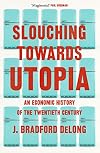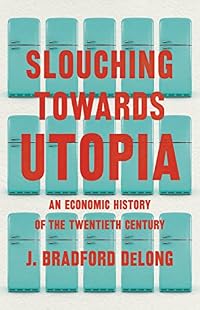
Slouching Towards Utopia: An Economic History of the Twentieth Century
by J. Bradford DeLong
On This Page
Description
"Before 1870, humanity lived in dire poverty, with a slow crawl of invention offset by a growing population. Then came a great shift: invention sprinted forward, doubling our technological capabilities each generation and utterly transforming the economy again and again. Our ancestors would have presumed we would have used such powers to build utopia. But it was not so. When 1870-2010 ended, the world instead saw global warming; economic depression, uncertainty, and inequality; and broad show more rejection of the status quo. Economist Brad DeLong's Slouching Towards Utopia tells the story of how this unprecedented explosion of material wealth occurred, how it transformed the globe, and why it failed to deliver us to utopia. Of remarkable breadth and ambition, it reveals the last century to have been less a march of progress than a slouch in the right direction"-- show lessTags
Recommendations

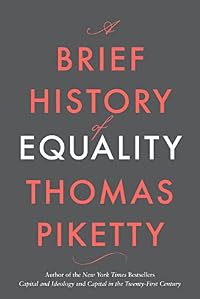
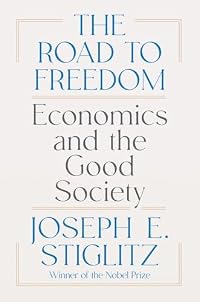
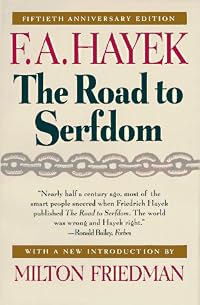

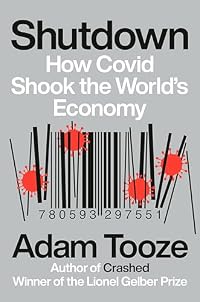




Member Recommendations
Member Reviews
I really enjoyed this. It's a 500+-page economic history of the years 1870 - 2010. It got really exciting in the WWI chapter, nearly every sentence packing a punch. Here's just one I bookmarked, about how just 80 years separated Croats & Serbs fighting together as blood brothers in WWI and the breakup of Yugoslavia in the 90s: "To fight one set of wars at the start of the twentieth century to unify Serbs and Croats, and another set of wars at the end of that century to 'ethnically cleanse' Serbs of Croats, and Croats of Serbs, seems among the sickest jokes history ever played on humanity, or, more causally accurate, humans ever played on history."
The overall theme of this history is Hayek vs. Polyani. Friedrich Hayek, I was familiar show more with, but with Michael Polyani I was not. DeLong sums up Hayek (repeatedly - the book is not afraid to repeat its themes): "The market giveth, and the market taketh away; blessed be the name of the market." Polyani, if I can summarize: nothing beats the free market for producing general prosperity, feeding technological progress, and allocating capital efficiently. However, people generally want more. They want some stability, some expectation they can keep their job, some fairness, etc. The market produces none of these things, which isn't a bad thing or a good thing; it's just not what the market does. Since people will persist in wanting these things, they will take action to make them happen, which is entirely reasonable. This struck me as one of those perspectives with a deep sense to it. Like when I turned away from libertarianism all those years ago. Freedom is great and important, but why should it trump other things that are also great and important? Like Haidt's RIGHTEOUS MIND - empathy is great and important, but people have other pillars of morality. So, the market is great and important, but there are other things that maybe it doesn't always trump.
Great food for thought, great history, great read. show less
The overall theme of this history is Hayek vs. Polyani. Friedrich Hayek, I was familiar show more with, but with Michael Polyani I was not. DeLong sums up Hayek (repeatedly - the book is not afraid to repeat its themes): "The market giveth, and the market taketh away; blessed be the name of the market." Polyani, if I can summarize: nothing beats the free market for producing general prosperity, feeding technological progress, and allocating capital efficiently. However, people generally want more. They want some stability, some expectation they can keep their job, some fairness, etc. The market produces none of these things, which isn't a bad thing or a good thing; it's just not what the market does. Since people will persist in wanting these things, they will take action to make them happen, which is entirely reasonable. This struck me as one of those perspectives with a deep sense to it. Like when I turned away from libertarianism all those years ago. Freedom is great and important, but why should it trump other things that are also great and important? Like Haidt's RIGHTEOUS MIND - empathy is great and important, but people have other pillars of morality. So, the market is great and important, but there are other things that maybe it doesn't always trump.
Great food for thought, great history, great read. show less
The subtitle of DeLong's book is "An Economic History of the Twentieth Century."
That's a tiny bit misleading. He writes about what he calls the "long twentieth century," beginning in 1870 not long after the end of the American Civil Warn, and ending in 2010, just after the election of Barack Obama and the 2008 housing crisis that kicked off the Great Recession.
It's ambitious -- that's 140 years on the entire world (with an acknowledged emphasis on the global north, but coverage of other regions as well), spanning what DeLong demonstrates is the greatest period of economic advancement and improvement in the history of humanity. He reaches backward every now and then, for example to the beginning of the industrial revolution in England, show more but does a very good job of staying on point for 530 or so pages.
There are recurring themes throughout the book -- "Polanyian rights," "really-existing socialism" and others reward an end-to-end read, because they are introduced once, and used over and over. I was struck, though, by the fact that individual chapters were really excellent short histories that could stand alone, on significant events in that long century. Want to understand the rise of the Soviet Union? Chapter 8, Really Existing Socialism, taught me things I never knew. Want to wrap your head around the economic forces and political genius that led to Hitler's rise? Chapter 9, Fascism and Nazism, is a pretty good textbook. Chapter 16, Reglobalization, Information Technology and Hyperglobalization is an outstanding explanation of the period, beginning most noticeably in the 1980s and running to about 2010, that produced so much wealth, and also social media.
The book is greater than the sum of its parts. Its parts are excellent.
You write a history of something when it's over, and DeLong's argument is that the long twentieth century has ended. That's not so much because of the date on the calendar, but because, DeLong says, the advantages and forces that led to such an astonishing climb have come apart at last. The book doesn't end pessimistically, exactly, but it acknowledges the enormous challenges we face right now -- a climate crisis, populism, discrimination and worse of some people, and an absence of thoughtful, principled and kind political leadership equal to the moment. show less
That's a tiny bit misleading. He writes about what he calls the "long twentieth century," beginning in 1870 not long after the end of the American Civil Warn, and ending in 2010, just after the election of Barack Obama and the 2008 housing crisis that kicked off the Great Recession.
It's ambitious -- that's 140 years on the entire world (with an acknowledged emphasis on the global north, but coverage of other regions as well), spanning what DeLong demonstrates is the greatest period of economic advancement and improvement in the history of humanity. He reaches backward every now and then, for example to the beginning of the industrial revolution in England, show more but does a very good job of staying on point for 530 or so pages.
There are recurring themes throughout the book -- "Polanyian rights," "really-existing socialism" and others reward an end-to-end read, because they are introduced once, and used over and over. I was struck, though, by the fact that individual chapters were really excellent short histories that could stand alone, on significant events in that long century. Want to understand the rise of the Soviet Union? Chapter 8, Really Existing Socialism, taught me things I never knew. Want to wrap your head around the economic forces and political genius that led to Hitler's rise? Chapter 9, Fascism and Nazism, is a pretty good textbook. Chapter 16, Reglobalization, Information Technology and Hyperglobalization is an outstanding explanation of the period, beginning most noticeably in the 1980s and running to about 2010, that produced so much wealth, and also social media.
The book is greater than the sum of its parts. Its parts are excellent.
You write a history of something when it's over, and DeLong's argument is that the long twentieth century has ended. That's not so much because of the date on the calendar, but because, DeLong says, the advantages and forces that led to such an astonishing climb have come apart at last. The book doesn't end pessimistically, exactly, but it acknowledges the enormous challenges we face right now -- a climate crisis, populism, discrimination and worse of some people, and an absence of thoughtful, principled and kind political leadership equal to the moment. show less
A great read!
A political economists looks at the "long" 20th century - 1870 to 2010 and picks out the big picture issues - the grand narratives.
The author has an engaging writing style, confident but also self-deprecating. I was rapt for most of the coverage, but not so much for the more recent decades - maybe it's harder for the author (and reader) to step back and consider the grand narrative for decades that are still raw in the mind of the writer and reader.
A political economists looks at the "long" 20th century - 1870 to 2010 and picks out the big picture issues - the grand narratives.
The author has an engaging writing style, confident but also self-deprecating. I was rapt for most of the coverage, but not so much for the more recent decades - maybe it's harder for the author (and reader) to step back and consider the grand narrative for decades that are still raw in the mind of the writer and reader.
This is a great book! If we could go back and tell the people of 1870 that we make over 8 times what they made, they would think that we live in utopia and all that all problems must be solved or nearly solved. But that's not the case. Why not? What happened over the "long century" of 1870-2008 that brought us to this point?
This book taught me a lot of ... history, as well as political economy. It is quite long, but I never got tired of it.
Lively, informative, and engaging.
Bought $34:99
Reading 10:07:25
The standard of economic literacy in high government offices all around the world has risen as all departments have to understand international trade as a result of President Trump’s belief in tariffs. 10:07:25.
Our federal elections due May 2028
Presidential Trump’s four years ends Jan 2029
Reading 10:07:25
The standard of economic literacy in high government offices all around the world has risen as all departments have to understand international trade as a result of President Trump’s belief in tariffs. 10:07:25.
Our federal elections due May 2028
Presidential Trump’s four years ends Jan 2029
Members
- Recently Added By
Lists

Top Five Books of 2022
736 works; 272 members

My wishlist
85 works; 1 member

TBR of Books I Don't Own
132 works; 1 member
Author Information

13 Works 564 Members
Awards and Honors
Distinctions
Common Knowledge
- Canonical title
- Slouching Towards Utopia: An Economic History of the Twentieth Century
- Original publication date
- 2022-09-06
- Quotations*
- Karl Marx argued that market economies necessarily produce ever-rising inequality and ever-increasing immiseration in the company of ever-increasing wealth. Was he right or wrong?
"Until it really existed, 'socialism'... (show all) could mean many things -- things other than the system Lenin created and Stalin solidified. In Western Europe and North America during the World War I era, most who called themselves any flavor of 'socialist' held that in a good society there ought to be enormous scope for individual initiative, for diversity, for the decentralization of decisionmaking, for liberal values, and even for non-commanding-heights private property. True freedom was, after all, the point. Eliminating the unequal distribution of income under capitalism that kept the bulk of the formally free imprisoned in the same life of drudgery was the goal.
"In price regulation and in public ownership, the question was an empirical one: private where private belongs, public where it was needed. And most people trusted representative democracy and rational argument to settle things case by case. But others took a more radical view, pushing for something beyond even a reformed, well-managed, and gentler market economy. It wasn't until Lenin began to exercise power that people began to discover the tradeoffs that would be involved in a really-existing socialism focused on destroying the power of the market.
"Lenin, his followers, and his successors began with a general article of faith: Karl Marx was right. In everything. If properly interpreted.
"Marx had mocked the sober businessmen of his time. They claimed to view revolution with horror. Yet, Marx asserted, they were themselves, in a sense, the most ruthless revolutionaries the world had ever seen. The business class -- what Marx called the bourgeoisie -- was responsible for the (up to then) greatest of all revolutions, and that revolution had changed the human condition. For the better. After all, it was the business class of entrepreneurs and investors, together with the market economy that pitted them against one another, that was responsible for bringing an end to the scarcity, want, and oppression that had been human destiny theretofore.
"But Marx also saw an inescapable danger: the economic system that the bourgeoisie had created would inevitably become the main obstacle to human happiness. It could, Marx thought, create wealth, but it could not distribute wealth evenly. Alongside prosperity would inevitably come increasing disparities of wealth. The rich would become richer. The poor would become poorer, and they would be kept in a poverty made all the more unbearable for being needless. The only solution was to utterly destroy the power of the market system to boss people around.
"My use of 'inescapable' and 'inevitable' is not for dramatic effect. Inevitability was for Marx and the inheritors of his ideas the fix to a fatal flaw. Marx spent his entire life trying to make his argument simple, comprehensible, and watertight. He failed. He failed because he was wrong. It is simply not the case that market economies necessarily produce ever-rising inequality and ever-increasing immiseration in the company of ever-increasing wealth. Sometimes they do. Sometimes they do not. And whether they do or do not is within the control of the government, which has sufficiently powerful tools to narrow and widen the income and wealth distribution to fit its purposes.
"But utopian, and for that matter dystopian, thinking does poorly with sometimes this and sometimes that, better or worse outcomes dependent on governments and their decisions. Inevitable was the patch for the flaw of contingent uncertainty. So Marx decided to prove that the existing system guaranteed dystopia: 'The more productive capital grows, the more the division of labor and the application of machinery expands. The more the division of labor and the application of machinery expands, the more competition among the workers expands and the more their wages contract. The forest of uplifted arms demanding work becomes thicker and thicker, while the arms themselves become thinner and thinner.' Marx was also certain that his dystopian vision of late capitalism would not be the end state of human history. For this bleak capitalist system was to be overthrown by one that nationalized and socialized the means of production. The rule of the business class, after creating a truly prosperous society, would 'produce … above all … its own gravediggers.'
"What would society be like after the revolution? Instead of private property, there would be 'individual property based on ... cooperation and the possession in common of the land and of the means of production.' And this would happen easily, for socialist revolution would simply require 'the expropriation of a few usurpers by the mass of the people,' who would then democratically decide upon a common plan for 'extension of factories and instruments of production owned by the State; the bringing into cultivation of waste-lands, and the improvement of the soil generally.' Voila, utopia.
"Except, of course, Marx was wrong.
"This inequality-increasing immiserarion-inevitable socialist revolution simply did not happen. For one thing, immiseration did not happen, in Britain at least, beyond 1850. Inequality had increased up to a peak of 1914 in Western Europe and 1929 in North America. But the upward leap in economic growth after 1870 meant that working classes all over the globe were also becoming richer and richer than their predecessors.
"That Marx got it wrong is not surprising. The fact is he was a theorist with only one example of industrialization to draw on, Britain. And in Britain, large and visible sections of the working class were worse off in 1840 than in 1790. Technological unemployment was a powerful thing. The construction of dark satanic mills in Lancashire left rural weaving skills useless and populations impoverished. There was a window of time when some of, even much of, Marx's dark brooding seemed plausible. In 1848 the belief that market capitalism necessarily produced a distribution of income that was unbearable was not reasonable. By 1883, when Marx died, such a belief was indefensible. By 1914, the doctrine of inevitable immiseration was indeed a doctrine: a matter not of human reason but of pure transcendent faith alone."
*Some information comes from Common Knowledge in other languages. Click "Edit" for more information.
Classifications
- Genres
- Economics, History, Nonfiction, General Nonfiction, Business
- DDC/MDS
- 330.904 — Society, Government, and Culture Economics Jobs & Careers Economic geography and history Standard subdivisions and By Period 20th Century
- LCC
- HC54 .D525 — Social sciences Economic history and conditions Economic history and conditions
- BISAC
Statistics
- Members
- 329
- Popularity
- 96,232
- Reviews
- 8
- Rating
- (3.77)
- Languages
- English
- Media
- Paper, Audiobook, Ebook
- ISBNs
- 11
- ASINs
- 3