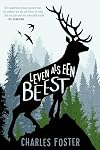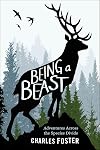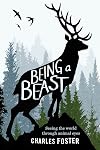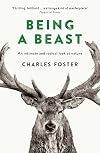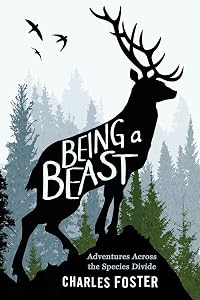
Being a Beast: Adventures Across the Species Divide
by Charles Foster
On This Page
Description
"How can we ever be sure that we really know the other? To test the limits of our ability to inhabit lives that are not our own, Charles Foster set out to know the ultimate other: the nonhumans, the beasts. And to do that, he tried to be like them, choosing a badger, an otter, a fox, a deer, and a swift. He lived alongside badgers for weeks, sleeping in a burrow on a Welsh hillside and eating earthworms, learning to sense the landscape through his nose rather than his eyes. He tried to catch show more fish in his teeth while swimming like an otter, rooted through London garbage cans as an urban fox, and as a red deer he was hunted by bloodhounds and nearly died in the snow. Finally, he followed the swifts on their migration route over the Strait of Gibraltar, discovering himself to be strangely connected to the birds. A lyrical, intimate, and completely radical look at the life of animals--human and other--Being a Beast mingles neuroscience and psychology, nature writing and memoir, to cross the boundaries separating the species. It is an extraordinary journey full of thrills and surprises, humor and joy. And, ultimately, it is an inquiry into the human experience in our world, carried out by exploring the full range of the life around us."--Dust jacket. show lessTags
Recommendations













Member Reviews
As a child my favorite library books were about how animals lived their lives and how they resembled or differed from us. I eagerly read about dogs, cats, horses, even stickleback fish. I expected Being a Beast to be something like those books. I did wonder about the London Evening Standard "wilderness porn" blurb on the front cover, a description I had not encountered before.
Only a dozen pages in I came upon this: "I don't for a moment deny the reality of true shamanic transformation. Indeed I have experienced it: I have a tale about a carrion crow, which is for another time. But it is arduous and, for me, too downright scary for regular use. And it's too weird for its results to be convincing to most. There are plenty of reasons to show more read a book about being a badger written by someone who has taken hallucinogens in his living room and believed he's become a badger, but a desire for knowledge about badgers or deciduous forests probably isn't among them." So is he saying he believes he can shape shift or that he was high when he wrote this? Foster mentions how much he admires J. A. Baker, author of The Peregrine, then pivots: " I don't have his desperate unhappiness, his desire for self-dissolution, or his conviction that the neck-snapping, baby-disemboweling, achingly wasteful natural world embodies a morality better than anything humans and devise or follow." I haven't read Baker but I suspect he could do without that kind of admiration. Or is Foster revealing something about himself?
Two pages later we have this odd digression: "Look at an oystercatcher stabbing the sand phallically in search of lug worms. On the edge of its bill it has huge numbers of Merkel cells, Herbst corpuscles, Grandry corpuscles, Ruffini endings, and free nerve endings." Apparently these are receptors that sense minute vibrations. "This is like nothing in human experience so much as sex. The inside of the human prepuce has similar concentrations of Merkel cells and other receptors, which are massaged rapturously during sexual intercourse. […] It's like wandering down the food aisles of the supermarket in a state of perpetual tumescence—pushed to the cusp of orgasm when you see the breakfast cereal you're after." (Actually, I have never experienced anything like this while grocery shopping.) The next paragraph says no, it's not like that, then adds that "Even the most thoughtless abuser of women only ever has sex in his head." What? The desire for power and control doesn't factor into it? A couple pages later we learn that "Women have more theory of mind [the ability to think oneself into another's position, i.e. empathy] than men, which makes them nicer people" and in Foster's mind this also accounts for why the Church burned more witches than warlocks. Again, the desire for power and control had nothing to do with any of it?
Foster has a keen sense of metaphor: "Wet suits are condoms that prevent your imagination from being fertilized by mountain rivers." I suppose that's good advice, especially if there are river sprites about—or it's simply the type of statement that sounds profound while you're tripping. Another astute observation: "... you could give a fair summary of the history and politics of Russia by listening to Russians talk in Russian about shopping and the weather—even if, and perhaps because, you didn't understand a word." Okay, I really have no idea how that could happen. These statements also have nothing to do with the purported subject of the book.
Foster and his eight year old son "become badgers" after a friend back hoes a burrow into the side of a hill for them. Foster describes the different flavors of earthworms depending on their place of origin (like wine or cheese maybe) and suggests that parents should add puréed earthworms to their children's milk in order to prevent asthma and eczema. (He doesn't give a source for this dubious medical advice.) The color of badger fear is blue he says. I was unable to find any support for badgers having any color vision; they see only black, grey and white. I have no idea why he thinks we should play the B Minor Mass for badgers.
Otters are next although Foster doesn't like them. He spends several pages discussing spraints—dung deposits—and encourages his children to go into the valley and create their own spraints for comparison. His wife declined to participate. The fox section also begins with scat, then suddenly veers off to people possessed by fox spirits are common in Japan followed by another abrupt turn: if I "persevered with the foxes, they might have shown me more islands, or perhaps even dived down with me, or raised the rest of Atlantis so that I could buy and taste beer in it, or run over its hills and feel it under my feet." What does that even mean? Is he on something? Foster doesn't even seem to like most of the animals he writes about but he really hates cats and deeply regrets that foxes rarely kill cats.
The section on Red deer begins with nine pages describing the hunting of a stag. After an undescribed political epiphany Foster decides to become the prey pursued by hounds which changes into a discussion of death resulting in the startling statement that it's "less morally culpable to eat an herbivore" because herbivores expect death and carnivores don't. Really? The last section, supposedly about swifts, includes such observations as sodium and chlorine atoms always bond in the same configuration because of habit. Argh! Or how about "If we live in a wood we acquire the accents of the trees"? Entish, I suppose.
Foster seems convinced that animals have some ancient knowledge long lost to humans and he aches to learn what they know but there's really very little information here about the various animals he sought to understand. Being a Beast is performance art, the type of theater that makes you wonder who has gone mad: the fevered artiste dashing about a minimalist stage, the so very appreciative audience applauding the deep meaning of it all, or you silently observing the absurd interplay between actor and spectators. The writing is a pretentious stream-of-consciousness which rambles off-topic every other paragraph, a crazy kaleidoscope, Alice on acid. I fully agree with Foster's burrow digging friend who said "I used to like metaphors until I met you" and "You, my friend, are one seriously disturbed freak." It was a relief to finish this ..., whatever this was.
Acknowledgments and Bibliography are presented together because "[t]here's no clear distinction between a person and the books they've read." There are no footnotes so there's no telling where any of Foster's "facts" came from but the finished book will be indexed.
P.S. I'm still not sure what "wilderness porn" is, but I am now very sure I do not want to know. show less
Only a dozen pages in I came upon this: "I don't for a moment deny the reality of true shamanic transformation. Indeed I have experienced it: I have a tale about a carrion crow, which is for another time. But it is arduous and, for me, too downright scary for regular use. And it's too weird for its results to be convincing to most. There are plenty of reasons to show more read a book about being a badger written by someone who has taken hallucinogens in his living room and believed he's become a badger, but a desire for knowledge about badgers or deciduous forests probably isn't among them." So is he saying he believes he can shape shift or that he was high when he wrote this? Foster mentions how much he admires J. A. Baker, author of The Peregrine, then pivots: " I don't have his desperate unhappiness, his desire for self-dissolution, or his conviction that the neck-snapping, baby-disemboweling, achingly wasteful natural world embodies a morality better than anything humans and devise or follow." I haven't read Baker but I suspect he could do without that kind of admiration. Or is Foster revealing something about himself?
Two pages later we have this odd digression: "Look at an oystercatcher stabbing the sand phallically in search of lug worms. On the edge of its bill it has huge numbers of Merkel cells, Herbst corpuscles, Grandry corpuscles, Ruffini endings, and free nerve endings." Apparently these are receptors that sense minute vibrations. "This is like nothing in human experience so much as sex. The inside of the human prepuce has similar concentrations of Merkel cells and other receptors, which are massaged rapturously during sexual intercourse. […] It's like wandering down the food aisles of the supermarket in a state of perpetual tumescence—pushed to the cusp of orgasm when you see the breakfast cereal you're after." (Actually, I have never experienced anything like this while grocery shopping.) The next paragraph says no, it's not like that, then adds that "Even the most thoughtless abuser of women only ever has sex in his head." What? The desire for power and control doesn't factor into it? A couple pages later we learn that "Women have more theory of mind [the ability to think oneself into another's position, i.e. empathy] than men, which makes them nicer people" and in Foster's mind this also accounts for why the Church burned more witches than warlocks. Again, the desire for power and control had nothing to do with any of it?
Foster has a keen sense of metaphor: "Wet suits are condoms that prevent your imagination from being fertilized by mountain rivers." I suppose that's good advice, especially if there are river sprites about—or it's simply the type of statement that sounds profound while you're tripping. Another astute observation: "... you could give a fair summary of the history and politics of Russia by listening to Russians talk in Russian about shopping and the weather—even if, and perhaps because, you didn't understand a word." Okay, I really have no idea how that could happen. These statements also have nothing to do with the purported subject of the book.
Foster and his eight year old son "become badgers" after a friend back hoes a burrow into the side of a hill for them. Foster describes the different flavors of earthworms depending on their place of origin (like wine or cheese maybe) and suggests that parents should add puréed earthworms to their children's milk in order to prevent asthma and eczema. (He doesn't give a source for this dubious medical advice.) The color of badger fear is blue he says. I was unable to find any support for badgers having any color vision; they see only black, grey and white. I have no idea why he thinks we should play the B Minor Mass for badgers.
Otters are next although Foster doesn't like them. He spends several pages discussing spraints—dung deposits—and encourages his children to go into the valley and create their own spraints for comparison. His wife declined to participate. The fox section also begins with scat, then suddenly veers off to people possessed by fox spirits are common in Japan followed by another abrupt turn: if I "persevered with the foxes, they might have shown me more islands, or perhaps even dived down with me, or raised the rest of Atlantis so that I could buy and taste beer in it, or run over its hills and feel it under my feet." What does that even mean? Is he on something? Foster doesn't even seem to like most of the animals he writes about but he really hates cats and deeply regrets that foxes rarely kill cats.
The section on Red deer begins with nine pages describing the hunting of a stag. After an undescribed political epiphany Foster decides to become the prey pursued by hounds which changes into a discussion of death resulting in the startling statement that it's "less morally culpable to eat an herbivore" because herbivores expect death and carnivores don't. Really? The last section, supposedly about swifts, includes such observations as sodium and chlorine atoms always bond in the same configuration because of habit. Argh! Or how about "If we live in a wood we acquire the accents of the trees"? Entish, I suppose.
Foster seems convinced that animals have some ancient knowledge long lost to humans and he aches to learn what they know but there's really very little information here about the various animals he sought to understand. Being a Beast is performance art, the type of theater that makes you wonder who has gone mad: the fevered artiste dashing about a minimalist stage, the so very appreciative audience applauding the deep meaning of it all, or you silently observing the absurd interplay between actor and spectators. The writing is a pretentious stream-of-consciousness which rambles off-topic every other paragraph, a crazy kaleidoscope, Alice on acid. I fully agree with Foster's burrow digging friend who said "I used to like metaphors until I met you" and "You, my friend, are one seriously disturbed freak." It was a relief to finish this ..., whatever this was.
Acknowledgments and Bibliography are presented together because "[t]here's no clear distinction between a person and the books they've read." There are no footnotes so there's no telling where any of Foster's "facts" came from but the finished book will be indexed.
P.S. I'm still not sure what "wilderness porn" is, but I am now very sure I do not want to know. show less
 This review was written for LibraryThing Early Reviewers.
This book – and I hesitate to box it in with so insipid-sounding a genre as nature writing is crazy beautiful. A stunning, vertiginous, odd, outrageous, academically rich, and personally challenging work.
Charles Foster – a vet and academic –takes us on a mind-altering, shamanistic, trip into the wild as he sets out to discover (as far as the limits of the human mind and body will allow) what it is to be a badger, an otter, a fox, a red deer, and a swift.
Foster packs his analytical toolbox with probes and scalpels forged in neuroscience, biology, sociology, mythology and anthropology and takes us on a journey rich with insight and learning. I learned how far a swift might fly in its brief lifetime (2.6 times the distance to the show more moon over twenty-one years), the difference in sociability and behaviour between badgers where wolves still predate them and those where wolves have long since disappeared from the landscape, and how a fox calibrates the intersection between the earth's magnetic field and the resonance of its prey's muffled movements to calculate its hunting leap in "an explosive unfolding of hamstrings and about a hundred or so other muscles filled with blood, lymph and hunger."
But for all these contemporary academic resources and findings, he's more interested in piercing the veil and trying to enter into the experience, and even the inner life, of these creaturely others.
To be a badger, he and one of his sons live underground and go on all fours through a forest for weeks, eating worms and sheltering from storms. He scavenges the dustbins of London's East End and sleeps in drains and hedges (before being moved on by police) to be an urban fox. He sojourns Scotland's highlands and is hunted by bloodhounds to be a deer. Swims and scrambles England's rivers by night as an otter. Obsessively traces the path of the swifts between England and Africa.
Although deeply odd, often disturbing, and occasionally deranged, the resulting work is a meditation on humanness, our need for the wild, and the deep toll civilisation exacts from us all in return for its undeniable gifts. Foster lovingly brings to speech the glory and wonder and strangeness of our animal companions – whose flourishing we need to be truly human, and whose continued existence is increasingly bound up in the choices we, who are so often alienated from soil and sky and stillness, make. And not just their strangeness, but our mutual relatedness. "I" and "Thou" but also "Us".
He acknowledges the limitations of his work and openly – often gleefully – owns up to what we may know, what we don't know, and what we may never know about the lives and consciousness of his animal interlocuters, constantly probing as well at how much (and indeed whether at all) we are truly able to know our own kind, or even our own selves. For example, he postulates, a strong (if ambiguously accessible) inner life for badgers. While of otters, "jangling, snarling, roaming, twitching bundles of ADHD" he writes,
"There are no prolonged ascents or descents in an otter's life, because there is no prolonged anything. These animals inhabit the instant, but not in a way that redeems it. There is a wretched, desperate, hypertensive, hungry moment. Then there is another such moment. And another. The dots are not connected, in that flattened head, to form a personality. Anxiety, when it is severe, erodes the self. If it is constitutional it precludes a self. Otters are circuit boards. There's nothing else there."
Foster strains language with a marvellous intensity. He piles metaphors up one upon another, presses nouns into new and evocative service as verbs, stretches description synaesthetically into our less-utilised senses. He pitches us into what he thinks, imagines, or hopes might be the savour of actually being that other beast, rather than our beastly selves.
Their experience of time. Of emotions such as fear, joy, grief and anxiety. The way velocity shapes the world. The significance of sensing with ears and noses and mouths and whiskers and internal magnetically-sensitive compasses more than with eyes.
"When I raised my head I could see bats flickering in and out of the lacework of the oaks, and a barn owl ghosting over the walls in the field across the river, and wood pigeons settling fussily in for the night. These had no place in the badger's night. Badgers trade these airy pleasures for darker, stickier, mucousy, damper, rougher pleasures. Dropping my head was like going from Schubert in the conservatoire to a candle-lit bordello where you wade through beer to the bed. If I had to pick one word for the badger's experience, it would be intimate. Grass and bracken stems brush your face. When you're forcing a new path, every step is like a birth. Water shudders off grass into your eyes. Things slide away. Slide; hop; rush. You don't just absorb the world; you make it. You make the fear that rustles away on every side."
And he does all this with a brash vigour and playful verve that often left me gasping or laughing out loud. He is a very funny writer.
"Earthworms taste of slime and the land. They are the ultimate local food, and as the wine people would say, have a very distinct terroir. Worms from Chablis have a long, mineral finish. Worms from Picardy are musty; they taste of decay and splintered wood. Worms from the high Kent Weald are fresh and uncomplicated; they'd appear in the list recommended with a grilled sole. Worms from the Somerset Levels have a stolid, unfashionable taste of leather and stout. But the worms of the Welsh Black Mountains are hard to place: they would be a serious challenge on a blind tasting. I'm not quite pretentious enough to have a go at describing them."
Foster is clearly a hippy who was taken his love of nature entirely too far. An academic whose full immersion study has unhinged him. A mystic who spends an unhealthy amount of time with shit – observing it, smelling it, depositing it – and sometimes leaves you wondering how much of what he has written comes from the same source.
I'm so glad to have read this book. It's a call to live more richly, to love and be loved by, the land which is home to me and all my fellow creatures. While I might never want to be a beast the way Foster clearly does, I'll happily learn the paths towards a richer, fuller, simpler way of living in the world, in my place, and among God's much-loved creatures, receiving them as the gift they are.
Learn old tunes; eat food that comes from where you are. Sit in the corner of a field, hearing. Put in wax earplugs, close your eyes and smell. Sniff everything, wherever you are: turn on those olfactory centres. Say, with St Francis, 'Hello, brother ox', and mean it. show less
Charles Foster – a vet and academic –takes us on a mind-altering, shamanistic, trip into the wild as he sets out to discover (as far as the limits of the human mind and body will allow) what it is to be a badger, an otter, a fox, a red deer, and a swift.
Foster packs his analytical toolbox with probes and scalpels forged in neuroscience, biology, sociology, mythology and anthropology and takes us on a journey rich with insight and learning. I learned how far a swift might fly in its brief lifetime (2.6 times the distance to the show more moon over twenty-one years), the difference in sociability and behaviour between badgers where wolves still predate them and those where wolves have long since disappeared from the landscape, and how a fox calibrates the intersection between the earth's magnetic field and the resonance of its prey's muffled movements to calculate its hunting leap in "an explosive unfolding of hamstrings and about a hundred or so other muscles filled with blood, lymph and hunger."
But for all these contemporary academic resources and findings, he's more interested in piercing the veil and trying to enter into the experience, and even the inner life, of these creaturely others.
To be a badger, he and one of his sons live underground and go on all fours through a forest for weeks, eating worms and sheltering from storms. He scavenges the dustbins of London's East End and sleeps in drains and hedges (before being moved on by police) to be an urban fox. He sojourns Scotland's highlands and is hunted by bloodhounds to be a deer. Swims and scrambles England's rivers by night as an otter. Obsessively traces the path of the swifts between England and Africa.
Although deeply odd, often disturbing, and occasionally deranged, the resulting work is a meditation on humanness, our need for the wild, and the deep toll civilisation exacts from us all in return for its undeniable gifts. Foster lovingly brings to speech the glory and wonder and strangeness of our animal companions – whose flourishing we need to be truly human, and whose continued existence is increasingly bound up in the choices we, who are so often alienated from soil and sky and stillness, make. And not just their strangeness, but our mutual relatedness. "I" and "Thou" but also "Us".
He acknowledges the limitations of his work and openly – often gleefully – owns up to what we may know, what we don't know, and what we may never know about the lives and consciousness of his animal interlocuters, constantly probing as well at how much (and indeed whether at all) we are truly able to know our own kind, or even our own selves. For example, he postulates, a strong (if ambiguously accessible) inner life for badgers. While of otters, "jangling, snarling, roaming, twitching bundles of ADHD" he writes,
"There are no prolonged ascents or descents in an otter's life, because there is no prolonged anything. These animals inhabit the instant, but not in a way that redeems it. There is a wretched, desperate, hypertensive, hungry moment. Then there is another such moment. And another. The dots are not connected, in that flattened head, to form a personality. Anxiety, when it is severe, erodes the self. If it is constitutional it precludes a self. Otters are circuit boards. There's nothing else there."
Foster strains language with a marvellous intensity. He piles metaphors up one upon another, presses nouns into new and evocative service as verbs, stretches description synaesthetically into our less-utilised senses. He pitches us into what he thinks, imagines, or hopes might be the savour of actually being that other beast, rather than our beastly selves.
Their experience of time. Of emotions such as fear, joy, grief and anxiety. The way velocity shapes the world. The significance of sensing with ears and noses and mouths and whiskers and internal magnetically-sensitive compasses more than with eyes.
"When I raised my head I could see bats flickering in and out of the lacework of the oaks, and a barn owl ghosting over the walls in the field across the river, and wood pigeons settling fussily in for the night. These had no place in the badger's night. Badgers trade these airy pleasures for darker, stickier, mucousy, damper, rougher pleasures. Dropping my head was like going from Schubert in the conservatoire to a candle-lit bordello where you wade through beer to the bed. If I had to pick one word for the badger's experience, it would be intimate. Grass and bracken stems brush your face. When you're forcing a new path, every step is like a birth. Water shudders off grass into your eyes. Things slide away. Slide; hop; rush. You don't just absorb the world; you make it. You make the fear that rustles away on every side."
And he does all this with a brash vigour and playful verve that often left me gasping or laughing out loud. He is a very funny writer.
"Earthworms taste of slime and the land. They are the ultimate local food, and as the wine people would say, have a very distinct terroir. Worms from Chablis have a long, mineral finish. Worms from Picardy are musty; they taste of decay and splintered wood. Worms from the high Kent Weald are fresh and uncomplicated; they'd appear in the list recommended with a grilled sole. Worms from the Somerset Levels have a stolid, unfashionable taste of leather and stout. But the worms of the Welsh Black Mountains are hard to place: they would be a serious challenge on a blind tasting. I'm not quite pretentious enough to have a go at describing them."
Foster is clearly a hippy who was taken his love of nature entirely too far. An academic whose full immersion study has unhinged him. A mystic who spends an unhealthy amount of time with shit – observing it, smelling it, depositing it – and sometimes leaves you wondering how much of what he has written comes from the same source.
I'm so glad to have read this book. It's a call to live more richly, to love and be loved by, the land which is home to me and all my fellow creatures. While I might never want to be a beast the way Foster clearly does, I'll happily learn the paths towards a richer, fuller, simpler way of living in the world, in my place, and among God's much-loved creatures, receiving them as the gift they are.
Learn old tunes; eat food that comes from where you are. Sit in the corner of a field, hearing. Put in wax earplugs, close your eyes and smell. Sniff everything, wherever you are: turn on those olfactory centres. Say, with St Francis, 'Hello, brother ox', and mean it. show less
This book is so much more bizarre than I thought it would be. I went in expecting a book about animals, but what I got was an exploration of the heights and depths you can go to with a seemingly infinite amount of both money and time. Foster is nothing if not committed to his quest to know what it is to be an animal. He eats worms and mayflies, lives in a man-made badger sett and skydives with the birds. But he never really gets outside his own head. I hate to even say that, because I can tell it bothers him immensely. But he seems to have taken the greatest amount of trouble possible over his subject, while having the least amount of fun. In the end, I'm only sorry for him, that he can't achieve his goal, which appears to be a Game of show more Thrones-esque warging into the very body of an animal. It's as though he was born to the Downton Abbey life, and he will spend the rest of his life regretting it as an irredeemable flaw. An interesting book, but better for the study of the eccentric bohemian than the wild beast. show less
This review was written for LibraryThing Early Reviewers.Extraordinary. The synopsis made me think that Foster's experiments - to live like the animals he'd chosen to study - were pointless. Eating eathworms disgusts us. They're bread and butter to badgers. In fact Foster learns huge amounts from spending weeks - say - living at almost ground level in a hole in the earth, learning to trust his senses - of smell, of touch and so on. He adopts the diurnal rhythms of the creatures he's shadowing, and eats their foods. He understands what it may feel like to be a hunted stage by being hunted himself. And so on. Foster writes with passion, humour, and more than a touch of the utterly eccentric. His physical curiosity is sensuous and obsessive. He brought me into contact with the natural world in a show more tactile, visceral way and it's a book I shan't forget. show less
Foster tries to understand several of the woodland animals around him, including the badger, the urban fox, the red deer, and the swift. He attacks from every experiential, academic, and cultural angle, presenting his own experiences sleeping under sheds and tracking migration paths across oceans, as well as extensive calculations and literary context. He writes in a conversational tone that does not assume ignorance of the reader, but invites further exploration of the intense locality of the natural world. It is an illumination in an almost literal sense, a light thrown on the experiences of animals which can so often or so rarely intersect our own. Though he does write about himself, he does not overwhelm his content with his own show more thoughts and feelings as so many American nonfiction writers do, but rather uses his own thoughts as leverage to explore other avenues and start other topics. The methods, rhythms, and directions of his prose perfectly fit his content. show less
I came to this book through my study with David Abram on the animacy of the world. David read an excerpt from the begging of the chapter on badgers, and I was hooked.
It is very human thing to pretend to be other animals. Kids do it all the time. As Foster points out, there are things we can learn about both the other and ourselves through this sort of play.
Foster takes his play seriously. In this book, you'll hear recounted stories of eating earthworms while living in a hole in a hillside with his eight-year-old son, having his children poop on the side of rivers as a form of territorial marking, and eating three-week-old pizza in back yards in London.
I remember an especially theatrical and eccentric friend from high school who would do show more things just for the sensational stories they would supply him with for later. This book has a bit of that quality to it. I wonder; would Foster have been able to do many of the things in this book if it weren't for the sake of getting a book published?
I learned a lot of interesting tidbits. Badgers diets are mostly earthworms. Otters require twenty percent of their body weight in food each day. Birds can distinguish between sounds that are one hundred times closer apart than humans. Swifts spend most of their lives continuously airborne (eating and sleeping while flying).
All of this leads us to the question that Foster never quiet answers: what is it to be human? show less
It is very human thing to pretend to be other animals. Kids do it all the time. As Foster points out, there are things we can learn about both the other and ourselves through this sort of play.
Foster takes his play seriously. In this book, you'll hear recounted stories of eating earthworms while living in a hole in a hillside with his eight-year-old son, having his children poop on the side of rivers as a form of territorial marking, and eating three-week-old pizza in back yards in London.
I remember an especially theatrical and eccentric friend from high school who would do show more things just for the sensational stories they would supply him with for later. This book has a bit of that quality to it. I wonder; would Foster have been able to do many of the things in this book if it weren't for the sake of getting a book published?
I learned a lot of interesting tidbits. Badgers diets are mostly earthworms. Otters require twenty percent of their body weight in food each day. Birds can distinguish between sounds that are one hundred times closer apart than humans. Swifts spend most of their lives continuously airborne (eating and sleeping while flying).
All of this leads us to the question that Foster never quiet answers: what is it to be human? show less
I've written a full-length review of this book called "Biophilia as Extreme Sport." http://www.counterpunch.org/2016/06/24/biophilia-as-extreme-sport/
But here, I'll just say my feelings are as mixed as some of Charles Foster's metaphors. It’s hard not to sympathize with his attempt, desperate as it is, to make the case that we still share a world with the animals he seeks to "become" and millions more and that we are the better for it. And we’d be even better off (as the other animals indubitably would) if we recognized them as beings just as worthy of admiration, respect and even love, as our own species.
So far so good. And yet in the end his gonzo attempt to ape - if you'll excuse the expression - these animals reminds me of show more nothing so much as the intrepid anthropologists who seek out un-contacted tribes and try to live like them – and then with all the sympathy in the world - try to “interpret” their lives to the civilized world.
I learned a lot about Charles Foster in this memoir. I learned almost nothing about the wife who mutely plays housemaid for him and his six kids – whom he recruits as participants his experiments in ways that are a little unsettling, like sharing the badger den in freezing weather and eating worms with him. But for all his effort, I’m not sure I learned much about how Foster’s chosen animals live that a good nature documentary (maybe with some fancy handheld underground and underwater camera work) couldn’t tell me. His attempts to give animals interiority by imitating their physical behaviors from within his utterly different skin and consciousness left me skeptical.
It’s not that I don’t believe animals – or plants, for that matter - can think. I’m positive they can, in terms of any reasonable definition of thinking. It’s just that I don’t believe that I – or Charles Foster either - can know what their experience feels like to them.
As I was reading the book one afternoon on a windswept beach in California, I looked up and saw a little girl carefully making her way across the sand, her eyes on the ground. Even though I myself have been a little girl walking on the beach (although not that particular beach), I had no more idea what that child’s inner experience was at that moment than I have of what any given otter is experiencing when he or she slides off a riverbank, or stag when he steps through a brushy grove. And Foster’s combination of constructed situations, highly torqued prose, and biochemistry factoids didn’t really get me there.
Mainly I was left thinking that there was a fundamental contradiction in this labor of supposed respect: must humans try to go everywhere? To insert ourselves, physically or cognitively, into every aspect of life, including the inner experience of other animals? Can’t we express our respect for wild nature by letting it be?
So while I appreciate the effort he goes to such lengths to describe, I'm not sure I find this book very helpful in giving us a better understanding of animals in the wild or what their lives ought to mean to us, much less what they mean to those animals themselves. I think I still prefer the old school naturalists who just sit quietly and use their human eyes, ears, and minds as they wait patiently for the wild to reveal itself to them. show less
But here, I'll just say my feelings are as mixed as some of Charles Foster's metaphors. It’s hard not to sympathize with his attempt, desperate as it is, to make the case that we still share a world with the animals he seeks to "become" and millions more and that we are the better for it. And we’d be even better off (as the other animals indubitably would) if we recognized them as beings just as worthy of admiration, respect and even love, as our own species.
So far so good. And yet in the end his gonzo attempt to ape - if you'll excuse the expression - these animals reminds me of show more nothing so much as the intrepid anthropologists who seek out un-contacted tribes and try to live like them – and then with all the sympathy in the world - try to “interpret” their lives to the civilized world.
I learned a lot about Charles Foster in this memoir. I learned almost nothing about the wife who mutely plays housemaid for him and his six kids – whom he recruits as participants his experiments in ways that are a little unsettling, like sharing the badger den in freezing weather and eating worms with him. But for all his effort, I’m not sure I learned much about how Foster’s chosen animals live that a good nature documentary (maybe with some fancy handheld underground and underwater camera work) couldn’t tell me. His attempts to give animals interiority by imitating their physical behaviors from within his utterly different skin and consciousness left me skeptical.
It’s not that I don’t believe animals – or plants, for that matter - can think. I’m positive they can, in terms of any reasonable definition of thinking. It’s just that I don’t believe that I – or Charles Foster either - can know what their experience feels like to them.
As I was reading the book one afternoon on a windswept beach in California, I looked up and saw a little girl carefully making her way across the sand, her eyes on the ground. Even though I myself have been a little girl walking on the beach (although not that particular beach), I had no more idea what that child’s inner experience was at that moment than I have of what any given otter is experiencing when he or she slides off a riverbank, or stag when he steps through a brushy grove. And Foster’s combination of constructed situations, highly torqued prose, and biochemistry factoids didn’t really get me there.
Mainly I was left thinking that there was a fundamental contradiction in this labor of supposed respect: must humans try to go everywhere? To insert ourselves, physically or cognitively, into every aspect of life, including the inner experience of other animals? Can’t we express our respect for wild nature by letting it be?
So while I appreciate the effort he goes to such lengths to describe, I'm not sure I find this book very helpful in giving us a better understanding of animals in the wild or what their lives ought to mean to us, much less what they mean to those animals themselves. I think I still prefer the old school naturalists who just sit quietly and use their human eyes, ears, and minds as they wait patiently for the wild to reveal itself to them. show less
This review was written for LibraryThing Early Reviewers.Members
- Recently Added By
Lists

Science: Zoology
107 works; 1 member
Author Information

27 Works 710 Members
Charles Foster is a writer, barrister, tutor in medical law and ethics at the University of Oxford, and a Fellow of Green Templeton College, Oxford. He has written, edited, or contributed to over thirty books, most recently The Sacred Journey, The Selfless Gene, Wired for God: The Biology of Spiritual Experience, and Tracking the Ark of the show more Covenant. show less
Awards and Honors
Common Knowledge
- Original publication date
- 2016
- Epigraph
- To ask "What is an animal?"—or, I would add, to read a child a story about a dog or to support animal rights—is inevitably to touch upon how we understand what it means to be us and not them. It is to ask, "What is a huma... (show all)n?"
— Jonathan Safran Foer, Eating Animals - Dedication
- To my father,
who never came home without roadkill in a plastic bag,
who paid for my formalin and glass eyes,
and whom I love and honor - First words
- Prologue
I want to know what it is like to be a wild thing.
1. Becoming A Beast
I am a human. At least in the sense that both of my genetic parents were human. This has certain consequences. I cannot, for instance, make children with a fox. I have to come to terms with that. - Quotations
- There are plenty of reasons to read a book about being a badger written by someone who has taken hallucinogens in his living room and believed he's become a badger, but a desire for knowledge about badgers or deciduous forest... (show all)s probably isn't among them.
[pp. 11-12] - Last words
- (Click to show. Warning: May contain spoilers.)Swifts have the habit of flying. You've got to get the habit of the swift in order to fly.
(Click to show. Warning: May contain spoilers.)Epilogue
Now there's a thought.
Classifications
Statistics
- Members
- 280
- Popularity
- 115,184
- Reviews
- 26
- Rating
- (3.45)
- Languages
- Dutch, English, French, German
- Media
- Paper, Audiobook, Ebook
- ISBNs
- 14
- UPCs
- 1
- ASINs
- 5