
On This Page
Description
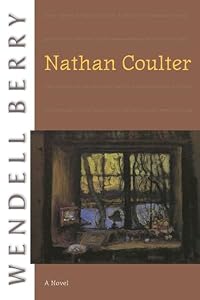
In the latest installment in Wendell Berry's long story about the citizens of Port William, Kentucky, readers learn of the Coulters' children, of the Feltners and Branches, and how survivors 'live right on.' 'Ignorant boys, killing each other,' is just about all Nathan Coulter would tell his wife about the Battle of Okinawa in the spring of 1945. Life carried on for the community of Port William, Kentucky, as some boys returned from the war while the lives of others were mourned. In her show more seventies, Nathan's wife, Hannah, now has time to tell of the years since the war. show lessTags
Recommendations








Member Reviews
Wendell Berry’s Port William novels are quiet stories set in Port William, a fictional rural Kentucky community near the Ohio River. The Coulter, Feltner, and Beechum families lead simple lives working the land, bound together by a deep commitment to the land and the place. No one is trying to get to “a better place”; they are already there.
Hannah Coulter is written a bit like a memoir. Hannah, well into her 70s, relates her life story and the story of Port William as she observed it. Born in 1922, she experienced the early loss of her mother, but was raised by a loving grandmother. World War II brought more loss to Port William, including Hannah’s first husband Virgil Feltner. After the war she married Nathan Coulter, who show more experienced war horrors of his own. Together they work the land, raise a family, and care for extended family and the community.
Besides the obvious impact of war, Wendell Berry makes it a turning point in Port William and in American life. Post-war America brought a new emphasis on college education which, accompanied by technological change, created a fundamentally different world. While Port William remained a rural farming community, many of its children left for college and did not return.
Reading Hannah Coulter, as with other Port William novels, I found myself drawn into the Port William “membership,” feeling as if I actually knew the characters and were part of their story. While there are occasional funny stories that could only happen in a small rural community, the tone is mostly philosophical and contemplative, causing me to consider my own very different surroundings and life choices, and how I can better model respect for the land and love for others. show less
Hannah Coulter is written a bit like a memoir. Hannah, well into her 70s, relates her life story and the story of Port William as she observed it. Born in 1922, she experienced the early loss of her mother, but was raised by a loving grandmother. World War II brought more loss to Port William, including Hannah’s first husband Virgil Feltner. After the war she married Nathan Coulter, who show more experienced war horrors of his own. Together they work the land, raise a family, and care for extended family and the community.
Besides the obvious impact of war, Wendell Berry makes it a turning point in Port William and in American life. Post-war America brought a new emphasis on college education which, accompanied by technological change, created a fundamentally different world. While Port William remained a rural farming community, many of its children left for college and did not return.
Reading Hannah Coulter, as with other Port William novels, I found myself drawn into the Port William “membership,” feeling as if I actually knew the characters and were part of their story. While there are occasional funny stories that could only happen in a small rural community, the tone is mostly philosophical and contemplative, causing me to consider my own very different surroundings and life choices, and how I can better model respect for the land and love for others. show less
There is a simple grace to the plot of Hannah Coulter. There is a simple grace to the character of Hannah Coulter, as well. You won't find major conflict. You won't tremendous disaster or upheaval. No crazy mood swings or dramatic tantrums. Hannah is simply an elderly Kentucky farmer nearing the end of her life, sharing her life story with an unknown audience. She has survived two husbands and the changing of her community, but really what she truly wants to talk about is love. Love as a parent, grandparent, farmer, Port William resident, and, most importantly, the wife of a tormented veteran. It is this last love that brings a change of tone to Hannah Coulter. It's as if the entire book was written to support the chapter of Okinawa. show more Hannah tries to make sense of the war; to put it into a context she can understand. "You were living, it seemed, inside a dark cloud filled with lightning and thunder; thousands of tons of explosives, bombs and shells, machine gun and rifle fire" (p 169). Hannah puts it into a perspective the reader can understand. It is easy to forgot about the involuntary reactions of the body during fear and pain. Based on the animated and passionate voice, Berry seems to be the veteran in the two pages describing the Battle of Okinawa. He is that puzzle piece that completes the picture but doesn't quite fit the space; as if the jigsaw didn't cut the angles correctly.
Much like a yoga instructor asking practitioners to "breathe through their heart's center," I am asking readers of Hannah Coulter to read with heartfelt intention; to inhale the words gently and with a deliberate pace. It is well worth the effort. show less
Much like a yoga instructor asking practitioners to "breathe through their heart's center," I am asking readers of Hannah Coulter to read with heartfelt intention; to inhale the words gently and with a deliberate pace. It is well worth the effort. show less
I am making a gift to myself, a promise to read all of Wendell Berry’s novels. Hannah Coulter is my latest stop on that journey though Port William, and, as always, I am sitting after closing the book with misty eyes and a full heart.
How can one be so wise and yet so human? I felt inclined to mark every other passage, but in the end, I didn’t want to step outside the story even long enough to drag the yellow marker across the page. As is so often the case with Berry, this is not a plot driven story, so much as a tribute to life and the life of Hannah particularly. It is a tribute to the resilience of the human soul and the beauty of existence itself.
Hannah profoundly understands love--that it has a scent, an electric touch, a shape, show more and that it comes in as many varieties as there are people.
Love in this world doesn’t come out of thin air. It is not something thought up. Like ourselves, it grows out of the ground. It has a body and a place.
She understands the nature of resentment and forgiveness:
But I knew at the same instant that my resentment was gone, just gone. And the fear of her that was once so big in me, where was it? And who was this poor suffer who stood there with me? ‘Yes, Ivy, I know you,” I said, and I sounded kind. I didn’t understand exactly what had happened until the thought of her woke me up in the middle of the night, and I was saying to myself, “You have forgiven her.” I had. My old hatred and contempt and fear, that I had kept so carefully so long, were gone, and I was free.
And, she understands loss:
I was changed by Nathan’s death, because I had to be. Our life together here was over. It was life alone that had to go on. The strand had slackened. I had begun the half-a-life you have when you have a whole life that you can only remember.
Throughout the novel, she gives good advice to anyone who might be listening, but perhaps the most valuable advice is this:
You mustn’t wish for another life. You mustn’t want to be somebody else. What you must do is this: ‘Rejoice evermore. Pray without ceasing. In everything give thanks.’ I am not all the way capable of so much, but those are the right instructions.
I know why I keep wishing to return to Port William. It is the same impulse that makes you want to go visit an old friend and rock on the porch and share some memories and laughs that only the two of you can ever share. It is the reason you take out the picture books and stare at the faces of the past, the ones that are gone forever, and think, “but they aren’t gone, they are alive in me, they cannot wholly die until I die as well.”
Some authors give you characters, Wendell Berry gives you friends. show less
How can one be so wise and yet so human? I felt inclined to mark every other passage, but in the end, I didn’t want to step outside the story even long enough to drag the yellow marker across the page. As is so often the case with Berry, this is not a plot driven story, so much as a tribute to life and the life of Hannah particularly. It is a tribute to the resilience of the human soul and the beauty of existence itself.
Hannah profoundly understands love--that it has a scent, an electric touch, a shape, show more and that it comes in as many varieties as there are people.
Love in this world doesn’t come out of thin air. It is not something thought up. Like ourselves, it grows out of the ground. It has a body and a place.
She understands the nature of resentment and forgiveness:
But I knew at the same instant that my resentment was gone, just gone. And the fear of her that was once so big in me, where was it? And who was this poor suffer who stood there with me? ‘Yes, Ivy, I know you,” I said, and I sounded kind. I didn’t understand exactly what had happened until the thought of her woke me up in the middle of the night, and I was saying to myself, “You have forgiven her.” I had. My old hatred and contempt and fear, that I had kept so carefully so long, were gone, and I was free.
And, she understands loss:
I was changed by Nathan’s death, because I had to be. Our life together here was over. It was life alone that had to go on. The strand had slackened. I had begun the half-a-life you have when you have a whole life that you can only remember.
Throughout the novel, she gives good advice to anyone who might be listening, but perhaps the most valuable advice is this:
You mustn’t wish for another life. You mustn’t want to be somebody else. What you must do is this: ‘Rejoice evermore. Pray without ceasing. In everything give thanks.’ I am not all the way capable of so much, but those are the right instructions.
I know why I keep wishing to return to Port William. It is the same impulse that makes you want to go visit an old friend and rock on the porch and share some memories and laughs that only the two of you can ever share. It is the reason you take out the picture books and stare at the faces of the past, the ones that are gone forever, and think, “but they aren’t gone, they are alive in me, they cannot wholly die until I die as well.”
Some authors give you characters, Wendell Berry gives you friends. show less
“I began to trust the world again, not to give me what I wanted, for I saw that it could not be trusted to do that, but to give unforeseen goods and pleasures that I had not thought to want.”
Oh, how I loved this book. Wendell Berry is truly a national treasure. While I've previously read many of his poems and essays, [b:Hannah Coulter|146198|Hannah Coulter|Wendell Berry|https://images.gr-assets.com/books/1442893723s/146198.jpg|1033718] represents my first experience with Berry's fiction.
"Coulter" is one of the last installments of Berry's novels which are set in the fictional town of Port William, KY. This book stands alone, as I imagine the others do. In this narrative, Hannah Coulter, now in her late 70s, looks back on her life, show more her family, her friends, and the town in which she spent her entire life. This is a "quiet" and reflective book, powerful in its imagery, sense of place, prose, and meaning. Fans of [a:Elizabeth Strout|97313|Elizabeth Strout|https://images.gr-assets.com/authors/1361387789p2/97313.jpg] and Anna Quindlen's [b:Miller's Valley|26131641|Miller's Valley|Anna Quindlen|https://images.gr-assets.com/books/1447962407s/26131641.jpg|46081985] will feel right at home in the pages of Berry's book.
Hannah Coulter is a woman who hasn't had an easy life. She is never defiant, but she certainly has not been defeated by life either. With dignity, she stands as a symbol of the changing American economy -- and culture -- from the 1930s through the 1970s.
While Berry writes of simpler times in Port William, he doesn't stray into cloying sentimentality. It took me a long time to make my first visit to Port William, and I'll be making a return visit soon.
show less
Oh, how I loved this book. Wendell Berry is truly a national treasure. While I've previously read many of his poems and essays, [b:Hannah Coulter|146198|Hannah Coulter|Wendell Berry|https://images.gr-assets.com/books/1442893723s/146198.jpg|1033718] represents my first experience with Berry's fiction.
"Coulter" is one of the last installments of Berry's novels which are set in the fictional town of Port William, KY. This book stands alone, as I imagine the others do. In this narrative, Hannah Coulter, now in her late 70s, looks back on her life, show more her family, her friends, and the town in which she spent her entire life. This is a "quiet" and reflective book, powerful in its imagery, sense of place, prose, and meaning. Fans of [a:Elizabeth Strout|97313|Elizabeth Strout|https://images.gr-assets.com/authors/1361387789p2/97313.jpg] and Anna Quindlen's [b:Miller's Valley|26131641|Miller's Valley|Anna Quindlen|https://images.gr-assets.com/books/1447962407s/26131641.jpg|46081985] will feel right at home in the pages of Berry's book.
Hannah Coulter is a woman who hasn't had an easy life. She is never defiant, but she certainly has not been defeated by life either. With dignity, she stands as a symbol of the changing American economy -- and culture -- from the 1930s through the 1970s.
While Berry writes of simpler times in Port William, he doesn't stray into cloying sentimentality. It took me a long time to make my first visit to Port William, and I'll be making a return visit soon.
show less
This lovely novel is my first experience with Berry and in it I found an unexpected gem. I was surprised by the quiet wisdom and truth in his writing.
Hannah Coulter tells us the story of her life in Kentucky. From her early days with her father and step-mother in a small home, to her courting days, to the pain caused by World War II and the eventual life she settles into. It’s a beautiful look at Midwestern life, both realistic and idealistic if that’s possible.
At the beginning of the story Hannah loses her mother when she is only 12-years-old. Her father remarries and her Grand Mam looks out for her. Though much of Hannah’s life is marred by grief she is a strong woman. She accepts both the good and the bad and moves forward. show more It reminded me a bit of the later books in the Anne of Green Gables series.
Through the losses Hannah experiences in her life she paints a beautiful portrait of grief; its overwhelming presence and the continued normalcy of life all at the same time. Grief, especially when it’s caused by a war, is universally shared, but also it’s also shockingly isolating.
There’s a section in the book that talks about the “ghosts” that are present at big events like weddings. Even though they may have been dead for years, you can’t help but see the whole event through the eyes of those you’ve lost. They are there in a way, their presence is felt and they’re missed by everyone. It hit home for me because I’d just experienced that at my brother’s wedding in May, missing my own Mom desperately and wishing she could have been there to celebrate with us.
BOTTOM LINE: This is such a beautiful book about all the stages of life. This will absolutely not be my last Berry novel, but it was a perfect place to start with his work.
“War and rumors of war made a kind of pressure against the future or any talk of plans.” show less
Hannah Coulter tells us the story of her life in Kentucky. From her early days with her father and step-mother in a small home, to her courting days, to the pain caused by World War II and the eventual life she settles into. It’s a beautiful look at Midwestern life, both realistic and idealistic if that’s possible.
At the beginning of the story Hannah loses her mother when she is only 12-years-old. Her father remarries and her Grand Mam looks out for her. Though much of Hannah’s life is marred by grief she is a strong woman. She accepts both the good and the bad and moves forward. show more It reminded me a bit of the later books in the Anne of Green Gables series.
Through the losses Hannah experiences in her life she paints a beautiful portrait of grief; its overwhelming presence and the continued normalcy of life all at the same time. Grief, especially when it’s caused by a war, is universally shared, but also it’s also shockingly isolating.
There’s a section in the book that talks about the “ghosts” that are present at big events like weddings. Even though they may have been dead for years, you can’t help but see the whole event through the eyes of those you’ve lost. They are there in a way, their presence is felt and they’re missed by everyone. It hit home for me because I’d just experienced that at my brother’s wedding in May, missing my own Mom desperately and wishing she could have been there to celebrate with us.
BOTTOM LINE: This is such a beautiful book about all the stages of life. This will absolutely not be my last Berry novel, but it was a perfect place to start with his work.
“War and rumors of war made a kind of pressure against the future or any talk of plans.” show less
Hannah Coulter suffers from supporting a supposedly feminine voice that focuses on the good work of all the men. It is horribly nostalgic and offers inadequate individual solutions to deep structural problems, solutions that would perpetuate the privileged groups' power. And yet--I cried for the last third of the book. Hannah reminded me of my collective grandmothers, from whom I'm estranged by time and distance and circumstance; their knowledge ever more denigrated by the contemporary. There was beauty in Hannah's life, beauty that has been destroyed and not replaced by anything equal.
Written from the perspective of 70 year old Hannah as she reflects on her life in the small farming community of Port William, Kentucky, this quiet, introspective novel touched me deeply, as few books do. Wendell Berry is a poet and it shows in the rhythm and cadence of his prose, which is beautiful and contemplative. My copy is filled with passages I’ve marked, passages that brought me to tears for the sheer beauty of the insights they contained. This is writing to be savored.
At it’s heart, this is a story of life in a tight-knit community, with all its joys and sorrows, and a way of life that is quickly disappearing. I loved the sense of community, and what it means to live a life of gratitude, giving and receiving love and show more forgiveness, and the “membership” we all have with those living, as well as with those who have passed on.
You don’t read a book like this for it’s drama, plot, or action but as you read, the quiet beauty grows on you and won’t let go. I loved it! show less
Members
- Recently Added By
Lists

Top Five Books of 2021
604 works; 181 members

el
1,139 works; 1 member

Books Featured on Readers' Review of the Diane Rehm Show
161 works; 8 members
Author Information

160+ Works 24,691 Members
Wendell Berry The prolific poet, novelist, and essayist Wendell Berry is a fifth-generation native of north central Kentucky. Berry taught at Stanford University; traveled to Italy and France on a Guggenheim Fellowship; and taught at New York University and the University of Kentucky, Lexington, before moving to Henry County. Berry owns and show more operates Lanes Landing Farm, a small, hilly piece of property on the Kentucky River. He embraced full-time farming as a career, using horses and organic methods to tend the land. Harmony with nature in general, and the farming tradition in particular, is a central theme of Berry's diverse work. As a poet, Berry gained popularity within the literary community. Collected Poems, 1957-1982, was particularly well-received. Novels and short stories set in Port William, a fictional town paralleling his real-life home town of Port Royal further established his literary reputation. The Memory of Old Jack, Berry's third novel, received Chicago's Friends of American Writers Award for 1975. Berry reached his broadest audience and attained his greatest popular acclaim through his essays. The Unsettling of America: Culture and Agriculture is a springboard for contemporary environmental concerns. In his life as well as his art, Berry has advocated a responsible, contextual relationship with individuals in a local, agrarian economy. (Bowker Author Biography) show less
Awards and Honors
Distinctions
Series

Common Knowledge
- Canonical title
- Hannah Coulter
- Original publication date
- 2004
- People/Characters
- Hannah Coulter; Nathan Coulter; Burley Coulter; Danny Branch; Matt Feltner; Virgil Feltner
- Important events
- World War II
- Epigraph
- Have drawn at last from time which takes away
And taking leaves all things in their right place
An image of forever
One and whole.
-- Edwin Muir - Dedication
- This book is given in gratitude to Tanya Amyx Berry
- First words
- "I picked him up in my arms and I carried him home."
- Last words
- (Click to show. Warning: May contain spoilers.)The shiver of the altogether given passes over me from head to foot.
- Original language
- English
- Canonical LCC
- 2004013121
Classifications
Statistics
- Members
- 1,460
- Popularity
- 15,964
- Reviews
- 47
- Rating
- (4.31)
- Languages
- English, Italian
- Media
- Paper, Audiobook, Ebook
- ISBNs
- 6
- UPCs
- 1
- ASINs
- 7