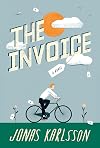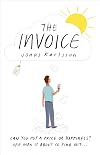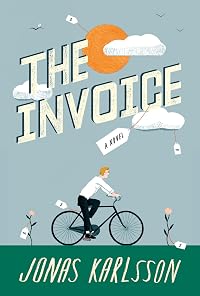
The Invoice
by Jonas Karlsson
On This Page
Description
Hilarious, profound, and achingly true-to-life, Jonas Karlsson's new novel explores the true nature of happiness through the eyes of hero you won't soon forget. A passionate film buff, our hero's life revolves around his part-time job at a video store, the company of a few precious friends, and a daily routine that more often than not concludes with pizza and movie in his treasured small space in Stockholm. When he receives an astronomical invoice from a random national bureaucratic agency, show more everything will tumble into madness as he calls the hotline night and day to find out why he is the recipient of the largest bill in the entire country. What is the price of a cherished memory? How much would you pay for a beautiful summer day? How will our carefree idealist, who is content with so little and has no chance of paying it back, find a way out of this mess? All these questions pull you through The Invoice and prove once again that Jonas Karlsson is simply a master of entertaining, intelligent, and life-affirming work. -- Provided by publisher. show lessTags
Recommendations





















Member Reviews
As a financial economist by profession, I spend a lot of time thinking about how the prices for goods and services are set as well as how those items are distributed to the consuming public. In the so-called “free market” model, prices alone often determine who gets what, with the people willing to pay the highest amount ending up with the desired objects. What would happen, then, if happiness itself was a commodity to which a price could be attached? Also, what if the collective amount of happiness we experience as a planet is a zero-sum game wherein those who enjoy the most happiness are compelled by some sort of bureaucratic authority to pay the most while those in relative pain receive a transfer payment as compensation for show more their suffering?
What if in a socially progressive European country—Sweden, say—this scenario was actually true? Suppose further there is an unassuming, not-quite-so-young-anymore man who, out of the blue, receives an official bill for 5,700,000 kronor (about 685,000 dollars) because his Experienced Happiness (E.H.) score is so high. This situation sounds like Kafka meets Bergman meets Orwell meets Woody Allen, right? Nevertheless, that is the basic premise of The Invoice, Jonas Karlsson’s cheerfully engaging reflection on the things that make us truly happy and what that contentment might be worth. In fact, when the novel’s protagonist protests the charge, he is told that there has indeed been a mistake: his original E.H. score was severely understated and he now owes considerably more!
This is a very short, very sweet story. The main character, whose name we never learn, is both likeable and someone who is easy to root for, especially in his efforts to maintain a satisfied perspective and even forge a new romantic relationship against the mounting odds. The author’s message is straightforward enough and delivered gently with a good-natured sense of humor that I found appealing. That central theme is also mildly thought provoking, despite the fact that the tale reads more like a longish short story than a fully developed novel. I enjoyed the brief amount of time it took to consume this book and I will look forward to reading more of Karlsson’s work in the future. show less
What if in a socially progressive European country—Sweden, say—this scenario was actually true? Suppose further there is an unassuming, not-quite-so-young-anymore man who, out of the blue, receives an official bill for 5,700,000 kronor (about 685,000 dollars) because his Experienced Happiness (E.H.) score is so high. This situation sounds like Kafka meets Bergman meets Orwell meets Woody Allen, right? Nevertheless, that is the basic premise of The Invoice, Jonas Karlsson’s cheerfully engaging reflection on the things that make us truly happy and what that contentment might be worth. In fact, when the novel’s protagonist protests the charge, he is told that there has indeed been a mistake: his original E.H. score was severely understated and he now owes considerably more!
This is a very short, very sweet story. The main character, whose name we never learn, is both likeable and someone who is easy to root for, especially in his efforts to maintain a satisfied perspective and even forge a new romantic relationship against the mounting odds. The author’s message is straightforward enough and delivered gently with a good-natured sense of humor that I found appealing. That central theme is also mildly thought provoking, despite the fact that the tale reads more like a longish short story than a fully developed novel. I enjoyed the brief amount of time it took to consume this book and I will look forward to reading more of Karlsson’s work in the future. show less
 This review was written for LibraryThing Early Reviewers.
Accountants, especially those working in the corporate environment, are trained to look at everything with a price tag attached with the challenge being to make sure that all of those price tags are recorded in the proper accounts. After all, everything costs something, and nothing is free. In The Invoice, Mr. Karlsson is doing nothing more than taking that philosophy and hypothesizing what would happen if we treated the entire world that way using a regular person to guide us through the discussions that would ensue as a result.
This regular person, our unnamed narrator, is absolutely charming. The entire novel is his personal reflection on his life as he tries to fight against the invoice amount he received. His life may not seem like show more much, especially given the price tag associated with that life. After all, his life is every warning we have ever received or given our children. His part-time job, his small apartment, his dearth of close friends, his lack of wardrobe or furniture, or anything of monetary value are not highly prized by society. However, as you discover more and more about that life and his attitudes about life in general, you understand why his invoice is so high.
The Invoice works in much the same way Marie Kondo’s tidying method works. Both are basic ideas that speak to the trend towards reevaluating our lives, understanding what makes us happy, and ignoring what society deems important. They both remind us that one’s success or happiness is not about possessions or the career advancements. It is not about being able to dine at the trendiest restaurant or even about the amount of money in your bank account. A successful life is much more than that and yet so much less.
At 208 pages, The Invoice is a very quick read in sheer number of pages. However, the story is so engaging that it quickly becomes a book you want to finish in one sitting. As the narrator progresses through his battle to amend his amount due, the discussions about the influencing factors in the algorithm that calculated his total are eye-opening but also written in such a way as to spark discussion on the definitions of happiness and success. The entire novel leaves you wondering about your own invoice. Just how high would yours be? show less
This regular person, our unnamed narrator, is absolutely charming. The entire novel is his personal reflection on his life as he tries to fight against the invoice amount he received. His life may not seem like show more much, especially given the price tag associated with that life. After all, his life is every warning we have ever received or given our children. His part-time job, his small apartment, his dearth of close friends, his lack of wardrobe or furniture, or anything of monetary value are not highly prized by society. However, as you discover more and more about that life and his attitudes about life in general, you understand why his invoice is so high.
The Invoice works in much the same way Marie Kondo’s tidying method works. Both are basic ideas that speak to the trend towards reevaluating our lives, understanding what makes us happy, and ignoring what society deems important. They both remind us that one’s success or happiness is not about possessions or the career advancements. It is not about being able to dine at the trendiest restaurant or even about the amount of money in your bank account. A successful life is much more than that and yet so much less.
At 208 pages, The Invoice is a very quick read in sheer number of pages. However, the story is so engaging that it quickly becomes a book you want to finish in one sitting. As the narrator progresses through his battle to amend his amount due, the discussions about the influencing factors in the algorithm that calculated his total are eye-opening but also written in such a way as to spark discussion on the definitions of happiness and success. The entire novel leaves you wondering about your own invoice. Just how high would yours be? show less
This review was written for LibraryThing Early Reviewers.The Invoice, Jonas Karlsson
What is your happiness quotient? Do you think it is better to be happy or unhappy? In the world of this book, one must pay a price for experiencing happiness. It is not a tax; it is simply the cost one must absorb for how one deals with life. The amount is figured out using elaborate formulas in which all of one’s activities are calculated. It is a formulaic, one-size-fits all method. It is redistribution as an art form!
This is a tale in which big brother is watching every moment of your life from insignificant to significant. Your relationships with others are measured and evaluated. You have let the watchers in by not taking their actions seriously enough, by not paying enough attention to what is show more happening in the world around you, even as you innocently enjoy what the world around you has to offer, by answering questionnaires about your life and not paying enough attention to the answers you provide, sometimes exaggerating a bit to make yourself seem more important. There is no privacy from the powers that be. Every aspect of your life has a dollar value attached to it. All of your property is inventoried. If you enjoy more, you must give more, but it does not pertain to monetary wealth. You simply must give back for what you have received, so it can be shared, even if in fact, you received little or nothing because you were content with what little you had. You have a debt to society, and it must be paid.
This book takes place in Sweden. It is brief, barely 200 pages, but not a word is wasted. It is about an ordinary man with no name who has no possessions of value, who works in an ordinary part-time job. When this ordinary man discovers that he has an enormous debt to society to the tune of millions of kroner, he has no idea why. What could he have bought that would have cost millions? Wouldn’t he remember such large purchases? Why does he owe so much money? Surely, he thinks, it must be a mistake and he tosses his first bill. After first ignoring the invoice, he follows up when he receives a second notice. He calls the help number provided and is put on hold. He roams the voicemail corridors for hours as the hold time increases rather than decreases. He is trapped in the voicemail tunnel. Soon, though, he discovers that no, it is not a mistake. He owes the money. He is a happy man and happiness has a price. He faces adversity with cheerfulness, and consistently turns negatives into positives. Isn't that a good thing? Well, not for him. He is an anomaly. He is a happy man who has nothing in a world of fairly miserable people, even though some have more than enough money to provide for their every need. His positivity has a very substantial cost, not only for himself but for others around him as well. Relationships are tracked. Just knowing him, a satisfied person, could raise someone else’s debt to society because his happiness might be contagious.
Sometimes the neediest were forced to pay more while those in far better circumstances were given lower invoices. In a way, they were penalized for being happy as those who made more money were penalized for being successful. Everything apparently had a price. Was this a reverse Socialism working in the background or a spoof about the redistribution of wealth? Being rich did not guarantee peace of mind or contentment. One's attitude governed that. The rich often had a lower debt to society because the rate applied depended on enjoyment derived.
As he navigated the labyrinthine world of W. R. D., the company (or cold hearted corporation responsible for monitoring the enjoyment quotient and preparing and collecting payment of the invoices), he met face to face with supervisors. Each time his bill grew enormously. In the end, he demanded to meet Maud, the counselor handling his file. Their telephone conversations had gown increasingly friendly. It had to be kept secret or she would lose her job. So even in his investigation, he found a silver lining, romance. He began to like Maud more and more. If their friendship was known, how would it affect her invoice? If positive living led to higher invoices, which was a negative outcome that upset most people, would he become anathema to everyone with whom he fraternized. He did little and was happy. He took little from society materially, but he was on overload with how he took pleasure from his simple, modest existence. Does he represent the perfect citizen in a perfect world of socialism? Should everyone, therefore, be like him and be content with less, less desire, less ambition, less of everything material and even less intelligence? According to those that monitored him, he was imperfect because he was perfect, capable of being perfectly upbeat at all times. This author has designed a story that outlines a society by subtly pointing out its failures. The system seemed to grow more and more unfair as human emotion and computation was left out or removed from the process, and mechanical formulae were used for evaluation. It seemed as if actuarial results left no room for adjustment. The lack of human compassion caused errors. It would seem that a person's good life was rated by those who didn't fully understand the good life? Positivity was a negative!
One has to wonder if he will ultimately reverse and become an unhappy pariah, avoided by others, forced into a place of unhappiness because of his being penalized for being happy. Will his frustration deepen? Will his ability to shrug off adversity end? For sure he was caught in a bureaucratic nightmare. Had society become a maze with no way out? Would he still be consistently happy, creating rainbows with a pot of "happiness", at the end?
***I won this book as part of the Early Reviewer program on Library Thing in return for a review. show less
What is your happiness quotient? Do you think it is better to be happy or unhappy? In the world of this book, one must pay a price for experiencing happiness. It is not a tax; it is simply the cost one must absorb for how one deals with life. The amount is figured out using elaborate formulas in which all of one’s activities are calculated. It is a formulaic, one-size-fits all method. It is redistribution as an art form!
This is a tale in which big brother is watching every moment of your life from insignificant to significant. Your relationships with others are measured and evaluated. You have let the watchers in by not taking their actions seriously enough, by not paying enough attention to what is show more happening in the world around you, even as you innocently enjoy what the world around you has to offer, by answering questionnaires about your life and not paying enough attention to the answers you provide, sometimes exaggerating a bit to make yourself seem more important. There is no privacy from the powers that be. Every aspect of your life has a dollar value attached to it. All of your property is inventoried. If you enjoy more, you must give more, but it does not pertain to monetary wealth. You simply must give back for what you have received, so it can be shared, even if in fact, you received little or nothing because you were content with what little you had. You have a debt to society, and it must be paid.
This book takes place in Sweden. It is brief, barely 200 pages, but not a word is wasted. It is about an ordinary man with no name who has no possessions of value, who works in an ordinary part-time job. When this ordinary man discovers that he has an enormous debt to society to the tune of millions of kroner, he has no idea why. What could he have bought that would have cost millions? Wouldn’t he remember such large purchases? Why does he owe so much money? Surely, he thinks, it must be a mistake and he tosses his first bill. After first ignoring the invoice, he follows up when he receives a second notice. He calls the help number provided and is put on hold. He roams the voicemail corridors for hours as the hold time increases rather than decreases. He is trapped in the voicemail tunnel. Soon, though, he discovers that no, it is not a mistake. He owes the money. He is a happy man and happiness has a price. He faces adversity with cheerfulness, and consistently turns negatives into positives. Isn't that a good thing? Well, not for him. He is an anomaly. He is a happy man who has nothing in a world of fairly miserable people, even though some have more than enough money to provide for their every need. His positivity has a very substantial cost, not only for himself but for others around him as well. Relationships are tracked. Just knowing him, a satisfied person, could raise someone else’s debt to society because his happiness might be contagious.
Sometimes the neediest were forced to pay more while those in far better circumstances were given lower invoices. In a way, they were penalized for being happy as those who made more money were penalized for being successful. Everything apparently had a price. Was this a reverse Socialism working in the background or a spoof about the redistribution of wealth? Being rich did not guarantee peace of mind or contentment. One's attitude governed that. The rich often had a lower debt to society because the rate applied depended on enjoyment derived.
As he navigated the labyrinthine world of W. R. D., the company (or cold hearted corporation responsible for monitoring the enjoyment quotient and preparing and collecting payment of the invoices), he met face to face with supervisors. Each time his bill grew enormously. In the end, he demanded to meet Maud, the counselor handling his file. Their telephone conversations had gown increasingly friendly. It had to be kept secret or she would lose her job. So even in his investigation, he found a silver lining, romance. He began to like Maud more and more. If their friendship was known, how would it affect her invoice? If positive living led to higher invoices, which was a negative outcome that upset most people, would he become anathema to everyone with whom he fraternized. He did little and was happy. He took little from society materially, but he was on overload with how he took pleasure from his simple, modest existence. Does he represent the perfect citizen in a perfect world of socialism? Should everyone, therefore, be like him and be content with less, less desire, less ambition, less of everything material and even less intelligence? According to those that monitored him, he was imperfect because he was perfect, capable of being perfectly upbeat at all times. This author has designed a story that outlines a society by subtly pointing out its failures. The system seemed to grow more and more unfair as human emotion and computation was left out or removed from the process, and mechanical formulae were used for evaluation. It seemed as if actuarial results left no room for adjustment. The lack of human compassion caused errors. It would seem that a person's good life was rated by those who didn't fully understand the good life? Positivity was a negative!
One has to wonder if he will ultimately reverse and become an unhappy pariah, avoided by others, forced into a place of unhappiness because of his being penalized for being happy. Will his frustration deepen? Will his ability to shrug off adversity end? For sure he was caught in a bureaucratic nightmare. Had society become a maze with no way out? Would he still be consistently happy, creating rainbows with a pot of "happiness", at the end?
***I won this book as part of the Early Reviewer program on Library Thing in return for a review. show less
This review was written for LibraryThing Early Reviewers.Preface to review: Before you discard this book due to my 2 star rating, bear in mind that I normally give satires only one star because I don't like satire, so this book fared quite well.
Quite without the protagonist noticing it, a tax has been imposed on life experience (not sure why people say happiness tax, since even the unhappy are taxed; but the happier you are, the higher you are going to be taxed, but anyone who gets to see blue skies, ever, and nature, or food, or just about anything is going to have some sort of high fee for the experiences of them). That is, until he gets a bill for 50,000,000 kroner. At first he discards it; as a part time employee at a video store who lives in a little apartment, clearly this is some sort show more of junk mail. That is, until he gets his next statement with a late payment fee attached.
Thus begins two things, a semi-philosophical, satirical examination of what happiness really is, and a telephone relationship with a woman who works for the international corporation who decides just how much people are taxed based on some incomprehensible, complicated process. Certainly there is some humour in this, but I really wasn't impressed. The entire satire was based on such a ludicrous premise of this insane tax, and the protagonist is just so bland and boring (part of the point, naturally) that I came close to liking this at times, and really wanted it to be a solid three stars at the very least, but I cannot honestly say that I ever actually liked it, just came sort of close at moments.
As you can see from the average reviews thus far, many people had a more enjoyable, happier experience with this book. No doubt if there actually were this sort of tax, this would raise their taxes more than it would mine.
That said, if you enjoy satire, this may be a book for you. show less
Quite without the protagonist noticing it, a tax has been imposed on life experience (not sure why people say happiness tax, since even the unhappy are taxed; but the happier you are, the higher you are going to be taxed, but anyone who gets to see blue skies, ever, and nature, or food, or just about anything is going to have some sort of high fee for the experiences of them). That is, until he gets a bill for 50,000,000 kroner. At first he discards it; as a part time employee at a video store who lives in a little apartment, clearly this is some sort show more of junk mail. That is, until he gets his next statement with a late payment fee attached.
Thus begins two things, a semi-philosophical, satirical examination of what happiness really is, and a telephone relationship with a woman who works for the international corporation who decides just how much people are taxed based on some incomprehensible, complicated process. Certainly there is some humour in this, but I really wasn't impressed. The entire satire was based on such a ludicrous premise of this insane tax, and the protagonist is just so bland and boring (part of the point, naturally) that I came close to liking this at times, and really wanted it to be a solid three stars at the very least, but I cannot honestly say that I ever actually liked it, just came sort of close at moments.
As you can see from the average reviews thus far, many people had a more enjoyable, happier experience with this book. No doubt if there actually were this sort of tax, this would raise their taxes more than it would mine.
That said, if you enjoy satire, this may be a book for you. show less
This review was written for LibraryThing Early Reviewers.O, little books that cause such consternation! And supreme insight. The Invoice is a sublime examination of how we allow our lives to be shaped and defined, not always with the result we wanted. We are treated to a perspective of happiness that is refreshing. The free galley copy came in at around 200 pages. It is likely more a novella given the tightness of plot line and intense focus upon the narrator. At several points, the narrator’s off-beat description and earnest contemplation lifted me out of my daily existence into that transcendent place of serene joy for which Dean Moriarty spent his life questing. The theme cannot be undervalued: You have the ability to be happy on your own terms. The Invoice is now in my top 20.
Caution: show more Slight Spoilers. The plot device is introduced through the title. The invoice is a hefty universal bill for each person’s experience of happiness. Inherent in the invoice is the cost of feeling respected, loved, and contented. Karlsson's previous book, The Room, was compared with Melville, Kafka, and others. This time around Karlsson will likely be compared to Orwell and Atwood, and once again his writing takes issue with expectations and social norms measured through happiness and self-determination. Unlike the previously mentioned authors, Karlsson has a very different perspective--one that throws the breaks on arriving at a dystopian or fascist future.
On the surface level, The Invoice is the tale of a simple man with simple pleasures who, along with everyone else on the planet, receives an invoice requiring him to pay his for his “personal quantity of Experienced Happiness.” His amount is in the millions. Seriously? For a guy with a part-time video store job in a cheap rented apartment? What immediately intrigues is that the unnamed narrator doesn’t have any of the usual means of happiness—no house, career, significant relationship, money, fame, power, and so on. But he is undeniably happy.
The narrator is unnamed, which can be bothersome (especially when trying to review this book), but that lends a sort of everyman-ness to him. His innocence and naivete work to throw us back to a time when we, ourselves, were untutored on how interaction with others, even loved ones, creates pressure and how easily the daily grind kills off small pleasures and joys. The narrator doesn’t look for big wins. Instead he has daily small victories, such as the luxurious feeling of a freshly cleaned floor. He sends us back to a mindset when ice cream was simply delicious and not a binge-eating, guilty, calorie-ridden response to stress. When he first receives the staggering invoice, he decides it is a mistake, sets it aside and goes for ice cream. Two scoops, two flavors, all the better to savour. The narrator is not, however, blissed out. He’s had his share of sad experiences. His parents have died, and the love of his life let him know from the start she was slumming with him. His friends have left him behind in the pursuit of love and material happiness. Yet he manages to carve a place in the universe that provides contentment. Is it a perfect life? Nope. He is missing out on certain things, but, and this is an important but, he continues to find beauty in the world. The sense that the world isn’t going to let him get off so lightly enters with the invoice, but this leads to opening himself up to another person. Initially it looks as if the narrator going to fall for another unavailable woman, Maud, who is his account contact and is present primarily by phone conversations. There is no fatuous flirting or gratuitous sex-talk to move their conversations forward (and sales upwards). They have conversations, sincere conversations. The narrator needs help, and Maud is human enough to care.
I would be remiss by not mentioning The Invoice has a subtext about who runs this planet and how the idea of value works. Let’s start with the idea of what exactly the W.R. D. is taxing. The narrator asks for clarification. Maud asks him if he can smell anything. He considers this: “I breathed in the smell of the street. It was sweet and warm with summer scents. Flowers, a shrub of some sort? Some old food? A faint smell of something slightly rotten, and petrol. Typical summer smells. Almost a bit Mediterranean.” Through a series of questions about having feelings and dreams, Maud sums it up with “Being alive costs.” (30-31) How could a simple olfactory sensation create a payable expense? Alive perhaps is not the accurate word. Living, as in appreciating, enjoying, engaging, might be better. Even so, the cost of that which keeps us alive has been covered. The petrol was paid for, and taxed. The food purchased, and taxed. The government has made its money already. But W.R.D. has not, and each nation seems beholden to this organization. A discussion of philosophies concerning the role of government and the individual’s responsibility to the social whole is apt here, but that’s a different review.
What saves this from being a dark cautionary tale of corporate or government interference and a 1984ish Big Brother dystopia is the affirmation of the being true to oneself and determining one's own metric. Rather than breeding fear of a rat in a cage on my head, Karlsson made me feel felt elated, hopeful, and truly individual. My happiness doesn’t have to look like everyone else’s. This story can be a quick read, one or two sittings, with moments of laughter and 'oh, yeah!!" It can also be a slow, thoughtful read with many pauses to think about what has been said so simply and yet is so deeply true. Karlsson has created a unique character and a beautiful quest. Best of all he makes room for all of us to join the journey. Ultimately, I am not sure whether The Invoice is comedy or satiric tragedy, but I suspect that if we don't take more notice of our routines and delights, the joke will be on us. show less
Caution: show more Slight Spoilers. The plot device is introduced through the title. The invoice is a hefty universal bill for each person’s experience of happiness. Inherent in the invoice is the cost of feeling respected, loved, and contented. Karlsson's previous book, The Room, was compared with Melville, Kafka, and others. This time around Karlsson will likely be compared to Orwell and Atwood, and once again his writing takes issue with expectations and social norms measured through happiness and self-determination. Unlike the previously mentioned authors, Karlsson has a very different perspective--one that throws the breaks on arriving at a dystopian or fascist future.
On the surface level, The Invoice is the tale of a simple man with simple pleasures who, along with everyone else on the planet, receives an invoice requiring him to pay his for his “personal quantity of Experienced Happiness.” His amount is in the millions. Seriously? For a guy with a part-time video store job in a cheap rented apartment? What immediately intrigues is that the unnamed narrator doesn’t have any of the usual means of happiness—no house, career, significant relationship, money, fame, power, and so on. But he is undeniably happy.
The narrator is unnamed, which can be bothersome (especially when trying to review this book), but that lends a sort of everyman-ness to him. His innocence and naivete work to throw us back to a time when we, ourselves, were untutored on how interaction with others, even loved ones, creates pressure and how easily the daily grind kills off small pleasures and joys. The narrator doesn’t look for big wins. Instead he has daily small victories, such as the luxurious feeling of a freshly cleaned floor. He sends us back to a mindset when ice cream was simply delicious and not a binge-eating, guilty, calorie-ridden response to stress. When he first receives the staggering invoice, he decides it is a mistake, sets it aside and goes for ice cream. Two scoops, two flavors, all the better to savour. The narrator is not, however, blissed out. He’s had his share of sad experiences. His parents have died, and the love of his life let him know from the start she was slumming with him. His friends have left him behind in the pursuit of love and material happiness. Yet he manages to carve a place in the universe that provides contentment. Is it a perfect life? Nope. He is missing out on certain things, but, and this is an important but, he continues to find beauty in the world. The sense that the world isn’t going to let him get off so lightly enters with the invoice, but this leads to opening himself up to another person. Initially it looks as if the narrator going to fall for another unavailable woman, Maud, who is his account contact and is present primarily by phone conversations. There is no fatuous flirting or gratuitous sex-talk to move their conversations forward (and sales upwards). They have conversations, sincere conversations. The narrator needs help, and Maud is human enough to care.
I would be remiss by not mentioning The Invoice has a subtext about who runs this planet and how the idea of value works. Let’s start with the idea of what exactly the W.R. D. is taxing. The narrator asks for clarification. Maud asks him if he can smell anything. He considers this: “I breathed in the smell of the street. It was sweet and warm with summer scents. Flowers, a shrub of some sort? Some old food? A faint smell of something slightly rotten, and petrol. Typical summer smells. Almost a bit Mediterranean.” Through a series of questions about having feelings and dreams, Maud sums it up with “Being alive costs.” (30-31) How could a simple olfactory sensation create a payable expense? Alive perhaps is not the accurate word. Living, as in appreciating, enjoying, engaging, might be better. Even so, the cost of that which keeps us alive has been covered. The petrol was paid for, and taxed. The food purchased, and taxed. The government has made its money already. But W.R.D. has not, and each nation seems beholden to this organization. A discussion of philosophies concerning the role of government and the individual’s responsibility to the social whole is apt here, but that’s a different review.
What saves this from being a dark cautionary tale of corporate or government interference and a 1984ish Big Brother dystopia is the affirmation of the being true to oneself and determining one's own metric. Rather than breeding fear of a rat in a cage on my head, Karlsson made me feel felt elated, hopeful, and truly individual. My happiness doesn’t have to look like everyone else’s. This story can be a quick read, one or two sittings, with moments of laughter and 'oh, yeah!!" It can also be a slow, thoughtful read with many pauses to think about what has been said so simply and yet is so deeply true. Karlsson has created a unique character and a beautiful quest. Best of all he makes room for all of us to join the journey. Ultimately, I am not sure whether The Invoice is comedy or satiric tragedy, but I suspect that if we don't take more notice of our routines and delights, the joke will be on us. show less
This review was written for LibraryThing Early Reviewers.What if every experience in life had a price tag, only we didn't know it? Would we appreciate it more? That is the premise of this little book. The (unnamed) narrator might be construed a "slacker" by society's uber-achieving standards: part-time job at a video store, nearing middle-age, single, apartment dwelling, carry-out eater, very few possessions....One day he receives an invoice for $5, 700,000 (kronor, actually as the story takes place in Sweden) which he disregards, assuming it is an error, since money in those amounts was never conceivable in his lifestyle. But no, he gets another, with a late fine, and so he goes in pursuit of who is charging him for what. The WRD, (World Resources Distribution) is a maze of bureaucracy, but show more he finally connects with a person, Maud, who just says "Being alive costs"(p. 31) Apparently, everyone, everywhere must pay up for experiencing life and the amount corresponds to a index created by number crunchers at the WRD who assess people's happiness. The narrator is an anomaly in that he is off the charts, especially because he has so little material wealth. His attempts to get his invoice reduced and to determine the source of the high number consume the rest of this short book and it is both humorous and meaningful in the ways we measure and value our lives as we live them. Good lessons without heavy-handed moralizing. show less
What a great quick read. The writing was nice and tight, the main character was fleshed out well, and the premise of the book - the value of happiness - was excellent. I have not read this author before but will probably look into other books he has written.
Our protagonist receives a bill from the government for 5.7 million kronor, but he can't figure out why. Eventually after making contact with the agency, he finds out he's being charged for enjoying life. His friends are charged much less, and he doesn't understand why - he has a dead-end part-time job at a video store, no education, no money, no family, and very few possessions. Why is he being charged so much when he has so little? But what we discover is that the most valuable show more things in life are intangible, and every day is to be enjoyed for what it is.
I highly recommend this book for a quick beach read, or just any quick read. Great! show less
Our protagonist receives a bill from the government for 5.7 million kronor, but he can't figure out why. Eventually after making contact with the agency, he finds out he's being charged for enjoying life. His friends are charged much less, and he doesn't understand why - he has a dead-end part-time job at a video store, no education, no money, no family, and very few possessions. Why is he being charged so much when he has so little? But what we discover is that the most valuable show more things in life are intangible, and every day is to be enjoyed for what it is.
I highly recommend this book for a quick beach read, or just any quick read. Great! show less
This review was written for LibraryThing Early Reviewers.Members
- Recently Added By
Published Reviews
ThingScore 75
I received this copy from LibraryThing Early Reviewers. I think the topic of this book is quite interesting. Imagine receiving a bill for being alive, and how much would you pay for it all?
added by rangel_tatum
Lists

Top Five Books of 2016
795 works; 229 members

Books Read in 2022
5,168 works; 114 members

Books Read in 2016
4,666 works; 199 members

Bureaucracies
25 works; 2 members

Books Read in 2021
5,361 works; 114 members
Author Information

21+ Works 976 Members
Awards and Honors
Awards
Common Knowledge
- Canonical title
- The Invoice
- Original title
- Fakturan
- Original publication date
- 2014
- First words
- It was such an incredible amount, 5,700,000 kronor.
- Last words
- (Click to show. Warning: May contain spoilers.)Mint chocolate and raspberry, my two favorites.
Classifications
- Genres
- General Fiction, Fiction and Literature
- DDC/MDS
- 839.73 — Literature & rhetoric German & related literatures Other Germanic literatures Swedish literature Swedish fiction
- LCC
- PT9877.21 .A74 .F3513 — Language and Literature German, Dutch and Scandinavian literatures Swedish literature Individual authors or works 2001-
- BISAC
Statistics
- Members
- 282
- Popularity
- 114,339
- Reviews
- 93
- Rating
- (3.65)
- Languages
- 9 — Czech, Danish, Dutch, English, Estonian, French, Hungarian, Portuguese, Swedish
- Media
- Paper, Audiobook, Ebook
- ISBNs
- 19
- ASINs
- 3