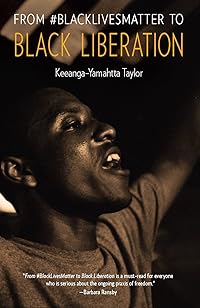
From #BlackLivesMatter to Black Liberation
by Keeanga-Yamahtta Taylor
On This Page
Description
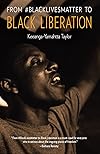
Politics. Sociology. Nonfiction. The eruption of mass protests in the wake of the police murders of Michael Brown in Ferguson, Missouri, and Eric Garner in New York City have challenged the impunity with which officers of the law carry out violence against black people and punctured the illusion of a postracial America. The Black Lives Matter movement has awakened a new generation of activists. In this stirring and insightful analysis, activist and scholar Keeanga-Yamahtta Taylor surveys the show more historical and contemporary ravages of racism and persistence of structural inequality such as mass incarceration and black unemployment. In this context, she argues that this new struggle against police violence holds the potential to reignite a broader push for black liberation. show lessTags
Recommendations










Member Reviews
Where do we go from here?
"From the mutual foundation of slavery and freedom at the country’s inception to the genocide of the Native population that made the “peculiar institution” possible to the racist promulgation of “manifest destiny” to the Chinese Exclusion Act to the codified subordinate status of Black people for a hundred years after slavery ended, they are all grim reminders of the millions of bodies upon which the audacious smugness of American hubris is built. Race and racism have not been exceptions; instead, they have been the glue that holds the United States together."
"Pathologizing 'Black' crime while making 'white' crime invisible creates a barrier between the two, when solidarity could unite both in show more confronting the excesses of the criminal justice system. This, in a sense, is the other product of the “culture of poverty” and of naturalizing Black inequality. This narrative works to deepen the cleavages between groups of people who would otherwise have every interest in combining forces."
-- 4.5 stars --
I picked up From #BlackLivesMatter to Black Liberation expecting a discussion about police brutality, mass incarceration, and the criminalization of blackness and poverty; what I found was a little different, and much more far-reaching.
While Keeanga-Yamahtta Taylor does talk about recent, high-profile cases of police brutality and murder - and the protest movement these injustices have birthed - she also goes further back, in order to examine the current wave of activism in its historical context. Reaching as far back as Roosevelt's New Deal in the 1920s and LBJ's "Great Society" reforms in the 1960s, Taylor shows how each came about as a result of social unrest - and was later undermined and dismantled as activism waned (or was routinely suppressed by the government), often under the guise of some utopian, post-racial colorblindness. Tracing the beginning of harmful racist stereotypes to the rise of the Trans-Atlantic slave trade, she argues that the path to black liberation is primarily economic, i.e., dismantling the capitalist system and/or embracing socialist initiatives (presumably resembling the People's Platform recently presented to the Democrats).
The early chapters on politics that predate me were a little rough to get through, I'm not gonna lie. But this is a personal preference, and you or may not feel the same. Once Taylor hit more contemporary events, my interest picked up too. Her argument is shrewd, impassioned, and all but guaranteed to make you think - even if you don't agree with her conclusions 100%.
Before my reading, I perused the reviews on Goodreads to get a feel for the material. My attention was drawn to the lone two-star review, which took Taylor to task for ignoring the racism of early leftists, "equating racism by whites & black people's response to it as if they are on the same level" (which I definitely don't remember seeing). I think maybe some of the confusion lies in the terms; for example, Taylor frequently criticizes liberals for erasure (e.g., ignoring racism and racial identity in their policies and agendas), or engaging in racism themselves. Can the terms "liberal," "progressive," and "socialist" be used interchangeably, though? More importantly, are they here? It wasn't always clear to me.
To this first point - erasure, for example, by focusing on class instead of race - I wondered what Taylor would make of Bernie Sanders, who has been roundly criticized by women and people of color for throwing these groups under the bus ('identity politics are divisive') in order to attract white, middle- and working-class Christian men (i.e., Trump's base). Taylor does mention Sanders briefly, only to dismiss him as part of the "right wing" of the socialist party. I have to wonder how different (if at all) this book might have looked it it was written and published a year or two later. (fwiw, I supported Sanders in the primary, but voted for Clinton in the general election. I've grown increasingly disillusioned with Sanders's focus on white men to the exclusion of marginalized groups. It's almost like the Dems didn't learn anything in November!)
Though not without some minor flaws, From #BlackLivesMatter to Black Liberation is a book that informs, educates, and challenges. I really hope it gets published with an update four or eight years down the line.
Table of Contents
Introduction: Black Awakening in Obama’s America
Chapter 1. A Culture of Racism
Chapter 2. From Civil Rights to Colorblind
Chapter 3. Black Faces in High Places
Chapter 4. The Double Standard of Justice
Chapter 5. Barack Obama: The End of an Illusion
Chapter 6. Black Lives Matter: A Movement, Not a Moment
Chapter 7. From #BlackLivesMatter to Black Liberation
Acknowledgments
Notes
About the Author
http://www.easyvegan.info/2017/08/10/from-blacklivesmatter-to-black-liberation-b... show less
"From the mutual foundation of slavery and freedom at the country’s inception to the genocide of the Native population that made the “peculiar institution” possible to the racist promulgation of “manifest destiny” to the Chinese Exclusion Act to the codified subordinate status of Black people for a hundred years after slavery ended, they are all grim reminders of the millions of bodies upon which the audacious smugness of American hubris is built. Race and racism have not been exceptions; instead, they have been the glue that holds the United States together."
"Pathologizing 'Black' crime while making 'white' crime invisible creates a barrier between the two, when solidarity could unite both in show more confronting the excesses of the criminal justice system. This, in a sense, is the other product of the “culture of poverty” and of naturalizing Black inequality. This narrative works to deepen the cleavages between groups of people who would otherwise have every interest in combining forces."
-- 4.5 stars --
I picked up From #BlackLivesMatter to Black Liberation expecting a discussion about police brutality, mass incarceration, and the criminalization of blackness and poverty; what I found was a little different, and much more far-reaching.
While Keeanga-Yamahtta Taylor does talk about recent, high-profile cases of police brutality and murder - and the protest movement these injustices have birthed - she also goes further back, in order to examine the current wave of activism in its historical context. Reaching as far back as Roosevelt's New Deal in the 1920s and LBJ's "Great Society" reforms in the 1960s, Taylor shows how each came about as a result of social unrest - and was later undermined and dismantled as activism waned (or was routinely suppressed by the government), often under the guise of some utopian, post-racial colorblindness. Tracing the beginning of harmful racist stereotypes to the rise of the Trans-Atlantic slave trade, she argues that the path to black liberation is primarily economic, i.e., dismantling the capitalist system and/or embracing socialist initiatives (presumably resembling the People's Platform recently presented to the Democrats).
The early chapters on politics that predate me were a little rough to get through, I'm not gonna lie. But this is a personal preference, and you or may not feel the same. Once Taylor hit more contemporary events, my interest picked up too. Her argument is shrewd, impassioned, and all but guaranteed to make you think - even if you don't agree with her conclusions 100%.
Before my reading, I perused the reviews on Goodreads to get a feel for the material. My attention was drawn to the lone two-star review, which took Taylor to task for ignoring the racism of early leftists, "equating racism by whites & black people's response to it as if they are on the same level" (which I definitely don't remember seeing). I think maybe some of the confusion lies in the terms; for example, Taylor frequently criticizes liberals for erasure (e.g., ignoring racism and racial identity in their policies and agendas), or engaging in racism themselves. Can the terms "liberal," "progressive," and "socialist" be used interchangeably, though? More importantly, are they here? It wasn't always clear to me.
To this first point - erasure, for example, by focusing on class instead of race - I wondered what Taylor would make of Bernie Sanders, who has been roundly criticized by women and people of color for throwing these groups under the bus ('identity politics are divisive') in order to attract white, middle- and working-class Christian men (i.e., Trump's base). Taylor does mention Sanders briefly, only to dismiss him as part of the "right wing" of the socialist party. I have to wonder how different (if at all) this book might have looked it it was written and published a year or two later. (fwiw, I supported Sanders in the primary, but voted for Clinton in the general election. I've grown increasingly disillusioned with Sanders's focus on white men to the exclusion of marginalized groups. It's almost like the Dems didn't learn anything in November!)
Though not without some minor flaws, From #BlackLivesMatter to Black Liberation is a book that informs, educates, and challenges. I really hope it gets published with an update four or eight years down the line.
Table of Contents
Introduction: Black Awakening in Obama’s America
Chapter 1. A Culture of Racism
Chapter 2. From Civil Rights to Colorblind
Chapter 3. Black Faces in High Places
Chapter 4. The Double Standard of Justice
Chapter 5. Barack Obama: The End of an Illusion
Chapter 6. Black Lives Matter: A Movement, Not a Moment
Chapter 7. From #BlackLivesMatter to Black Liberation
Acknowledgments
Notes
About the Author
http://www.easyvegan.info/2017/08/10/from-blacklivesmatter-to-black-liberation-b... show less
First off, this book was written during the Obama administration, with a short update at the end that appears to have been written immediately after Trump was elected. I'd love to see an update that covers the recent BLM uprising.
That said, this book was much better than I thought it would be. It gives a detailed history of the Civil Rights movement, and it's successes and failures, and then compares them to the current (six years ago) Black Lives Matter movement. Taylor explains this in an academic voice, but one that's accessible to just about anyone. I feel like I have a much clearer understanding of many things now that I've read this.
The only section that rubbed me the wrong way was when Taylor, seemingly apropos of nothing, show more defends Marx from charges that he was racist. She doesn't do a very good job, and doesn't even mention his misogyny or rampant anti-Semitism show less
That said, this book was much better than I thought it would be. It gives a detailed history of the Civil Rights movement, and it's successes and failures, and then compares them to the current (six years ago) Black Lives Matter movement. Taylor explains this in an academic voice, but one that's accessible to just about anyone. I feel like I have a much clearer understanding of many things now that I've read this.
The only section that rubbed me the wrong way was when Taylor, seemingly apropos of nothing, show more defends Marx from charges that he was racist. She doesn't do a very good job, and doesn't even mention his misogyny or rampant anti-Semitism show less
Good history of racism in the US, though a bit more fervent than I'd like; sometimes the anger gets in the way of the argument or structure of the book. On the other hand, I'd be pretty fervent if I had to put up with this shit everyday of my life, so you can write that off as white privilege. And in any case, this is an excellent example of why attempts to deal with racism must be social as well as political; and why the fight against anti-Black racism must aim ultimately at genuine racial equality, and not at more simplistic identity political posturing about, you know, your white privilege.
An excellent, if dense, look into where Black Lives Matter came from and where it might be going. A lot of history I should have known already, and some well put ideas. I could see the parts that were more "work" for the author - when we hit more recent events the writing became easier to read, and when it moved into theoretical ideas it densed up again. I highly recommend it.
black liberation, race, nonfiction, black lives matter, civil rights, social justice,
Ratings
Members
- Recently Added By
Lists

Phi Beta Kappa reading list
260 works; 8 members

The Black Archives: All Power To the People! Reading List
79 works; 10 members

African American History Month
99 works; 2 members

List of Removed Books from Nimitz Library
353 works; 1 member
Author Information

9+ Works 1,614 Members
Keeanga-Yamahtta Taylor writes and speaks on Black politics, social movements, and racial inequality in the United States. She is the author of Race for Profit How Banks and the Real Estate industry Undermined Black Homeownership, which was a finalist for the 2020 Pulitzer Prize for History, and of How We Get Free: Black Feminism and the Combahee show more River Collective, which won the Lambda Literary Award for LGBTQ nonfiction in 2018. She is a professor of African American Studies at Princeton University and a contributing writer at the New Yorker. show less
Some Editions
Awards and Honors
Common Knowledge
- Original publication date
- 2016
Classifications
- Genres
- Nonfiction, Anthropology, General Nonfiction, History, Politics and Government
- DDC/MDS
- 305.896 — Society, Government, and Culture Social sciences, sociology & anthropology Social group - Age, Gender, Ethnicity Ethnic and national groups Other ethnic and national groups Africans and people of African descent; Blacks of African origin
- LCC
- E185.86 .T373 — History of the United States United States Elements in the population Afro-Americans Status and development since emancipation
- BISAC
Statistics
- Members
- 572
- Popularity
- 51,246
- Reviews
- 5
- Rating
- (4.56)
- Languages
- English, German
- Media
- Paper, Audiobook, Ebook
- ISBNs
- 9
- ASINs
- 3