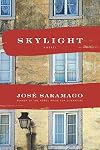
Skylight
by José Saramago
On This Page
Description
"A previously unpublished novel by a literary master, Skylight tells the intertwined stories of the residents of a faded apartment building in 1940s Lisbon. Silvestre and Mariana, a happily married elderly couple, take in a young nomad, Abel, and soon discover their many differences. Adriana loves Beethoven more than any man, but her budding sexuality brings new feelings to the surface. Carmen left Galicia to marry humble Emilio, but hates Lisbon and longs for her first love, Manolo. Lidia show more used to work the streets, but now she's kept by Paulo, a wealthy man with a wandering eye. These are just some of the characters in this early work, completed by Saramago in 1953 but never published until now. With his characteristic compassion, depth, and wit, Saramago shows us the quiet contentment of a happy family and the infectious poison of an unhappy one. We see his characters' most intimate moments as well as the casual encounters particular to neighbors living in close proximity. Skylight is a portrait of ordinary people, painted by a master of the quotidian, a great observer of the immense beauty and profound hardships of the modern world"-- show lessTags
Recommendations































Member Reviews
Best for:
Fans of books that look at many different characters(as opposed to just one or two protagonists).
In a nutshell:
In late-1940s Lisbon, six apartments contain a variety of tenants searching for something more in their lives — or searching for ways to keep their lives the same.
Worth quoting:
“She knew men too well to love any of them.”
“I have never lied so much in my life and I hadn’t realised how many people are prepared to believe lies.”
“His brain attached itself to all kinds of things, went over and over the same problems, plunged into them, drowned in them, so that, in the end, his own thoughts became the problem.”
Why I chose it:
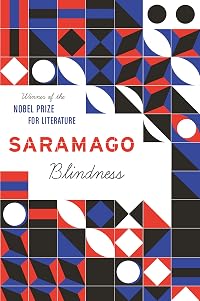
My favorite book is Blindness, which José Saramago published in 1995. A friend show more bought it for me (having never read it himself) and it turned into the book I gave friends if I stayed with them. Maybe an odd choice, but whatever. I think it’s a fantastic book. I read the sequel and wasn’t as into it, but still, Saramago can write. Last year we went to Lisbon for our anniversary and visited Casa dos Bicos, which is home to the Saramago foundation. I saw his Nobel Prize for literature. It was amazing. They also had a bookshop, and this book stood out to me because it was one of his first books but was only published after his death.
Review:
CN: Brief discussion of marital assault
Early in his career, Saramago sent the manuscript for Skylight to a publisher. Early, as in, he sent it in 1953. The publisher didn’t get back to him. In 1989, someone at the publishing house found it and asked if they could publish it. Saramago said no. In fact, he said it couldn’t be published until after his death.
Although this book is set in the 1940s, it could be set in the 2010s. Obviously there are no mobile phones, and people listen to the radio or play games in the evening, but nothing about the stories feels dated or old fashioned, which is, to me, a pretty amazing sign of Saramago’s ability to write people, regardless of time or space.
That’s not to say that time and space don’t play into this. Some of the people in this book are a bit of a throwback (in my mind at least), such as the man who has a wife and daughter and prides himself on being the head of the household in a way that I consider pathetic. There is the mother, her sister, and two daughters all living together because the family has come on hard times.
The neighbors are connected in some ways, and disconnected in others. One couple takes in a lodger who stays up late discussing life with the husband. Another is a woman living alone in an apartment kept by the man who employs her as a mistress; he also employs another tenant as an office worker, which creates some drama. There is the couple whose daughter died and who cannot stand each other the the point that he sexually assaults her (in fairly brief scene that challenges the reader). There is the woman who is attracted to other women but doesn’t know what to do with those feelings.
And the women don’t exist just to further along the plots of the men. We get to hear from them, get their points of view, experience their lives. As part of the time, many of those lives are intertwined with or dependent on men, but they clearly have their own goals and dreams and perspectives. The writing of them isn’t perfect, but it’s mostly well done.
I was a bit worried to pick this one up because I love Blindness so much. What if it was a fluke? What if Saramago’s writing only spoke to me the one time? Especially as I didn’t entirely enjoy the follow-up? But not to worry - this was nearly as good as Blindness for me. Radically different in plot, but still an interesting exploration of human life.
Keep it / Pass to a Friend / Donate it / Toss it:
Keep it show less
Fans of books that look at many different characters(as opposed to just one or two protagonists).
In a nutshell:
In late-1940s Lisbon, six apartments contain a variety of tenants searching for something more in their lives — or searching for ways to keep their lives the same.
Worth quoting:
“She knew men too well to love any of them.”
“I have never lied so much in my life and I hadn’t realised how many people are prepared to believe lies.”
“His brain attached itself to all kinds of things, went over and over the same problems, plunged into them, drowned in them, so that, in the end, his own thoughts became the problem.”
Why I chose it:
My favorite book is Blindness, which José Saramago published in 1995. A friend show more bought it for me (having never read it himself) and it turned into the book I gave friends if I stayed with them. Maybe an odd choice, but whatever. I think it’s a fantastic book. I read the sequel and wasn’t as into it, but still, Saramago can write. Last year we went to Lisbon for our anniversary and visited Casa dos Bicos, which is home to the Saramago foundation. I saw his Nobel Prize for literature. It was amazing. They also had a bookshop, and this book stood out to me because it was one of his first books but was only published after his death.
Review:
CN: Brief discussion of marital assault
Early in his career, Saramago sent the manuscript for Skylight to a publisher. Early, as in, he sent it in 1953. The publisher didn’t get back to him. In 1989, someone at the publishing house found it and asked if they could publish it. Saramago said no. In fact, he said it couldn’t be published until after his death.
Although this book is set in the 1940s, it could be set in the 2010s. Obviously there are no mobile phones, and people listen to the radio or play games in the evening, but nothing about the stories feels dated or old fashioned, which is, to me, a pretty amazing sign of Saramago’s ability to write people, regardless of time or space.
That’s not to say that time and space don’t play into this. Some of the people in this book are a bit of a throwback (in my mind at least), such as the man who has a wife and daughter and prides himself on being the head of the household in a way that I consider pathetic. There is the mother, her sister, and two daughters all living together because the family has come on hard times.
The neighbors are connected in some ways, and disconnected in others. One couple takes in a lodger who stays up late discussing life with the husband. Another is a woman living alone in an apartment kept by the man who employs her as a mistress; he also employs another tenant as an office worker, which creates some drama. There is the couple whose daughter died and who cannot stand each other the the point that he sexually assaults her (in fairly brief scene that challenges the reader). There is the woman who is attracted to other women but doesn’t know what to do with those feelings.
And the women don’t exist just to further along the plots of the men. We get to hear from them, get their points of view, experience their lives. As part of the time, many of those lives are intertwined with or dependent on men, but they clearly have their own goals and dreams and perspectives. The writing of them isn’t perfect, but it’s mostly well done.
I was a bit worried to pick this one up because I love Blindness so much. What if it was a fluke? What if Saramago’s writing only spoke to me the one time? Especially as I didn’t entirely enjoy the follow-up? But not to worry - this was nearly as good as Blindness for me. Radically different in plot, but still an interesting exploration of human life.
Keep it / Pass to a Friend / Donate it / Toss it:
Keep it show less
“There are certain words that draw back, that refuse to be uttered, because they are too laden with significance for our word-weary ears.” ~ José Saramago, Skylight
Every once in a while, you read a book that stirs your imagination long after you read the last line. Skylight by José Saramago, recipient of the Nobel Prize for Literature, is one of those books. The story is not complicated; in fact, the plot is rather weak. It is, instead, a series of intricate character studies. The nuanced portrayals of ordinary people engaged in mundane tasks—such as darning socks or sewing buttonholes into a shirt—is breathtaking.
The subjects of the novel are residents of a small apartment block in Lisbon in the late 1940s. A philosophical show more cobbler and his wife must take in a lodger to make ends meet. A widow with her sister and two spinster daughters do their best to find beauty in hard times. A couple who lost their daughter to meningitis find they have nothing in common anymore. A desperately lonely salesman and his angry wife compete for the attentions of their young son. A retired prostitute preserves her dignity even as she loses her lover and the home he provided for her. Two overly-solicitous parents attempt to save the reputation of their beautiful daughter, only to deliver her into the hands of a sexual predator.
Saramago is a true master of his craft, giving voice to everyday phenomenon we often take for granted: “There is no doubt that just as pets . . . reflect the temperament and character of their owners, the furniture and even the most insignificant household objects reflect something of the lives of their owners too. They give off coldness or warmth, friendliness or reserve. They are witnesses constantly recounting, in a silent language, what they have seen and what they know. The difficulty lies in finding the best, most private moment, the most propitious light, in which to hear their confession.”
But it is his poignant descriptions of quiet moments where his craftsmanship really shines. A mother dreams of her dead daughter and feels “the obsessive presence of someone behind a door that all the strength in the world could not open." A father confesses his loneliness and despair to his sleeping son, not realizing that the child is very much awake and hanging on every word. A kept woman cries when she realizes she has been replaced and will have to start over. Again. “Just two tears. That’s all life is worth.”
Although Skylight is Saramago’s first work, it was not published in Portugal until after his death in 2010. Strikingly modern, the book was written in the early 1950s. It touches on several deeply hidden aspects of human relationships, including marital rape, incest, domestic abuse, infidelity, prostitution, sexual harassment.
How, then, did it come to be published?
The answer can be found in the introduction, written by Pilar del Río, President of the José Saramago Foundation. A Spanish journalist, writer and translator, del Río was also Saramago’s wife.
Saramago submitted the manuscript for Skylight to a publisher in 1953. He received no response until thirty-six years later, when the publishing house was preparing to move offices and the lost manuscript was rediscovered. Upon its discovery in 1989, the publishing house immediately called Saramago with an offer to publish his earliest work.
Saramago refused.
He never forgave the publishing house for failing to respond to his submission. The day he received the phone call, he collected his manuscript from the publishing house and forbid it to be published during his lifetime. After his death in 2010, the foundation bearing his name arranged for the publication of this, his first novel.
Exactly why the manuscript was set aside is not clear, but it is certainly open to conjecture. In 1953, Portugal was ruled by an authoritarian dictator, the devout Catholic, António de Oliveira Salazar. Censorship was ubiquitous and any opposition to Salazar’s regime was swiftly squelched by the secret police. A portrait of ordinary working people struggling to make ends meet would not have been popular with the anti-Communist regime. Given this historical context, and the nature of Saramago’s writing, it is easy to imagine a publisher weighing the very real risks of incurring the wrath of the current regime against the negligible rewards of publishing an unknown author.
This is the first of Saramago’s books that I have read. It provides a foundation to his future work and affords an opportunity to see how the author’s style evolved over the course of his writing life. Written more than sixty years ago, the novel is still relevant today. And I can’t help but compare Portugal’s authoritarian regime of 1953 to the current administration’s authoritarian bent. It saddens me to think that Saramago’s last line still rings true today: “The day when we can build on love has still not arrived.”
★★★★
Skylight, a novel by José Saramago, translated from the Portuguese by Margaret Jull Costa, published by Mariner Books, a division of Houghton Mifflin Harcourt, in 2015. show less
Every once in a while, you read a book that stirs your imagination long after you read the last line. Skylight by José Saramago, recipient of the Nobel Prize for Literature, is one of those books. The story is not complicated; in fact, the plot is rather weak. It is, instead, a series of intricate character studies. The nuanced portrayals of ordinary people engaged in mundane tasks—such as darning socks or sewing buttonholes into a shirt—is breathtaking.
The subjects of the novel are residents of a small apartment block in Lisbon in the late 1940s. A philosophical show more cobbler and his wife must take in a lodger to make ends meet. A widow with her sister and two spinster daughters do their best to find beauty in hard times. A couple who lost their daughter to meningitis find they have nothing in common anymore. A desperately lonely salesman and his angry wife compete for the attentions of their young son. A retired prostitute preserves her dignity even as she loses her lover and the home he provided for her. Two overly-solicitous parents attempt to save the reputation of their beautiful daughter, only to deliver her into the hands of a sexual predator.
Saramago is a true master of his craft, giving voice to everyday phenomenon we often take for granted: “There is no doubt that just as pets . . . reflect the temperament and character of their owners, the furniture and even the most insignificant household objects reflect something of the lives of their owners too. They give off coldness or warmth, friendliness or reserve. They are witnesses constantly recounting, in a silent language, what they have seen and what they know. The difficulty lies in finding the best, most private moment, the most propitious light, in which to hear their confession.”
But it is his poignant descriptions of quiet moments where his craftsmanship really shines. A mother dreams of her dead daughter and feels “the obsessive presence of someone behind a door that all the strength in the world could not open." A father confesses his loneliness and despair to his sleeping son, not realizing that the child is very much awake and hanging on every word. A kept woman cries when she realizes she has been replaced and will have to start over. Again. “Just two tears. That’s all life is worth.”
Although Skylight is Saramago’s first work, it was not published in Portugal until after his death in 2010. Strikingly modern, the book was written in the early 1950s. It touches on several deeply hidden aspects of human relationships, including marital rape, incest, domestic abuse, infidelity, prostitution, sexual harassment.
How, then, did it come to be published?
The answer can be found in the introduction, written by Pilar del Río, President of the José Saramago Foundation. A Spanish journalist, writer and translator, del Río was also Saramago’s wife.
Saramago submitted the manuscript for Skylight to a publisher in 1953. He received no response until thirty-six years later, when the publishing house was preparing to move offices and the lost manuscript was rediscovered. Upon its discovery in 1989, the publishing house immediately called Saramago with an offer to publish his earliest work.
Saramago refused.
He never forgave the publishing house for failing to respond to his submission. The day he received the phone call, he collected his manuscript from the publishing house and forbid it to be published during his lifetime. After his death in 2010, the foundation bearing his name arranged for the publication of this, his first novel.
Exactly why the manuscript was set aside is not clear, but it is certainly open to conjecture. In 1953, Portugal was ruled by an authoritarian dictator, the devout Catholic, António de Oliveira Salazar. Censorship was ubiquitous and any opposition to Salazar’s regime was swiftly squelched by the secret police. A portrait of ordinary working people struggling to make ends meet would not have been popular with the anti-Communist regime. Given this historical context, and the nature of Saramago’s writing, it is easy to imagine a publisher weighing the very real risks of incurring the wrath of the current regime against the negligible rewards of publishing an unknown author.
This is the first of Saramago’s books that I have read. It provides a foundation to his future work and affords an opportunity to see how the author’s style evolved over the course of his writing life. Written more than sixty years ago, the novel is still relevant today. And I can’t help but compare Portugal’s authoritarian regime of 1953 to the current administration’s authoritarian bent. It saddens me to think that Saramago’s last line still rings true today: “The day when we can build on love has still not arrived.”
★★★★
Skylight, a novel by José Saramago, translated from the Portuguese by Margaret Jull Costa, published by Mariner Books, a division of Houghton Mifflin Harcourt, in 2015. show less
This novel has an interesting history. The author sent it to a publisher in 1953. The publisher then failed to respond with an acceptance or a rejection until 1989, when someone apparently found the manuscript still sitting in a drawer somewhere. Saramago then refused to let it be published until after his death, which is why it has only recently seen the light of day. I gather Saramago's fans are understandably excited about this and see lots of interesting examples here of themes that would become familiar in his later works. It's the first of his books that I've read, though, so I can only respond to it on its own terms.
Anyway. This novel follows the separate but intertwined lives of the inhabitants of a small apartment building in show more Lisbon in the 1950s, showing us their petty disputes, unhappy marriages, secrets, sexual issues, mindgames, scandals, inner discontents, and philosophies. The structure is interesting: it moves smoothly back and forth between the different characters, and I often imagined the author's attention as that of a movie camera, sometimes following one person for a while and then swooping off after another instead, or poking into one room until tired of what's to be seen in there and popping in to see what's going on next door. This works well, I think, and serves to break up individual stories that might not be so interesting on their own, as well as providing a pretty broad look at the different experiences of life -- or at least of working-class life in 1950s Portugal.
The characters are mostly well-drawn, although the writing, and especially the dialog, sometimes felt rather stilted, though that may partly be an artifact of the translation. I do have to say that the rambling philosophical conversations between the inhabitants of one of the apartments struck kind of a false note for me, as they felt a little out of place, a little too much like the author stepping in to talk to us, or perhaps talking to himself in front of us. Also, while I don't necessarily have a problem with low-key, character-based novels, there was a point, maybe two-thirds of the way in, where I found myself longing for a little narrative thrust, a little forward momentum. Fortunately, the ending manages to be more satisfying in that respect than I was expecting, with most of the individual stories feeling as if they have, in fact, arrived somewhere, even if they never really felt like they were moving.
I feel like I've been dwelling a little too much on the negative here. Ultimately, I did find it worth reading, and it certainly hasn't put me off sampling more Saramago, but it just didn't quite affect me, or suck me into these people's lives quite as much as I would have hoped. show less
Anyway. This novel follows the separate but intertwined lives of the inhabitants of a small apartment building in show more Lisbon in the 1950s, showing us their petty disputes, unhappy marriages, secrets, sexual issues, mindgames, scandals, inner discontents, and philosophies. The structure is interesting: it moves smoothly back and forth between the different characters, and I often imagined the author's attention as that of a movie camera, sometimes following one person for a while and then swooping off after another instead, or poking into one room until tired of what's to be seen in there and popping in to see what's going on next door. This works well, I think, and serves to break up individual stories that might not be so interesting on their own, as well as providing a pretty broad look at the different experiences of life -- or at least of working-class life in 1950s Portugal.
The characters are mostly well-drawn, although the writing, and especially the dialog, sometimes felt rather stilted, though that may partly be an artifact of the translation. I do have to say that the rambling philosophical conversations between the inhabitants of one of the apartments struck kind of a false note for me, as they felt a little out of place, a little too much like the author stepping in to talk to us, or perhaps talking to himself in front of us. Also, while I don't necessarily have a problem with low-key, character-based novels, there was a point, maybe two-thirds of the way in, where I found myself longing for a little narrative thrust, a little forward momentum. Fortunately, the ending manages to be more satisfying in that respect than I was expecting, with most of the individual stories feeling as if they have, in fact, arrived somewhere, even if they never really felt like they were moving.
I feel like I've been dwelling a little too much on the negative here. Ultimately, I did find it worth reading, and it certainly hasn't put me off sampling more Saramago, but it just didn't quite affect me, or suck me into these people's lives quite as much as I would have hoped. show less
First Saramago
Skylight: A Novel by José Saramago, translated by Margaret Coster (Houghton Mifflin Harcourt, $26).
Four years after the death of the Portuguese Nobel laureate, his very first novel, written in 1952, finally sees print.
While it’s certainly not as polished as his more familiar work, José Saramago’s first effort, Skylight: A Novel, contains all the elements that would develop into the classic works we came to know and love: people who chafe against their roles in life and push the limits of society, as well as thick, lush language that fully describes the outer world and inner life.
Set in a single apartment building in post-war Portugal, Skylight is the story of its occupants, unsettled both by the pressures of a show more terrible economy, their own longings, and the arrival of Abel, a mysterious man who takes up lodging with the cobbler and his wife on the ground floor. With an unusual (for the time) insight into the inner lives and struggles of women, as well as a sympathetic and open-minded portrayal of lesbian desire, it’s no wonder that Saramago’s first novel was shoved in a drawer. It was definitely ahead of its time.
Reviewed on Lit/Rant: www.litrant.tumblr.com show less
Skylight: A Novel by José Saramago, translated by Margaret Coster (Houghton Mifflin Harcourt, $26).
Four years after the death of the Portuguese Nobel laureate, his very first novel, written in 1952, finally sees print.
While it’s certainly not as polished as his more familiar work, José Saramago’s first effort, Skylight: A Novel, contains all the elements that would develop into the classic works we came to know and love: people who chafe against their roles in life and push the limits of society, as well as thick, lush language that fully describes the outer world and inner life.
Set in a single apartment building in post-war Portugal, Skylight is the story of its occupants, unsettled both by the pressures of a show more terrible economy, their own longings, and the arrival of Abel, a mysterious man who takes up lodging with the cobbler and his wife on the ground floor. With an unusual (for the time) insight into the inner lives and struggles of women, as well as a sympathetic and open-minded portrayal of lesbian desire, it’s no wonder that Saramago’s first novel was shoved in a drawer. It was definitely ahead of its time.
Reviewed on Lit/Rant: www.litrant.tumblr.com show less
An early novel that was translated and published after Saramago's death. The novel is set in an apartment building, with the stories of the households of the building taken up in turn. These stories are loosely connected, as lives become when lived in proximity. The range of happinesses and unhappinesses in these households are vividly described. The ending gets a bit didactic, but I'll forgive that as Saramago seeks to find a conclusion that both explains and binds the characters to one another.
Epopee umane
Storia di abitanti di un condominio, per antonomasia il palcoscenico delle miserie umane. Storie che si intrecciano, compromessi ed ipocrisie, tristezze e rimpianti, sconfitte e tradimenti. Microcosmi, scatole cinesi di una storia sempre uguale e sempre diversa, la storia dell'uomo. Un piccolo capolavoro il capitolo 31: in dodici pagine e mezza si assiste alla consumazione di un dramma annunciato da secoli di meschinità umana. Feroce e perfetto.
Storia di abitanti di un condominio, per antonomasia il palcoscenico delle miserie umane. Storie che si intrecciano, compromessi ed ipocrisie, tristezze e rimpianti, sconfitte e tradimenti. Microcosmi, scatole cinesi di una storia sempre uguale e sempre diversa, la storia dell'uomo. Un piccolo capolavoro il capitolo 31: in dodici pagine e mezza si assiste alla consumazione di un dramma annunciato da secoli di meschinità umana. Feroce e perfetto.
Good character study about those living in the same apartment building. People only know their neighbors by what they see but behind those closed doors we see what others do not. The masks, and the gloves, come off. Husbands and wives hate each other and plot revenge. As their lives change they are unwilling or unable to change. None of them know what they want. My favorite characters were Abel, Silvestre, and Mariana. I loved the discussions between the two men. The I felt the most sorrow for was Emilio but he was stagnant. He went with the flow because it was easier than fighting his wife. When he finally is free he does not know what to do with himself. When Dona Lidia is asked to help Maria Claudia get a job I knew what was going to show more happen. With Justina and Caetano when their anger and hatred of each other exploded, boy-oh-boy. I was not expecting that. Sisters Adriana and Isaura cannot admit to themselves their sexual desires and their need to find someone to love and love them back. All these characters are in denial about themselves and the others living in their apartments. I wanted to know what would happen to them. Very well done. show less
Members
- Recently Added By
Author Information

241+ Works 53,269 Members
José Saramago was born on November 16, 1922. He spent most of his childhood on his parent's farm, except while attending school in Lisbon. Before devoting himself exclusively to writing novels in 1976, he worked as a draftsman, a publisher's reader, an editor, translator, and political commentator for Diario de Lisboa. He is indisputably show more Portugal's best-known literary figure and his books have been translated into more than 25 languages. Although he wrote his first novel in 1947, he waited some 35 years before winning critical acclaim for work such as the Memorial do Convento. His works include The Year of the Death of Ricardo Reis, The Stone Raft, Baltasar and Blimunda, The History of the Siege of Lisbon, The Gospel According to Jesus Christ, and Blindness. At age 75, he was awarded the Nobel Prize for Literature in 1998 for his work in which "parables sustained by imagination, compassion and irony, continually enables us to apprehend an elusory reality." He died from a prolonged illness that caused multiple organ failure on June 18, 2010 at the age of 87. (Bowker Author Biography) show less
Some Editions
Awards and Honors
Series
Belongs to Publisher Series
Common Knowledge
- Canonical title
- Skylight
- Original title
- Clarabóia
- Alternate titles
- Claraboia
- Original publication date
- 2011
- People/Characters
- Silvestre; Lídia
- Important places
- Lisbon, Portugal
- First words
- Through the swaying veils filling his sleep came the clatter of crockery, and Silvestre could almost swear that light was beginning to filter through the loose weft of those veils.
- Last words
- (Click to show. Warning: May contain spoilers.)The day when we can build our love has still not arrived.
- Original language
- Portuguese
Classifications
- Genres
- Fiction and Literature, General Fiction
- DDC/MDS
- 869.3 — Literature & rhetoric Spanish Literature Literatures of Portuguese and Galician languages Portuguese fiction
- LCC
- PQ9281 .A66 .C5813 — Language and Literature French, Italian, Spanish and Portuguese literatures Portuguese literature Individual authors, 1961-2000
- BISAC
Statistics
- Members
- 532
- Popularity
- 56,249
- Reviews
- 21
- Rating
- (3.81)
- Languages
- 10 — Catalan, Dutch, English, French, German, Italian, Norwegian (Bokmål), Portuguese, Spanish, Turkish
- Media
- Paper, Ebook
- ISBNs
- 40
- ASINs
- 11