On This Page
Description
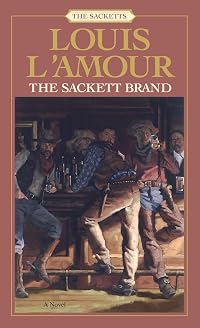
In The Sackett Brand, Louis L’Amour spins the story of a courageous man who must face overwhelming odds to track down a killer.Tell Sackett and his bride, Ange, came to Arizona to build a home and start a family. But on Black Mesa, something goes terribly wrong. Tell is ambushed and badly injured. When he finally manages to drag himself back to where he left Ange, she is gone. Desperate, cold, hungry, and with nothing to defend himself, Tell is stalked like a wounded animal. While he show more hides from his attackers, his rage and frustration mount as he tries to figure out who the men are, why they are trying to kill him, and what has happened to his wife. Discovering the truth will be risky. And when he finally does, it will be their turn to run. show less
Tags
Recommendations
















Member Reviews
Once again Louis L’Amour has chosen William Tell Sackett as his main character. In this outing Tell and his wife Ange are heading west with plans to homestead. When Tell goes on a scout, someone shoots him off a cliff, causing him to fall hundreds of feet. When he finally gathers himself and returns tow where his wife and wagon should be they are gone. Eventually he finds where his wagon has been burnt and his mules shot. He finds out that he is being hunted by the owner of the Lazy A Ranch. His death is required to cover up the murder of his wife.
A deadly game of cat and mouse ensues as Tell has no plans to move on until he gets his revenge,and the Lazy A boss hires more and more guns to track him down. Other Sacketts hear bout the show more problem and arrive in the area ready to help Tell.
The Sackett Brand is a short story of survival, revenge and family loyalty. I enjoyed this Western and look forward to continuing on with the series. show less
A deadly game of cat and mouse ensues as Tell has no plans to move on until he gets his revenge,and the Lazy A boss hires more and more guns to track him down. Other Sacketts hear bout the show more problem and arrive in the area ready to help Tell.
The Sackett Brand is a short story of survival, revenge and family loyalty. I enjoyed this Western and look forward to continuing on with the series. show less
This review is written with a GPL 4.0 license and the rights contained therein shall supersede all TOS by any and all websites in regards to copying and sharing without proper authorization and permissions. Crossposted at WordPress, Blogspot & Librarything by Bookstooge’s Exalted Permission
Title: Sackett Brand
Series: Sacketts #10
Author: Louis L'Amour
Rating: 3 of 5 Stars
Genre: Western
Pages: 160
Format: Digital Edition
Synopsis:
William Tell Sackett and his new bride Ange are making a start of it. With the gold they had, they bought enough supplies to start a new life in the West with cattle. When Tell goes ahead to scout, he's shot and falls into a river. He escapes those hunting him and makes his way back to where Ange had the wagons. show more There is no trace of the wagons OR Ange.
Tell survives and hunts down information after finding Ange's body. A rancher, co-owner of the Lazy A, is responsible. Nobody knows that he killed Ange and he must kill Tell to keep his secret, for NO one will work for a man who kills a woman. Said rancher hires a large group of gunfighters under the claim that Tell tried to kill him.
The word goes out that a Sackett is being hunted. Other Sacketts come a running and Tell only has to survive until they arrive. Of course, he has to survive 40 gunfighters who are all hunting him.
He survives and the other Sacketts take down the gunfighters. The book ends with Tell surrounded by his family.
My Thoughts:
Gotta admit, it took me by surprise when L'Amour had Ange killed. I did not see it coming, especially so early. It really affected how I read the rest of the book. While it gave Tell a real motive to survive and for revenge, L'Amour's writing of Ange's death probably affected me more than it did Tell.
This was a very quick read and it was even quicker given certain stock phrases and ideas that L'Amour uses in almost every book of his. You don't read these for originality at all but to see the Right prevail and the Wrong fail. Truth and Justice. Sometimes you need to read that those Ideals actually do exist and that there are men willing to bear the burden of being responsible for them. I read this in about 2-3hrs, so it was quick.
There just isn't much else to say. These reviews of the Sacketts are more about getting the synopsis so when I look back in 10-15 years I don't have to feel like I need to read these again.
★★★☆☆ show less
Title: Sackett Brand
Series: Sacketts #10
Author: Louis L'Amour
Rating: 3 of 5 Stars
Genre: Western
Pages: 160
Format: Digital Edition
Synopsis:
William Tell Sackett and his new bride Ange are making a start of it. With the gold they had, they bought enough supplies to start a new life in the West with cattle. When Tell goes ahead to scout, he's shot and falls into a river. He escapes those hunting him and makes his way back to where Ange had the wagons. show more There is no trace of the wagons OR Ange.
Tell survives and hunts down information after finding Ange's body. A rancher, co-owner of the Lazy A, is responsible. Nobody knows that he killed Ange and he must kill Tell to keep his secret, for NO one will work for a man who kills a woman. Said rancher hires a large group of gunfighters under the claim that Tell tried to kill him.
The word goes out that a Sackett is being hunted. Other Sacketts come a running and Tell only has to survive until they arrive. Of course, he has to survive 40 gunfighters who are all hunting him.
He survives and the other Sacketts take down the gunfighters. The book ends with Tell surrounded by his family.
My Thoughts:
Gotta admit, it took me by surprise when L'Amour had Ange killed. I did not see it coming, especially so early. It really affected how I read the rest of the book. While it gave Tell a real motive to survive and for revenge, L'Amour's writing of Ange's death probably affected me more than it did Tell.
This was a very quick read and it was even quicker given certain stock phrases and ideas that L'Amour uses in almost every book of his. You don't read these for originality at all but to see the Right prevail and the Wrong fail. Truth and Justice. Sometimes you need to read that those Ideals actually do exist and that there are men willing to bear the burden of being responsible for them. I read this in about 2-3hrs, so it was quick.
There just isn't much else to say. These reviews of the Sacketts are more about getting the synopsis so when I look back in 10-15 years I don't have to feel like I need to read these again.
★★★☆☆ show less
This is a story about the power of family. Tell Sackett and his wife Ange were headed into Arizona to settle a ranch of their own. While scouting ahead he was shot. By the time he was able to make his way back to where he had left her, she and all their possessions had disappeared. He soon discovered that he had forty men looking for him to kill him. His motivation now is to stay alive long enough to find the man who killed Ange. As is usual in a L'Amour book, the power of his descriptions is phenomenal. As I read I could feel the heat and the cold and sense the anger just rolling off Tell. I loved the details of his tracking and movement. His thoughts of Ange and how much they had loved each other were heartbreaking. He thought he was show more all alone in his fight, but was determined to make it count. He didn't know that word of his trouble had spread and that Sacketts from all over were coming to help. In speaking to one of the hunters Nolan Sackett said this: "Mister, you're huntin' a Sackett, an' the one you're huntin' would, man to man, make you eat that six-gun you're packin'. Howsoever, when you hunt one Sackett, you just naturally make the rest of us feel the urge. Now, I don't know if I'll make it up there in time to he'p, so I figured to trim the edges off, like. You look maverick to me, so I figured to put the Sackett brand on you."
The last paragraph said it all: "We stopped in Globe and the lot of us lined up in O'Leary's place, all of us together, more Sacketts than I'd ever seen before...or anybody else, I guess. Me, standing there amongst them, I looked around and I knew I was not alone, and I'd never be alone again." show less
The last paragraph said it all: "We stopped in Globe and the lot of us lined up in O'Leary's place, all of us together, more Sacketts than I'd ever seen before...or anybody else, I guess. Me, standing there amongst them, I looked around and I knew I was not alone, and I'd never be alone again." show less
Tell Sackett and his bride Ange are headed to Arizona to build a home and start a family. When Tell leaves Ange to scout a place to camp, he is ambushed and badly injured. When he makes his way back to where he left Ange and his wagon and mules, there is no trace of anything. Now, Tell is being stalked, and he is desperate to find Ange. But there will be no good news, and he wants only to live long enough to exact revenge. This is one of the more heartbreaking and exciting adventures in the series. Tell will need all his might - and a lot of help from his fellow Sacketts - to live through the gun fight that looms in his future. It’s hard to find better adventure stories than the ones that Louis L’Amour spins.
If Tell Sackett hadn’t moved when he did, he’d be a dead man. For as he turned, a bullet grazed his head, knocking him off balance and causing him to plummet down a cliff side. When he finally regained consciousness, his brain is fuzzy, but his thoughts are clear – who just shot at him? And why?
Apparently, whoever aimed at Sackett wasn’t taking a pot shot. He was purposely trying to kill him. Sackett can’t figure out why – he has no enemies in this part of the country, and there’s no reason… Ange!
When Sackett drags himself back to his campsite, he finds everything he had once called his own vanished – wagon, mules… and wife. They’ve disappeared without a trace! But traces or no, Sackett is determined to track down show more his would-be murderer and recover what is rightfully his!
Discussion.
Okay, a quick revelation of everything that happened after my synopsis (not quite everything, you understand…). Sackett quickly discovers his wagon, burned to a crisp with all of his belongings. All of his mules have been slaughtered and dumped over a cliff. Sackett learns that the reason for this destruction is his wife – while Sackett was out scouting, a man rode into camp and, when Ange repudiated his advances, this man murdered her. He immediately realized the consequence of what he had done, and sets out to remove all traces of his evil deed. This means that he must also kill Sackett, and most of the novel recounts the man’s desperate hunt for Sackett.
There was one thing that I loved about The Sackett Brand. And that was, as the news spread across the country that Tell Sackett was in trouble, Sacketts began pouring in from all across the country to help out their fellow family member. I especially liked this because often, westerns depict a main character who is cut from all family ties – he rides for himself and is uncomfortable in a family setting. But this story was all about family – the reason Sackett is in so much trouble is because he wishes to bring those who murdered his wife to justice. In the end, it is his family that rescues him. It was kinda sweet the way they all showed up with their six-guns. :’(
And then there’s the revenge factor. Immediately after being attacked, Sackett decides that he will find the person who arranged it and will make him pay. Once he discovers that his wife has been murdered, this resolve is doubled and reinforced with venom.
Because Ange’s murderer wishes to destroy all traces of his crime, he employs his band of hired hands to murder Sackett, too. They try to kill him on numerous occasions, but Sackett usually succeeds in killing them first. I felt that he could have had a degree or two more respect for the lives that he took (many of those chasing him had been deceived into thinking that Sackett deserved to die), but I also understood that had he hesitated on the draw, they would have killed him without hesitation.
Conclusion. Due to the familial theme, I enjoyed The Sackett Brand. However, it is not what I would call ‘edifying’ reading.
Visit The Blithering Bookster to read more reviews!
www.blitheringbookster.com show less
Apparently, whoever aimed at Sackett wasn’t taking a pot shot. He was purposely trying to kill him. Sackett can’t figure out why – he has no enemies in this part of the country, and there’s no reason… Ange!
When Sackett drags himself back to his campsite, he finds everything he had once called his own vanished – wagon, mules… and wife. They’ve disappeared without a trace! But traces or no, Sackett is determined to track down show more his would-be murderer and recover what is rightfully his!
Discussion.
Okay, a quick revelation of everything that happened after my synopsis (not quite everything, you understand…). Sackett quickly discovers his wagon, burned to a crisp with all of his belongings. All of his mules have been slaughtered and dumped over a cliff. Sackett learns that the reason for this destruction is his wife – while Sackett was out scouting, a man rode into camp and, when Ange repudiated his advances, this man murdered her. He immediately realized the consequence of what he had done, and sets out to remove all traces of his evil deed. This means that he must also kill Sackett, and most of the novel recounts the man’s desperate hunt for Sackett.
There was one thing that I loved about The Sackett Brand. And that was, as the news spread across the country that Tell Sackett was in trouble, Sacketts began pouring in from all across the country to help out their fellow family member. I especially liked this because often, westerns depict a main character who is cut from all family ties – he rides for himself and is uncomfortable in a family setting. But this story was all about family – the reason Sackett is in so much trouble is because he wishes to bring those who murdered his wife to justice. In the end, it is his family that rescues him. It was kinda sweet the way they all showed up with their six-guns. :’(
And then there’s the revenge factor. Immediately after being attacked, Sackett decides that he will find the person who arranged it and will make him pay. Once he discovers that his wife has been murdered, this resolve is doubled and reinforced with venom.
Because Ange’s murderer wishes to destroy all traces of his crime, he employs his band of hired hands to murder Sackett, too. They try to kill him on numerous occasions, but Sackett usually succeeds in killing them first. I felt that he could have had a degree or two more respect for the lives that he took (many of those chasing him had been deceived into thinking that Sackett deserved to die), but I also understood that had he hesitated on the draw, they would have killed him without hesitation.
Conclusion. Due to the familial theme, I enjoyed The Sackett Brand. However, it is not what I would call ‘edifying’ reading.
Visit The Blithering Bookster to read more reviews!
www.blitheringbookster.com show less
Tell Sackett has finally married Ange, his own true love. They are heading west to start their own life together. However, Tell is nearly murdered and returns to find his wife gone without a trace.
I hated some of the story, because I wanted a happy ending for Tell and Ange and that wasn't to be (she is found murdered -- this happens early in the book, so I'm not giving away anything). I loved other parts of it. I think the message is that with family, you are never really alone.
If you like Westerns and haven't read this one, what are you waiting for? Add it to your to-read list pronto.
I hated some of the story, because I wanted a happy ending for Tell and Ange and that wasn't to be (she is found murdered -- this happens early in the book, so I'm not giving away anything). I loved other parts of it. I think the message is that with family, you are never really alone.
If you like Westerns and haven't read this one, what are you waiting for? Add it to your to-read list pronto.
Tell Sackett has married his beloved Ange and set off for the Mogollons to start a new life. Happiness is fleeting, however, as Tell finds when he is ambushed as he scouts ahead. When he finally finds his way back to camp, his wagon, his mules and his Ange are gone - as if they had never existed.
Tell uncovers the truth, and exacts his own brand of justice. Forty men have him backed into a corner, moving in for the kill, but Sackett brothers and cousins start appearing from everywhere, and like the man says, forty isn't nearly enough.
In my mind, the ultimate Sackett novel. Most of them don't have to be read in order, but this one is more fun if you have read the others first. When all the Sacketts start popping up, it's nice to know show more their back stories. Love this one. show less
Tell uncovers the truth, and exacts his own brand of justice. Forty men have him backed into a corner, moving in for the kill, but Sackett brothers and cousins start appearing from everywhere, and like the man says, forty isn't nearly enough.
In my mind, the ultimate Sackett novel. Most of them don't have to be read in order, but this one is more fun if you have read the others first. When all the Sacketts start popping up, it's nice to know show more their back stories. Love this one. show less
Members
- Recently Added By
Author Information

870+ Works 99,971 Members
Born in Jamestown, North Dakota on March 22, 1908, Louis L'Amour's adventurous life could have been the subject of one of his novels. Striking out on his own in 1923, at age 15, L'Amour began a peripatetic existence, taking whatever jobs were available, from skinning dead cattle to being a sailor. L'Amour knew early in life that he wanted to be a show more writer, and the experiences of those years serve as background for some of his later fiction. During the 1930s he published short stories and poetry; his career was interrupted by army service in World War II. After the war, L'Amour began writing for western pulp magazines and wrote several books in the Hopalong Cassidy series using the pseudonym Tex Burns. His first novel, Westward the Tide (1950), serves as an example of L'Amour's frontier fiction, for it is an action-packed adventure story containing the themes and motifs that he uses throughout his career. His fascination with history and his belief in the inevitability of manifest destiny are clear. Also present and typical of L'Amour's work are the strong, capable, beautiful heroine who is immediately attracted to the equally capable hero; a clear moral split between good and evil; reflections on the Native Americans, whose land and ways of life are being disrupted; and a happy ending. Although his work is somewhat less violent than that of other western writers, L'Amour's novels all contain their fair share of action, usually in the form of gunfights or fistfights. L'Amour's major contribution to the western genre is his attempt to create, in 40 or more books, the stories of three families whose histories intertwine as the generations advance across the American frontier. The novels of the Irish Chantry, English Sackett, and French Talon families are L'Amour's most ambitious project, and sadly were left unfinished at his death. Although L'Amour did not complete all of the novels, enough of the series exists to demonstrate his vision. L'Amour's strongest attribute is his ability to tell a compelling story; readers do not mind if the story is similar to one they have read before, for in the telling, L'Amour adds enough small twists of plot and detail to make it worth the reader's while. L'Amour fans also enjoy the bits of information he includes about everything from wilderness survival skills to finding the right person to marry. These lessons give readers the sense that they are getting their money's worth, that there is more to a L'Amour novel than sheer escapism. With over 200 million copies of his books in print worldwide, L'Amour must be counted as one of the most influential writers of westerns in this century. He died from lung cancer on June 10, 1988. (Bowker Author Biography) Louis L'Amour, truly America's favorite storyteller, was the first fiction writer ever to receive the Congressional Gold Medal from the United States Congress in honor of his life's work, & was also awarded the Medal of Freedom. There are over 260 million copies of his books in print worldwide. (Publisher Provided) show less
Series


Work Relationships
Common Knowledge
- Canonical title
- The Sackett Brand
- Original title
- The Sackett Brand
- Original publication date
- 1965-06
- People/Characters
- William Tell Sackett; Nolan Sackett; Parmalee Sackett; Flagan Sackett; Galloway Sackett; Van Allen (show all 7); Swandell
- Important places
- American West; Mogollons, New Mexico, USA
- Epigraph
- [None]
- Dedication
- To Jud and Red, At Tucumcari and Santa Rosa, A Long Time Ago . . . .
To Jud and Red,
At Tucumcari and Santa Rosa,
A Long Time Ago…. - First words
- Nobody could rightly say any of us Sacketts were what you'd call superstitious.
- Quotations
- -He mentioned a Sackett in trouble. Well, that was Orlando Sackett and his saddle partner, the Tinker.
--What's that mean?
--It means the Lazy A better hire more men. Forty's not going to be anywhere near enou... (show all)gh. - Last words
- (Click to show. Warning: May contain spoilers.)Me, standing there amongst them, I looked around and I knew I was not alone, and I'd never be alone again.
Classifications
Statistics
- Members
- 1,135
- Popularity
- 22,309
- Reviews
- 15
- Rating
- (4.05)
- Languages
- Czech, English, Norwegian (Bokmål), Spanish
- Media
- Paper, Audiobook, Ebook
- ISBNs
- 29
- ASINs
- 24