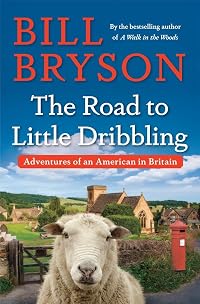
The Road to Little Dribbling: Adventures of an American in Britain
by Bill Bryson
Bill Bryson's Complete Notes (3)
On This Page
Description
"Twenty years ago, Bill Bryson went on a trip around Britain to discover and celebrate that green and pleasant land. The result was Notes from a Small Island, a true classic and one of the bestselling travel books ever written. Now he has traveled about Britain again, by bus and train and rental car and on foot, to see what has changed--and what hasn't. Following a route he dubs the Bryson Line, from Bognor Regis in the south to Cape Wrath in the north, by way of places few travelers ever show more get to at all, Bryson rediscovers the wondrously beautiful, magnificently eccentric, endearingly singular country that he both celebrates and, when called for, twits. With his matchless instinct for the funniest and quirkiest and his unerring eye for the idiotic, the bewildering, the appealing, and the ridiculous, he offers acute and perceptive insights into all that is best and worst about Britain today."--From book jacket. show lessTags
Recommendations










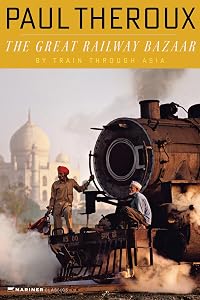



Member Recommendations
dajashby Twenty years earlier, Bryson hits on the winning formula. Every bit as amusing.
40

darllenwr_brwd If you want to focus on the contemporary and the historical of a city bypassed by Bryson this may be for you.
Member Reviews
This book is about one-third a great travelogue, featuring great descriptions of landscapes, sites, landmarks, and history. Unfortunately, the other two-thirds are an old guy griping about everything and everyone he encounters, usually from a lack of preparation or effort on his own part. Andy Rooney could barely hold a candle to the blathering pseudo-insights of what Bryson thinks is wrong with the world. Truly "Old Man Yells at Cloud" levels of cantankerousness. It is a shame, because the travelogue aspect is informative and even charming at times, only to be marred by Bryson's purposeful attempts to malign himself to the reader as a grade A curmudgeon. About 1 in 10 anecdotes are amusing and worthwhile, while the rest just highlight show more the dolts Bryson could easily avoid, the food he is shoving in his face but does not like, or how drunk he got. It is a shame because I do enjoy Bryson's writing on a technical level, but this book is a warning to steer clear from his personal experiences and stick to the objective subject matter books that he has authored. show less
Hard as it may be for Bill Bryson fans to believe, his breakthrough book about England, Notes from a Small Island, is now 20 years old. This may just be a little difficult for Bryson to believe also, because it was only after his publisher pointed the anniversary date out to him and inquired about a possible sequel that the author even considered such a thing worth doing. Coincidentally, Bryson had also just become a dual citizen of Great Britain and the United States, so he decided there was no better time to travel around his newly adopted country revisiting a few of the spots he highlighted in Notes from a Small Island and finally making it to some of the other places he had, up to then, managed to miss in his forty years of living show more on the island. All of this would be accomplished, of course, with the new book firmly in mind.
Early on in The Road to Little Dribbling, Bryson states that he never intended to follow literally in the footsteps of Notes because if he did that he feared that the new book would become little more than a whining narrative about how those places had all changed for the worse. Nonetheless, as the author steadily makes his way around the U.K., a sense of loss begins to overwhelm both him and the reader. In Bryson’s defense, however, his readers will easily understand a feeling they are likely to have often had themselves when revisiting their own pasts.
Times were simpler twenty years ago. Because there were fewer cars on the roads, it was easier (if perhaps slower) to make one's way through a country so well serviced by its public transportation system. People were more optimistic about the future and were enjoying life as the world moved further and further from the aftermath of World War II. Roads were new, seaside resorts were still fresh and well maintained, and a feeling of economic restraint was nowhere to be found in Britain. Today, while the natural beauty of the country is as great as ever, cutbacks and infrastructure deterioration are evident. And despite the well-earned English reputation for stoicism, pessimism now seems more the order of the day.
But don't let that worry you, as a reader, too much. The old Bill Bryson is still very much in evidence, his sense of humor and irony are still intact, and this book is as much fun to read as I suspect it was for its author to write. In one of my favorite bits from the book, Bryson even takes it upon himself to create what he calls “The Bryson Line,” map included, which more correctly identifies the two points in Britain with the most distance between them. They are not Lands End and John O'Groats (as my journey completion certificate from the nineties attests) but Bognor Regis (well to the east of Lands End) and Cape Wrath (a bit west of John O'Groats). So now I need to earn a new certification or stop telling complete strangers that I once completed the trip between the two most widely separated cities in the U.K. Thanks for an excuse to revisit Britain, Bill.
Traveling with Bill Bryson, even in print, makes for a fun trip because of the way he throws out little tidbits and observations when you least expect to hear them. Here are a couple of my particular favorites:
“It was as if they had died and gone to heaven, albeit a heaven populated largely by people with enormous bellies and neck tattoos...” – this while describing the reaction of his two London grandsons who were seeing an Everton football home match for the first time ever. Previously, the only other live Everton fan they had ever seen was their father.
“They all looked like the sort of people who had never had sex with anything they couldn't put in a closet afterwards. I tried to imagine what the rest of their lives were like if this was the fun part, but couldn't.” – this an observation Bryson made when running across a small group of “trainspotters” in a Lancashire train station.
All in all, The Road to Little Dribbling (a place Bryson is still looking for, by the way) is great fun. Longtime fans are certain to be pleased, and new ones are going to be eager to take more trips with Bill Bryson via his earlier books. show less
Early on in The Road to Little Dribbling, Bryson states that he never intended to follow literally in the footsteps of Notes because if he did that he feared that the new book would become little more than a whining narrative about how those places had all changed for the worse. Nonetheless, as the author steadily makes his way around the U.K., a sense of loss begins to overwhelm both him and the reader. In Bryson’s defense, however, his readers will easily understand a feeling they are likely to have often had themselves when revisiting their own pasts.
Times were simpler twenty years ago. Because there were fewer cars on the roads, it was easier (if perhaps slower) to make one's way through a country so well serviced by its public transportation system. People were more optimistic about the future and were enjoying life as the world moved further and further from the aftermath of World War II. Roads were new, seaside resorts were still fresh and well maintained, and a feeling of economic restraint was nowhere to be found in Britain. Today, while the natural beauty of the country is as great as ever, cutbacks and infrastructure deterioration are evident. And despite the well-earned English reputation for stoicism, pessimism now seems more the order of the day.
But don't let that worry you, as a reader, too much. The old Bill Bryson is still very much in evidence, his sense of humor and irony are still intact, and this book is as much fun to read as I suspect it was for its author to write. In one of my favorite bits from the book, Bryson even takes it upon himself to create what he calls “The Bryson Line,” map included, which more correctly identifies the two points in Britain with the most distance between them. They are not Lands End and John O'Groats (as my journey completion certificate from the nineties attests) but Bognor Regis (well to the east of Lands End) and Cape Wrath (a bit west of John O'Groats). So now I need to earn a new certification or stop telling complete strangers that I once completed the trip between the two most widely separated cities in the U.K. Thanks for an excuse to revisit Britain, Bill.
Traveling with Bill Bryson, even in print, makes for a fun trip because of the way he throws out little tidbits and observations when you least expect to hear them. Here are a couple of my particular favorites:
“It was as if they had died and gone to heaven, albeit a heaven populated largely by people with enormous bellies and neck tattoos...” – this while describing the reaction of his two London grandsons who were seeing an Everton football home match for the first time ever. Previously, the only other live Everton fan they had ever seen was their father.
“They all looked like the sort of people who had never had sex with anything they couldn't put in a closet afterwards. I tried to imagine what the rest of their lives were like if this was the fun part, but couldn't.” – this an observation Bryson made when running across a small group of “trainspotters” in a Lancashire train station.
All in all, The Road to Little Dribbling (a place Bryson is still looking for, by the way) is great fun. Longtime fans are certain to be pleased, and new ones are going to be eager to take more trips with Bill Bryson via his earlier books. show less
Wow. It took me an extraordinarily long time to finish this book, especially considering how much I enjoyed it. Yes, I put it down for a couple of weeks to read a library book I'd been waiting for for many weeks, but still. I may also have been slowed down by the fact that at least once every chapter I found myself laughing out loud and marking, copying or reading some phrase or passage to whoever happened to be nearby. There is so much here-- it is primarily observations taken on Bryson's second (purposeful) trip around Britain, done a few decades after his first one, and after he'd been living in the country all that time. But more than just passionate exaltations about the beauty of the landscape (of which there are many), there is a show more great deal of history as well as commentary about the current state of the culture and politics of the place. The descriptions are so rapturous, I wanted to visit many places immediately. I certainly plan to go and walk around Britain a lot someday, and I will certainly take this book along with me when I do. show less
Twenty years after Notes from a Small Island, Bill Bryson again tours England, only occasionally going to places he's gone before, and comments on the countryside, people, pubs, litter and history.
I generally like Bryson's rambly style of including just various things he finds interesting. I enjoy history and I loved my trip to London a few years back, and I've found a few more places I'd love to check out in part due to Bryson's accounts. This one continues that same style of traveling, bumbling around, and commenting - mainly in a very curmudgeonly manner, but sometimes deeming something good or "splendid" - on what he encounters. Some people have commented that he seems a bit more grumpy than usual, and I can see why. Most of the show more time I found it a humorous take and a bit of a persona, but occasionally I thought he went over the top, particularly in one recounting wherehe became so upset with a woman that let her dog poop wherever and then merely covered with leaves that, he says, he killed her and buried the body . And while I'll admit I grew up in a household that barely cursed so I may notice it more than average, there were several more f-words than I would have expected. He's a talented writer and could have found more entertaining ways of insulting people (if that's really what he wanted to do) than calling them f***s. On the other hand, some of his descriptions had me laughing out loud and I really want to see the Ashmolean Museum now. So a mixed bag, but a decent Bryson is still a worthwhile read. show less
I generally like Bryson's rambly style of including just various things he finds interesting. I enjoy history and I loved my trip to London a few years back, and I've found a few more places I'd love to check out in part due to Bryson's accounts. This one continues that same style of traveling, bumbling around, and commenting - mainly in a very curmudgeonly manner, but sometimes deeming something good or "splendid" - on what he encounters. Some people have commented that he seems a bit more grumpy than usual, and I can see why. Most of the show more time I found it a humorous take and a bit of a persona, but occasionally I thought he went over the top, particularly in one recounting where
Forty years after arriving in the U.K., Bryson decides to travel about to visit many of the places he'd never seen. Of course, after 40 years in a smallish country, he also ends up in many places he hadn't seen in decades and can't help but compare them to his memories, and the present day version often loses. This is an older, grumbling Bryson, who complains about train lines, customer service, housing developments, the disappearance of traditional British shops and littering. He also delves into the history of Stonehenge, the fishing industry, holiday camps, eccentric museum founders and nuclear power. He visits perfectly preserved tiny villages, seaside towns with their best days behind them, and lots of small museums. While not show more everyone would enjoy being guided by a testy old man who constantly complains that things aren't what they used to be, I was happy with his surly company. Bryson hasn't lost his sense of humor or his sense of adventure. He walks every chance he gets, taking roads and trails without knowing where they'll lead him. show less
Bill Bryson’s latest book, THE ROAD TO LITTLE DRIBBLING: ADVENTURES OF AN AMERICAN IN BRITAIN, is a delight to read. On a cold, gray, wintry day in New England, I can’t think of another book I would rather sit next to the woodstove with. If I’m not quietly chuckling, I am shouting out, “I know. I hate that, too!” or “What a great idea!” or “What were they thinking!”
Mr. Bryson is ‘spot on’ with his musings and observations. He loves his adopted country and travels extensively throughout its borders. I like his idea of visiting places along the ‘Bryson Line’ which runs from Bognor Regis to Cape Wrath. The ‘Bryson Line’ is the longest distance you can travel in Britain in a straight line.
I highlighted numerous show more passages, intending to repeat them here, but I realized I would be copying almost the entire book! Let me repeat just a few notes.
“Almost 40% of London is green space.”
London is arguably the biggest city in the world - “in terms of density and complexity and depth of history.”
“That is the most extraordinary fact about Britain. It wants to be a garden.”
I do like the closing of the book when Bill muses about his reasons for loving Britain as he does. As he travels to the White Horse of Uffington, just beneath the ancient track known as the Ridgeway, he says that, “There isn’t a landscape in the world that is more artfully worked, more lovely to behold, more comfortable to be in than the countryside of Great Britain. It is the world’s largest park, its most perfect accidental garden. I think it may be the British nation’s most glorious achievement. All Britain has to do now is look after it. I hope that’s not too much to ask.”
Thank you, Bill, for another great book. I quite enjoyed it. show less
Mr. Bryson is ‘spot on’ with his musings and observations. He loves his adopted country and travels extensively throughout its borders. I like his idea of visiting places along the ‘Bryson Line’ which runs from Bognor Regis to Cape Wrath. The ‘Bryson Line’ is the longest distance you can travel in Britain in a straight line.
I highlighted numerous show more passages, intending to repeat them here, but I realized I would be copying almost the entire book! Let me repeat just a few notes.
“Almost 40% of London is green space.”
London is arguably the biggest city in the world - “in terms of density and complexity and depth of history.”
“That is the most extraordinary fact about Britain. It wants to be a garden.”
I do like the closing of the book when Bill muses about his reasons for loving Britain as he does. As he travels to the White Horse of Uffington, just beneath the ancient track known as the Ridgeway, he says that, “There isn’t a landscape in the world that is more artfully worked, more lovely to behold, more comfortable to be in than the countryside of Great Britain. It is the world’s largest park, its most perfect accidental garden. I think it may be the British nation’s most glorious achievement. All Britain has to do now is look after it. I hope that’s not too much to ask.”
Thank you, Bill, for another great book. I quite enjoyed it. show less
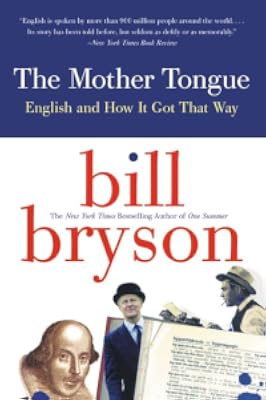
I've always enjoyed Bill Bryson. I loved [book:A Walk in the Woods] and [book:The Mother Tongue] and his Shakespeare book, etc. This? Not this. I couldn't manage this.
Yes, it was lovely to learn that we've all been pronouncing "Everest" wrong (and that George Everest never went up it). It's good to know that almost 40% of London is park and the city is almost half as populated as New York, and France and England are only 20.6 miles apart at their closest point, and such. Motopia is a very cool idea and I'm enjoying running it through Google Image. But…
>“It’s not the same thing at all. You can’t be this stupid.”
>“Well, pardon me for saying so, but you’re an idiot,” I said matter-of-factly.
This is Bryson quoting … show more himself. And both times he was talking to a young person in the service industry. If he's being honest and not self-mocking or self-parodying or whatever, Bill Bryson is apparently a jackass.
“Do you want fries with that?” the young man serving me asked.
I hesitated for a moment, and in a pained but patient tone said: “No. That’s why I didn’t ask for fries, you see.”
Seriously. I don't want to spend time with this person. When he calls Leslie Charteris "a recluse and a bigot" it feels very much like a pot and kettle pronouncement.
The humor is forced, and very much largely unfunny. I'm disappointed – and I quit.
The usual disclaimer: I received this book via Netgalley for review. show less
Yes, it was lovely to learn that we've all been pronouncing "Everest" wrong (and that George Everest never went up it). It's good to know that almost 40% of London is park and the city is almost half as populated as New York, and France and England are only 20.6 miles apart at their closest point, and such. Motopia is a very cool idea and I'm enjoying running it through Google Image. But…
>“It’s not the same thing at all. You can’t be this stupid.”
>“Well, pardon me for saying so, but you’re an idiot,” I said matter-of-factly.
This is Bryson quoting … show more himself. And both times he was talking to a young person in the service industry. If he's being honest and not self-mocking or self-parodying or whatever, Bill Bryson is apparently a jackass.
“Do you want fries with that?” the young man serving me asked.
I hesitated for a moment, and in a pained but patient tone said: “No. That’s why I didn’t ask for fries, you see.”
Seriously. I don't want to spend time with this person. When he calls Leslie Charteris "a recluse and a bigot" it feels very much like a pot and kettle pronouncement.
The humor is forced, and very much largely unfunny. I'm disappointed – and I quit.
The usual disclaimer: I received this book via Netgalley for review. show less
Members
- Recently Added By
Lists

Recommend the 20 best books you've read in the last five years
2,168 works; 606 members

Best Travel Writing - Non-Fiction
110 works; 6 members

Books read in 2015
213 works; 5 members

Books Read in 2016
4,666 works; 199 members

Books Read in 2017
4,249 works; 130 members
Author Information

70+ Works 136,293 Members
Bill Bryson was born in Des Moines, Iowa on December 8, 1951. In 1973, he went backpacking in England, where he eventually decided to settle. He wrote for the English newspapers The Times and The Independent, as well as supplementing his income by writing travel articles. He moved back to the United States in 1995. His first travel book, The Lost show more Continent: Travels in Small-Town America, was published in 1989. His other books include I'm a Stranger Here Myself, In a Sunburned Country, Bill Bryson's Dictionary of Troublesome Words, Neither Here nor There: Travels in Europe, Made in America, The Mother Tongue, Bill Bryson's African Diary, A Short History of Nearly Everything, At Home: A Short History of Private Life, Walk About, and Seeing Further: The Story of Science, Discovery, the Genius of the Royal Society. A Walk in the Woods was adapted into a movie starring Robert Redford and Nick Nolte. Bryson's titles, The Road to Little Dribbling: Adventures of an American in Britain, Notes from a Small Island and Neither Here Nor There made the New York Times bestseller list in 2016. (Bowker Author Biography) show less
Some Editions
Awards and Honors
Awards
Distinctions
Series

Common Knowledge
- Canonical title*
- De weg naar Little Dribbling : een reis door Groot-Brittannië
- Original title
- The Road to Little Dribbling: More Notes From a Small Island
- Alternate titles
- The Road to Little Dribbling: Adventures of an American in Britain
- Original publication date
- 2015-10-08
- People/Characters
- Bill Bryson; Mary Anning; Cheryl Tiegs
- Important places
- Totnes, Devon, England, UK; Penzance, Cornwall, England, UK; Cornwall, England, UK; Devon, England, UK; Skegness, Lincolnshire, England, UK; Bognor Regis, West Sussex, England, UK (show all 12); Torquay, Devon, England, UK; Grimsby, Lincolnshire, England, UK; Lyme Regis, Dorset, England, UK; Birmingham, England, UK; Cape Wrath, Highland, Scotland, UK; London, England, UK
- Dedication
- To James, Rosie, and Daphne. Welcome.
- First words
- Before I went there for the first time, about all I knew about Bognor Regis, beyond how to spell it, was that some British monarch, at some uncertain point in the past, in a moment of deathbed acerbity, called out the words '... (show all)Bugger Bognor' just before expiring, though which monarch it was and why his parting wish on earth was to see a medium-sized English coastal resort sodomized are questions I could not answer.
- Quotations
- - Știai că au trecut 20 de ani de când ai scris Însemnări de pe o insulă mică? m-a întrebat el.
- Serios? am replicat, uimit de cât trecut poate să acumuleze omul fără cel mai mic efort. p.21
Dacă ai lu... (show all)a toți tinerii din sudul Angliei cu șepci din astea și cu umerii căzuți și i-ai strânge pe toți în aceeași încăpere, tot n-ai obține suficiente puncte IQ ca să faci un debil mintal. p.35
Marea Britanie e a patra ca mărime între statele insulare, depășită doar de Indonezia, Japonia și Insulele Filipine. Ca bogăție, e a doua. p.51
Trebuie să recunosc că tânărul mi-era deja antipatic, pentru că avea un aer insolent. În plus, își dăduse părul cu mult gel. Familia îmi spune că nu se cade să antipatizezi pe cineva doar pentru că-și dă păru... (show all)l cu gel, dar mie mi se pare un motiv la fel de bun ca oricare altul. p. 69
Un exemplu și mai bun e Turnul Poștei din Londra. Timp de 15 ani a fost cea mai înaltă clădire din Europa. Domina profilul Londrei pe cer. Totuși, pentru că era folosit pentru comunicații prin satelit, existența sa era, oficial, secretă. S-a interzis să fie trecut pe hărțile Planului Cadastral până în 1995. p. 120
Atunci când Anglia e fermecătoare , nu există în lume un alt loc în care să vreau să fiu. p.128
Privită de sus, Londra nu e atât un oraș, cât o pădure de clădiri. p. 71
Asta e trăsătura cea mai ieșită din comun a Marii Britanii: vrea să fie o grădină. p. 84
Azi vezi doar kilometri după kilome... (show all)tri de frumusețe întâmplătoare. E într-adevăr splendid. p. 85
„Pădure însemna inițial orice zonă rezervată pentru vânătoare. Putea fi împădurită, dar nu obligatoriu. Aproape toate pădurile cândva întinse ale Marii Britanii (...) au dispărut cu totul ori s-au micșorat drastic”. p. 104
„Din experiența mea, ultimii oameni care ar trebui să încerce să rezolve orice problemă, dar mai cu samă pe cele legate de drumuri, sunt inginerii care construiesc autostrăzi. Ei funcționează plecâând de la principiul că, deși nici problemă de trafic nu poate fi rezolvată vreodată cu adevărat, ea poate fi întinsă pe o zonă mult mai mare.”p.104
Andrew, expertul nostru în istorie naturală ne-a recitat denumirile lor - escara-doamnei, vărsat-de-vacă, gâdilici-la-fund, strănuțici, crăpătura-moșului. N-aveam carnetul de însemnări la mine, așa că poate n-am reținut exact toate denumirile, dar în mare parte cam asta era. p.107
Din ziua aceea n-am mai presupus niciodată că ceva e distractiv doar pentru că englezii lasă impresia că le face plăcereși, în cele mai multe cazuri, nu mă înșel. p.135. Îmi place Norfolkul. Am locuit acolo 10 ani, până-n 2013, și am căpătat convingerea că Norfolkul n-are niciun neajuns pe care nu l-ar putea rezolva câteva dealuri și puțină diversitate genetică. După cum spunea fiul meu Sam: „Norfolk: prea mulți oameni, prea puține nume de familie.” p. 220
Norfolkul se specializează în pronunții bizare. Hautbois e hobbiss, Wymondham e windum, Costessey e cozzy, Postwick e pozzik. p. 226
St. Mary e o biserică impresionantă, cu o turlă pătrată, înaltă de 33 m, ce... (show all) pare și mai înaltă pe fundalul cerului întins și pustiu al Norfolkului. Biserica pare să se afle la o distanță sigură de mal, dar, la ritmul actual al eroziunii coastei, s-a calculat că marea o va răpi peste vreo 70 de ani. Confruntat cu această posibilitate tragică, guvernul britanic face ce fac întotdeauna guvernele în situații ce nu necesită o soluție imediată: nimic. p.228
În esență, efectul Dunning-Kruger înseamnă să fii prea prost ca să știi cât de prost ești. p.247
(...)distincția îmi era acordată pentru servicii aduse literaturii, lucru foarte amabil și generos, dar care însemna de fapt că o primesc pentru servicii aduse mie însumi, căci n-am făcut nimic ce n-aș fi avut de gând să fac oricum. p.249
(...) reședința ducilor de Marlborough, ale căror înfăptuiri de-a lungul ultimelor 11 generații ar putea fi înscrise cu un marker pe o alună. p. 250
Când eram copil, Marea Britanie fabrica un sfert din toate bunurile produse în lume (deși, în realitate, faptul că eu eram copil n-avea aici nici o legătură)(...) p. 267
Am remarcat cu deosebit interes că oamenii din Grimsby aveau obiceiul să-și aducă peștele de-acasă, pe care localul îl prăjea la prețul de un penny. p.290
Și cu gândul ăsta trist în minte, mi-am recuperat mașina și am pornit spre un loc mult mai plăcut: altundeva. p. 291
Sunt încontinuu uluit de minunățiile presărate la tot pasul în Marea Britanie. p. 293
(...) viața pedestrului nu e doar mai sănătoasă ci și mai bogată. p. 296
(...) Cressbrok Mill, construită de Richard Arkwright în 1779 (și refăcută 8 ani mai târziu, după un incendiu) ca filatură de bumbac. E cea mai frumoasă fabrică din câte veți vedea vreodată și poate cea mai importantă, căci a schimbat lumea. Aici și la Cromford Mill, construită la câțiva km mai încolo, lângă Matlock, s-a născut sistemul fabricilor. Tot ce se produce azi în lume își are începuturile în acest colț rural liniștit din Derbyshire. p. 301
Când îți câștigi existența scriind cărți, ajungi să-ți dai seama că, deși nu toți oamenii care le scriu autorilor sunt ciudați, toți oamenii care sunt ciudați le trimit scrisori autorilor. p. 303.
Unul ... (show all)dintre lucrurile care mă impresionează la Belgia - și, desigur, avem de-a face aici cu o listă foarte scurtă (...) p. 347
(...) m-am așezat la o coadă lungă și i-am explicat problema mea unui bărbat care răspunsese cândva la un anunț dat de British Rail cu conținutul: „Se caută nemernic morocănos pentru relații cu publicul.” p .347
Se cunoscuseră, cred, într-o junglă de lantipozi, în ttimpul participării la o emisiune de televiziune de la Channel 5 intitulată Mănânc gângănii contra cost (asta presupun pe baza fotografiilor). S-au căsătorit în februarie 2010.și au divorțat după 11 luni. Eu am avut bube care m-au ținut mai mult. 373
Ador comitatul Yorkshire și pe locuitorii lui. Îi admir pentru stilul lor direct. Cum spuneam în Însemnări de pe o insulă mică, dacă vrei să-ți cunoști defectele, nu vei găsi nicăieri oameni mai săritori. p. 373
În măsura în care a auzit cineva de Dentdale, atunci o știe ca una dintre principalele regiuni prin care trece celebra cale ferată Settle-Carlisle, care s-ar putea să fie cea mai pitorească și cea mai splendid de inutilă cale ferată construită vreodată în Anglia. p.373
Mă îndoiesc că există în țară vreun alt domeniu al activității umane care să genereze mai multe beneficii de talie mondială cu mai puține investiții financiare decât învățământul superior. Poate că nu există lucru mai remarcabil în Marea Britanie de azi. p. 384
(...) acesta e unul dintre lucrurile care-mi plac foarte, foarte mult la Marea Britanie: nu poate fi cunoscută. E atât de complexă, încât depășește capacitatea unui om de a vedea sau de a înțelege sau de a începe să cunoască. p.404 - Last words
- (Click to show. Warning: May contain spoilers.)I hope that’s not too much to ask.
- Original language
- English
- Canonical DDC/MDS
- 914.1048612
- Canonical LCC
- DA632
*Some information comes from Common Knowledge in other languages. Click "Edit" for more information.
Classifications
- Genres
- Travel, General Nonfiction, Nonfiction, Biography & Memoir
- DDC/MDS
- 914.1048612 — History & geography Geography & travel Geography of and travel in Europe British Isles, UK, Great Britain, Scotland, Ireland subdivisions and modified standard subdivisions Travel; guidebooks 1837- Victoria & Windsors 2000- 2000-2019 2010-2019
- LCC
- DA632 — History of Europe, Asia, Africa and Oceania Great Britain History of Great Britain England Description and travel. Guidebooks
- BISAC
Statistics
- Members
- 2,883
- Popularity
- 6,251
- Reviews
- 134
- Rating
- (3.64)
- Languages
- 6 — Chinese, Dutch, English, German, Italian, Romanian
- Media
- Paper, Audiobook, Ebook
- ISBNs
- 46
- UPCs
- 1
- ASINs
- 19