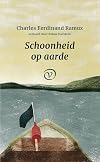
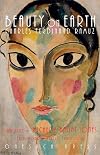
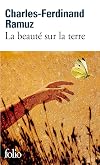
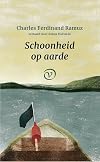
Schoonheid op aarde
by Charles Ferdinand Ramuz
On This Page
Description
Through the door of a Swiss inn the reader steps into a painting. Two men talk to each other and before long the writer -someone like them, one of them- begins to address us. Thus commences the fugue that is Beauty on Earth, in which the coming of a beautiful orphan to her uncle's inn brings a gradual chaos upon his town. Swiss novelist Charles-Ferdinand Ramuz published La Beaut in 1927. This translation by Michelle Bailat-Jones is a gift for which English language readers have waited decades.Tags
Recommendations



























Member Reviews
I was thrilled to get my hands on a copy of Charles Ferdinand Ramuz’s 1927 novel Beauty on Earth, newly translated by Michelle Bailat-Jones. Ramuz is a Swiss writer, not well known here in the U.S., and it’s exciting to see that his work is now available. The novel tells the story of a young woman, Juliette, who comes to live with her uncle in a small Swiss town after her father’s death. She grew up in Cuba, and so has a large change ahead of her. The focus of the novel is not on her experience of this change, however, or at least not on her inward experience, for we see her mainly from the outside as she arrives in the town, an unusual and surprising figure to whom the villagers don’t know how to respond. The novel is focused show more more on the experiences of the uncle, Milliquet, a café owner, and Rouge, a fisherman, as well as a handful of other townspeople. It’s a story of a stranger coming in and disrupting what appears to be a quiet, peaceful place, revealing tensions lying beneath the surface. It’s Juliette’s beauty that the town finds so disruptive; she captivates all — or at least many — of the people who meet her. Her beauty provokes them to want to possess her. The fact that Juliette provokes such possessiveness and that we never learn much about her inner life suggests that she is meant to be a symbol for human longing for the unattainable.
One of the most intriguing aspects of the book is the narrative voice and the novel’s point of view. The book starts off in a straightforward third person objective point of view, but the narrator quickly shifts to first person plural, and from there on, moves back and forth between first and third, and sometimes shifts into second. It’s disorienting for readers, as sometimes we’re outside the scene looking in, and sometimes, through the narrator’s use of “we,” are in the scene itself, one of the townspeople, taking part in the action. Sometimes, when the narrator uses “you,” we are being addressed directly. Readers never quite know where they are, what their place is, and are therefore not allowed to sit in judgment on the townspeople from afar. Readers are implicated in the desire to possess Juliette, and, just like the townspeople, are frustrated in any attempt to know her.
Ramuz’s writing — and the new translation — is beautiful; the lake and village landscapes are gorgeously evoked. I finished the book with a strong sense of the place — its cliffs and waves and storms. The novel’s title refers to Juliette’s disruptive beauty, but it also surely gestures toward the beauty of the landscape. I wish I could visit, although I would not want to be drawn, as Juliette is, into the schemes of the townspeople. The genius of this novel is that Ramuz never lets the reader keep a safe, observing distance. To read this novel is to take part in its struggle, an unsettling, but satisfying, experience. show less
One of the most intriguing aspects of the book is the narrative voice and the novel’s point of view. The book starts off in a straightforward third person objective point of view, but the narrator quickly shifts to first person plural, and from there on, moves back and forth between first and third, and sometimes shifts into second. It’s disorienting for readers, as sometimes we’re outside the scene looking in, and sometimes, through the narrator’s use of “we,” are in the scene itself, one of the townspeople, taking part in the action. Sometimes, when the narrator uses “you,” we are being addressed directly. Readers never quite know where they are, what their place is, and are therefore not allowed to sit in judgment on the townspeople from afar. Readers are implicated in the desire to possess Juliette, and, just like the townspeople, are frustrated in any attempt to know her.
Ramuz’s writing — and the new translation — is beautiful; the lake and village landscapes are gorgeously evoked. I finished the book with a strong sense of the place — its cliffs and waves and storms. The novel’s title refers to Juliette’s disruptive beauty, but it also surely gestures toward the beauty of the landscape. I wish I could visit, although I would not want to be drawn, as Juliette is, into the schemes of the townspeople. The genius of this novel is that Ramuz never lets the reader keep a safe, observing distance. To read this novel is to take part in its struggle, an unsettling, but satisfying, experience. show less
Ratings
Members
- Recently Added By
Lists

Time is out of joint
19 works; 3 members

"We" narration
49 works; 2 members

Les 50 meilleurs livres de langue française de 1900 à aujourd’hui
69 works; 2 members
Author Information

134+ Works 874 Members
Awards and Honors
Series
Belongs to Publisher Series
Gallimard, Folio (5211)
Common Knowledge
- Original title
- La beauté sur la terre
- Original publication date
- 1927
- First words*
- - Voyons, a dit le patron, tu ne vois pas que c'est un timbre d'Amérique?… Santiago, dans l'île de Cuba. Et la lettre est une lettre officielle, pas moyen de s'y tromper. Qu'est-ce qu'il faut que je réponde?
- Quotations*
- Moi... Nous, dit-il, on va où on veut. On a tout, parce qu'on a rien...
- Last words*
- (Click to show. Warning: May contain spoilers.)Elle attend, elle attend encore; on lui a tourné le dos.
Et les pas s'éloignent, s'éloignent toujours plus.
*Some information comes from Common Knowledge in other languages. Click "Edit" for more information.
Classifications
Statistics
- Members
- 71
- Popularity
- 443,867
- Reviews
- 1
- Rating
- (4.13)
- Languages
- Dutch, English, French, Hebrew
- Media
- Paper, Ebook
- ISBNs
- 7
- ASINs
- 3